AC Humidity Control Dubai: A National Guide to UAE Indoor Air Quality

Article by
Jon Bonnett
Australian Air Conditioning Specialist with extensive hands-on experience in AC servicing, deep cleaning, maintenance, and troubleshooting. Focused on high-quality workmanship, reliability, and professional service to UAE standards.
What if your air conditioner is actually making your home less comfortable? Many residents in the UAE lower their thermostats to 20 degrees only to find the air feels heavy and “sticky” rather than truly refreshing. This happens because cooling isn’t the same as dehumidifying. Achieving effective ac humidity control dubai requires more than just a low temperature setting; it demands a precise balance of mechanical performance and environmental hygiene. When your system fails to extract moisture, you aren’t just dealing with discomfort. You’re inviting musty odors and visible mould growth into your primary living spaces.
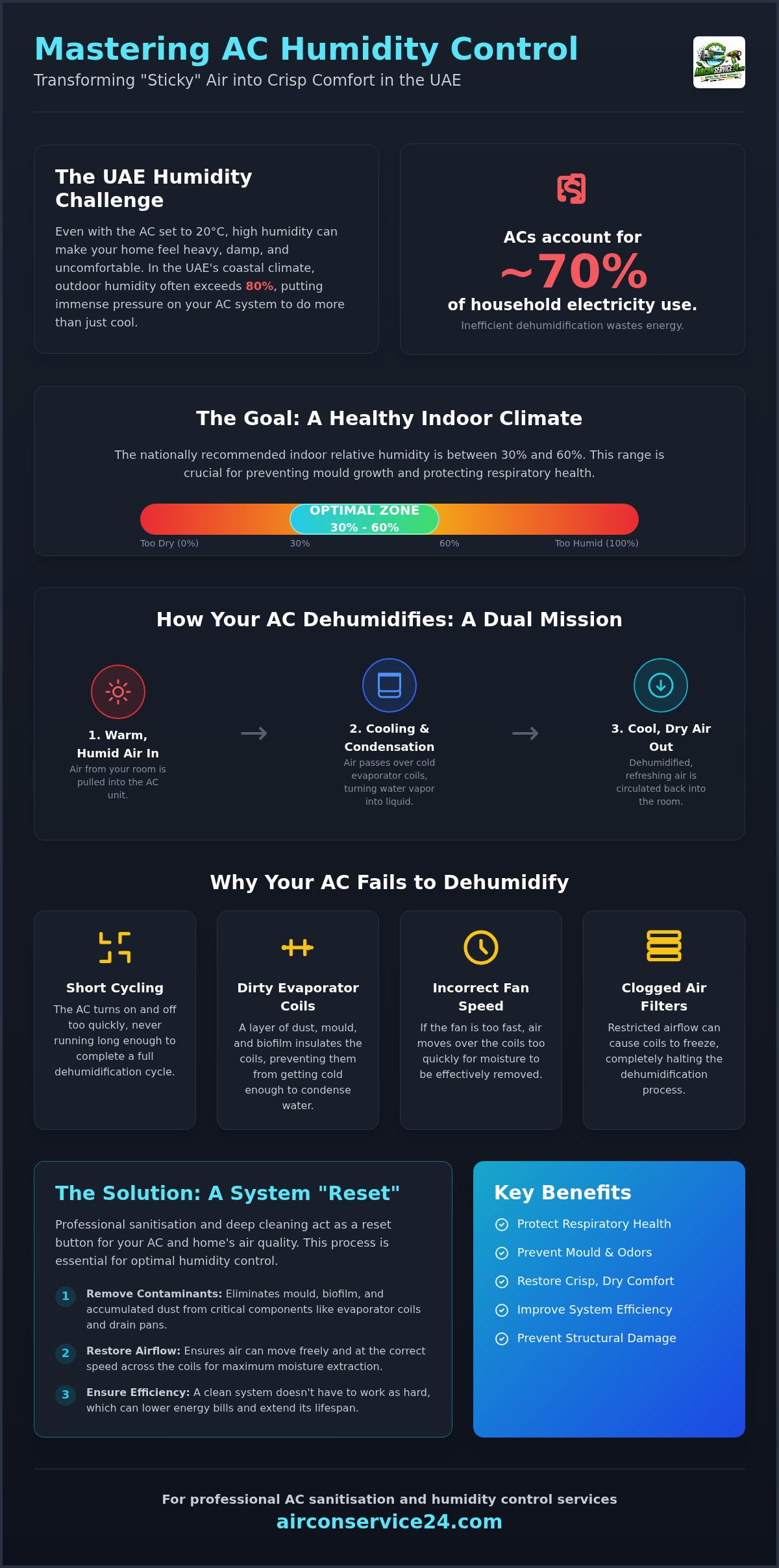
We recognize the frustration of facing high utility bills for a home that still feels damp and oppressive. Since air conditioning accounts for approximately 70% of the total electricity usage in a typical UAE household, your system must work with absolute precision. This guide will help you master the science of moisture management to eliminate “wet” air for good. We will preview how to maintain the ASHRAE-recommended indoor humidity level of 30% to 50% through advanced sanitisation and deep cleaning. You’ll discover the exact steps to ensure a dry, crisp indoor environment that protects your family’s respiratory health while restoring domestic harmony.
Key Takeaways
- Understand why the UAE’s extreme coastal humidity requires your AC to function as a high-precision dehumidifier to maintain a healthy indoor environment.
- Identify critical system failures, such as short cycling or dirty evaporator coils, that leave your air feeling heavy and “sticky” despite low temperature settings.
- Master the essential maintenance protocols for ac humidity control dubai to ensure your system effectively extracts moisture during peak summer months.
- Discover how professional sanitisation and deep cleaning act as a “reset button” for your home’s air quality by removing mould, biofilm, and accumulated contaminants.
- Learn to maintain the recommended 30% to 50% relative humidity level to protect your family from respiratory issues and prevent structural mould growth.
The Science of Humidity in the UAE Coastal Climate
Living in Dubai means coexisting with a maritime climate that frequently pushes outdoor humidity levels above 80% during the peak summer months. While the heat is the most obvious factor, the invisible moisture load represents the true challenge for indoor comfort and structural integrity. Standard air conditioning units are often engineered for temperature reduction as a primary function; however, in this region, they must work twice as hard to manage latent heat, which is the energy held in water vapor. Effective ac humidity control dubai isn’t just a matter of comfort. It’s a technical necessity to prevent your living space from becoming a breeding ground for dust mites and mould spores.
When indoor moisture isn’t managed, the health implications are immediate and cumulative. High humidity levels facilitate the growth of allergens that can trigger asthma and other respiratory conditions. To ensure a healthy environment, maintaining a relative humidity level between 40% and 60% is considered the national gold standard. This range is high enough to prevent skin and throat irritation but low enough to inhibit the biological growth that thrives in damp conditions. Achieving this balance requires a system that is both mechanically sound and hygienically clean.
Understanding Relative vs. Absolute Humidity
Many residents believe that dropping the thermostat to a very low setting will solve the “sticky” feeling in the air. In reality, cooling the air without effectively removing the water vapor actually increases the relative humidity. This occurs because colder air has a lower capacity to hold moisture than warm air. If your system doesn’t actively extract water, you reach the dew point faster, causing condensation to form on vents, ceilings, and walls. Relative Humidity is the amount of water vapor present in the air expressed as a percentage of the amount needed for saturation at the same temperature. Understanding How Air Conditioners Control Humidity is essential for anyone living in a high-moisture zone, as it highlights the need for the system to run long enough to complete a full dehumidification cycle.
The Impact of Coastal Air on National Properties
Proximity to the Arabian Gulf accelerates moisture ingress through a process known as vapor pressure, where humid outdoor air naturally moves toward the drier, cooler air inside your home. In Dubai’s coastal communities, the building envelope acts as the first line of defense. Common architectural weak points, such as poorly sealed window frames, degraded balcony door gaskets, and uninsulated ceiling voids, allow humid air to seep into the structure. This constant infiltration places an immense load on your AC equipment, often leading to premature wear and higher energy costs. Achieving consistent ac humidity control dubai requires a combination of a sealed home environment and a perfectly calibrated cooling system that can handle the relentless coastal moisture.
How AC Systems Execute Dehumidification
Your air conditioner is a dual-purpose engine designed to manage both sensible heat (temperature) and latent heat (moisture). In the context of ac humidity control dubai, the cooling process is inseparable from dehumidification. As warm, humid air from your living room is pulled into the unit, it passes over a set of cold evaporator coils. This encounter triggers a thermodynamic reaction where the air’s temperature drops rapidly, forcing water vapor to lose energy and transform into liquid droplets. It’s a technical reality that if your system only cools the air without removing water, the resulting environment will remain heavy and uncomfortable.
The efficiency of this cycle depends entirely on the condition of your AC equipment. Airflow volume serves as the silent partner in this process. If the fan speed is calibrated too high, the air moves across the coils too quickly for condensation to occur. Conversely, restricted airflow due to clogged filters can cause the coils to drop below freezing, halting the dehumidification process entirely. The EPA Guide to Indoor Air Quality highlights that maintaining this mechanical balance is the first step in defending your home against biological contaminants.
The Role of the Evaporator Coil
The evaporator coil must maintain a temperature consistently below the “dew point” of the incoming air to successfully pull water from the atmosphere. This creates the “wet coil” phenomenon, which is actually a sign of a healthy, functioning system. As moisture clings to the coil, it also traps fine dust particles, essentially washing the air before it’s recirculated. The relationship between refrigerant pressure and moisture extraction is absolute; lower suction pressure results in a colder coil surface, which increases the moisture removal capacity up to the point of coil icing. If you notice your home feels damp despite the AC running, a professional AC inspection can determine if your refrigerant levels are correctly balanced for Dubai’s specific humidity loads.
Condensate Management and Drainage
Once moisture is extracted, it must be safely removed from the building. The journey of water follows a specific path:
- Collection: Droplets drip from the evaporator coils into a primary condensate tray.
- Transport: The water flows through a drainage line, often assisted by a condensate pump in high-rise apartments where gravity alone is insufficient.
- Discharge: The fluid is expelled into the building’s main drainage system or an external drain point.
In Dubai’s high-density residential towers, drainage efficiency is directly linked to indoor air quality. A blockage in this system doesn’t just cause leaks; it creates a reservoir of stagnant water that can lead to bacterial growth and musty odors. Ensuring these lines are clear is a non-negotiable part of effective ac humidity control dubai.
Troubleshooting Excess Moisture and Sticky Air
Troubleshooting a “sticky” home environment starts with understanding that cooling and dehumidifying are two separate mechanical outcomes. If your unit is oversized for the room, it may reach the target temperature in just a few minutes and shut off before the moisture is effectively extracted. This “short cycling” leaves water vapor suspended in the air, resulting in a cold but damp atmosphere. For effective ac humidity control dubai, your system requires longer, more consistent run times at a lower intensity to pull water from the air. A unit that cycles on and off too rapidly never gives the evaporator coil enough time to complete the condensation process.
A common culprit behind poor moisture removal is the “dirty coil” barrier. Over time, fine desert dust and grime accumulate on the evaporator fins, creating a thick insulating layer. This prevents the warm indoor air from making direct contact with the cold metal, which is the physical requirement for condensation to occur. Similarly, low refrigerant levels can mean the coil never reaches the dew point, even if the air blowing out still feels somewhat cool. Ignoring these early warning signs leads to catastrophic system failure and potential mould infestation. This is why following a rigorous schedule for preventive AC maintenance UAE is vital for long-term comfort and equipment longevity.
The Hidden Threat of Biofilm and Sludge
Inside the dark, damp environment of your AC unit, a complex layer of bacteria known as biofilm can form. This biological “sludge” often clogs the primary drain line, causing water to back up into the collection tray. This stagnant water increases local humidity levels within the ductwork and is the primary source of the musty “AC smell” that plagues many Dubai apartments. Adhering to ASHRAE Ventilation and Air Quality Standards ensures your system is not just moving air, but maintaining a hygienic environment that resists these biological loads. This level of ac humidity control dubai requires a disciplined approach to internal cleanliness.
Thermostat and Sensor Calibration Errors
Sometimes the issue is digital rather than mechanical. Faulty humidity sensors can provide inaccurate data to the system, causing it to cycle off prematurely while the air is still heavy. You can improve performance by checking your fan settings; keeping the fan on “Auto” ensures that when the compressor stops, the fan also stops. This prevents moisture sitting on the wet coils from being evaporated back into the room. Modern smart thermostats can also be programmed to prioritize dehumidification, running the system specifically to manage moisture levels regardless of the temperature reading.
Maintenance Protocols for Optimal Humidity Control
Maintaining a dry indoor environment in the UAE requires a methodical approach that goes beyond simple temperature adjustments. Routine care is the primary defense against the relentless moisture of the coastal climate. By adopting a disciplined maintenance schedule, you can ensure your system operates at peak efficiency, which typically reduces electricity consumption by 20% to 30%. Consistent ac humidity control dubai depends on the integrity of your system’s components, starting with the filtration quality and ending with the precise calibration of cooling cycles.
High-MERV filters play a critical role in this process by capturing fine, moisture-laden particles that standard filters might miss. These particles often act as the “seeds” for mould growth when they settle on damp internal surfaces. For national homeowners, the most important date on the calendar is the pre-summer peak service, ideally scheduled between February and April. This proactive inspection ensures that your coils, sensors, and drainage lines are fully prepared for the extreme latent heat loads of July and August. If you encounter sudden visible mould or a complete failure in moisture extraction, you should contact a specialist for 24/7 emergency AC repair to protect your home’s hygiene and structural integrity.
Essential Filter and Vent Care
Cleaning your filters is a simple yet powerful way to maintain the airflow required for moisture removal. Follow these steps to ensure thorough care:
- Remove and Vacuum: Carefully slide out the filter and use a soft brush attachment to remove surface dust.
- Wash: Rinse with lukewarm water; avoid harsh chemicals that can degrade the delicate mesh.
- Dry Completely: Ensure the filter is bone-dry before reinsertion to prevent immediate bacterial growth.
During UAE sandstorm seasons, you must check your filters at least once a week to prevent dust accumulation from choking the system’s ability to dehumidify. Additionally, verify that supply and return vents are free from obstructions like heavy curtains or furniture, which can disrupt the balanced airflow required for effective ac humidity control dubai.
Optimising Fan and Cooling Cycles
The settings on your thermostat dictate how effectively your system handles water vapor. Using the “Auto” fan setting is superior for moisture removal because it stops the fan as soon as the cooling cycle ends, preventing moisture on the wet coil from being blown back into the room. Many modern units also feature a “Dry Mode,” which runs the compressor at a lower speed while maintaining a cold coil surface to maximize condensation without over-cooling the space. To avoid the risk of coil freezing and subsequent water leaks, set realistic temperature targets between 22°C and 24°C. If your system still feels sluggish or the air remains heavy, a professional maintenance check can recalibrate your sensors for optimal performance.
The AirConService24.com Approach to Sanitisation
Sanitisation represents the final, critical step in mastering ac humidity control dubai. While mechanical repairs address how the system runs, deep cleaning addresses the environment in which it operates. AirConService24.com treats a comprehensive sanitisation as a “reset button” for your property’s indoor air quality. By removing the accumulated layers of dust and biological growth from internal components, we restore the system’s native ability to manage moisture. This process ensures that the air circulating through your home is not only cool but also hygienically safe and crisp.
Our technicians follow a rigorous protocol that utilizes professional-grade biocides. These agents are specifically formulated to eliminate microscopic spores and stubborn biofilm without compromising the air you breathe. When the evaporator coil is coated in grime, it loses its ability to transfer heat effectively, which forces the compressor to run longer and harder. By stripping away these contaminants, we restore the heat-exchange efficiency of the coil, allowing it to reach the dew point faster and extract moisture more aggressively. This methodical approach transforms your AC from a potential source of pollution into a disciplined guardian of your home environment.
Specialized Odour and Mould Removal
Many residents struggle with “Dirty Sock Syndrome,” a pungent, musty smell that signals significant bacterial colonies within the unit. Addressing this requires more than a simple surface wipe of the vents. Professional deep-tissue AC cleaning involves disassembling key components to reach the dark, damp recesses where mould and biofilm thrive. It’s a health necessity, not just a cosmetic fix. Eliminating these biological loads is the only way to stop the cycle of recycled spores that can cause persistent respiratory irritation and domestic discomfort.
Ensuring Long-Term System Efficiency
A clean system is an efficient system. When your AC is free from internal obstructions, the workload on the compressor drops significantly, which directly results in lower monthly utility bills and a longer lifespan for your AC equipment. Our service provides the AirConService24.com guarantee of professional reassurance that every part of your system, from the drip tray to the fan blades, has been methodically inspected and restored to a factory-clean standard. We prioritize transparency and integrity, ensuring you understand the exact state of your home’s air quality after every visit.
Don’t let sticky air and musty smells compromise your domestic harmony. Take control of your indoor environment with a specialized service designed for the unique challenges of the UAE climate. Book a professional humidity assessment and deep clean today to ensure your home remains a dry, healthy sanctuary all year round.
Secure Your Home’s Air Quality Today
Mastering your indoor climate requires a shift from simple cooling to comprehensive moisture management. We’ve explored how a clean evaporator coil and balanced refrigerant levels are the true engines of dehumidification. By maintaining your system and ensuring internal hygiene, you eliminate the threat of mould and the “sticky” discomfort that plagues many national properties. Professional ac humidity control dubai is an investment in your family’s health and your home’s longevity.
Our team operates as licensed building maintenance specialists, providing elite sanitisation and specialized odour removal across the UAE. We remain ready to act with a 24/7 emergency response for any cooling or moisture crisis you encounter. Don’t let poor air quality compromise your domestic harmony or well-being. Restore your comfort with professional AC deep cleaning and humidity control. You deserve a home that feels as crisp and refreshing as it looks.
Frequently Asked Questions
Why does my AC run but the house still feels humid?
This usually happens because the system is short cycling or has low refrigerant levels. If the unit is too powerful for the space, it reaches the target temperature quickly and shuts off before it can extract enough water vapor. For effective ac humidity control dubai, the compressor needs to run for extended periods to ensure the evaporator coil pulls moisture from the air. A system that stops too soon leaves the air feeling “sticky” and heavy.
What is the ideal indoor humidity level for UAE homes?
The national gold standard for indoor comfort is a relative humidity level between 40% and 60%. This range is high enough to prevent skin irritation and low enough to inhibit the growth of mould and dust mites. Maintaining this balance is essential for both your health and the structural integrity of your property. Levels consistently above 60% lead to musty odors and potential biological infestations within your ductwork.
Can a dirty AC filter cause high humidity levels?
Yes, a clogged filter restricts the volume of air passing over the evaporator coils. When airflow is limited, the heat exchange process becomes inefficient; the system may even experience coil freezing, which halts all moisture extraction. Regular filter cleaning is a simple but vital step in ensuring your system has the necessary breath to perform its dual role of cooling and dehumidifying effectively. Don’t let a layer of dust compromise your home’s hygiene.
Does “Dry Mode” on my AC actually save energy?
Dry Mode can save energy when the outdoor humidity is high but the temperature is moderate. In this setting, the fan runs at a lower speed while the compressor works to maximize condensation on the coils. This allows the system to lower the humidity without constantly cycling the compressor at high power for cooling. It’s a precise way to maintain comfort without the high utility costs of standard cooling cycles during humid months.
How often should I deep clean my AC for humidity control?
You should schedule a professional deep clean at least once a year, ideally during the pre-summer peak between February and April. In the harsh UAE climate, bi-annual servicing is even better for homes near the coast. Regular sanitisation removes the biofilm and dust that insulate the coils, ensuring your system maintains the high heat-exchange efficiency required for consistent ac humidity control dubai. Proactive care prevents the accumulation of moisture-trapping contaminants.
What causes the musty smell coming from my AC vents?
Musty odors are typically caused by biological growth, such as mould or biofilm, inside the dark and damp sections of your unit. When moisture isn’t drained correctly, stagnant water in the tray becomes a breeding ground for bacteria. This “Dirty Sock Syndrome” isn’t just a cosmetic issue; it’s a sign that your system is recirculating contaminants. Professional sanitisation is required to eliminate these colonies and restore a fresh, neutral scent to your home.
Is high indoor humidity dangerous for my health?
Prolonged exposure to high humidity is a significant health risk. Excess moisture promotes the proliferation of dust mites and mould spores, which are major triggers for asthma and allergic rhinitis. Beyond respiratory issues, damp environments can lead to fatigue and sleep disruption because the body cannot effectively cool itself through sweat. Maintaining a dry indoor environment is a fundamental requirement for a healthy lifestyle and long-term domestic harmony.
Can an oversized AC unit actually make my home more humid?
An oversized unit is a common cause of high indoor humidity. Because the unit is too powerful, it cools the room to the set temperature almost instantly and then shuts down. This prevents the system from running a full dehumidification cycle, which requires time. For proper moisture removal, you need a correctly sized system that runs longer at a steady pace to wring the water out of the air before the compressor cycles off.