AC Pipe Insulation Repair: The Homeowner’s 2026 Guide to Thermal Efficiency

Article by
Jon Bonnett
Australian Air Conditioning Specialist with extensive hands-on experience in AC servicing, deep cleaning, maintenance, and troubleshooting. Focused on high-quality workmanship, reliability, and professional service to UAE standards.
That small patch of peeling foam on your external AC lines isn’t just an eyesore; it’s a thermal breach that forces your system to fight a losing battle against the 50°C UAE sun. When this protective barrier degrades, your unit works overtime, leading to those unexplained spikes in your DEWA or SEWA bills that every homeowner dreads. If you’ve noticed water dripping from your ceiling or your AC struggling to reach its set temperature during a peak Dubai afternoon, it is time to prioritize ac pipe insulation repair. Maintaining these lines is no longer just a recommendation. It’s a critical necessity for any disciplined guardian of a modern, efficient home environment.
We understand the urgency of protecting your domestic harmony from the relentless summer heat. You want a home that remains a cool sanctuary without the anxiety of soaring operational costs or system failure. This guide provides a methodical roadmap to identify insulation failure, choose high-performance materials like elastomeric foam, and upgrade your system to meet the mandatory 2026 thermal efficiency standards. We will walk you through the technical steps to seal your lines effectively, ensuring your cooling system operates with the precision and longevity you expect from a premium HVAC setup.
Key Takeaways
- Identify critical warning signs like surface cracking and pipe sweating to prevent moisture damage before it reaches your ceiling or walls.
- Understand why the UAE’s unique combination of extreme UV radiation and high humidity necessitates specialized, high-performance insulation materials.
- Apply the “25% Rule” to determine whether a targeted ac pipe insulation repair is sufficient or if a full replacement is required for system integrity.
- Learn how to align your home with the 2026 UAE thermal efficiency standards to significantly reduce cooling costs and energy expenditure.
- Discover the methodical professional approach to assessing refrigerant lines and restoring the thermal shield that protects your cooling system from desert heat.
Understanding AC Pipe Insulation and Its Role in Cooling
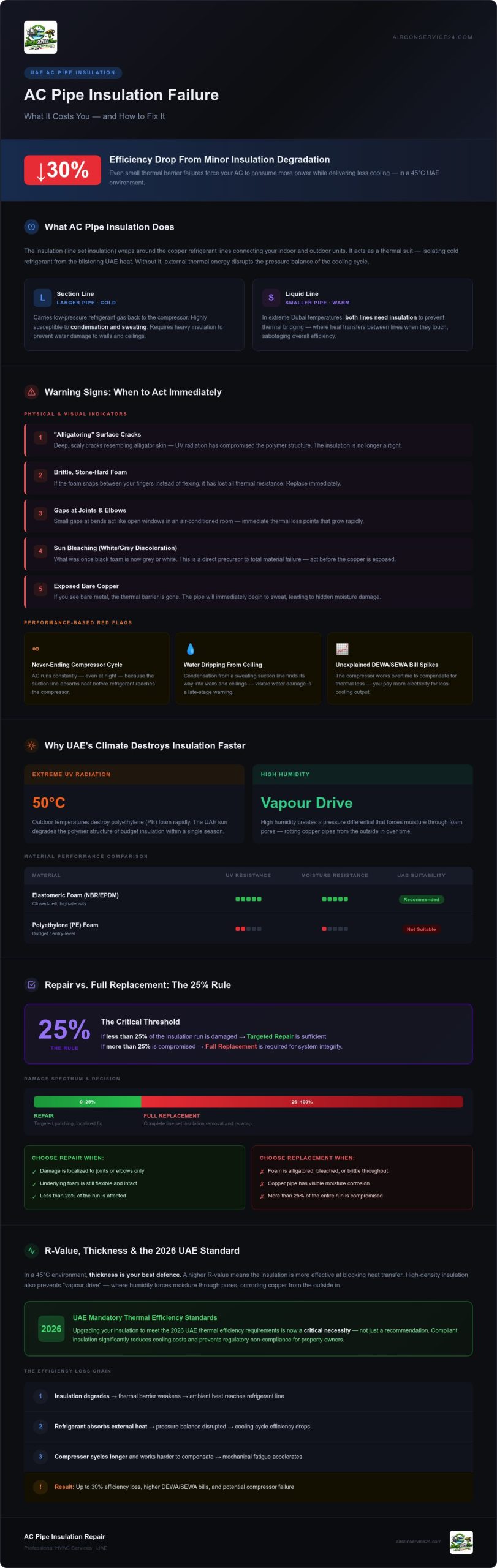
Think of your AC pipe insulation as a thermal suit for your cooling system. Formally known as line set insulation, this flexible barrier wraps around the copper refrigerant lines that connect your indoor and outdoor units. Its primary job is to isolate the cold refrigerant from the blistering UAE ambient heat. Without this protection, the refrigerant absorbs external thermal energy, which disrupts the pressure balance required for the cooling cycle to function. This isn’t just a matter of comfort; it’s a critical component of ac pipe insulation repair that determines whether your system survives the summer or burns out prematurely.
The choice of material matters immensely in the desert. Most high-quality installations utilize closed-cell elastomeric foam, such as NBR or EPDM, because these materials resist moisture absorption. Lower-grade polyethylene (PE) foam is often found in budget installations, but it tends to degrade rapidly under intense UV radiation. When this material fails, your AC compressor becomes the primary victim. It must cycle longer and work harder to achieve the same cooling effect, leading to mechanical fatigue and eventual failure. You can find specialized AC equipment and high-grade insulation materials designed specifically for these high-stress environments.
The Suction Line vs. The Liquid Line
Every split system has two copper lines, and understanding the difference is key to a successful ac pipe insulation repair. The larger, cold pipe is the suction line. It carries low-pressure refrigerant gas back to the compressor and is highly susceptible to condensation. If this line isn’t heavily insulated, it will “sweat,” leading to water damage in your walls or ceilings. The smaller, warmer pipe is the liquid line. While some regions leave this bare, the extreme temperatures in Dubai often require both lines to be insulated to prevent thermal bridging. This occurs when the two pipes touch or are too close, allowing heat to transfer between them and sabotaging the system’s efficiency.
Thermal Conductivity and R-Values
In the context of Pipe insulation, the R-value measures the material’s resistance to heat flow. In a 45°C environment, thickness is your best friend. A higher R-value means the insulation is more effective at keeping the desert heat out. Industry data suggests that even minor degradation in your pipe’s thermal barrier can drop overall system efficiency by up to 30%. This loss forces your unit to consume more power while delivering less cooling. High-density insulation also plays a vital role in preventing the “vapour drive” effect, where high humidity forces moisture through the foam’s pores, eventually rotting the copper pipes from the outside in.
Signs Your AC Pipe Insulation Needs Immediate Repair
The desert environment is unforgiving. Identifying the early warning signs of degradation is the only way to avoid a total system shutdown during a July heatwave. When the thermal shield around your refrigerant lines fails, the consequences ripple through your entire home, affecting both your comfort and your wallet. If you catch these indicators early, a targeted ac pipe insulation repair can prevent the need for a costly compressor replacement later.
Physical and Visual Indicators
Start with a simple visual inspection of your outdoor unit and the lines entering your building. If the exterior foam looks like the skin of an alligator, with deep, scaly cracks, the UV radiation has already compromised the polymer structure. This “alligatoring” means the insulation is no longer airtight. When you touch it, the foam shouldn’t feel like stone. If it’s brittle and snaps between your fingers, it’s lost its thermal resistance. Look closely at the joints and elbows. Small gaps here act like open windows in an air-conditioned room. You might also see white or grey discoloration on what was once black foam. This is sun bleaching, a precursor to total material failure. If you see the glint of bare copper, the thermal barrier is gone. This exposed metal will instantly begin to sweat, leading to moisture accumulation in places it doesn’t belong.
Performance-Based Red Flags
Your AC unit shouldn’t run forever. If the compressor is trapped in a “Never-Ending Cycle,” running even during the cooler night hours, it’s likely struggling with thermal loss. This often happens because the suction line is absorbing heat before the refrigerant reaches the indoor unit. Watch for these specific issues:
- Ice Buildup: Frozen valves on the outdoor unit or ice on the indoor evaporator coil often signal that the refrigerant isn’t maintained at the correct temperature.
- Rising Humidity: If your home feels “sticky” despite the thermostat being set to 22°C, the system isn’t effectively removing moisture because the thermal pressure is off.
- Water Stains: Yellow or brown rings on your ceiling or walls near the AC entry point are clear signs of “pipe sweating.”
This condensation does more than damage paint. It creates a damp, dark micro-climate within your wall cavities. This is the primary driver for internal mold growth, which can impact your family’s respiratory health long before you see a single spore. Addressing these issues through a professional AC equipment assessment ensures these hidden risks are neutralized. A proactive ac pipe insulation repair is far more cost-effective than a massive mold remediation project or a mid-summer emergency repair call.
Why UAE Environmental Factors Destroy AC Insulation
The UAE’s climate is a “perfect storm” for material degradation. While standard insulation might last a decade in temperate zones, the combination of 50°C temperatures, intense UV exposure, and abrasive sand makes ac pipe insulation repair a frequent necessity for local homeowners. Understanding these environmental stressors is the first step in building a more resilient cooling system that can withstand the desert’s unique pressures.
Extreme UV radiation is the primary culprit for material failure. The desert sun delivers high-energy photons that physically break the polymer chains within the foam. This chemical breakdown turns flexible, airtight barriers into brittle, porous shells. Once these chains snap, the material loses its ability to trap air, which is the core principle of thermal insulation. This is often accompanied by “Vapour Drive.” In high-humidity coastal areas like Dubai or Abu Dhabi, moisture is physically forced from the humid outside air into the cold, low-pressure space near the copper pipe. If your insulation isn’t high-density, it will absorb this water, leading to the “sweating” and mold issues discussed in previous sections.
UV Degradation and Solar Loading
Not all insulation is created equal. Many systems are installed with indoor-rated polyethylene (PE) foam that lacks essential UV stabilizers. This material fails within a single summer season when exposed on a rooftop or balcony. For a lasting ac pipe insulation repair, we utilize outdoor-rated elastomeric foam paired with UV-resistant coatings or specialized “jacketing.” This protective layer reflects solar radiation and prevents the foam from reaching the critical temperatures that accelerate its decay. Without this shield, the “solar loading” effect can raise the temperature of the copper pipes themselves, forcing your compressor to work significantly harder to maintain the refrigerant’s thermal state.
The Bird and Pest Problem
Local wildlife adds a layer of physical destruction that technical manuals often ignore. In the UAE, birds like the common myna and pigeons frequently target soft AC foam. They find it to be an ideal, lightweight material for nesting. Once a small section is stripped away, the exposed copper becomes a massive heat sink. This bare metal also attracts other pests, and the resulting moisture from condensation can lead to corrosion or even electrical shorts if the lines are near wiring. To prevent this, we recommend using high-tensile PVC tape or hard-shell covers. These barriers make the insulation inaccessible to birds and provide an extra layer of defense against the abrasive sand and dust that erode the foam during seasonal storms.
AC Pipe Insulation Repair vs. Full Replacement
Deciding between a quick fix and a total overhaul requires a methodical assessment of your system’s thermal integrity. For many homeowners, the choice comes down to the “25% Rule.” If less than a quarter of your exterior line set shows the cracking or bird damage described earlier, a targeted ac pipe insulation repair is usually sufficient to restore efficiency. However, if the degradation spans more than 25% of the total length, the internal structure of the remaining foam is likely compromised, making a full replacement the only reliable way to protect your compressor.
Before you commit to a repair, you must inspect the copper itself. If the pipe exhibits green oxidation or deep pitting, simply wrapping it in new foam won’t solve the underlying issue. Insulation on a corroded pipe is a temporary bandage on a structural problem. Additionally, you must ensure precise material matching. Using insulation with a different wall thickness than the original creates a “step” at the junction. This gap allows ambient air to infiltrate the seal, leading to localized condensation and eventual failure of the new patch.
How to Perform a Minor Patch Repair
Success in a minor repair depends on the quality of the thermal seal. First, use a clean cloth to remove all dust, sand, and oxidation from the copper surface. Any debris left behind will prevent the insulation from bonding correctly. We recommend the “Slit and Glue” method rather than relying solely on mechanical fasteners or tape. Apply a specialized contact adhesive to the longitudinal slit of the new foam and the butt joints where it meets the old insulation. This creates a fused, airtight bond. Finally, seal the ends with high-tensile PVC tape to prevent moisture from “wicking” into the old, porous sections of the line set.
When Professional Replacement is Mandatory
In certain scenarios, a patch is no longer a viable option. If the foam feels “squishy” or water-logged when squeezed, it has reached total saturation. This moisture destroys the material’s R-value and accelerates copper corrosion. Similarly, if you discover a mold infestation within the foam, cleaning is impossible. The porous nature of the insulation traps spores, meaning the only way to safeguard your indoor air quality is to strip the lines bare and start fresh. Modern high-efficiency units also demand specific equipment and thicker insulation to meet the 2026 UAE thermal standards. If your system is being upgraded, your insulation must be upgraded alongside it to handle the higher thermal pressures.
If your system is showing signs of total saturation or widespread UV failure, don’t wait for the next heatwave to act. You can book a professional AC inspection today to ensure your thermal shield is ready for the peak summer months.
Professional AC Maintenance and Insulation Solutions
Our methodology at AirConService24.com transcends simple foam replacement. We operate as the disciplined guardian of your home environment, ensuring that every ac pipe insulation repair is part of a broader strategy to restore peak system efficiency. Since over 70% of energy consumption in UAE buildings is attributed to cooling systems, even a minor insulation gap is a direct threat to your household budget. Our technicians don’t just patch visible cracks; they conduct a methodical assessment of your entire line set to ensure the thermal shield is impenetrable. This holistic approach includes verifying refrigerant levels and performing comprehensive AC maintenance UAE to ensure your system meets the strict 2026 energy standards.
We believe in advanced protection that outlasts a single season. Beyond the basic foam, we implement UV-resistant wraps and high-durability protective ducting that shields your lines from the abrasive sand and intense solar loading typical of the desert. This precision application is designed to restore domestic harmony by eliminating the condensation leaks and humidity spikes that disrupt your comfort. By sealing the system correctly, we prevent the vapour drive that leads to internal pipe rot and poor air quality.
Our High-Stakes Response to Cooling Loss
Precision is our baseline. We treat significant insulation failure as an emergency AC repair because we know that an uninsulated suction line can lead to compressor burnout in a matter of days during the peak summer. The team at AirConService24.com utilizes advanced thermal imaging cameras to identify hidden energy leaks that the naked eye might miss. This technology allows us to provide transparent workflows; we show you exactly where the heat is infiltrating your system and explain the technical reason for the failure before we begin the restoration process.
Long-Term Protection Strategies
Sustainable cooling requires more than a one-time fix. Incorporating insulation checks into your regular AC maintenance schedule is the most effective way to extend the longevity of your materials. We also prioritize hygiene by combining repair work with professional sanitisation and odour removal. This ensures that your new insulation doesn’t trap old bacteria or moisture-driven scents from previous sweating episodes. For villas and commercial properties, we offer customized jacketing solutions that provide a hard-shell defense against local wildlife and the elements, ensuring your thermal efficiency remains uncompromised for years to come.
Secure Your Home’s Thermal Integrity Today
Restoring your system’s efficiency starts with recognizing that insulation is the first line of defense against the relentless UAE sun. By addressing visible cracks and moisture issues early, you prevent the mechanical fatigue that leads to total system failure. A methodical ac pipe insulation repair doesn’t just lower your utility bills; it safeguards your indoor air quality and protects your home from hidden water damage. Our expert technicians are available for national UAE support, bringing specialized experience in high-stakes cooling solutions to every villa and apartment. We ensure every comprehensive repair includes deep cleaning and sanitisation, leaving your system optimized for the 2026 thermal standards.
Don’t let a minor breach become a major crisis. Take control of your home’s comfort and health by choosing a partner committed to precision and domestic harmony. Secure Your Cooling Efficiency with Professional AC Pipe Insulation Repair and enjoy the peace of mind that comes with a perfectly maintained environment. Your cooling system is an investment in your well-being; keep it running at its peak with the care it deserves.
Frequently Asked Questions
Can I use duct tape to repair my AC pipe insulation?
You should not use duct tape for ac pipe insulation repair because it lacks the necessary thermal resistance properties. Duct tape is a mechanical fastener, not an insulator, and its adhesive will rapidly fail under the intense UAE sun. Within weeks, the tape will peel away, leaving your refrigerant lines exposed to solar loading and causing condensation to form underneath the remaining tape.
How much energy do I lose from damaged AC insulation?
Damaged insulation can cause your cooling system to lose up to 30% of its operational efficiency. This loss happens because the cold refrigerant absorbs ambient heat before it ever reaches your indoor unit. Your compressor is then forced to cycle longer and work harder to achieve your set temperature, which directly inflates your monthly DEWA or SEWA bills.
Why is there water dripping from my AC pipes even though the insulation looks okay?
Water dripping often indicates that the insulation has reached “total saturation” or is suffering from the vapour drive effect. Even if the exterior foam appears intact, moisture can be trapped against the copper pipe if the joints or elbows aren’t perfectly airtight. This hidden condensation eventually travels along the length of the pipe and leaks into your wall cavities or through your ceiling.
How long does AC pipe insulation typically last in the UAE?
Standard insulation typically lasts between 3 to 5 years in the UAE’s harsh climate before UV degradation becomes critical. High-performance materials like closed-cell elastomeric foam can last longer if they’re protected by specialized UV-resistant coatings. However, factors like abrasive sandstorms and local bird activity can significantly shorten this lifespan if the lines aren’t properly shielded.
Is it dangerous to leave AC pipes uninsulated for a few weeks?
Leaving pipes uninsulated isn’t an immediate safety hazard, but it’s dangerous for the health of your AC compressor. The lack of a thermal barrier causes refrigerant to return to the outdoor unit at the wrong temperature and pressure. This can lead to “liquid slugging,” which can cause permanent mechanical failure of the compressor within just a few weeks of peak summer operation.
What is the best material for outdoor AC pipe insulation?
Closed-cell elastomeric foam is the superior choice for ac pipe insulation repair in the desert. This material is highly resistant to moisture absorption and has low thermal conductivity. For maximum longevity, we recommend pairing this foam with a UV-reflective jacket or a hard-shell cover to prevent the sun from breaking down the material’s polymer chains.
How can I protect my AC insulation from birds?
You can protect your insulation by installing hard-shell PVC covers or wrapping the foam in high-tensile PVC tape. Birds like the common myna frequently strip soft foam to use as nesting material. Creating a tough, inaccessible outer layer is the most effective way to deter them while providing an extra layer of defense against sand erosion.
Does damaged insulation cause the AC to smell bad?
Yes, damaged or waterlogged insulation is a frequent cause of musty odours inside the home. When insulation stays damp, it becomes a breeding ground for mold and bacteria. These microorganisms release spores and volatile organic compounds that can be pulled into your ventilation system, compromising your indoor air quality and domestic harmony.