Improve Indoor Air Quality for Allergies: UAE Home Guide

Article by
Jon Bonnett
Australian Air Conditioning Specialist with extensive hands-on experience in AC servicing, deep cleaning, maintenance, and troubleshooting. Focused on high-quality workmanship, reliability, and professional service to UAE standards.
In the sealed environment of a UAE home, your air conditioning system is effectively the lung of your household; however, without clinical intervention, it’s likely functioning as a high-speed delivery system for allergens. You’ve probably experienced the frustration of keeping every window shut against the desert dust, yet still suffering from persistent sneezing and itchy eyes the moment the vents kick in. It’s exhausting to feel that your own home environment isn’t the safe haven it should be for your children. This guide, supported by the technical standards of AirConService24.com, provides a professional-grade framework to improve indoor air quality for allergies, transforming your AC from an irritant pump into a high-performance air purifier.
We’ll detail the precise steps to eliminate musty odors, implement a rigorous maintenance schedule, and align your home with the latest UAE environmental standards for a healthy living space. You’ll gain the confidence that every breath your family takes is filtered through a system optimized for health, not just cooling. By the end of this article, you’ll have a clear roadmap to reclaim your domestic harmony and achieve immediate relief from the triggers that disrupt your daily life.
Key Takeaways
- Understand how UAE architecture creates “Sealed Building Syndrome,” trapping irritants and necessitating a strategic approach to home environmental health.
- Identify the cooling coil as a critical site for moisture-driven mold growth and learn how to stop your AC from circulating active allergens.
- Implement a professional-grade mechanical reset to improve indoor air quality for allergies, moving beyond surface dusting to deep internal sanitisation.
- Establish a “Defence First” mindset with a structured 5-step maintenance routine that provides immediate and long-term relief from respiratory triggers.
- Discover why specialized sanitisation is the essential final barrier against microbial hotspots that standard cleaning methods simply cannot reach.
Understanding Indoor Air Quality (IAQ) and the Allergy Connection
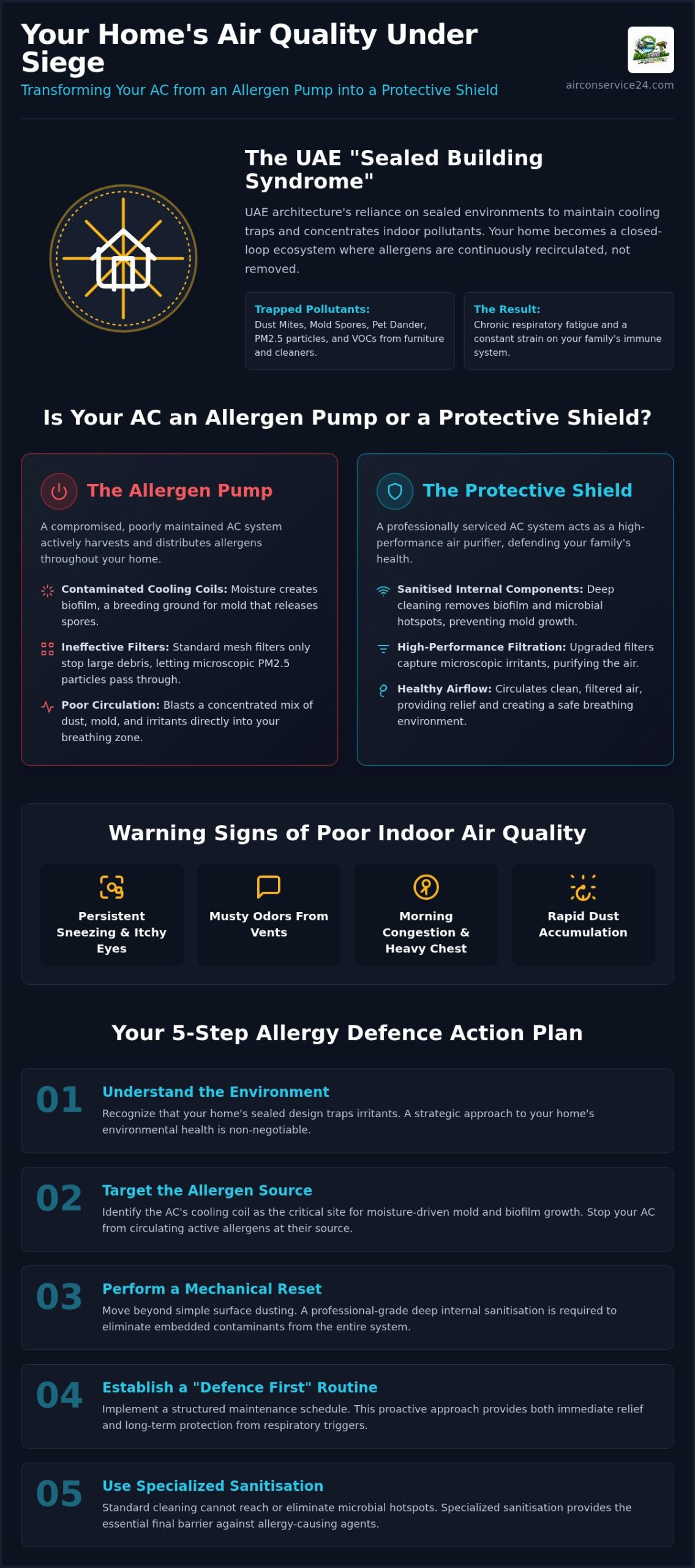
Indoor air quality (IAQ) is the measure of environmental health within your home’s interior, specifically concerning the air you breathe during the 90% of your life spent indoors in the UAE. While we often view our four walls as a barrier against the harsh desert climate, the reality is more complex. The UAE’s architecture relies on hermetically sealed environments to maintain cooling. This design choice often leads to “Sealed Building Syndrome,” where pollutants become trapped and concentrated. To effectively improve indoor air quality for allergies, you must first recognize that your home isn’t just a shelter; it’s a closed-loop ecosystem. Poor IAQ isn’t merely a nuisance. It’s a silent driver of chronic respiratory fatigue, putting constant strain on your immune system through exposure to dust mites, mold spores, and pet dander.
Why Your Home is Not the “Safe Haven” You Think
Outdoor dust and fine particulate matter, known as PM2.5, are persistent intruders. Even in a sealed home, these microscopic particles infiltrate through tiny gaps in window seals and door frames. Once inside, they mix with Volatile Organic Compounds (VOCs) emitted by high-end furniture finishes and common household cleaners. UAE national environmental standards set strict limits for these pollutants, such as keeping formaldehyde below 0.08 ppm, yet many homes exceed these levels without professional monitoring. Stagnant air behaves like a reservoir, trapping these allergens in a continuous loop where they’re repeatedly inhaled and recirculated by your cooling system. High-performance specialized equipment is often required to break this cycle and restore baseline health.
Recognizing the Symptoms of Poor IAQ
It’s easy to mistake indoor triggers for seasonal hay fever. However, if your symptoms persist regardless of the month, you’re likely dealing with a localized environmental issue. Morning congestion is one of the most reliable indicators of bedroom air quality failures. If you wake up with a heavy chest or itchy eyes that clear once you leave the house, your indoor environment is actively working against you. Other ready-to-act signs include persistent musty odors from vents and visible dust accumulation on surfaces within hours of cleaning. These aren’t just housekeeping frustrations. They’re clear signals that you need a comprehensive health audit to improve indoor air quality for allergies and protect your family’s long-term well-being.
The AC System: An Allergen Pump or a Protective Shield?
Your air conditioning system is the most critical variable in UAE allergy management. It doesn’t just regulate temperature; it’s the primary mechanism for air filtration and circulation. When properly maintained, it acts as a protective shield. However, if the mechanical cycle is compromised, the unit transforms into an allergen pump. The process is simple yet dangerous. Air is drawn from your rooms, passed over cooling coils, and redistributed. If those internal components are contaminated, your system is actively harvesting desert dust and mold, then blasting them into your breathing zone. To improve indoor air quality for allergies, you must shift your focus from the air you see to the mechanical path you don’t.
Biofilm and Microbial Growth in Cooling Coils
The cooling coil is the hidden epicenter of most indoor allergy triggers. As warm air meets the cold metal surface, heavy condensation occurs. In our humid climate, this moisture often fails to drain completely, creating a permanent damp environment. This leads to the development of biofilm, a thick, biological sludge that anchors itself to the fins. This isn’t just harmless grime; it’s a breeding ground for colonies that release aerosolized spores every time the fan engages. Breathing these biological agents can lead to chronic inflammation and severe asthma flare-ups. For a technical breakdown of how to prevent this buildup, consult our comprehensive guide on AC Maintenance UAE.
The Role of Air Filters in Allergy Defense
Standard mesh filters provided with most units are designed to protect the machinery, not your lungs. They capture large debris but allow microscopic irritants like PM2.5 and pollen to pass through effortlessly. Once a filter becomes “saturated,” the system’s static pressure increases. This often forces air to bypass the filter through tiny gaps in the housing, or it causes the filter itself to shed trapped pollutants back into the airstream. To effectively Control Indoor Allergens, high-allergy households should consider the following:
- Upgrade to filters with a MERV rating between 8 and 13 to capture finer particulates.
- Inspect filters every 30 days during peak summer months when the system runs 24/7.
- Ensure a perfect seal around the filter frame to prevent “air bypass” issues.
If you’ve noticed a musty odor or a spike in sneezing, your system’s internal defense has likely failed. You can restore your home’s safety by scheduling a professional AC sanitisation to eliminate these microbial hotspots at the source. This intervention is the only way to improve indoor air quality for allergies when the system has already reached a state of biological saturation.
Deep Cleaning vs. Standard Maintenance: What Allergy Sufferers Need
Standard maintenance in the UAE usually involves a quick filter rinse and a surface wipe. While this might keep your electricity bill stable, it does almost nothing to improve indoor air quality for allergies. Surface dusting is insufficient if the mechanical core of your system remains a reservoir for biological contaminants. For those suffering from chronic respiratory triggers, you need a “mechanical reset.” This is where deep cleaning enters the frame. It’s not a luxury service; it’s a clinical intervention designed to strip away the accumulated layers of dust, skin cells, and microbial growth that standard cleaning ignores. Professional sanitisation uses specialized anti-microbial agents to treat the system’s internal architecture, ensuring that the air delivered to your living space is medically clean rather than just cold.
As noted in The Inside Story: A Guide to Indoor Air Quality by the CPSC, biological contaminants like mold and dust mites are primary drivers of indoor health issues. In our sealed UAE environments, these pollutants have nowhere to go but into your lungs. Positioned as the “disciplined guardian” of your home health, professional deep cleaning acts as a hard barrier between these triggers and your family.
The Anatomy of a Professional Deep Clean
A true deep clean is a meticulous, multi-stage process that targets the hidden hotspots mentioned in previous sections. It begins with professional-grade pressure washing of the cooling coils to dislodge deep-seated allergens that a brush cannot reach. We then perform a comprehensive drain line flushing to prevent the stagnant water buildup that invites bacterial colonies. Finally, the blower fan, which is often caked in fine dust, undergoes full sanitisation. To achieve this level of precision, we utilize high-performance equipment specifically designed for the complex HVAC configurations found in modern UAE homes. This thoroughness ensures that every component in the air path is returned to its original, hygienic state.
Odour Removal: Eliminating the “Musty AC” Smell
If you detect a musty scent when your AC starts, you aren’t just smelling “old air.” You’re inhaling a direct indicator of active mold or bacterial metabolism occurring within your vents. These odours are chemical signals that your IAQ has reached a critical failure point. Standard air fresheners only mask the problem with additional VOCs, which can further irritate sensitive airways. Our sanitisation treatments neutralize these odours at the source by destroying the biological matter responsible for the smell. The result is more than just a fresh-smelling home; it’s the psychological relief and domestic harmony that comes from knowing your environment is safe. Reclaiming your home from these invisible irritants is the final step in a proactive allergy defense strategy.
How to Improve Indoor Air Quality: A Step-by-Step Allergy Action Plan
Adopting a “Defence First” mindset is essential for any resident looking to improve indoor air quality for allergies. In a climate where air conditioning runs nearly 24/7, passive management is a recipe for health failure. You must treat your home as a controlled environment where every variable is actively monitored. This proactive approach transforms your living space from a reactive allergy zone into a fortified sanctuary. By establishing a disciplined routine, you can significantly reduce the allergen load before it reaches your respiratory system.
Step 1: Master Your Humidity Levels
Maintaining indoor relative humidity between 40% and 50% is the golden rule for dust mite control. While national standards allow for slightly higher levels, allergy sufferers require a stricter limit to prevent triggers. High humidity acts as a catalyst for mold blooms on walls and inside ducts. Utilize your AC system’s “Dry Mode” during the transition months or invest in dedicated dehumidifiers for high-moisture areas like laundry rooms. Effective moisture control is the non-negotiable foundation of a truly hypoallergenic home. Without it, even the most expensive air purifiers will struggle to keep up with the rate of microbial growth.
Step 2: Establish a High-Frequency Filter Protocol
Standard advice to check filters every three months is dangerously inadequate for our environment. For high-allergy households, you must clean reusable mesh filters every two weeks without exception. If you use disposable high-efficiency filters, replace them every 45 to 60 days during peak summer. Clogged filters don’t just leak allergens; they restrict airflow and can lead to system freeze-ups. If your unit exhibits ice buildup or a total loss of cooling, professional AC repair is necessary to resolve the underlying restriction and restore safe airflow. Maintaining clean filters ensures that your system uses its specialized internal components effectively rather than bypassing them.
Step 3: Eliminate Textile Reservoirs
Heavy fabrics are the primary reservoirs for pet dander and dust mites. Minimize the use of thick curtains and wall-to-wall carpets, opting instead for hard flooring and washable window treatments. Invest in high-quality, anti-allergy protectors for all mattresses and pillows to create a physical barrier against microscopic irritants. Every week, wash all bedding and soft items at a minimum of 60°C to ensure dust mites are neutralized. To maintain this standard, follow this 5-step daily and weekly routine:
- Wipe high-traffic surfaces daily with damp microfibre to prevent dust suspension.
- Run HEPA air purifiers in bedrooms for at least 30 minutes before sleep.
- Vacuum all floors and remaining textiles weekly using HEPA-certified equipment.
- Clean AC filters bi-weekly to prevent allergen saturation.
- Inspect window seals monthly for signs of desert dust infiltration.
Consistency is your greatest ally in the fight against indoor triggers. Ensure your home remains a safe haven by booking a professional IAQ assessment to identify hidden vulnerabilities in your current setup. This disciplined approach is the most effective way to improve indoor air quality for allergies and maintain long-term domestic harmony.
Professional Sanitisation: The Final Barrier Against Allergy Triggers
While smart sensors can alert you to a decline in air standards, they’re powerless to physically remove the pathogens embedded in your HVAC infrastructure. To effectively improve indoor air quality for allergies, you must move beyond monitoring and into the practice of clinical restoration. DIY methods are fundamentally limited; they can’t reach the deep internal casing, the intricate fins of the cooling coil, or the rear of the blower wheel where the most dangerous microbial colonies reside. AirConService24 serves as the technical elite in air quality restoration, providing a sophisticated sanitisation process that acts as the final, impenetrable barrier between your family and persistent allergy triggers. Reclaiming your home’s air isn’t just a mechanical task. It’s a health intervention that restores domestic harmony and ensures your AC system functions as a high-performance air purifier.
The AirConService24 Methodology
Our approach is characterized by a blend of high-stakes urgency and professional reassurance. When a technician enters your home, they follow a highly structured, step-by-step workflow designed to eliminate customer anxiety through clear expectations and methodical execution. We prioritize the use of environmentally responsible, health-safe sanitizers that effectively neutralize biological contaminants and facilitate specialized odour removal without introducing secondary irritants into your breathing zone. This commitment to modern standards of excellence ensures that your environment remains safe for children with asthma and those with severe sensitivities. Recognizing that respiratory crises can happen at any hour, our team remains ready-to-act with 24/7 availability for families in urgent need of environmental relief.
Long-Term Maintenance for Sustained Relief
Achieving a hypoallergenic home isn’t a single event; it’s a continuous commitment to environmental hygiene. We suggest an annual or bi-annual deep cleaning schedule to ensure that your system never reverts to being an allergen pump. The cost-benefit analysis is clear. Investing in proactive sanitisation is significantly more economical than the cumulative price of reactive medical treatments, specialized air purifiers, and the chronic fatigue caused by poor sleep. By maintaining a clear maintenance schedule to improve indoor air quality for allergies, you transition from a state of constant vulnerability to one of confident authority over your home’s air quality.
Restore your home’s health with professional sanitisation today and experience the immediate relief of a clinically purified environment.
Take Command of Your Indoor Environment
Your home should be a sanctuary, not a source of respiratory stress. By understanding the mechanical cycle of your AC and implementing a disciplined maintenance routine, you’ve already taken the first steps toward a healthier living space. Remember that surface cleaning is only half the battle; real relief requires addressing the microbial hotspots within your cooling system. To effectively improve indoor air quality for allergies, you must transition from reactive dusting to proactive mechanical sanitisation.
Our expert technicians are available 24/7 across the UAE to provide the clinical intervention your home needs. Utilizing professional-grade deep cleaning equipment and specialized anti-microbial sanitisation treatments, we restore your system to its peak hygienic state. Don’t let hidden irritants dictate your family’s well-being or comfort. Schedule your professional AC Deep Cleaning and Sanitisation today and breathe with total confidence. You deserve a home that supports your health and provides lasting domestic harmony.
Frequently Asked Questions
Can an AC unit cause allergy symptoms?
Yes, an unmaintained AC unit is a primary driver of allergy symptoms in the UAE. It doesn’t just cool; it circulates air through internal components that can harbor dust, mold, and bacteria. When these contaminants are aerosolized, they trigger sneezing, itchy eyes, and congestion. Professional maintenance is the only way to ensure your system acts as a protective shield rather than a delivery mechanism for harmful environmental irritants.
How often should I clean my AC filters for allergies?
For households with allergy sufferers, you should clean reusable mesh filters every two weeks. High-efficiency disposable filters should be replaced every 45 to 60 days during peak summer months. In the UAE, the 24/7 operation of cooling systems leads to rapid allergen saturation. Ignoring this schedule allows particulates to bypass the filter and deposit directly on the coils, significantly increasing the allergen load within your home.
What is the best humidity level to prevent indoor allergies in the UAE?
You must maintain indoor relative humidity between 40% and 50% to effectively suppress dust mites and mold growth. While UAE national standards allow up to 60%, allergy sufferers require a stricter limit to prevent triggers. Excess moisture acts as a catalyst for biological blooms on cooling coils and within ductwork. Using the AC Dry Mode or dedicated dehumidifiers helps maintain this critical threshold for a truly hypoallergenic environment.
Does AC deep cleaning really improve air quality?
Deep cleaning is a clinical intervention that provides a mechanical reset for your entire system. Unlike standard maintenance, it utilizes professional-grade pressure washing and specialized equipment to remove deep-seated biofilm and microbial sludge from cooling coils. This process is essential to improve indoor air quality for allergies because it eliminates the physical source of contamination. By stripping away years of accumulated debris, you prevent the continuous recirculation of mold spores and fine desert dust.
Is it better to use an air purifier or clean the AC system?
You should prioritize cleaning the AC system, as it is the primary source of air distribution in your home. An air purifier only treats the air already present in the room, whereas a contaminated AC unit continuously pumps new irritants into the space. For the most effective strategy to improve indoor air quality for allergies, use professional sanitisation to clean the source and then supplement with HEPA purifiers for secondary filtration.
How do I know if my AC has mold inside it?
Persistent musty odours and visible black spotting on the vent louvers are the most common indicators of internal mold. You might also notice a spike in respiratory symptoms, such as morning congestion, specifically when the unit is running. If you detect these signs, it’s a ready-to-act situation requiring professional inspection. Mold anchors itself deep within the cooling coils and blower fans, where standard DIY cleaning methods simply cannot reach.
Can professional sanitisation remove pet dander from the air?
Professional sanitisation removes pet dander that has settled within the AC unit’s internal architecture. Dander is microscopic and sticky; it often bypasses standard filters to coat the blower fan and cooling coils. By using specialized anti-microbial agents and high-pressure equipment, technicians strip away these biological reservoirs. This prevents the system from repeatedly aerosolizing old dander, providing immediate relief for those with sensitive immune systems and high-stakes allergy needs.
Will improving indoor air quality help with my asthma?
Yes, optimizing your home’s air quality is a fundamental component of asthma management. Reducing the concentration of PM2.5, mold spores, and dust mites lowers the trigger load on your respiratory system. Clinical sanitisation ensures that your environment remains stable and safe, which directly reduces the frequency of flare-ups. A clean system provides the domestic harmony necessary for those with chronic conditions to breathe without constant irritation and health anxiety.