Why Your AC Smells Like Vinegar: Causes, Risks, and Solutions

Article by
Jon Bonnett
Australian Air Conditioning Specialist with extensive hands-on experience in AC servicing, deep cleaning, maintenance, and troubleshooting. Focused on high-quality workmanship, reliability, and professional service to UAE standards.
That sharp, pungent scent wafting through your living room isn’t just a minor annoyance; it’s a chemical warning sign that your indoor air quality is under immediate threat. You expect your air conditioning to provide a sanctuary from the intense UAE heat, yet when your ac smells like vinegar, it transforms your home into an uncomfortable environment. This sour odor often triggers immediate concerns about mold growth and the potential for expensive mechanical failures. We understand that your priority is the health of your family and the long-term efficiency of your cooling system.
In this guide, you’ll discover the exact reasons behind that biting vinegar scent and learn how to eliminate it permanently for a fresh, healthy home environment. We’ll identify the source of the problem, from clogged condensate lines to dirty evaporator coils, while providing clear solutions to ensure your system is thoroughly sanitised. By following our methodical approach, you can move from uncertainty to a state of domestic harmony with a system that operates at peak precision. We’ll explore the technical causes and the professional-grade steps needed to reclaim your air quality today.
Key Takeaways
- Identify why your ac smells like vinegar by understanding the chemical reaction between moisture, accumulated dust, and organic breakdown within your cooling system.
- Learn how to pinpoint the odor’s source by monitoring whether the scent remains constant or triggers only when the compressor activates.
- Discover the necessity of professional deep sanitisation using hospital-grade disinfectants to eliminate biological matter that basic cleaning cannot reach.
- Understand how to differentiate between localized issues and property-wide contamination to determine the scale of the required technical intervention.
- Establish a disciplined maintenance routine to prevent the recurrence of acidic odors and protect the health and well-being of your home environment.
Understanding the ‘Vinegar Smell’ in Your Air Conditioning System
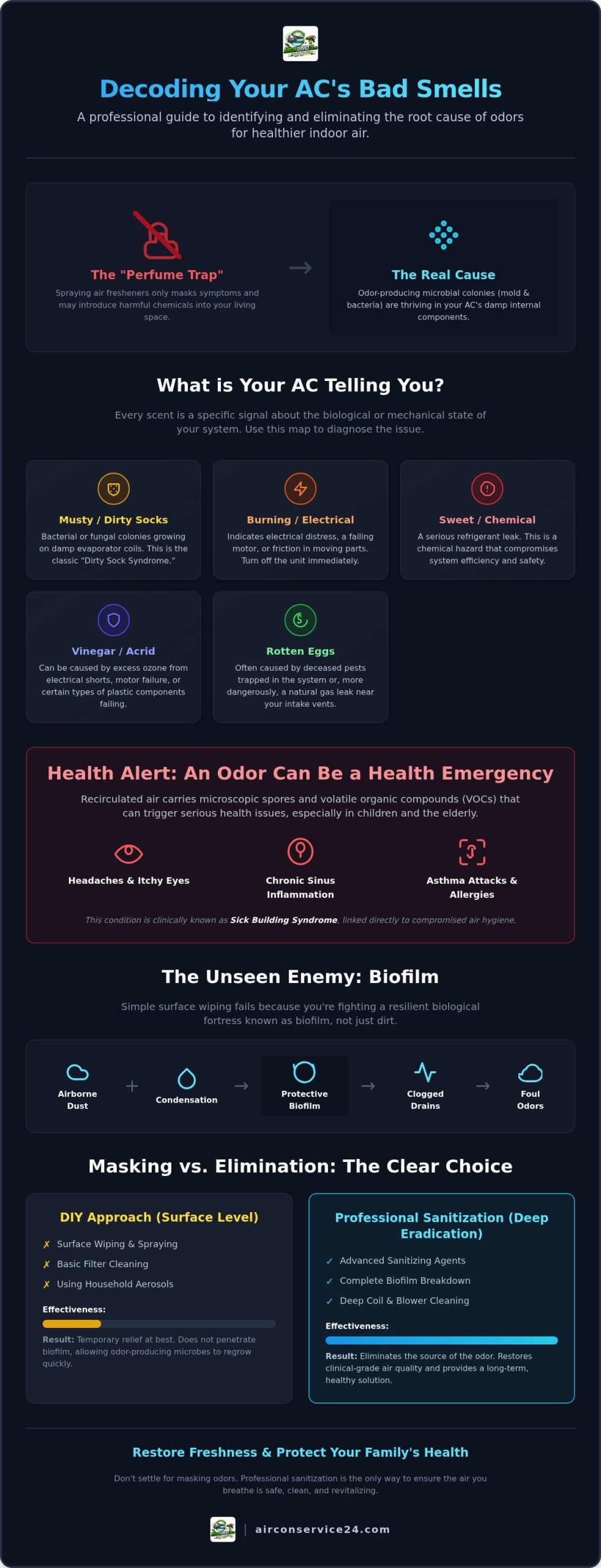
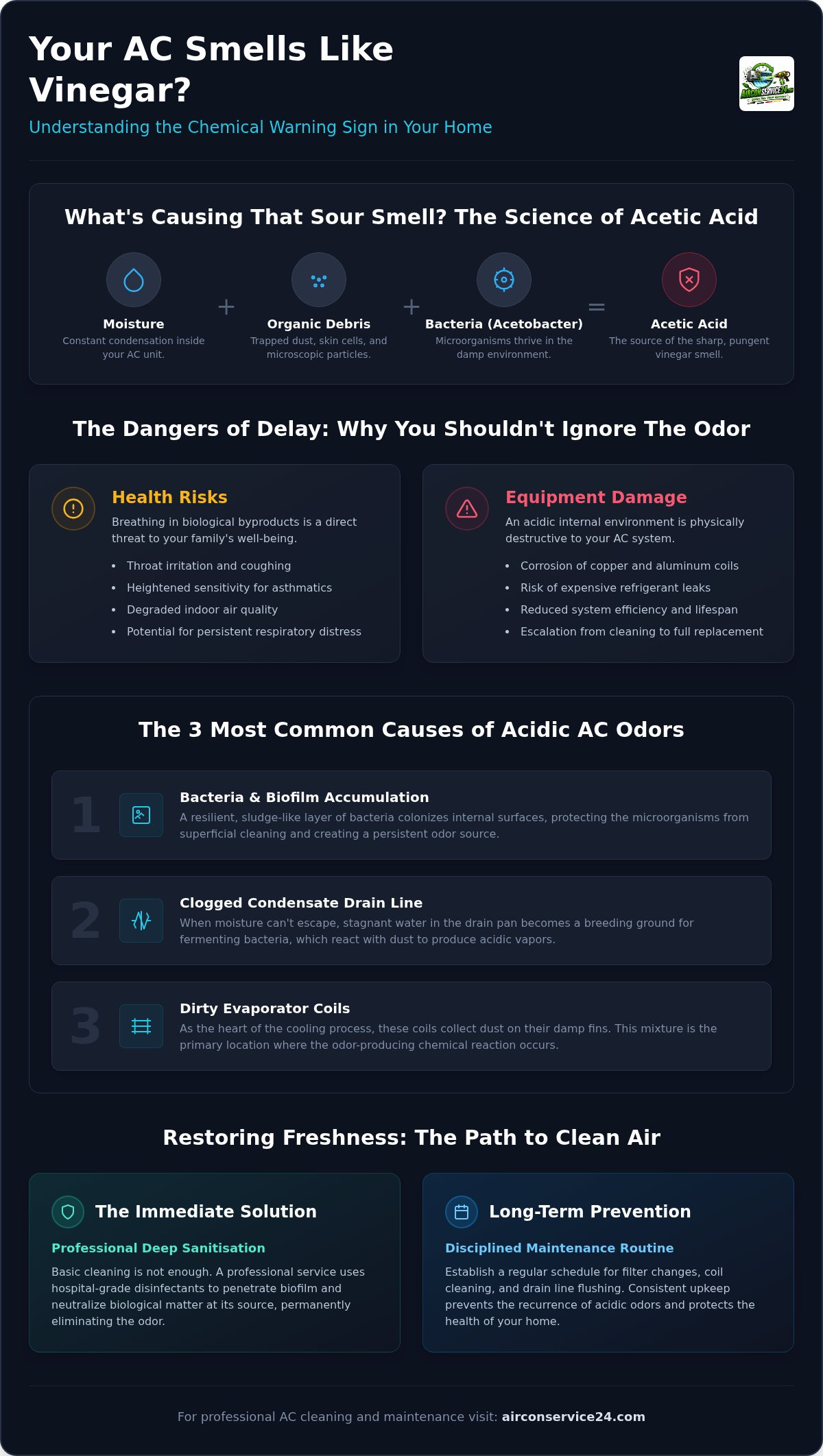
The sharp, acidic aroma of vinegar is unmistakable. When your ac smells like vinegar, it’s a signal that a specific chemical reaction is occurring within your HVAC unit. This isn’t a mere aesthetic issue; it’s the result of acetic acid formation. This occurs when organic matter, such as skin cells or microscopic dust particles, becomes trapped in the moist environment of your evaporator coils and begins to break down. This sharp odor indicates that organic matter is reacting with moisture in a way that suggests your system’s hygiene has been compromised.
The Chemical Signature of Acetic Acid
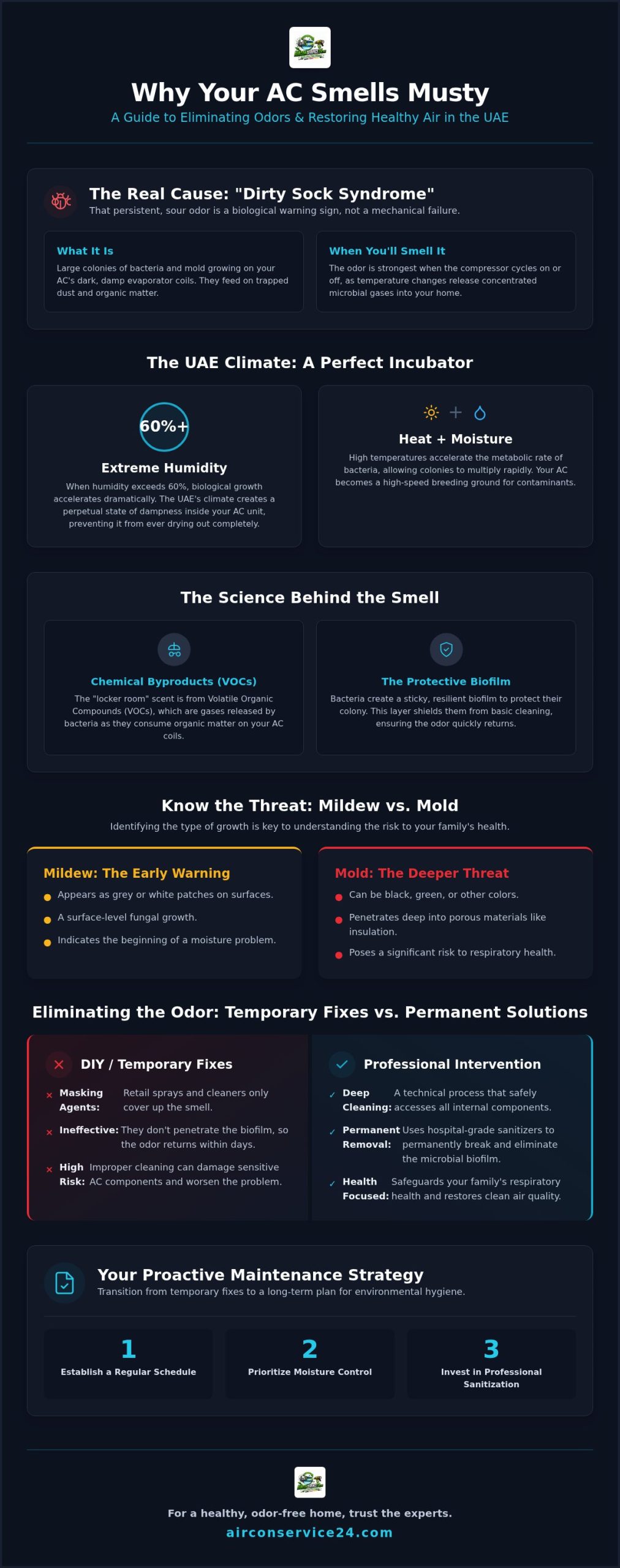
In the high-humidity environment of the UAE, condensation is constant. When this moisture mixes with accumulated debris, it creates a biochemical soup. Specific bacteria, most notably Acetobacter, thrive in these conditions. These microorganisms convert ethanol or other organic compounds into acetic acid through a fermentation-like process. This reaction is distinct from the damp, earthy scent of typical mildew, often referred to as “dirty sock syndrome.” While mildew smells musty, the presence of acetic acid creates a biting, pungent odor that cuts through the air. It serves as a precursor to more severe biological growth if you leave it unaddressed.
Why Ignoring the Scent is a Risk
Ignoring this scent is a gamble with your health and your assets. Understanding Indoor Air Quality is essential for any property owner, as the presence of acetic acid byproducts can lead to throat irritation, coughing, and heightened sensitivity for asthmatic residents. Breathing in concentrated biological byproducts isn’t just unpleasant; it’s a direct threat to your domestic harmony. If you don’t act, the ac smells like vinegar today but could lead to persistent respiratory distress tomorrow.
Beyond the human cost, an acidic environment is physically destructive. Constant exposure to low-pH vapors can lead to the premature corrosion of sensitive internal equipment, specifically the copper tubing and aluminum fins of your coils. This corrosion can eventually cause refrigerant leaks, which are far more expensive to repair than a standard cleaning. Delaying a professional inspection doesn’t just prolong the discomfort; it escalates the risk. What starts as a localized bacterial colony can quickly evolve into widespread contamination throughout your property. Acting now ensures that a routine sanitisation procedure doesn’t turn into a full-scale system replacement.
The 4 Most Common Causes of an Acidic AC Odor
While many online resources focus on automotive cooling, residential HVAC systems in the UAE face a unique set of challenges due to near-constant operation and extreme humidity. When your ac smells like vinegar, it’s rarely a simple mechanical failure. Instead, it’s typically the result of biological or chemical processes occurring deep within your unit’s internal components. Identifying the specific trigger is the first step toward restoring a fresh, healthy home environment.
Bacteria and Biofilm Accumulation
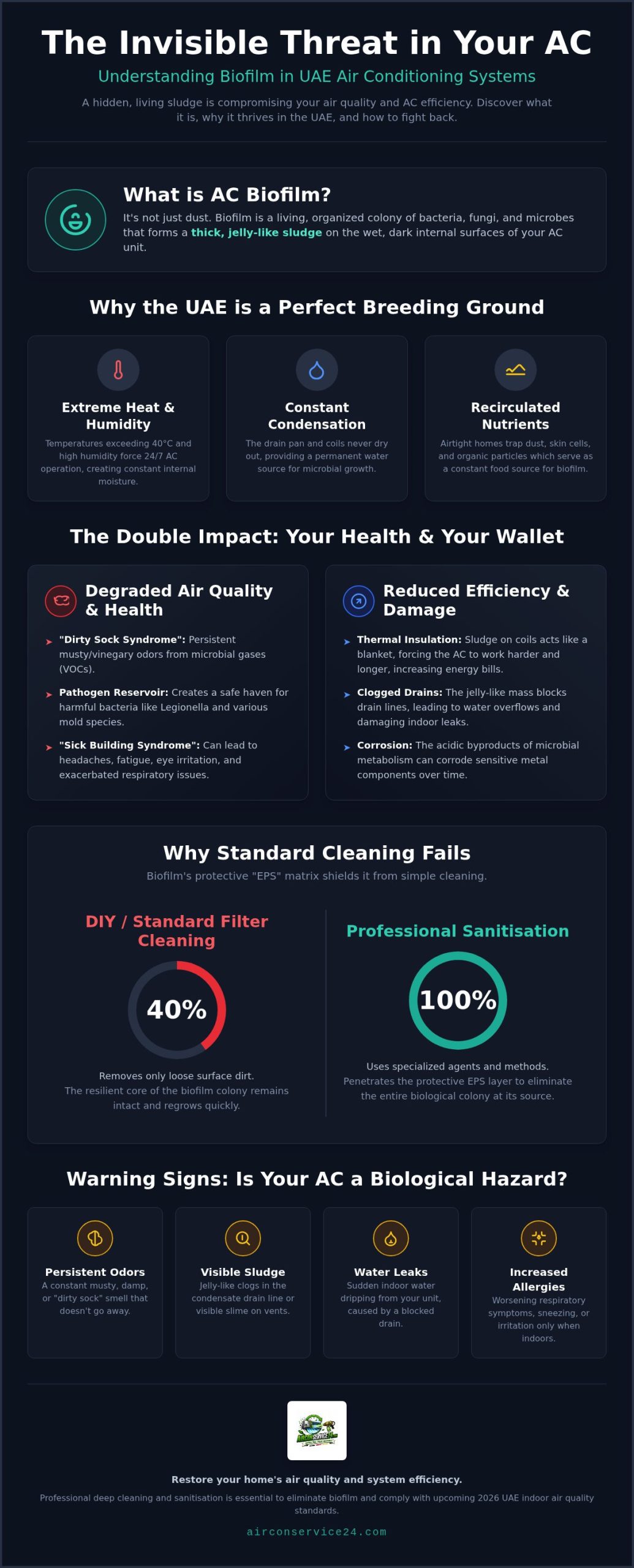
Biological growth is the primary culprit behind sharp, vinegary scents. In the damp interior of an air handler, bacteria don’t just float; they colonize. They create what specialists call biofilm, a resilient, sludge-like layer that adheres to internal surfaces. Biofilm is sophisticated. It acts as a protective shield for the bacteria, making them resistant to superficial cleaning sprays. This biological matrix allows colonies to thrive even when you think the system is clean. Eliminating this requires professional sanitisation to penetrate these layers and neutralize the odor at its source.
Clogged Condensate Drain Lines
Your AC doesn’t just cool the air; it removes massive amounts of moisture. This water is supposed to exit through a dedicated drain line. However, dust and organic debris often create blockages in the primary or secondary drain pans. When water stagnates in the high-humidity UAE climate, it quickly becomes a breeding ground for fermenting bacteria. This standing water reacts with the dust to produce acidic vapors. If you notice water spots near your unit or a sudden spike in indoor humidity alongside the scent, a clogged drain is likely the cause.
Dirty Evaporator Coils and Dust Build-up
The evaporator coil is the heart of your cooling process and the most common place for odors to originate. As air passes over the cold coils, moisture condenses on the metal fins. If your filters aren’t capturing every particle, dust accumulates on these damp surfaces. This dust acts as a concentrated food source for microorganisms. You can find several Common causes for a vinegar smell, but the interaction between organic dust and coil moisture is the most persistent in residential settings. Simple filter changes are often insufficient once the equipment itself is contaminated; the coils require a deep technical cleaning to remove the embedded matter.
Finally, it’s worth considering your air purification settings. Some electronic air cleaners produce trace amounts of ozone during the filtration process. In confined spaces, concentrated ozone can mimic a sharp, acidic scent that many homeowners confuse with vinegar. If your ac smells like vinegar only when specific purification modes are active, the issue might be electronic rather than biological. For a definitive diagnosis and a permanent fix, scheduling a professional odour removal assessment is the most methodical way to protect your home’s air quality.
Diagnosing the Source: Where Is the Smell Coming From?
Pinpointing the origin of an acidic odor requires a methodical approach to your cooling system’s operation. Start by observing the timing of the scent. If your ac smells like vinegar only when the compressor kicks in, the issue is likely concentrated on the evaporator coils where active condensation occurs. Conversely, a constant odor suggests a deeper contamination within the ductwork or a stagnant drain line that isn’t clearing properly. You should also evaluate whether the scent is localized to a single room or present throughout the entire property. Localized smells often point to a specific indoor unit’s failure, while a building-wide aroma indicates a systemic maintenance deficit.
Perform a quick walk-around of your indoor unit. Look for visible moisture on the casing or small pools of water on the floor. In the high-demand environment of the UAE, even a minor leak can lead to rapid bacterial fermentation. A visual inspection of your air filters is your next step. If you notice heavy dust saturation or dampness, the filters are no longer protecting the internal components from organic debris.
Inspecting the Filter and Vents
Safely remove your filters and hold them up to a bright light. You’re looking for more than just dust; check for grey or black spotting, which are clear indicators of microbial activity. These spots often correlate with the health risks of mold exposure, making immediate replacement or sanitisation a priority. Next, examine your vent covers. Look for “ghosting,” which appears as dark dust streaks or smudges around the louvers. This suggests that the contamination isn’t just on the surface but is being pushed through the system from the internal equipment.
Checking the Drain Pan for Standing Water
The condensate pan is a common site for “sludge” or biofilm to accumulate. Locate the pan beneath your indoor coils and check for discoloured, stagnant water. If the vinegar scent is significantly more concentrated at this drainage point, you’ve found your primary source. The water should be clear and moving freely. If it looks milky or gelatinous, a blockage is present. Don’t attempt to pour harsh DIY chemicals or bleach down the drain. These substances can react poorly with the plastic components or copper piping, leading to brittle lines and future leaks. A disciplined guardian of the home environment knows that while a visual check is helpful, professional-grade intervention is required to safely clear these blockages without damaging the system.
When your ac smells like vinegar, surface-level sprays and household cleaners won’t solve the underlying biochemical issue. You need a methodical, high-stakes response to ensure the safety of your home environment. Professional intervention moves beyond masking scents; it targets the molecular structures of acetic acid and the biological colonies producing them. Our approach as a disciplined guardian of your indoor air quality is to eliminate the threat through advanced technical procedures that standard cleaning simply cannot match.
The Role of Deep Cleaning and Sanitisation
Deep cleaning is a comprehensive technical process that involves the total removal of biological matter from evaporator coils and blower fans. We utilize specialized pressure washing techniques to dislodge the resilient biofilm layers that protect bacteria from common cleaning agents. This is followed by professional sanitisation using hospital-grade disinfectants. These biocides are specifically formulated to kill microorganisms at the source while remaining safe for residential air circulation. Technicians also clear the entire condensate system to ensure zero standing water, effectively removing the environment required for acidic reactions to occur.
UV Light and Advanced Odour Removal
For properties facing persistent issues, installing UV-C lamps within the air handler is a proactive solution. These lamps provide continuous sterilization, breaking down the DNA of mold and bacteria before they can colonize your internal components. Additionally, specialized carbon filtration can be integrated to neutralize persistent chemical odors and volatile organic compounds. This multi-layered approach ensures your indoor air remains pristine regardless of the intense external humidity found across the UAE.
Long-term success requires precise system calibration. By ensuring your AC is correctly removing humidity, you prevent the moist conditions that lead to fermentation. This proactive strategy is a core component of AC maintenance in the UAE, where the climate is particularly aggressive. A disciplined specialist doesn’t wait for a crisis to act; they establish a routine that prioritizes hygiene and mechanical integrity. System calibration ensures that your unit operates with the precision needed to keep your home fresh and your family safe.
If you’re currently dealing with a sharp, acidic scent, don’t delay the necessary technical intervention. Contact our experts for professional odour removal and sanitisation to restore your home’s air quality immediately.
Restoring Freshness with Expert AC Maintenance
A pristine cooling system is more than a mechanical requirement; it’s the foundation of domestic harmony and a comfortable lifestyle. When your ac smells like vinegar, the atmosphere of your home is compromised, creating a high-stakes situation that demands an authoritative response. Our professional technicians approach these issues with a methodical, calm demeanor, ensuring that your sanctuary is restored quickly and effectively. We prioritize transparency, providing you with a clear understanding of the technical root cause and the specific steps required to eliminate it permanently. This directness eliminates customer anxiety, replacing worry with the confidence that your home is in expert hands.
Immediate action is essential. If you delay, contaminants and biological byproducts can migrate through the ductwork, leading to widespread air quality issues. By acting decisively, you protect both your health and your mechanical equipment. A system that is left to circulate acidic vapors will eventually suffer from internal degradation, turning a simple sanitisation task into a complex repair project.
Why Professional Sanitisation Outperforms DIY
Many homeowners attempt to solve the issue using household vinegar or bleach. This is a mistake. Introducing acidic or corrosive household chemicals into your unit can damage sensitive aluminum fins and copper tubing, leading to brittle components and refrigerant leaks. These DIY methods often fail because they only treat the surface. Professional sanitisation utilizes specialized tools designed to reach deep into the plenum and blower housing, where biofilm often hides. We use industry-specific biocides that achieve total odour elimination while preserving the integrity of your system’s internal components. This thoroughness ensures that even if your ac smells like vinegar today, the scent won’t simply return after the first few hours of operation.
Establishing a Preventive Maintenance Routine
The UAE’s high-dust and high-heat environment places extreme stress on HVAC systems. In these conditions, quarterly inspections aren’t a luxury; they’re a necessity for maintaining environmental hygiene. Regular technical intervention prevents the accumulation of the organic matter that causes your system to fail. Securing a reliable AC repair service gives you the peace of mind that your home environment is being monitored by a disciplined guardian. This proactive strategy doesn’t just keep the air fresh; it significantly extends the lifespan of your cooling investment, saving you from the high costs of premature system replacement. Professional maintenance ensures your unit remains a reliable responder against the heat, operating with the precision and excellence you expect from a premium service.
Reclaim Your Pure Home Environment
When your ac smells like vinegar, it’s a signal that your indoor sanctuary has been compromised by biological growth and chemical reactions. We’ve explored how acetic acid forms from trapped organic matter and why ignoring this pungent warning sign risks both your respiratory health and the longevity of your cooling equipment. A disciplined approach to maintenance is the only way to ensure these contaminants don’t spread through your ductwork. You now understand that surface-level cleaning isn’t enough to penetrate resilient biofilms that protect bacteria from standard methods.
You deserve a living space defined by domestic harmony and fresh air. Our team provides 24/7 emergency response for urgent odour issues, utilizing specialized deep cleaning and sanitisation experts to deliver reliable cooling solutions across the UAE. We act as the proactive problem-solver your home needs to maintain modern standards of excellence and mechanical integrity. Restore fresh air to your home with professional AC sanitisation today. Take the first step toward a healthier, more comfortable environment and breathe easy once again.
Frequently Asked Questions
Is the vinegar smell from my AC dangerous to my health?
Breathing in these acidic vapors is a direct risk to your health, as the scent indicates active biological growth. These byproducts can cause respiratory irritation, coughing, and throat discomfort, particularly for residents with asthma or allergies. When your ac smells like vinegar, it’s a sign that your indoor air quality has fallen below safe standards. Immediate professional sanitisation is required to eliminate these airborne contaminants and restore a healthy home environment for your family.
Can I use an air freshener to get rid of the vinegar scent?
Air fresheners are ineffective because they only mask the symptoms without addressing the underlying biochemical reaction. Sprays add volatile organic compounds to your air, which can actually worsen the situation when mixed with existing pollutants. To permanently eliminate the scent, you need professional odour removal that neutralizes acetic acid molecules at the source. This methodical approach ensures the biological colonies causing the smell are completely eradicated rather than just temporarily hidden by artificial perfumes.
How long does a professional AC sanitisation take to remove odours?
A professional sanitisation procedure typically takes between 60 and 90 minutes per indoor unit. This timeframe allows our technicians to perform a methodical deep cleaning of the evaporator coils, blower housing, and condensate drain lines. The duration may vary based on the level of biological accumulation and the complexity of your specific system. We prioritize precision and thoroughness to ensure the sharp vinegar scent is removed completely, providing you with immediate and lasting relief.
Will a simple filter change stop the vinegar smell?
A filter change is rarely enough to stop an acidic odor once it has developed. While clean filters prevent new debris from entering, the vinegar scent usually originates from biofilm already established on the evaporator coils or in the drain pan. When your ac smells like vinegar, the contamination is already deep within the internal components. You need a technical intervention that includes deep cleaning and sanitisation to reach the areas where standard filters simply cannot help.
What happens if I ignore the acidic smell in my air conditioner?
Ignoring the scent leads to the premature corrosion of your unit’s internal copper and aluminum components. Over time, these acidic vapors cause microscopic pits in the coils, which eventually lead to expensive refrigerant leaks and total system failure. Beyond mechanical damage, the biological growth will continue to spread throughout your property’s ductwork. This escalates a simple cleaning task into a high-stakes crisis involving widespread contamination and significantly higher repair costs for your cooling system.
Can a clogged drain line really cause a vinegar odour?
A clogged drain line is a very common cause of this specific odor. When water stagnates in the drain pan due to a blockage, it mixes with accumulated organic dust and skin cells. In the high-humidity environment of the UAE, this mixture undergoes a fermentation-like process that produces acetic acid. This chemical reaction is what creates the sharp, vinegary scent. Clearing the blockage and sanitising the pan is the only way to stop this process effectively.
How often should I have my AC deep cleaned to prevent smells?
In the aggressive UAE climate, we recommend a professional deep cleaning every three to four months. The combination of high external temperatures and constant dust levels means that organic matter accumulates much faster than in other regions. Quarterly inspections allow a disciplined guardian to identify potential issues before they turn into pungent odors. Regular maintenance ensures your system operates at peak efficiency while maintaining the highest standards of hygiene and domestic harmony in your home.
Is the vinegar smell covered under a standard AC maintenance contract?
Standard maintenance contracts typically cover routine inspections and basic filter cleaning, but specialized odour removal often requires a separate, more intensive deep cleaning service. It’s important to review your specific agreement to understand the scope of work included. Our comprehensive maintenance plans are designed to be transparent, offering clear expectations for sanitisation and technical repairs. We focus on providing a proactive solution that keeps your cooling system operating reliably and without unpleasant scents.
8 Critical Signs of Mold in Air Vents: A Homeowner’s Checklist for 2026

Article by
Jon Bonnett
Australian Air Conditioning Specialist with extensive hands-on experience in AC servicing, deep cleaning, maintenance, and troubleshooting. Focused on high-quality workmanship, reliability, and professional service to UAE standards.
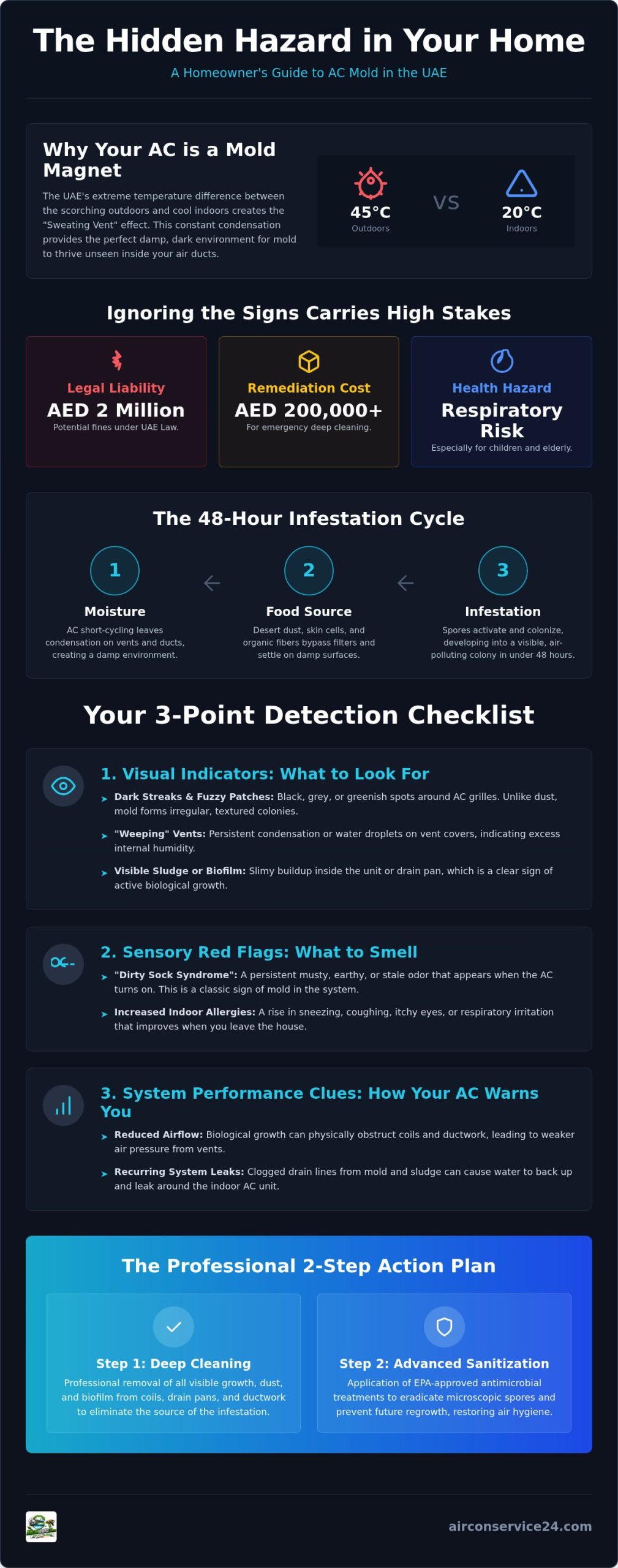
In the UAE, ignoring a musty odor in your living room is no longer just a comfort issue; it’s a legal and financial liability that can result in fines of up to AED 2 million under Law No. (3) of 2026. You’ve likely noticed a persistent, earthy smell or dark spotting around your AC grilles and felt a growing sense of anxiety about your children’s respiratory health. It’s a common concern in our humid climate where condensation cycles create the perfect breeding ground for biological growth. You know that a simple surface wipe isn’t enough to protect your home’s air quality.
This guide will help you identify the critical signs of mold in air vents before these microscopic spores impact your family’s health or lead to emergency remediation costs that can exceed AED 200,000. We’ll provide clear criteria for spotting hidden growth, explain the physiological risks involved, and outline the advanced sanitisation protocols required to restore environmental hygiene. By the end of this checklist, you’ll have a professional roadmap to ensure your cooling system remains a source of comfort rather than a hidden hazard.
Key Takeaways
- Understand how the UAE’s extreme temperature differentials create the “sweating vent” effect that serves as a primary precursor for biological growth.
- Identify the specific visual signs of mold in air vents, including dark streaks and fuzzy patches that indicate an active colony.
- Recognize the sensory red flags, such as the persistent “Dirty Sock Syndrome” odor, which signal compromised air hygiene before health symptoms escalate.
- Learn why recurring system leaks and reduced airflow are often mechanical indicators of a deeper biological obstruction within your cooling unit.
- Discover the professional two-step action plan for deep cleaning and sanitisation required to eradicate spores and restore domestic harmony.
The UAE Environment: Why Your Air Vents Are Prone to Mold
The UAE’s climate is a study in physical extremes. During peak summer months, outdoor temperatures frequently surge to 45°C, while indoor living spaces are maintained at a crisp 20°C. This 25-degree differential is the primary driver of moisture accumulation within your cooling infrastructure. When warm, humid air makes contact with the chilled surfaces of your supply grilles, it triggers the “sweating vent” phenomenon. This isn’t just a minor cosmetic nuisance; it’s the critical precursor to a biological infestation. If you’re searching for the early signs of mold in air vents, you must first understand that your AC is effectively a giant dehumidifier that occasionally fails to drain its own success.
HVAC mold is a persistent Indoor mold species that thrives in the dark, damp recesses of your ductwork. Unlike surface mildew that you might find on a bathroom tile, this biological contaminant embeds itself into the porous insulation and dust layers inside your vents. It stays hidden, releasing spores into the airstream every time the compressor kicks in. Recognizing the signs of mold in air vents requires a disciplined approach to home hygiene, acknowledging that your cooling system is a high-performance environment where small moisture imbalances lead to rapid, hidden growth.
The Condensation Cycle in High-Performance ACs
Moisture is the catalyst for every mold colony. In many modern UAE villas and high-rise apartments, AC units often “short-cycle,” which means they turn on and off rapidly to maintain a specific temperature setpoint. While this keeps you cool, it often prevents the system from completing a full dehumidification cycle. Instead of being drained away, moisture clings to the vent supply grills and the internal lining of the plenum. This standing water, trapped in a lightless environment, creates a perfect incubator. If you notice consistent water droplets hanging from your ceiling vents, the internal humidity within your ductwork has already reached a threshold where mold can flourish.
Dust and Debris: The Fuel for Biological Growth
Mold requires more than just water; it needs a steady organic food source. Fine desert dust is ubiquitous across the region, and much of it is small enough to bypass standard AC equipment filters. This dust isn’t merely mineral sand; it’s a complex cocktail of organic matter, including skin cells, fabric fibers, and microscopic plant debris. When these particles settle on damp internal surfaces, they provide the “soil” mold needs to take root.
- Filter Bypass: Micro-particles accumulate on the evaporator coils and the back of vent louvers.
- Spore Colonization: Dormant spores land on this damp organic layer and activate almost immediately.
- Active Infestation: Within 48 hours, a single spore can develop into a visible colony that begins to compromise your air quality.
Maintaining clean vents is no longer about aesthetics. It’s a necessary step in home sanitisation to ensure your mechanical systems don’t become a delivery mechanism for biological pollutants.
Visual Indicators: The Physical Checklist for Mold Detection
A visual inspection serves as your first line of defense in maintaining home hygiene. While many homeowners mistake dark accumulation for simple desert dust, specific physical characteristics distinguish biological growth from inert debris. One of the most telling signs of mold in air vents is the presence of black, grey, or greenish-brown “fuzzy” patches clustered around the edges of the supply grilles. Unlike dust, which settles evenly across surfaces, mold often forms irregular, circular colonies that appear to have a three-dimensional texture. If you notice dark streaks spreading from the grill across your ceiling or adjacent walls, this indicates that spores are being actively transported by the airflow and taking root in the surrounding porous materials.
Persistent moisture is another critical indicator. “Weeping” vents that remain damp even during periods of lower humidity suggest a failure in the system’s ability to manage condensation. This standing water often leads to the accumulation of visible sludge or biofilm within the primary AC equipment. According to EPA guidance on mold in air ducts, substantial visible mold growth is a definitive reason to pursue professional remediation. If you identify these physical markers, a comprehensive sanitisation of your cooling system is necessary to prevent further environmental degradation.
Identifying Different Mold Presentations
Distinguishing between household dust and mold requires a methodical eye. Grey dust is typically dry and breaks apart easily when touched with a gloved finger. In contrast, mold colonies often exhibit a “velvety” or “slimy” texture depending on the moisture levels. It’s also vital to realize that mold frequently initiates on the back of the grill or the internal lip of the plenum where condensation is highest. By the time it becomes visible on the exterior blades, the internal infestation is likely significant. Look for clusters that seem to “bloom” rather than just settle.
Signs of Moisture Damage Around Vents
The area surrounding your vents often tells a story that the metal grilles hide. Watch for peeling paint or bubbling wallpaper immediately adjacent to the air supply, as these are signs of localized high humidity and water intrusion. Yellow or brown water staining on ceiling tiles or drywall suggests that water is pooling within the ductwork and leaking through the joints. You can perform a preliminary check by using a high-powered flashlight to inspect the first few inches of the duct behind the louver. If the internal insulation appears damp or discolored, the biological risk is high and requires immediate professional attention.
Sensory Red Flags: Detecting What You Cannot See
Visual spotting is a late-stage indicator, but your senses often detect the signs of mold in air vents long before a colony becomes visible. The most common sensory red flag is known as “Dirty Sock Syndrome.” This persistent, musty odor is most pungent the moment your AC system starts up after being inactive for several hours. It isn’t just a nuisance; it’s a warning that your cooling system is circulating biological contaminants throughout your living spaces. When your home sanctuary begins to smell like a damp locker room, the environmental hygiene of your property has been compromised.
Beyond odors, your physical well-being provides critical data. Many residents experience persistent headaches, unexplained fatigue, or a general sense of “brain fog” that aligns perfectly with AC usage cycles. If these symptoms dissipate when you leave the house but return within an hour of coming home, the air quality is likely the culprit. This leads to a significant psychological impact, as the fear of invisible health threats creates anxiety and disrupts domestic harmony. Homeowners often report a loss of confidence in their living environment, feeling that their very air is working against their family’s health.
The Anatomy of the Musty Odour
The scent you’re breathing is actually a collection of Microbial Volatile Organic Compounds (mVOCs). These are chemical gases released by mold as it digests organic debris trapped in your vents. The odor is more intense after the system has been dormant because these gases accumulate in the still air of the ductwork. These pungent gases are the chemical signature of active biological metabolic processes occurring within your hidden cooling infrastructure. Relying on air fresheners only masks the symptom; it doesn’t address the source of the gas production.
Health Symptoms to Monitor
Pay close attention to “AC flu,” a condition where family members suffer from chronic sneezing, watery eyes, or a dry cough that only triggers indoors. For residents with pre-existing conditions like asthma or seasonal allergies, these spores can trigger severe respiratory distress.
- Respiratory Irritation: Chronic throat clearing or a persistent “tickle” that won’t go away.
- Skin Sensitivities: Unexplained rashes or itchy skin that worsens in air-conditioned rooms.
- Sleep Disruption: Difficulty breathing at night, leading to poor rest and daytime irritability.
If your children seem to be in a constant state of low-grade illness, it’s time to stop treating the symptoms and start inspecting the air supply. Professional intervention is the only way to ensure these microscopic triggers are permanently removed from your home environment.
Your cooling system often communicates its distress through mechanical failure long before visual evidence appears on the grilles. One of the most overlooked signs of mold in air vents is a noticeable, steady reduction in airflow. When biological growth is left unaddressed, it doesn’t just stay in the ducts; it colonizes the very components responsible for heat exchange. This creates a physical barrier that forces your system to work harder while producing less cooling. If you find yourself constantly lowering the thermostat without a corresponding drop in room temperature, your system is likely fighting an internal biological obstruction.
These performance issues aren’t merely mechanical inconveniences. They’re indicators of a compromised environment. A struggling AC unit consumes more electricity, leading to unexplained spikes in your monthly utility bills. This strain is often the result of the system running for extended periods to compensate for poor heat exchange. Adhering to a disciplined schedule for AC maintenance in the UAE is the only reliable way to identify these performance-robbing contaminants before they lead to a total system breakdown.
Airflow Restriction and Coil Contamination
Mold “mats” are a common but hidden reality in neglected systems. As spores settle on the damp evaporator coils, they weave together with fine dust to form a thick, felt-like layer over the cooling fins. This mat acts as an insulator, preventing the refrigerant from effectively absorbing heat from the air passing through. The feedback loop is destructive: poor cooling leads to longer run times, which generates more condensation, which in turn fuels more mold growth. Eventually, this restricted airflow causes the coils to drop below freezing, leading to ice formation and significant water damage when the unit finally thaws.
The Relationship Between Clogs and Mold
A leaking AC is frequently a biological hygiene problem rather than a simple plumbing issue. Stagnant water in the drain line creates a “mold nursery” where bacteria and fungi thrive, eventually forming a thick, jelly-like substance known as biofilm in AC units. This sludge is the primary cause of frequent water leaks and drain pan overflows. If your condensate pump is struggling or making unusual grinding noises, it’s likely trying to process this biological debris. When water backs up into the system, it provides the final ingredient needed for a full-scale mold explosion within your supply vents. To prevent these mechanical and hygiene failures, you should book a professional AC Deep Cleaning and Sanitisation to clear the system of all biological obstructions.
Professional Action Plan: Eradicating Mold at the Source
Once you have identified the signs of mold in air vents, immediate and methodical intervention is required to prevent further environmental degradation. A superficial response will only allow the colony to regroup. Our professional action plan follows a disciplined, five-step protocol designed to eliminate biological contaminants and restore the integrity of your home’s air supply:
- Step 1: Comprehensive Diagnostic: We conduct a thorough inspection of the air handler, plenum, and supply vents to map the extent of the infestation.
- Step 2: Deep Cleaning: This involves the physical removal of mold colonies, dust mats, and biofilm from internal surfaces using specialized vacuum systems.
- Step 3: Professional Sanitisation: We apply specialized, non-toxic biocides that penetrate porous materials to kill dormant spores without introducing harsh chemicals into your home.
- Step 4: Advanced Odour Removal: Utilizing molecular neutralizers, we eliminate lingering mVOCs to ensure your living space smells fresh and clean.
- Step 5: Post-Treatment Verification: A final assessment of airflow and air quality ensures the system is operating at peak efficiency and hygiene standards.
This structured approach moves rapidly from identifying the problem to delivering a comprehensive solution. It ensures that every mechanical component, from the blower fan to the furthest vent, is returned to a state of clinical hygiene.
Why Surface Wiping Fails
Many homeowners attempt to resolve the signs of mold in air vents with a simple cloth and household bleach. This is a critical error. Mold spores are microscopic and often hide deep within the fibrous insulation of your ductwork where a wipe cannot reach. Additionally, household bleach is composed mostly of water; while the chlorine evaporates quickly, the water remains and can actually encourage mold growth on porous surfaces. To truly eradicate an infestation, high-pressure cleaning of the evaporator coils is necessary to remove the “mats” that surface cleaning simply cannot touch.
The Value of Professional Sanitisation
Professional sanitisation goes beyond simple dirt removal. Our treatments create a microscopic protective barrier on your AC equipment, making it difficult for new spores to take root. We utilize eco-friendly disinfectants that are tough on biological growth but safe for your family and pets. This proactive guardianship of your home environment is an essential component of a comfortable lifestyle in the UAE’s challenging climate. Don’t let hidden growth compromise your family’s health. Book your professional AC Deep Cleaning and Sanitisation today to restore your home’s air hygiene.
Securing Your Home’s Environmental Future
Maintaining a healthy indoor environment in the UAE requires constant vigilance against biological contaminants. You’ve learned that the signs of mold in air vents range from subtle musty odours to visible circular colonies and restricted airflow. Ignoring these indicators compromises your family’s respiratory health and leads to significant mechanical strain on your cooling system. Surface cleaning is simply insufficient for eradicating deep-seated spores; true air hygiene demands a professional, methodical approach to sanitisation.
Our team acts as the disciplined guardian of your domestic harmony. With 24/7 Emergency AC Support and Certified Technicians for National UAE Coverage, we’re ready to respond to your home’s needs at any hour. We provide Specialized Sanitisation & Odour Removal to ensure your system remains a source of comfort rather than a hidden hazard. Don’t wait for health symptoms to escalate before taking action. Restore your home’s air hygiene with expert AC Deep Cleaning and reclaim your peace of mind. Your family deserves the highest standard of indoor air quality every day of the year.
Frequently Asked Questions
Is mold in air vents dangerous to my health?
Yes, it’s a significant health risk. Spores use your AC as a delivery system for biological contaminants. When the system runs, it distributes triggers that cause asthma, chronic coughing, and watery eyes. In the UAE’s indoor-centric lifestyle, breathing these spores for extended periods can lead to long-term respiratory sensitivity. Protecting your family’s health requires immediate sanitisation once you identify the signs of mold in air vents.
Can I clean mold out of my air vents myself?
DIY cleaning is generally ineffective because surface wiping cannot reach the microscopic roots embedded in porous insulation. Using household bleach often introduces more moisture, which can actually accelerate fungal growth on porous surfaces. Professional intervention is necessary to access the evaporator coils and internal plenums. Attempting to clean it yourself without specialized equipment often just agitates the spores, spreading the contamination further throughout your living room and bedrooms.
How much does professional AC mold removal cost in the UAE?
Professional costs in the UAE vary depending on the scope of the contamination. Industry data for 2026 suggests that basic residential mold removal services can start around AED 550, while comprehensive remediation for larger systems can range from AED 1,500 upwards. Preventative risk assessments are also available for premium properties. Investing in professional sanitisation is significantly more cost-effective than facing the AED 20,000 to AED 200,000 fees often associated with emergency structural remediation.
Will mold in my air vents spread to the rest of my house?
Yes, your HVAC system acts as a primary vector for cross-contamination. Once mold establishes a colony in the vents, it releases millions of microscopic spores into the airstream. These spores eventually settle on soft furnishings, carpets, and porous wall surfaces throughout your home. In the high humidity of the UAE summer, these settled spores can quickly start new colonies in other rooms, leading to a widespread infestation that requires much more extensive cleaning.
What is the difference between dust and mold in air vents?
Distinguishing between the two is vital for home hygiene. Dust is typically dry, grey, and accumulates uniformly across the vent louvers. In contrast, the signs of mold in air vents include irregular, circular “fuzzy” patches or a slimy, dark biofilm. While dust is an aesthetic issue, mold is a biological contaminant that releases pungent mVOCs. If the dark spots appear to be growing or spreading across the ceiling, you’re dealing with an active colony.
How often should I have my AC vents cleaned to prevent mold?
In the UAE’s extreme climate, we recommend a professional deep cleaning and sanitisation at least every six months. The constant temperature differential between the 45°C outdoors and 20°C indoors creates a permanent condensation cycle. Regular maintenance ensures that fine desert dust doesn’t accumulate to provide a food source for spores. This proactive schedule is the most effective way to prevent biological growth from ever taking root in your cooling infrastructure.
Does a musty smell always mean there is mold in the AC?
A persistent musty odor, often called “Dirty Sock Syndrome,” is a definitive indicator of biological activity. While it can occasionally be caused by stagnant water in a blocked drain line, that water quickly becomes a breeding ground for mold. If the smell is most intense when the system first starts, it confirms that gases from a colony have accumulated in the ductwork. You should never ignore these sensory red flags as they signal compromised environmental hygiene.
What happens if I ignore the signs of mold in my air vents?
Ignoring these signs leads to a dangerous decline in air quality and potential system failure. Mechanically, biological “mats” will eventually freeze your coils and cause expensive water damage. Legally, under the nation’s updated building safety regulations (Law No. 3 of 2026), owners face significant responsibilities for maintenance, with non-compliance fines reaching up to AED 2 million. Beyond the financial risk, the long-term impact on your family’s respiratory well-being is a high price to pay for delayed maintenance.
Improve Indoor Air Quality for Allergies: UAE Home Guide
Article by
Jon Bonnett
Australian Air Conditioning Specialist with extensive hands-on experience in AC servicing, deep cleaning, maintenance, and troubleshooting. Focused on high-quality workmanship, reliability, and professional service to UAE standards.
In the sealed environment of a UAE home, your air conditioning system is effectively the lung of your household; however, without clinical intervention, it’s likely functioning as a high-speed delivery system for allergens. You’ve probably experienced the frustration of keeping every window shut against the desert dust, yet still suffering from persistent sneezing and itchy eyes the moment the vents kick in. It’s exhausting to feel that your own home environment isn’t the safe haven it should be for your children. This guide, supported by the technical standards of AirConService24.com, provides a professional-grade framework to improve indoor air quality for allergies, transforming your AC from an irritant pump into a high-performance air purifier.
We’ll detail the precise steps to eliminate musty odors, implement a rigorous maintenance schedule, and align your home with the latest UAE environmental standards for a healthy living space. You’ll gain the confidence that every breath your family takes is filtered through a system optimized for health, not just cooling. By the end of this article, you’ll have a clear roadmap to reclaim your domestic harmony and achieve immediate relief from the triggers that disrupt your daily life.
Key Takeaways
- Understand how UAE architecture creates “Sealed Building Syndrome,” trapping irritants and necessitating a strategic approach to home environmental health.
- Identify the cooling coil as a critical site for moisture-driven mold growth and learn how to stop your AC from circulating active allergens.
- Implement a professional-grade mechanical reset to improve indoor air quality for allergies, moving beyond surface dusting to deep internal sanitisation.
- Establish a “Defence First” mindset with a structured 5-step maintenance routine that provides immediate and long-term relief from respiratory triggers.
- Discover why specialized sanitisation is the essential final barrier against microbial hotspots that standard cleaning methods simply cannot reach.
Understanding Indoor Air Quality (IAQ) and the Allergy Connection
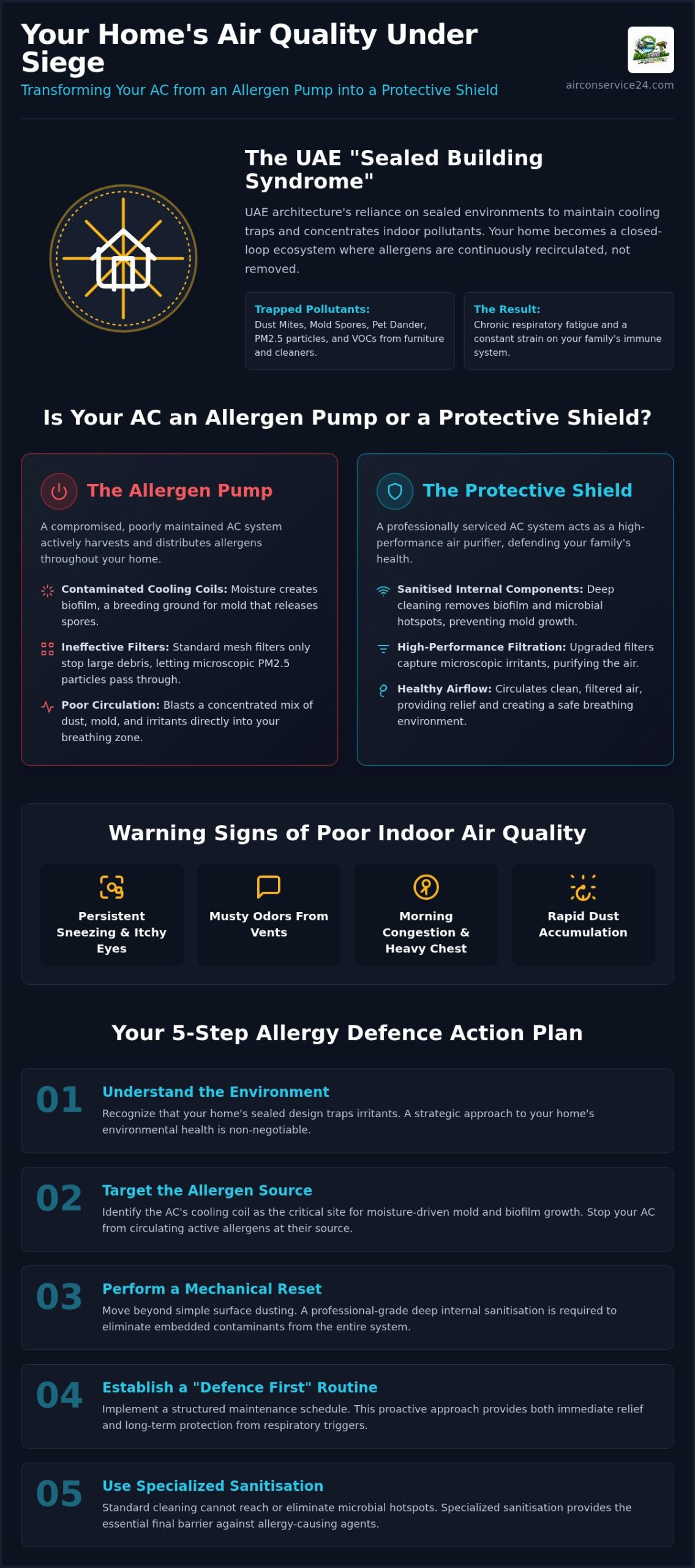
Indoor air quality (IAQ) is the measure of environmental health within your home’s interior, specifically concerning the air you breathe during the 90% of your life spent indoors in the UAE. While we often view our four walls as a barrier against the harsh desert climate, the reality is more complex. The UAE’s architecture relies on hermetically sealed environments to maintain cooling. This design choice often leads to “Sealed Building Syndrome,” where pollutants become trapped and concentrated. To effectively improve indoor air quality for allergies, you must first recognize that your home isn’t just a shelter; it’s a closed-loop ecosystem. Poor IAQ isn’t merely a nuisance. It’s a silent driver of chronic respiratory fatigue, putting constant strain on your immune system through exposure to dust mites, mold spores, and pet dander.
Why Your Home is Not the “Safe Haven” You Think
Outdoor dust and fine particulate matter, known as PM2.5, are persistent intruders. Even in a sealed home, these microscopic particles infiltrate through tiny gaps in window seals and door frames. Once inside, they mix with Volatile Organic Compounds (VOCs) emitted by high-end furniture finishes and common household cleaners. UAE national environmental standards set strict limits for these pollutants, such as keeping formaldehyde below 0.08 ppm, yet many homes exceed these levels without professional monitoring. Stagnant air behaves like a reservoir, trapping these allergens in a continuous loop where they’re repeatedly inhaled and recirculated by your cooling system. High-performance specialized equipment is often required to break this cycle and restore baseline health.
Recognizing the Symptoms of Poor IAQ
It’s easy to mistake indoor triggers for seasonal hay fever. However, if your symptoms persist regardless of the month, you’re likely dealing with a localized environmental issue. Morning congestion is one of the most reliable indicators of bedroom air quality failures. If you wake up with a heavy chest or itchy eyes that clear once you leave the house, your indoor environment is actively working against you. Other ready-to-act signs include persistent musty odors from vents and visible dust accumulation on surfaces within hours of cleaning. These aren’t just housekeeping frustrations. They’re clear signals that you need a comprehensive health audit to improve indoor air quality for allergies and protect your family’s long-term well-being.
The AC System: An Allergen Pump or a Protective Shield?
Your air conditioning system is the most critical variable in UAE allergy management. It doesn’t just regulate temperature; it’s the primary mechanism for air filtration and circulation. When properly maintained, it acts as a protective shield. However, if the mechanical cycle is compromised, the unit transforms into an allergen pump. The process is simple yet dangerous. Air is drawn from your rooms, passed over cooling coils, and redistributed. If those internal components are contaminated, your system is actively harvesting desert dust and mold, then blasting them into your breathing zone. To improve indoor air quality for allergies, you must shift your focus from the air you see to the mechanical path you don’t.
Biofilm and Microbial Growth in Cooling Coils
The cooling coil is the hidden epicenter of most indoor allergy triggers. As warm air meets the cold metal surface, heavy condensation occurs. In our humid climate, this moisture often fails to drain completely, creating a permanent damp environment. This leads to the development of biofilm, a thick, biological sludge that anchors itself to the fins. This isn’t just harmless grime; it’s a breeding ground for colonies that release aerosolized spores every time the fan engages. Breathing these biological agents can lead to chronic inflammation and severe asthma flare-ups. For a technical breakdown of how to prevent this buildup, consult our comprehensive guide on AC Maintenance UAE.
The Role of Air Filters in Allergy Defense
Standard mesh filters provided with most units are designed to protect the machinery, not your lungs. They capture large debris but allow microscopic irritants like PM2.5 and pollen to pass through effortlessly. Once a filter becomes “saturated,” the system’s static pressure increases. This often forces air to bypass the filter through tiny gaps in the housing, or it causes the filter itself to shed trapped pollutants back into the airstream. To effectively Control Indoor Allergens, high-allergy households should consider the following:
- Upgrade to filters with a MERV rating between 8 and 13 to capture finer particulates.
- Inspect filters every 30 days during peak summer months when the system runs 24/7.
- Ensure a perfect seal around the filter frame to prevent “air bypass” issues.
If you’ve noticed a musty odor or a spike in sneezing, your system’s internal defense has likely failed. You can restore your home’s safety by scheduling a professional AC sanitisation to eliminate these microbial hotspots at the source. This intervention is the only way to improve indoor air quality for allergies when the system has already reached a state of biological saturation.
Deep Cleaning vs. Standard Maintenance: What Allergy Sufferers Need
Standard maintenance in the UAE usually involves a quick filter rinse and a surface wipe. While this might keep your electricity bill stable, it does almost nothing to improve indoor air quality for allergies. Surface dusting is insufficient if the mechanical core of your system remains a reservoir for biological contaminants. For those suffering from chronic respiratory triggers, you need a “mechanical reset.” This is where deep cleaning enters the frame. It’s not a luxury service; it’s a clinical intervention designed to strip away the accumulated layers of dust, skin cells, and microbial growth that standard cleaning ignores. Professional sanitisation uses specialized anti-microbial agents to treat the system’s internal architecture, ensuring that the air delivered to your living space is medically clean rather than just cold.
As noted in The Inside Story: A Guide to Indoor Air Quality by the CPSC, biological contaminants like mold and dust mites are primary drivers of indoor health issues. In our sealed UAE environments, these pollutants have nowhere to go but into your lungs. Positioned as the “disciplined guardian” of your home health, professional deep cleaning acts as a hard barrier between these triggers and your family.
The Anatomy of a Professional Deep Clean
A true deep clean is a meticulous, multi-stage process that targets the hidden hotspots mentioned in previous sections. It begins with professional-grade pressure washing of the cooling coils to dislodge deep-seated allergens that a brush cannot reach. We then perform a comprehensive drain line flushing to prevent the stagnant water buildup that invites bacterial colonies. Finally, the blower fan, which is often caked in fine dust, undergoes full sanitisation. To achieve this level of precision, we utilize high-performance equipment specifically designed for the complex HVAC configurations found in modern UAE homes. This thoroughness ensures that every component in the air path is returned to its original, hygienic state.
Odour Removal: Eliminating the “Musty AC” Smell
If you detect a musty scent when your AC starts, you aren’t just smelling “old air.” You’re inhaling a direct indicator of active mold or bacterial metabolism occurring within your vents. These odours are chemical signals that your IAQ has reached a critical failure point. Standard air fresheners only mask the problem with additional VOCs, which can further irritate sensitive airways. Our sanitisation treatments neutralize these odours at the source by destroying the biological matter responsible for the smell. The result is more than just a fresh-smelling home; it’s the psychological relief and domestic harmony that comes from knowing your environment is safe. Reclaiming your home from these invisible irritants is the final step in a proactive allergy defense strategy.
How to Improve Indoor Air Quality: A Step-by-Step Allergy Action Plan
Adopting a “Defence First” mindset is essential for any resident looking to improve indoor air quality for allergies. In a climate where air conditioning runs nearly 24/7, passive management is a recipe for health failure. You must treat your home as a controlled environment where every variable is actively monitored. This proactive approach transforms your living space from a reactive allergy zone into a fortified sanctuary. By establishing a disciplined routine, you can significantly reduce the allergen load before it reaches your respiratory system.
Step 1: Master Your Humidity Levels
Maintaining indoor relative humidity between 40% and 50% is the golden rule for dust mite control. While national standards allow for slightly higher levels, allergy sufferers require a stricter limit to prevent triggers. High humidity acts as a catalyst for mold blooms on walls and inside ducts. Utilize your AC system’s “Dry Mode” during the transition months or invest in dedicated dehumidifiers for high-moisture areas like laundry rooms. Effective moisture control is the non-negotiable foundation of a truly hypoallergenic home. Without it, even the most expensive air purifiers will struggle to keep up with the rate of microbial growth.
Step 2: Establish a High-Frequency Filter Protocol
Standard advice to check filters every three months is dangerously inadequate for our environment. For high-allergy households, you must clean reusable mesh filters every two weeks without exception. If you use disposable high-efficiency filters, replace them every 45 to 60 days during peak summer. Clogged filters don’t just leak allergens; they restrict airflow and can lead to system freeze-ups. If your unit exhibits ice buildup or a total loss of cooling, professional AC repair is necessary to resolve the underlying restriction and restore safe airflow. Maintaining clean filters ensures that your system uses its specialized internal components effectively rather than bypassing them.
Step 3: Eliminate Textile Reservoirs
Heavy fabrics are the primary reservoirs for pet dander and dust mites. Minimize the use of thick curtains and wall-to-wall carpets, opting instead for hard flooring and washable window treatments. Invest in high-quality, anti-allergy protectors for all mattresses and pillows to create a physical barrier against microscopic irritants. Every week, wash all bedding and soft items at a minimum of 60°C to ensure dust mites are neutralized. To maintain this standard, follow this 5-step daily and weekly routine:
- Wipe high-traffic surfaces daily with damp microfibre to prevent dust suspension.
- Run HEPA air purifiers in bedrooms for at least 30 minutes before sleep.
- Vacuum all floors and remaining textiles weekly using HEPA-certified equipment.
- Clean AC filters bi-weekly to prevent allergen saturation.
- Inspect window seals monthly for signs of desert dust infiltration.
Consistency is your greatest ally in the fight against indoor triggers. Ensure your home remains a safe haven by booking a professional IAQ assessment to identify hidden vulnerabilities in your current setup. This disciplined approach is the most effective way to improve indoor air quality for allergies and maintain long-term domestic harmony.
Professional Sanitisation: The Final Barrier Against Allergy Triggers
While smart sensors can alert you to a decline in air standards, they’re powerless to physically remove the pathogens embedded in your HVAC infrastructure. To effectively improve indoor air quality for allergies, you must move beyond monitoring and into the practice of clinical restoration. DIY methods are fundamentally limited; they can’t reach the deep internal casing, the intricate fins of the cooling coil, or the rear of the blower wheel where the most dangerous microbial colonies reside. AirConService24 serves as the technical elite in air quality restoration, providing a sophisticated sanitisation process that acts as the final, impenetrable barrier between your family and persistent allergy triggers. Reclaiming your home’s air isn’t just a mechanical task. It’s a health intervention that restores domestic harmony and ensures your AC system functions as a high-performance air purifier.
The AirConService24 Methodology
Our approach is characterized by a blend of high-stakes urgency and professional reassurance. When a technician enters your home, they follow a highly structured, step-by-step workflow designed to eliminate customer anxiety through clear expectations and methodical execution. We prioritize the use of environmentally responsible, health-safe sanitizers that effectively neutralize biological contaminants and facilitate specialized odour removal without introducing secondary irritants into your breathing zone. This commitment to modern standards of excellence ensures that your environment remains safe for children with asthma and those with severe sensitivities. Recognizing that respiratory crises can happen at any hour, our team remains ready-to-act with 24/7 availability for families in urgent need of environmental relief.
Long-Term Maintenance for Sustained Relief
Achieving a hypoallergenic home isn’t a single event; it’s a continuous commitment to environmental hygiene. We suggest an annual or bi-annual deep cleaning schedule to ensure that your system never reverts to being an allergen pump. The cost-benefit analysis is clear. Investing in proactive sanitisation is significantly more economical than the cumulative price of reactive medical treatments, specialized air purifiers, and the chronic fatigue caused by poor sleep. By maintaining a clear maintenance schedule to improve indoor air quality for allergies, you transition from a state of constant vulnerability to one of confident authority over your home’s air quality.
Restore your home’s health with professional sanitisation today and experience the immediate relief of a clinically purified environment.
Take Command of Your Indoor Environment
Your home should be a sanctuary, not a source of respiratory stress. By understanding the mechanical cycle of your AC and implementing a disciplined maintenance routine, you’ve already taken the first steps toward a healthier living space. Remember that surface cleaning is only half the battle; real relief requires addressing the microbial hotspots within your cooling system. To effectively improve indoor air quality for allergies, you must transition from reactive dusting to proactive mechanical sanitisation.
Our expert technicians are available 24/7 across the UAE to provide the clinical intervention your home needs. Utilizing professional-grade deep cleaning equipment and specialized anti-microbial sanitisation treatments, we restore your system to its peak hygienic state. Don’t let hidden irritants dictate your family’s well-being or comfort. Schedule your professional AC Deep Cleaning and Sanitisation today and breathe with total confidence. You deserve a home that supports your health and provides lasting domestic harmony.
Frequently Asked Questions
Can an AC unit cause allergy symptoms?
Yes, an unmaintained AC unit is a primary driver of allergy symptoms in the UAE. It doesn’t just cool; it circulates air through internal components that can harbor dust, mold, and bacteria. When these contaminants are aerosolized, they trigger sneezing, itchy eyes, and congestion. Professional maintenance is the only way to ensure your system acts as a protective shield rather than a delivery mechanism for harmful environmental irritants.
How often should I clean my AC filters for allergies?
For households with allergy sufferers, you should clean reusable mesh filters every two weeks. High-efficiency disposable filters should be replaced every 45 to 60 days during peak summer months. In the UAE, the 24/7 operation of cooling systems leads to rapid allergen saturation. Ignoring this schedule allows particulates to bypass the filter and deposit directly on the coils, significantly increasing the allergen load within your home.
What is the best humidity level to prevent indoor allergies in the UAE?
You must maintain indoor relative humidity between 40% and 50% to effectively suppress dust mites and mold growth. While UAE national standards allow up to 60%, allergy sufferers require a stricter limit to prevent triggers. Excess moisture acts as a catalyst for biological blooms on cooling coils and within ductwork. Using the AC Dry Mode or dedicated dehumidifiers helps maintain this critical threshold for a truly hypoallergenic environment.
Does AC deep cleaning really improve air quality?
Deep cleaning is a clinical intervention that provides a mechanical reset for your entire system. Unlike standard maintenance, it utilizes professional-grade pressure washing and specialized equipment to remove deep-seated biofilm and microbial sludge from cooling coils. This process is essential to improve indoor air quality for allergies because it eliminates the physical source of contamination. By stripping away years of accumulated debris, you prevent the continuous recirculation of mold spores and fine desert dust.
Is it better to use an air purifier or clean the AC system?
You should prioritize cleaning the AC system, as it is the primary source of air distribution in your home. An air purifier only treats the air already present in the room, whereas a contaminated AC unit continuously pumps new irritants into the space. For the most effective strategy to improve indoor air quality for allergies, use professional sanitisation to clean the source and then supplement with HEPA purifiers for secondary filtration.
How do I know if my AC has mold inside it?
Persistent musty odours and visible black spotting on the vent louvers are the most common indicators of internal mold. You might also notice a spike in respiratory symptoms, such as morning congestion, specifically when the unit is running. If you detect these signs, it’s a ready-to-act situation requiring professional inspection. Mold anchors itself deep within the cooling coils and blower fans, where standard DIY cleaning methods simply cannot reach.
Can professional sanitisation remove pet dander from the air?
Professional sanitisation removes pet dander that has settled within the AC unit’s internal architecture. Dander is microscopic and sticky; it often bypasses standard filters to coat the blower fan and cooling coils. By using specialized anti-microbial agents and high-pressure equipment, technicians strip away these biological reservoirs. This prevents the system from repeatedly aerosolizing old dander, providing immediate relief for those with sensitive immune systems and high-stakes allergy needs.
Will improving indoor air quality help with my asthma?
Yes, optimizing your home’s air quality is a fundamental component of asthma management. Reducing the concentration of PM2.5, mold spores, and dust mites lowers the trigger load on your respiratory system. Clinical sanitisation ensures that your environment remains stable and safe, which directly reduces the frequency of flare-ups. A clean system provides the domestic harmony necessary for those with chronic conditions to breathe without constant irritation and health anxiety.
AC Deep Cleaning Benefits: Why Your System Needs More Than a Filter Wash in 2026
Article by
Jon Bonnett
Australian Air Conditioning Specialist with extensive hands-on experience in AC servicing, deep cleaning, maintenance, and troubleshooting. Focused on high-quality workmanship, reliability, and professional service to UAE standards.
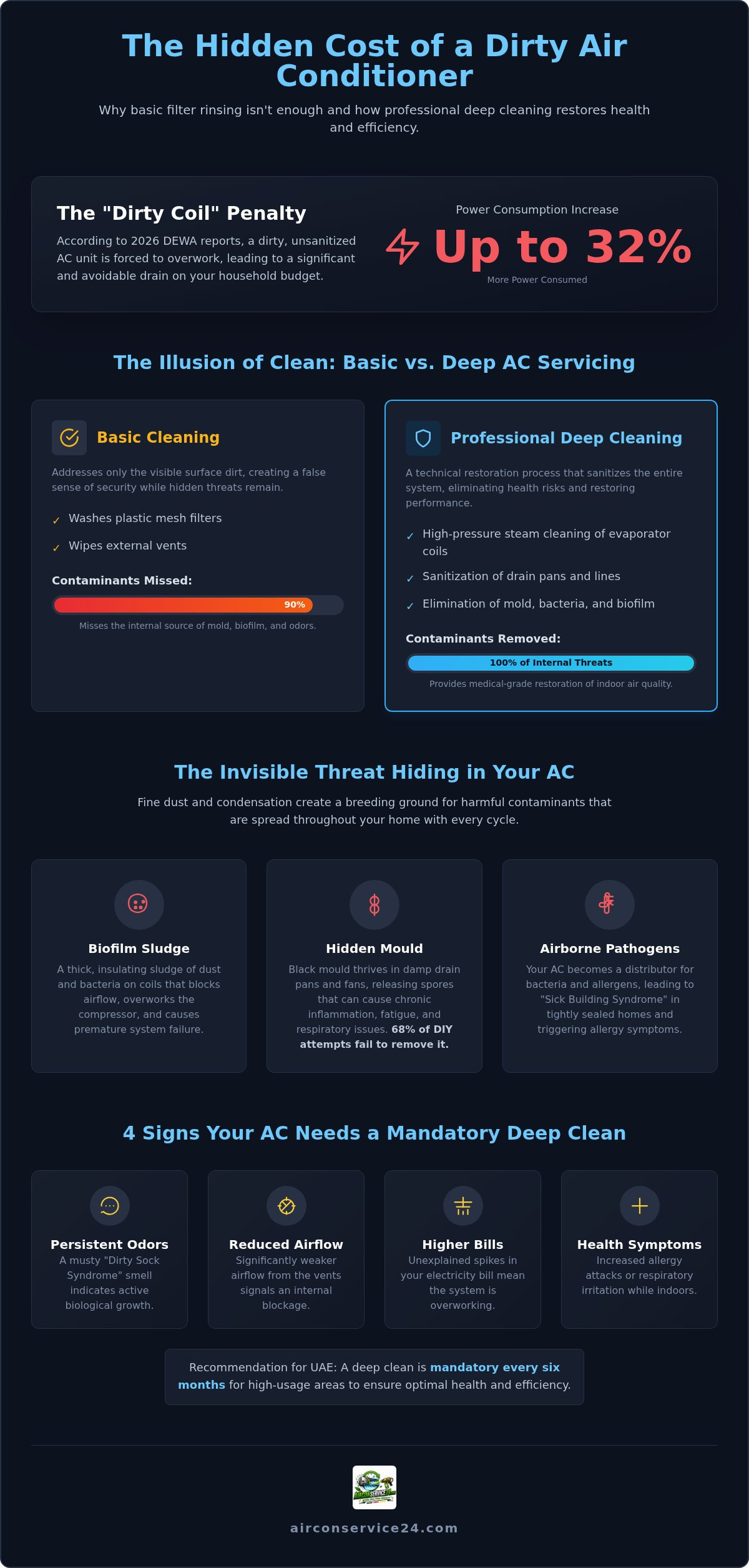
Did you know that a dirty air conditioner can consume up to 32% more power than a sanitized unit, according to 2026 DEWA reports? It’s a staggering figure that represents a silent, avoidable drain on your household budget. You’ve likely spent weekends diligently rinsing plastic filters, yet you’re still greeted by that persistent musty odor and electricity bills that continue to climb despite your efforts. It’s a common frustration to realize that a simple rinse is merely a surface-level fix for a deep-seated mechanical issue.
Discovering the full range of ac deep cleaning benefits is the first step toward transforming your cooling system from a dust-trap into a high-performance health asset. Professional sanitization does more than just move dirt; it eliminates respiratory irritants and restores mechanical precision to your system. This guide explores how advanced cleaning methods provide total peace of mind regarding indoor air hygiene while slashing energy costs. We’ll examine the technical processes that eliminate smells and ensure your home remains a sanctuary of domestic harmony, fully aligned with the UAE’s rigorous 2026 energy efficiency standards.
Key Takeaways
- Learn why surface-level filter washing misses 90% of internal contaminants and how deep cleaning targets the invisible biofilm breeding deep within your system.
- Understand the “Dirty Coil” penalty that forces your compressor to overwork, and how restoring thermal exchange can significantly lower your monthly utility expenses.
- Explore the comprehensive ac deep cleaning benefits that provide a medical-grade restoration of your indoor environment, moving beyond simple maintenance to total sanitisation.
- Discover the precise technical protocol for safe unit dismantling to eliminate the biological source of persistent “Dirty Sock Syndrome” odors.
- Transition your cooling system from a potential health hazard into a high-performance asset that supports long-term domestic harmony and air hygiene.
Understanding the Critical Difference Between Basic and Deep AC Cleaning
A standard AC service often provides a false sense of security. Most residents believe that washing the mesh filters and wiping the external vents constitutes a thorough job. While these actions are necessary for daily maintenance, they only address the visible 10% of your system. The real danger lies in the “Invisible Threat” lurking within the internal chassis. Standard cleaning misses 90% of contaminants, leaving the core of your unit to accumulate dust, dander, and microscopic pollutants.
A true deep clean is a technical restoration process. It involves accessing the evaporator coils and drainage trays, areas where moisture and darkness encourage biological growth. By utilizing high-pressure steam and professional-grade sanitisers, we can reach the depths of the specialized equipment inside your unit. This level of thoroughness is essential to achieve the long-term ac deep cleaning benefits your home deserves, ensuring the air you breathe is as clean as it is cool.
The Anatomy of a Dirty AC Unit
The UAE climate presents unique challenges for HVAC systems. Fine sand and microscopic dust particles are small enough to bypass standard filters, eventually settling on the damp evaporator coils. This mixture forms a thick, insulating sludge known as biofilm. This substance doesn’t just block airflow; it creates a toxic reservoir in the drainage pans. Understanding the comprehensive overview of indoor air quality highlights how these internal components can distribute allergens throughout your living space. When biofilm accumulates, it forces the motor to work harder, leading to the primary cause of premature system failure.
When is a Deep Clean Mandatory?
Basic maintenance has its limits. If you notice a “musty smell” the moment your unit kicks in, you’ve reached the biological trigger point. This odor indicates that mold and bacteria are actively colonizing your system. In the high-demand UAE environment, a deep clean is mandatory every six months for high-usage areas. Look for these critical signs:
- Persistent odors that return shortly after a filter wash.
- A visible reduction in airflow volume from the vents.
- Unexplained spikes in your monthly electricity consumption.
- Increased respiratory irritation or allergy symptoms while indoors.
Securing the ac deep cleaning benefits means acting before these symptoms escalate into a cooling crisis or a health concern.
Eliminating Biofilm, Mould, and Airborne Pathogens for Better Health
Inside your AC unit, moisture and organic dust combine to create a resilient biological layer known as biofilm. This isn’t just “dirt”; it’s a complex bacterial colony that thrives in the dark, damp environment of your cooling coils. When your system cycles between cooling and standby, it creates the perfect incubation period for these pathogens to multiply. This biological accumulation is the hidden driver behind many of the primary ac deep cleaning benefits, as standard maintenance simply cannot penetrate this adhesive biological matrix.
Once these colonies establish themselves, they release airborne pathogens directly into your living space. In modern UAE apartments, which are often tightly sealed for energy efficiency, this leads to a localized version of “Sick Building Syndrome.” Without fresh air circulation, your AC becomes the sole distributor of these contaminants. Every breath you take is filtered through this biological layer, linking AC hygiene directly to your long-term respiratory well-being. Addressing these hidden threats is a mechanical necessity for domestic harmony.
The Dangers of Hidden Mould Growth
Black mould is a common but dangerous inhabitant of neglected blower fans and internal vents. In the UAE, the extreme temperature difference between the outdoor heat and indoor cooling creates constant condensation. This moisture is the lifeblood of mould spores. A 2026 study by Dubai Municipality revealed that 68% of DIY cleaning attempts fail to reach the mould buried in drain pans. These spores don’t just cause minor sneezing; they can lead to chronic inflammation and persistent fatigue for the residents. Identifying and removing these colonies requires professional precision to prevent them from spreading further into the ductwork.
Sanitisation vs. Simple Cleaning
There is a critical distinction between wiping a surface and professional sanitisation. While a basic wash might remove visible dust, it leaves microscopic pathogens untouched. True sanitisation involves using non-toxic, food-grade sanitisers that kill bacteria at the source without introducing harsh chemicals into your home. This level of care is essential for protecting vulnerable residents like children, the elderly, and those with chronic allergies. To ensure your home remains a safe sanctuary, you can schedule a professional sanitisation to eliminate these risks entirely.
Investing in these specific ac deep cleaning benefits ensures that your cooling system supports your health rather than compromising it. By moving beyond surface cleaning, you are effectively disinfecting your home’s respiratory system and ensuring that every cubic meter of air delivered is crisp, clean, and safe.
Maximising Energy Efficiency and System Longevity in the UAE Heat
Operating a cooling system in the UAE’s extreme climate requires mechanical perfection. When dust and biofilm accumulate on your evaporator coils, they create a “Dirty Coil” penalty. This layer of grime acts as a thermal insulator, effectively trapping heat and preventing the refrigerant from cooling the air efficiently. Consequently, your compressor must run for significantly longer cycles to reach the desired thermostat setting. This unnecessary strain is a leading cause of “Compressor Burnout,” a catastrophic failure that often results in expensive replacements. By prioritizing ac deep cleaning benefits, you directly protect the heart of your HVAC system from premature exhaustion.
Calculating the return on investment for professional sanitisation is straightforward. According to a 2026 DEWA report, dirty air conditioners consume up to 32% more power than maintained units. In a region where AC accounts for 60-70% of building electricity usage, this inefficiency translates into hundreds of dirhams wasted every month. Professional care can extend the operational lifespan of your unit by 3 to 5 years, deferring the high capital expenditure of a new installation. It’s a strategic financial decision that transforms a maintenance cost into long-term utility savings.
The Physics of Efficient Cooling
Efficient cooling relies on rapid heat exchange. Clean evaporator coils facilitate this process by allowing maximum surface contact between the air and the cooling fins. When airflow resistance is minimized, the “on-cycle” time of your AC unit decreases. This means your home reaches the target temperature faster and stays there longer without the motor constantly restarting. Reducing this resistance is one of the most immediate ac deep cleaning benefits, resulting in a quieter home environment and lower power consumption.
Avoiding Costly Emergency Repairs
Neglect often leads to a cascade of mechanical failures. Deep cleaning serves as a critical diagnostic tool, allowing technicians to identify early signs that might necessitate AC repair before a total breakdown occurs. During the process, we clear drainage trays and flush lines to prevent the water leaks that damage walls and ceilings. Implementing a robust preventive maintenance strategy ensures that small issues like clogged drains or vibrating fans don’t escalate into midnight cooling emergencies. This proactive approach safeguards your domestic harmony and ensures your system remains reliable during the peak summer months.
The Professional Deep Cleaning Protocol: What to Expect During Service
Transparency is the foundation of an elite service. When our specialists arrive at your property, they don’t just start scrubbing; they begin with a methodical pre-service diagnostic. We check thermostat accuracy and record baseline airflow volume to ensure we have a benchmark for the performance improvement. This initial assessment allows us to identify existing mechanical stresses before the deep cleaning protocol begins. It’s about precision and ensuring you understand the exact state of your home’s air delivery system from the outset.
Safe dismantling is the next critical phase of the operation. We carefully access the internal blower wheel and coil assembly, components that are often neglected in standard maintenance. This access is vital to unlock the full ac deep cleaning benefits, as it allows for the removal of the biological buildup that hides in the chassis. Once opened, the system undergoes a rigorous pressure-washing and chemical-treatment phase. We use specific solutions designed to dissolve stubborn grime without damaging the delicate aluminum fins of the heat exchanger.
Step-by-Step Restoration
Our workflow follows a logical, predictable sequence to ensure zero disruption to your living space. This methodical approach eliminates the anxiety often associated with home maintenance. The restoration follows these key stages:
- Step 1: We isolate the power supply and use high-grade waterproof covers to protect your furniture and flooring from any overspray or debris.
- Step 2: Technicians perform a deep clean of the evaporator and condenser coils, using pressurized water to reach the very center of the coil pack.
- Step 3: We flush both primary and secondary drainage lines to clear the biological sludge that causes indoor water leaks and ceiling damage.
Advanced Odour and Sanitisation Measures
The final stage moves beyond mechanical cleaning into the realm of environmental hygiene. We treat the air handling unit with anti-microbial agents designed to inhibit future bacterial growth. It’s essential that the equipment used is hospital-grade to ensure the total elimination of microscopic pathogens. We finish with a professional scent-neutralisation process that removes odors at the molecular level rather than simply masking them with heavy perfumes. To experience this elite level of restoration, you can book your professional AC deep cleaning today and reclaim your home’s air quality.
Verification is our closing commitment. We re-assemble the unit and conduct a final performance check, comparing the new airflow volume against our initial readings. This ensures that the ac deep cleaning benefits are documented and verifiable, giving you total peace of mind regarding your system’s restored efficiency and hygiene.
Restoring Domestic Harmony with Advanced Sanitisation and Odour Removal
Musty smells are more than a minor annoyance; they are a clear signal of biological distress within your home’s cooling system. Many residents attempt to mask these unpleasant scents with aerosol sprays or plug-in air fresheners, but these “cover-up” tactics inevitably fail. They merely add a layer of synthetic perfume over a growing colony of bacteria. To truly reclaim your living space, you must address the source of the stench. This is where the psychological ac deep cleaning benefits become most apparent, as the heavy, stale air is replaced by a crisp, neutral atmosphere that promotes genuine domestic harmony.
“Dirty Sock Syndrome” is the technical term for the pungent, damp odor that occurs when bacteria and mould colonize the moist surfaces of the evaporator coils. As your system cycles, these colonies release volatile organic compounds directly into your breathing zone. Identifying this biological source is the first step toward a permanent cure. Professional sanitisation provides a “fresh-start” indoor environment, allowing you to breathe without hesitation. It transforms your AC from a source of anxiety into a high-performance health asset that supports your family’s well-being.
Targeted Odour Elimination
Permanent odour removal requires neutralising the specific acids and bacteria that cling to internal components. Deep cleaning is the only effective solution because it physically removes the biofilm that standard dusting leaves behind. Once the biological layers are eradicated, we apply specialised odour-neutralising agents that break down foul-smelling molecules at a chemical level. Maintaining a fresh environment post-service becomes effortless because the mechanical source of the smell has been completely removed. This level of thoroughness ensures that your home remains a sanctuary of cleanliness.
The Elite Specialist Advantage
We operate with a “Ready-to-Act” energy. Because cooling crises and air quality issues don’t follow a schedule, our commitment to professional excellence ensures you are never left in a compromised environment. We view our service as more than a mechanical fix; it’s a lifestyle upgrade that prioritizes your health and mental peace. Transitioning to a high-performance, sanitized system is the ultimate commitment to your home’s longevity and comfort. Book your professional deep cleaning today to experience the difference of a truly pristine living space.
By securing these ac deep cleaning benefits, you are acting as a disciplined guardian of your home’s respiratory health. The result is an environment where the air is as restorative as the cooling is efficient, ensuring your domestic sanctuary remains healthy, fresh, and harmonized throughout the year.
Secure Your Home’s Respiratory Health and Efficiency
Moving beyond the basic filter wash is a vital technical necessity for any UAE resident. You’ve discovered that professional restoration eliminates the “Invisible Threat” of biofilm while significantly reducing the energy penalties that drive up monthly bills. These ac deep cleaning benefits extend far beyond simple cooling; they represent a commitment to environmental hygiene and long-term mechanical reliability. By addressing hidden mould and restoring thermal transfer, you ensure your system operates as a high-performance health asset rather than a silent drain on your resources.
Our team stands as the disciplined guardian of your indoor environment. As specialized odour removal experts using hospital-grade sanitisation equipment, we deliver results that surface cleaning simply cannot match. With our 24/7 emergency response nationwide, professional reassurance is always within reach. It’s time to stop masking odors and start eliminating them at the source. Reclaim your sanctuary and ensure your cooling system supports a lifestyle of health and domestic harmony.
Restore Your Home Air Quality Today and experience the difference that professional expertise brings to your living space. Your family deserves the highest standards of air purity and mechanical efficiency.
Frequently Asked Questions
Is AC deep cleaning really necessary if my unit is still cooling?
Yes, cooling alone is an incomplete metric of system health. Even a unit that feels cold can harbor thick layers of biofilm and mold spores on its internal coils. These contaminants force the compressor to work harder, increasing mechanical wear and energy consumption. Professional deep cleaning ensures that your system isn’t just cooling the air, but also purifying it. It’s a vital step to prevent the sudden mechanical failures that often occur during the peak UAE summer heat.
How often should I book a deep cleaning service in the UAE?
In the high-demand UAE climate, we recommend booking a deep cleaning service every six months for residential properties. High-usage environments or homes with pets and children often require more frequent attention to maintain optimal air hygiene. Regular intervals ensure that sand, dust, and moisture don’t have the opportunity to form a resilient biological matrix. This schedule aligns with modern standards for domestic harmony and prevents the accumulation of stubborn allergens within your cooling system.
Can AC deep cleaning help reduce my electricity bills?
Absolutely, professional restoration is one of the most effective ways to lower utility costs. One of the primary ac deep cleaning benefits is the removal of the insulating dust layer on evaporator coils, which allows for faster heat exchange. When your system reaches the target temperature quickly, the compressor runs for shorter cycles. This efficiency can reduce power consumption by up to 30%, directly offsetting the cost of the service through significant monthly savings.
What is the difference between sanitisation and deep cleaning?
Deep cleaning is the mechanical removal of physical debris, dust, and grime from internal components like the blower wheel and coils. Sanitisation is the subsequent application of antimicrobial agents to kill microscopic pathogens, bacteria, and mold spores. While deep cleaning restores mechanical efficiency, sanitisation ensures environmental hygiene. Our elite protocol combines both processes to provide a medical-grade restoration of your home’s air quality, moving beyond simple surface-level cleanliness for total peace of mind regarding indoor hygiene.
How long does a professional AC deep cleaning service take?
A comprehensive deep cleaning typically takes between 60 to 90 minutes per unit. This duration allows our specialists to perform a thorough diagnostic, safely dismantle the internal assembly, and apply pressurized chemical treatments. We prioritize precision over speed to ensure every drainage line is flushed and every coil fin is sanitized. While the process is methodical, our “ready-to-act” energy ensures we complete the restoration efficiently with minimal disruption to your daily routine or domestic sanctuary.
Will deep cleaning remove the musty smell from my air conditioner?
Yes, deep cleaning is the only permanent solution for the “Dirty Sock Syndrome” caused by bacterial growth. Unlike air fresheners that merely mask odors, our process eliminates the organic biofilm and stagnant moisture where smells originate. By targeting the drainage trays and evaporator coils with specialized odour removal treatments, we neutralize the acids and bacteria at their source. This results in a fresh-start indoor environment that supports long-term domestic harmony and total air purity for your family.
Does deep cleaning help prevent AC water leakage?
Deep cleaning is essential for preventing leaks because it targets the primary cause: clogged drainage systems. Over time, dust and moisture create a thick sludge that blocks the primary and secondary drain lines, forcing water to overflow into your living space. Our protocol includes a high-pressure flush of all drainage components to ensure clear pathways. This proactive maintenance safeguards your walls and ceilings from expensive water damage while ensuring the system operates reliably throughout the year.
Is the chemical used in deep cleaning safe for pets and children?
We prioritize the safety of your family by using non-toxic, food-grade sanitisers and biodegradable cleaning agents. These professional solutions are specifically formulated to eliminate pathogens without leaving harmful residues or irritating fumes in your home. Our commitment to environmental hygiene means that the ac deep cleaning benefits include a safer environment for vulnerable residents. You can enjoy a sanitized, high-performance cooling system with total confidence in the safety and integrity of our technical processes.
How to Remove AC Odours: Professional Guide
Article by
Jon Bonnett
Australian Air Conditioning Specialist with extensive hands-on experience in AC servicing, deep cleaning, maintenance, and troubleshooting. Focused on high-quality workmanship, reliability, and professional service to UAE standards.
Spraying air freshener into a musty vent is like putting a small bandage on a deep wound; it masks the symptom while the underlying issue continues to fester. You’ve likely tried every DIY spray and scented candle in the house, yet that persistent, damp odour returns the moment the compressor kicks in. It’s frustrating to feel like your own home isn’t the sanctuary it should be, especially when you’re concerned about the health implications of what your family is breathing. These smells are rarely just a nuisance. They’re often a clear signal that your indoor air quality is compromised and requires immediate, professional attention.
Learning how to get rid of bad smell from ac requires moving beyond surface-level fixes and addressing the microbial colonies thriving in the dark, damp corners of your system. This guide provides a professional roadmap to identifying the root causes of these foul scents and executing the precise steps needed to restore clinical-grade freshness to your air. We’ll explore the science of evaporator coil contamination, the necessity of deep sanitisation, and the proactive maintenance habits that ensure your indoor environment remains a healthy, odour-free zone for the long term.
Key Takeaways
- Identify what specific scents, such as the common “dirty sock” smell, reveal about the biological or mechanical state of your cooling system.
- Understand why biofilm and condensate sludge require advanced sanitisation rather than simple surface cleaning to be permanently eradicated.
- Master a structured 5-step DIY approach for how to get rid of bad smell from ac while prioritising safety and air filter integrity.
- Avoid the “perfume trap” of household aerosols that merely mask underlying bacterial growth and may introduce harmful chemicals into your living space.
- Discover how professional-grade odour removal and regular maintenance contracts provide a 24/7 solution to the unique environmental hygiene challenges of the national climate.
Identifying the Scent: Why Your AC Smells Bad
Every scent emitted by your cooling unit is a specific data point. It’s a mechanical or biological signature that tells us exactly what’s failing inside the system. Understanding these signals is the first step in learning how to get rid of bad smell from ac before the issue escalates into a costly repair or a health crisis. When your air conditioner starts to fail, it doesn’t just stop cooling; it begins to communicate through these distinct, often unpleasant, aromas.
The Scent-to-Cause Diagnostic Map
To restore domestic harmony, you must first identify the culprit. Use the following table to map common scents to their likely mechanical or biological root causes.
| Scent Profile |
Probable Root Cause |
| Musty / Dirty Socks |
Bacterial colonies or mould on evaporator coils |
| Vinegar / Sharp Acrid |
Motor failure or excess ozone from electrical shorts |
| Sweet / Ethereal |
Refrigerant leak (High-stakes chemical hazard) |
| Burning / Dust |
Electrical distress or friction in moving parts |
| Rotten Eggs |
Pest intrusion or natural gas leak |
The “sweet” smell of refrigerant is particularly deceptive. It indicates a leak that compromises both system efficiency and environmental safety. While a temporary scent of burning dust is common when a unit hasn’t been used for months, persistent acrid smells suggest electrical components are under extreme distress. Identifying these early requires specialised diagnostic equipment to ensure the source is pinpointed with surgical precision.
When an Odour Becomes a Health Emergency
We often treat bad smells as a minor domestic inconvenience, but they’re frequently precursors to respiratory irritation. In modern Heating, ventilation, and air conditioning (HVAC) systems, recirculated air carries microscopic spores and volatile organic compounds directly into your living space. “Dirty Sock Syndrome” is the specific accumulation of bacterial colonies on the evaporator coils. As moisture condenses during the cooling cycle, it provides the perfect medium for these microbes to multiply and release gases.
Children and the elderly are more susceptible to this poor air quality, which can trigger asthma attacks or chronic sinus inflammation. Sick Building Syndrome is a clinical condition where occupants experience acute health or comfort effects that are directly linked to time spent in a building with compromised air hygiene. If your family is experiencing unexplained headaches or itchy eyes alongside a musty vent, the situation has moved beyond a maintenance task and into a health priority. Immediate sanitisation is the only way to ensure the air you breathe is safe and revitalising.
The Science of Biofilm: Why Simple Cleaning Fails
Most homeowners believe a quick spray of disinfectant or a surface wipe will solve their air quality issues. It won’t. You’re not just fighting dirt; you’re fighting a biological fortress known as biofilm. This complex colony of bacteria and fungi creates a protective, slimy matrix that allows it to thrive in the high-humidity environment of your cooling unit. Understanding the resilience of this biological shield is essential when researching how to get rid of bad smell from ac permanently. Without breaking down this film, the odour-producing microbes remain protected and ready to multiply.
The Anatomy of AC Sludge
Sludge begins as simple airborne dust that bypasses your filters. When this organic matter meets the constant condensation on your evaporator coils, it transforms into a thick, gelatinous substance. This material eventually migrates to the condensate drain pan, where it can block drainage entirely. Stagnant water trapped in these lines begins a fermentation process, producing the pungent, swampy gases that are then circulated through your vents. For those looking to implement a proactive strategy, the AC Maintenance UAE Reference provides a detailed breakdown of the preventive steps required to stop this buildup before it starts.
Why Surface Wiping Isn’t Enough
Surface-level cleaning is a temporary cosmetic fix that ignores the microscopic reality of mould. Spores don’t just sit on the metal surfaces; they embed themselves deep within the porous insulation and the intricate fins of the evaporator coils. Standard household cleaners are designed for hard, non-porous surfaces. They lack the chemical potency and surfactants needed to penetrate professional-grade biological films.
If you don’t use industrial-strength sanitising agents, the bacteria will regenerate within days. This leads to a frustrating cycle of re-contamination. Air passing through dirty ductwork or over contaminated coils picks up new spores and distributes them throughout your living space, rendering your DIY efforts useless. If you’re struggling with persistent, deep-seated odours, a professional sanitisation service is the only methodical way to break this biological cycle and ensure your air remains clinical-grade fresh. Using specialised equipment, technicians can reach the internal components where these biofilms hide, ensuring a total removal of the source rather than just masking the symptom.
5 Step DIY Guide to Freshening Your AC System
Before you begin any maintenance, you must isolate the power supply. Safety is the non-negotiable foundation of any technical intervention. Switch off the unit at the main breaker to ensure no mechanical parts engage while you’re working. Once the system is dormant, you can begin the methodical process of addressing the most common culprits behind indoor air quality issues. If you’re wondering how to get rid of bad smell from ac units without calling a technician immediately, these five steps provide a structured starting point for basic hygiene.
Step 1: Deep Cleaning the Air Filters
Air filters are your primary line of defence against the organic debris that feeds bacterial growth. Remove the filters carefully to avoid shedding dust into the room. If the mesh is intact, wash them using lukewarm water and a mild, pH-neutral detergent. Avoid using high-pressure hoses, as these can easily tear the delicate fibres. If the mesh appears frayed or the “dirty sock” odour remains after a thorough drying, washing is no longer sufficient. In these cases, a full replacement is necessary. You can find high-efficiency options and Professional AC Equipment to ensure your system has the best possible filtration for the national climate.
Step 2: Inspecting the Drain Pan and Line
Locate the primary drain pan, usually situated directly beneath the evaporator coils. Check for any standing water; this is a definitive sign of a blockage. To clear minor obstructions, use a wet/dry vacuum on the external exit of the condensate line to pull out sludge and debris. This low-pressure method is much safer than trying to blow air through the line, which can cause internal connections to burst. However, if the water doesn’t clear after one or two attempts, you must stop. Continuing DIY efforts on a stubborn clog can lead to a backup that floods your interior flooring or damages sensitive electrical components.
The final steps involve maintaining the unit’s environment. Use a damp microfibre cloth to wipe down the external cabinet and louvres, removing the fine dust that eventually migrates inside. Finally, ensure the area surrounding the indoor and outdoor units is free from debris and standing water. While these steps significantly improve air freshness, they’re maintenance tasks, not deep sanitisation. If the odour persists after this 5-step process, it indicates that the biological contamination is embedded deep within the internal components, requiring professional-grade intervention to resolve.
Masking vs. Elimination: Why Professional Sanitisation is Vital
When you’re searching for how to get rid of bad smell from ac, the convenience of a “quick fix” aerosol spray can be incredibly alluring. However, this approach represents a dangerous misunderstanding of environmental hygiene. Sprays and household deodorisers operate on the principle of masking; they use heavy fragrances to overwhelm your olfactory senses while the underlying biological rot continues to thrive. This “Perfume Trap” creates a false sense of security that can lead to prolonged exposure to harmful microbial spores. True domestic harmony isn’t achieved by adding scents, but by removing the source of the decay.
The Dangers of Deodorising Sprays
Household air fresheners are not designed for the complex internal architecture of a cooling system. When you spray these substances into your vents, the oily residue often coats the cooling coils. Instead of cleaning, this sticky film actually attracts more dust and organic matter, accelerating the growth of the very biofilms you’re trying to eliminate. There’s also a significant risk of respiratory distress. Inhaling concentrated chemical fragrances in a confined space can trigger allergic reactions and worsen chronic lung conditions. A disciplined guardian of the home environment knows that pure air doesn’t have a scent. It’s clean, neutral, and revitalising.
Professional Deep Cleaning Protocols
True elimination requires a methodical approach that household products simply cannot provide. Professional sanitisation involves the use of hospital-grade disinfectants that are specifically formulated to penetrate and dissolve biological films without damaging sensitive metal components. Technicians use high-pressure washing and chemical flushing to reach deep into the evaporator fins and condensate lines, ensuring every trace of sludge is physically removed from the system. This process doesn’t just clean; it creates a microscopic protective barrier on the internal surfaces to inhibit future mould growth and bacterial colonisation.
Investing in professional odour removal is a strategic decision for your home’s long-term health and mechanical efficiency. While DIY sprays are cheap, they often lead to more frequent service calls as the system’s efficiency drops due to clogged coils. For urgent situations where the odour is unbearable or indicates a potential mechanical failure, accessing Emergency AC Repair Services ensures a rapid, authoritative response. By choosing elimination over masking, you ensure your indoor air is not just “better smelling,” but clinically safe for every member of your household. If you’re ready to restore domestic harmony, contact our specialists for a deep sanitisation audit today.
Restoring Air Quality with Expert Odour Removal
Transitioning from a reactive “crisis mode” to a proactive state of environmental hygiene is the only way to ensure lasting comfort in your home. When you’re stuck wondering how to get rid of bad smell from ac, you’re usually already dealing with a significant biological or mechanical failure that has breached your domestic sanctuary. AirConService24.com approaches these situations with a methodical, high-stakes urgency. We don’t just “check” your system; we perform a comprehensive sanitisation audit to identify the precise origin of the contamination. Our goal is to move beyond the temporary fixes of DIY maintenance and restore a harmonised environment where the air is as fresh as it is safe.
Our 24/7 Odour Elimination Service
Air quality emergencies don’t adhere to standard business hours. Whether it’s a residential living room or a high-traffic commercial space, a foul odour can disrupt operations and well-being instantly. Our expert technicians maintain a “ready-to-act” posture, arriving equipped with professional-grade disinfectants and specialised tools to neutralise odours at their source. We prioritise transparency and integrity, providing clear expectations regarding the scope of the sanitisation required. This isn’t just about mechanical repair; it’s about an elite response and precision hygiene that protects your family’s health. We treat every call as a mission to restore the safety of your indoor environment.
Preventive Strategies for Year-Round Freshness
The national climate presents unique challenges, specifically high humidity that accelerates the growth of “Dirty Sock Syndrome” bacteria. Scheduling bi-annual deep cleanings is the most effective way to stay ahead of these biological threats. By managing internal humidity and ensuring the condensate system is flawlessly clear, you prevent the formation of the biofilms that lead to persistent stenches. This proactive stance transforms your cooling system from a potential hazard into a reliable component of a comfortable lifestyle. Consider this final checklist for maintaining a smell-free cooling system:
- Audit your air filters monthly and replace them if they show signs of grey discolouration or persistent odours.
- Keep the area around your external condenser unit clear of debris and standing water to prevent dust ingress.
- Ensure your indoor humidity levels remain below 60% to inhibit the growth of mould and microbial colonies.
- Utilise specialised sanitisation equipment to reach deep internal components that standard tools miss.
- Schedule professional sanitisation before the peak summer season to ensure the system is clinically clean.
Restore your domestic harmony today. Don’t wait for a pungent warning sign to signal a crisis when you can secure 24/7 peace of mind through methodical maintenance. Learning how to get rid of bad smell from ac is the first step, but professional elimination is the final solution. Our commitment to excellence ensures that your air isn’t just cooled, but purified to the highest modern standards.
Secure Your Indoor Air Quality Today
Unpleasant scents from your cooling system are more than just a domestic nuisance; they are biological warnings that your indoor environment is compromised. We’ve explored the diagnostic signs of system failure and the resilient nature of biofilms that thrive in our national climate. While basic maintenance is a vital habit, understanding how to get rid of bad smell from ac permanently requires moving beyond surface-level wiping and into the realm of professional deep sanitisation. Masking these smells with aerosols only delays the inevitable and may worsen your air quality.
AirConService24.com provides a 24/7 expert response to air quality crises, offering professional deep sanitisation and national UAE coverage to ensure your home remains a sanctuary. Our elite technicians are ready to act with the precision and transparency you deserve. Don’t settle for compromised air or ineffective DIY fixes when a clinical-grade solution is just a click away. Contact AirConService24 for Professional Odour Removal and take the final step toward restoring true domestic harmony. Your family’s health and comfort are our highest priority; we’re here to ensure you breathe easy every day.
Frequently Asked Questions
Is it safe to breathe air from a musty-smelling AC?
Breathing air from a musty-smelling unit isn’t safe for long-term health. These odours typically signal the presence of active mould spores or bacterial colonies within the evaporator coils. Exposure can lead to immediate respiratory irritation, persistent headaches, or allergic reactions. For children or those with chronic conditions, these biological contaminants represent a significant risk. Prioritising professional sanitisation is the only way to ensure your indoor air remains clinically clean and safe for your family.
Can I use vinegar to get rid of AC smells?
You can use vinegar as a mild, eco-friendly surface cleaner, but it’s rarely effective against deep-seated biological films. While its acidity can kill some surface bacteria, it lacks the industrial surfactants needed to dissolve thick sludge in the condensate lines. Over-reliance on vinegar often leads to a cycle where the smell returns within days. For a permanent solution on how to get rid of bad smell from ac, professional-grade disinfectants are required.
How long does professional AC odour removal take?
A standard professional odour removal and deep sanitisation session typically takes between one and three hours per unit. This duration allows technicians to thoroughly dismantle the external casing, flush the evaporator coils, and clear the condensate drainage system. The exact time depends on the severity of the biological buildup. If you’re researching how to get rid of bad smell from ac quickly, our methodical approach ensures every microbial colony is neutralised without rushing the essential sanitisation stages.
Why does my AC smell like something is burning?
A burning scent is a high-stakes warning sign of electrical distress or mechanical friction. It often indicates that the blower motor is overheating, a capacitor is failing, or wiring insulation is beginning to melt. If you notice this smell, you should shut down the system at the breaker immediately to prevent a potential fire hazard. Our technicians treat these cases as emergency repairs to ensure your home’s safety and mechanical integrity through precise diagnostics.
Will a dirty filter cause my air conditioner to stink?
Yes, a dirty filter is often the primary source of initial odours. Filters trap organic debris like skin cells, pet dander, and dust; when combined with the unit’s natural moisture, these materials begin to decay. This rot creates a stagnant smell that the system then recirculates throughout your rooms. Replacing or cleaning your filters every 30 days is a vital maintenance habit that prevents these contaminants from migrating deeper into the internal coils where they cause damage.
How often should I have my AC professionally sanitised?
You should schedule professional sanitisation at least twice a year in our specific regional climate. The high humidity and extreme temperatures accelerate the growth of biological films and “Dirty Sock Syndrome” bacteria. Regular bi-annual deep cleanings act as a preventive shield, ensuring that minor moisture issues don’t escalate into a full-blown air quality crisis. This proactive schedule maintains both your system’s efficiency and your home’s domestic harmony year-round through clinical-grade hygiene standards.
What happens if I ignore the bad smell in my AC?
Ignoring these odours allows biological contaminants to spread throughout your home’s ductwork and porous surfaces. Over time, the buildup of sludge can lead to condensate leaks that damage your ceiling or flooring. Mechanically, clogged coils force the compressor to work harder, which increases your energy bills and shortens the system’s lifespan. What starts as a minor nuisance eventually becomes an expensive emergency repair and a persistent health hazard for every member of your household.
Can a dead animal in the ductwork cause the smell?
A dead animal in the ductwork causes a distinct, pungent scent of decay that is often mistaken for a gas leak or rotten eggs. Small pests can enter the system through gaps in the external unit or unsealed vents. This situation requires immediate professional intervention to remove the source and execute a deep sanitisation of the affected area. Our team follows strict hygiene protocols to neutralise the biological hazards associated with pest intrusion and decay.
Musty Smell From Air Conditioner: Causes and Solutions for UAE Homes (2026)
Article by
Jon Bonnett
Australian Air Conditioning Specialist with extensive hands-on experience in AC servicing, deep cleaning, maintenance, and troubleshooting. Focused on high-quality workmanship, reliability, and professional service to UAE standards.
That lingering, damp scent wafting from your vents isn’t just a minor annoyance; it’s a biological warning sign that your home’s air quality is under immediate siege. In the intense humidity of the UAE, a musty smell from air conditioner units often signals the presence of “dirty sock syndrome,” where mold and bacteria have established a stubborn biofilm within your system. You’ve likely tried every retail spray and DIY cleaning hack only to find the odor returns within days, leaving you frustrated and concerned for your family’s respiratory health. It’s an exhausting cycle that compromises your domestic harmony and peace of mind.
We understand the urgency of restoring a clean, safe environment for your loved ones. This guide provides a professional roadmap to identify the root causes of these persistent odors and the advanced sanitization methods required to eliminate them permanently. You’ll discover how to transition from temporary fixes to comprehensive environmental hygiene. We’ll explore the technical reasons behind microbial growth in 2026’s climate and outline a methodical prevention strategy to ensure your living space remains a sanctuary of fresh, healthy air.
Key Takeaways
- Identify “Dirty Sock Syndrome” as the biological root cause of persistent odors, where bacteria colonize your evaporator coils during the cooling cycle.
- Understand how the UAE’s high humidity levels in 2026 trap moisture within your system, creating a perpetual breeding ground for mold and mildew.
- Learn why DIY masking agents are ineffective at removing a musty smell from air conditioner units and how improper cleaning can actually damage sensitive components.
- Discover the technical process behind professional deep cleaning and the use of hospital-grade sanitisation to permanently break the microbial biofilm.
- Establish a proactive maintenance schedule to prevent the return of unpleasant smells and safeguard the respiratory health of your household environment.
Understanding the Musty Smell: Is it “Dirty Sock Syndrome”?
That pungent, sour odor isn’t a mechanical failure; it’s a biological invasion. In the UAE, where cooling systems operate almost continuously, identifying a musty smell from air conditioner units is the first step in defending your home’s environment. This specific scent is professionally known as “Dirty Sock Syndrome.” It occurs when large colonies of bacteria and mold settle on your system’s evaporator coils. These microorganisms thrive in the dark, damp spaces of your unit, feeding on dust and skin cells trapped within the fins. Unlike a temporary “dusty” smell that vanishes after five minutes of operation, this biological odor is persistent, aggressive, and potentially hazardous.
You’ll notice the scent most intensely when the compressor cycles on or off. During these transitions, the temperature of the coils shifts, causing moisture to evaporate or settle. This process releases concentrated odors into the airflow. While some manufacturers suggest these smells are normal during seasonal startups, that logic doesn’t apply to the UAE’s year-round cooling demands. If you smell it now, the microbial growth is already active. This means your family is breathing in air that has passed through a living layer of contaminants, directly impacting your indoor air quality and domestic comfort.
The Science of Indoor Odours
The “locker room” scent is actually a chemical byproduct. As bacteria consume organic matter on your internal equipment, they release Volatile Organic Compounds (VOCs) through their metabolic processes. These gases are what your nose detects as a foul odor. Biofilm is the protective layer bacteria create to survive on AC components. This sticky, resilient film shields the colony from basic cleaning attempts, allowing the odor to return even after you’ve wiped down the visible exterior of the unit.
Mildew vs. Mould: Identifying the Threat
Differentiating between these two is vital for your response strategy. Mildew is typically a surface-level growth that appears as grey or white patches. It’s an early warning sign. Mould, however, is a more sophisticated fungi that can penetrate deep into the porous components of your AC system, including insulation and gaskets. Both represent a significant threat to vulnerable residents. Children, the elderly, and those with pre-existing respiratory conditions are at the highest risk when a persistent musty smell from air conditioner systems is ignored. In 2026, we recognize that these biological presence requires immediate, methodical intervention to prevent long-term health issues and system degradation.
The UAE Climate Factor: Why High Humidity Triggers AC Odours
The national humidity levels in the UAE often exceed the 60 percent threshold, which is the critical point where biological growth accelerates. Because the ambient air remains saturated, your system’s internal components never have the opportunity to dry out completely. This creates a perpetual state of dampness that is invisible from the outside but devastating within the unit. Experts agree that the key to mold control is moisture control, yet our local climate makes this a constant challenge. Your air conditioner essentially acts as the lung of your home, and in 2026, we recognize that a “lung” saturated with moisture is a primary catalyst for respiratory discomfort.
Extreme heat further complicates this environmental struggle. High temperatures accelerate the metabolic rate of bacteria, allowing colonies to double in size within hours. When this heat meets a damp cooling system, it creates a perfect incubator. A musty smell from air conditioner vents isn’t just a sign of age; it’s a sign that your system’s hygiene has been compromised by the very climate it’s designed to combat. Maintaining domestic harmony requires a shift in perspective, viewing your AC as a sensitive environmental guardian that demands rigorous, professional sanitisation to function safely.
How Condensation Becomes a Breeding Ground
The physics of cooling in a desert environment is relentless. Warm, humid air hits the freezing evaporator coils, causing immediate water runoff. While the condensate cycle is designed to channel this water away, stagnant pools often form in the drain pan due to minor blockages or poor levelling. These pools quickly become a high-speed breeding ground for microbial life. This is precisely why regular AC maintenance is no longer optional; it’s a fundamental requirement for maintaining a healthy living space. If you notice water isn’t draining efficiently, an odour will inevitably follow.
The Role of Dust and Sandstorms
Regional sandstorms introduce microscopic particles that easily bypass standard residential filters. These fine grains settle onto the damp surfaces of your internal coils, creating a thick, organic sludge. This dust serves as the primary food source for the fungi and bacteria that produce a musty smell from air conditioner units. Even in a home that appears spotless, the internal components of your AC can be “feeding” a massive microbial colony. Our specialized odour removal protocols are designed to strip away this nutrient layer, ensuring the biological cycle is broken at its source.
Locating the Source: Where Is the Smell Coming From?
Identifying the exact origin of a musty smell from air conditioner units is a technical challenge because the source is almost always hidden behind the internal casing. While you might expect to see visible mold, the biological culprits are often microscopic colonies tucked away in inaccessible corners. To begin your assessment, follow this diagnostic checklist:
- Is the odor localized to one specific room or present at every vent?
- Does the scent peak during the first few minutes of operation?
- Are there visible signs of moisture or “sweating” on the unit’s exterior?
- Is the smell purely musty, or does it have a metallic or sulfurous edge?
Distinguishing between a unit-specific issue and whole-house distribution is critical. If the scent is isolated, the problem likely resides in the indoor unit’s coils or pan. If it’s everywhere, the contamination has likely migrated into the ductwork, where it can circulate spores through every room, compromising the health of the entire household. Ignoring these early olfactory warnings allows the colonies to expand, eventually requiring more invasive and costly repairs than a standard sanitisation.
Blocked Condensate Lines and Stagnant Drain Pans
The condensate drain system is a frequent site for “algae bloom,” a thick microbial sludge that obstructs water flow. When water cannot exit the system, it pools in the drain pan, becoming stagnant. This creates a specific variation of the musty smell from air conditioner vents that often carries a sharp, rotten egg undertone. Beyond the odor, a blocked line presents a high-stakes risk of secondary water damage. If the pan overflows, it can lead to ceiling leaks and structural dampness, further complicating your home’s environmental hygiene and domestic harmony.
The Evaporator Coil: The Core of the Problem
The evaporator coil is the epicenter of cooling and, unfortunately, the primary site for Dirty Sock Syndrome. Its intricate network of aluminum fins is designed to maximize surface area for heat exchange, but these tight spaces also trap moisture and organic dust. As we discussed earlier, this combination creates the perfect substrate for biofilm. Removing this growth is a delicate task; you cannot simply scrub these components without risking permanent damage to the fins. Specialized AC equipment and precision pressure-washing tools are required to penetrate the coil’s depth and flush out the accumulated contaminants without compromising the system’s mechanical integrity.
How to Eliminate Musty Odours: DIY Steps vs. Professional Intervention
Eliminating a musty smell from air conditioner units starts with understanding the boundaries of safe home maintenance. As a homeowner, your primary responsibility is maintaining the first line of defense: the air filters. You can also safely wipe down visible plastic louvers and the external chassis with a damp, lint-free cloth to remove surface dust. However, you must avoid the temptation to spray household perfumes, essential oils, or bleach-based cleaners directly into the air intake. These substances don’t just fail to kill the underlying microbial colonies; they can also corrode sensitive aluminum components and introduce volatile organic compounds into your family’s breathing zone.
Masking an odor with plug-in air fresheners or aerosol sprays is a dangerous strategy. These products merely overwhelm your olfactory senses while the biological threat inside the unit continues to multiply and release spores. If a musty smell from air conditioner vents persists for more than 24 hours after you’ve cleaned the filters, you’ve reached the threshold where professional intervention is mandatory. Continuing to operate a contaminated system without proper sanitisation risks spreading contaminants deeper into your home’s infrastructure and compromising your respiratory health.
Cleaning Your Filters: The First Line of Defence
Correct filter maintenance is essential in the UAE’s dusty environment. Follow this methodical 3-step process to ensure peak performance:
- Carefully remove the filters and vacuum away loose debris to prevent clumping.
- Wash them with mild soap and lukewarm water, avoiding high-pressure streams that can tear the delicate mesh.
- Allow them to dry completely in a shaded, clean area before reinstalling to prevent moisture buildup.
In 2026, UAE residents should perform this task every 2-4 weeks to combat high particulate levels. While this removes large debris, standard filters are often porous enough to allow microscopic mold spores to pass through and settle on the damp internal coils, where they begin to form a biofilm.
When a Simple Filter Change Isn’t Enough
Odours frequently originate from the biofilm layers residing behind the filter, specifically on the evaporator coil and the blower fan assembly. DIY tools like vacuum attachments or long brushes are inadequate for reaching these deep recesses or the dark interior of the ductwork. Attempting to force tools into these areas can lead to expensive mechanical damage to the fan blades or coil fins. Adopting a “disciplined guardian” approach means recognizing when the problem requires the precision of specialized environmental hygiene. If your DIY efforts haven’t restored total freshness, it’s time for a definitive solution. Don’t compromise your domestic harmony with ineffective fixes; contact us for professional odour removal and restore your home’s air quality today.
Professional Deep Cleaning and Sanitisation: The Permanent Solution
When DIY efforts fail, the situation requires a transition from basic maintenance to advanced environmental restoration. A persistent musty smell from air conditioner units indicates that microbial colonies have matured into a resilient biofilm that standard cleaning cannot penetrate. At AirConService24.com, we act as the elite responder for these biological crises. Our professional deep cleaning protocol is a methodical, multi-stage process that goes far beyond a surface-level wipe. We begin by carefully dismantling the unit to expose the internal architecture, followed by precision pressure washing and the application of hospital-grade disinfection agents. This rigorous approach ensures that every square centimeter of your system is returned to a state of clinical hygiene.
Domestic harmony depends on the air you breathe. By utilizing specialized AC equipment, our technicians can reach the dark, damp recesses where odors originate. This isn’t just about comfort; it’s a commitment to the well-being of your household. In the 2026 UAE climate, a clean AC system is a fundamental component of a healthy lifestyle. We don’t just mask the scent; we eliminate the biological engine driving the odor, providing a permanent solution that restores your peace of mind and ensures your home remains a sanctuary.
The Science of Professional AC Sanitisation
Professional-grade disinfectants are engineered to break down the molecular structure of odours at their source. These hospital-grade agents penetrate the sticky biofilm that protects bacteria, effectively neutralising the metabolic byproducts that cause the “dirty sock” scent. Once the system is clean, we apply a sanitisation barrier that inhibits the immediate regrowth of mold and fungi. This comprehensive scope includes the blower motor, the intricate fan blades, and the drainage tray, ensuring no hidden pocket of contamination remains to restart the cycle. The result is a system that is biologically inert and mechanically optimized.
Restoring Your Indoor Environment
The improvement in your living environment is immediate and profound. Post-cleaning, you’ll notice a sharp increase in cooling efficiency and air velocity, as the removal of organic sludge allows for unobstructed heat exchange. This translates to significant long-term cost savings on your energy bills, which is vital in a region where cooling accounts for a major portion of household expenditure. Beyond the finances, the elimination of a musty smell from air conditioner vents removes the anxiety associated with poor indoor air quality. Your home will once again feel fresh, safe, and welcoming. Contact AirConService24.com for specialized odour removal today and reclaim your domestic comfort.
Secure Your Home’s Environmental Health
You shouldn’t have to compromise on the quality of the air your family breathes. A persistent musty smell from air conditioner units is a clear signal that the biological balance in your home has shifted. As we’ve explored, the UAE’s unique climate in 2026 demands more than just mechanical maintenance; it requires a disciplined approach to environmental hygiene. By identifying the root cause of “Dirty Sock Syndrome” and moving beyond superficial DIY masking, you’re choosing to protect both your system’s efficiency and your household’s long-term respiratory well-being.
Our elite team of expert UAE technicians is ready to act as the proactive guardian of your domestic harmony. We specialize in precision biofilm elimination using hospital-grade sanitisation protocols that restore your unit to a state of clinical purity. Whether you’re facing an immediate air quality crisis or seeking to prevent the return of foul odours, our 24/7 emergency odour removal services ensure you’re never left without a professional solution. Take the definitive step toward a healthier, fresher living environment today.
Eliminate AC Odours Today with Our Expert Sanitisation Services. Fresh, healthy air is just one methodical cleaning away.
Frequently Asked Questions
Is a musty smell from my AC dangerous to my health?
Yes, a persistent odor is a biological warning that your indoor air quality is compromised. The smell originates from active colonies of mold and bacteria growing on your evaporator coils. Inhaling these spores and metabolic byproducts can trigger respiratory distress, asthma attacks, and allergic reactions in vulnerable residents. Ignoring the problem allows these contaminants to circulate freely, turning your living space into a health hazard rather than a sanctuary of domestic harmony.
Can I use air fresheners to get rid of the AC smell?
No, air fresheners only mask the underlying issue without addressing the biological source. Using aerosols or plug-ins introduces volatile organic compounds into your home, which can react with existing mold spores to further degrade your air quality. This approach is a temporary distraction that allows the microbial biofilm to continue growing unchecked. Real domestic harmony requires professional sanitisation to eliminate the odor permanently rather than simply covering it up with synthetic scents.
How long does a professional AC odour removal service take?
A standard professional session typically requires between 90 minutes and three hours per unit. This duration allows our expert technicians to perform a methodical dismantling, pressure wash the internal components, and apply hospital-grade sanitisation treatments. The exact time depends on the level of microbial accumulation and the complexity of your specific system. We prioritize precision over speed to ensure every pocket of contamination is neutralized, restoring fresh air to your home efficiently.
Why does my AC smell like dirty socks even after I changed the filters?
This occurs because the musty smell from air conditioner units often resides deep within the internal components where standard filters cannot reach. While new filters improve airflow, they don’t remove the established biofilm on the evaporator coils or the blower fan. These dark, damp areas serve as the primary breeding ground for “Dirty Sock Syndrome.” Until these surfaces are professionally deep cleaned and disinfected, the odor will continue to permeate your living environment.
What happens if I ignore a musty smell in my air conditioner?
Ignoring the scent allows microbial colonies to migrate into your ductwork and structural components, making eventual removal far more complex and expensive. Over time, the accumulation of organic sludge on the coils forces the system to work harder, leading to higher energy consumption and premature mechanical failure. More importantly, prolonged exposure to these contaminants can lead to chronic respiratory issues for your family, compromising the safety and comfort of your home environment.
How often should I have my AC deep cleaned in the UAE?
In the intense climate of the UAE, we recommend a professional deep cleaning at least twice per year. The high humidity levels and frequent sandstorms characteristic of 2026 create a constant supply of moisture and organic food for bacteria. Regular maintenance acts as a disciplined guardian for your system, preventing the buildup of biofilm before it can produce a foul odor. Homes with pets or residents with allergies may require more frequent sanitisation.
Will a musty smell go away on its own if I lower the temperature?
Lowering the temperature will not eliminate the problem; it may actually worsen the situation by increasing condensation within the unit. While colder air might temporarily dampen your ability to detect the scent, the underlying mold and bacteria remain active and continue to multiply. A musty smell from air conditioner vents requires a targeted chemical intervention to break the biological cycle. Relying on thermostat adjustments only delays the necessary professional sanitisation your system needs.
Can a blocked drain line cause my AC to smell like rotten eggs?
Yes, a blocked condensate line often results in stagnant water pooling in the drain pan, which facilitates the growth of sulfur-producing bacteria. This creates a distinct “rotten egg” or sulfurous variation of the typical musty odor. Beyond the unpleasant scent, a blockage presents a high-stakes risk of water overflow and secondary damage to your ceilings or walls. Clearing the line and disinfecting the pan are essential steps in our comprehensive odour removal process.
AC Odour Removal Dubai: The Expert Guide to Restoring Freshness in 2026
Article by
Jon Bonnett
Australian Air Conditioning Specialist with extensive hands-on experience in AC servicing, deep cleaning, maintenance, and troubleshooting. Focused on high-quality workmanship, reliability, and professional service to UAE standards.
What if that persistent, musty scent drifting through your living room isn’t just a minor nuisance, but a biological warning signal that your home’s air quality is compromised? In the high-performance environment of the UAE, your air conditioning system acts as the lungs of your residence. When it begins to emit sour or damp smells, it’s often an indication of biofilm or mould accumulation that requires more than a superficial fix. You’ve likely tried the temporary relief of retail sprays, only to find the odour returns as soon as the fragrance fades. It’s a common frustration that creates unnecessary anxiety about the hidden bacteria your family might be breathing every day.
We understand that maintaining a pristine domestic environment is essential for your peace of mind and well-being. This expert guide provides a deep dive into the scientific causes of these smells and the professional methodology required for permanent ac odour removal dubai. You’ll discover how the latest 2026 standards, including the UAE’s Law No. 5 of 2025, have transformed indoor air hygiene requirements. We’ll preview the advanced technologies, from UVC sanitation to hydro-cleaning, that elite specialists use to restore your home to a state of total environmental harmony and lasting freshness.
Key Takeaways
- Identify the specific biological and environmental triggers, such as “Dirty Sock Syndrome” and pest intrusions, that compromise your indoor air quality.
- Understand why resilient biofilm and bacterial colonies require specialized sanitisation rather than superficial retail sprays to achieve lasting results.
- Learn the technical differences between standard maintenance and deep cleaning protocols that target hidden components like evaporator coils and blower fans.
- Discover the disciplined methodology used for permanent ac odour removal dubai to eliminate foul scents and restore environmental harmony.
- Master the prevention strategies, including quarterly servicing and humidity management, necessary to maintain a fresh and healthy home environment year-round.
Identifying the Source: Common AC Odours in Dubai and the UAE
The air you breathe shouldn’t be a source of stress. In Dubai, where air conditioning accounts for roughly 70% of household energy consumption, systems are under constant pressure. This relentless operation, combined with high humidity, creates a breeding ground for various unpleasant scents. Understanding these smells is the first step toward effective ac odour removal dubai. When your unit starts to emit a foul scent, it’s rarely just a mechanical glitch; it’s an environmental symptom that requires a disciplined response.
Different odours point to specific internal failures. We categorize these into three primary warning signs:
- Dirty Sock Syndrome: This stale, musty stench is caused by the accumulation of bacteria and mould on the evaporator coils. As the system cycles, moisture trapped in the dark recesses of the unit allows microbes to flourish.
- Rotten Eggs: This sharp, decaying scent typically indicates pest infiltration or organic matter trapped within the ductwork. It’s a hygiene crisis that demands immediate sanitisation.
- Acrid Burning: A chemical or ozone-like smell is a sign of electrical failure. If you detect this, turn the system off immediately to prevent a fire hazard.
The UAE’s unique climate accelerates these issues. High ambient humidity means your AC unit is constantly dealing with condensation. If this water doesn’t drain perfectly, it becomes a stagnant pool where microorganisms thrive. For a deeper understanding of how these colonies form, you can explore The Science of Biofilm. These sticky layers are incredibly resilient and don’t just wash away with a standard rinse.
Why Filter Cleaning is Rarely Enough
Many homeowners believe that washing the mesh filters will resolve the problem. While it’s a good maintenance habit, it rarely touches the root cause of persistent smells. Odours usually live deep within the evaporator coils or the blower fan, areas that are inaccessible to the average user. DIY aerosol sprays often just mask the scent with a temporary fragrance without neutralizing the underlying biological growth. To truly eliminate the source, technicians must use specialised equipment to reach the internal components where moisture and debris collect. Surface-level dust isn’t the primary culprit; it’s the hidden, wet areas that demand a professional touch.
The Link Between Odours and Health
A smelly AC isn’t just an aesthetic problem; it’s a health concern. When mould spores and bacteria circulate through a sealed environment, they can trigger “Sick Building Syndrome.” This leads to headaches, dry eyes, and respiratory irritation for residents in villas and apartments alike. Beyond the physical symptoms, a persistent odour creates a sense of domestic disharmony. Your home should be a sanctuary, not a place that causes anxiety every time the thermostat clicks on. Professional ac odour removal dubai ensures your indoor air quality supports your family’s well-being rather than compromising it.
The Science of AC Odours: Biofilm, Bacteria, and Air Quality
To solve a problem permanently, you must first understand its biological foundation. AC odours aren’t just “bad air”; they’re the byproduct of metabolic processes occurring within your unit’s dark, damp interior. Biofilm is a complex community of microorganisms that creates a resistant matrix on AC components. This sticky substance acts as a protective shield for bacteria and mould, preventing simple water rinses from reaching the core of the colony. Without targeted ac odour removal dubai, these microscopic cities continue to expand, releasing volatile organic compounds (VOCs) into your living space every time the fan cycles on.
Your evaporator coil functions as the massive lung of your home. It’s designed to pull heat from the air, but its constantly wet surface also acts as a high-efficiency trap for dust, skin cells, and pollen. When these organic materials combine with condensation, they provide a nutrient-rich feast for microbial life. If the condensate drain line becomes clogged or flows too slowly, stagnant water creates a bacterial soup. This moisture can back up into the drain pan, further saturating the air with foul scents and ensuring the cycle of growth remains unbroken.
Microbial Colonization in the UAE Climate
Heat and humidity in the UAE transform your HVAC system into a high-performance incubator. Modern Dubai residences are built for extreme energy efficiency, making them incredibly airtight. While this keeps the desert heat out, it also traps indoor pollutants, making it much harder to improve indoor air quality without active intervention. Pathogens like Legionella can find refuge in stagnant cooling water if systems aren’t treated with a disciplined approach. In a sealed environment, these contaminants circulate repeatedly, leading to the rapid onset of respiratory discomfort for sensitive family members.
Advanced Sanitisation Tools and Technology
Standard household detergents are insufficient for this level of biological contamination. They might remove surface grime, but they don’t penetrate the cellular walls of a mature biofilm. Professional sanitisation equipment is required to deliver medical-grade biocides deep into the coil fins and blower assemblies. These specialized agents break down the protective matrix, ensuring that the bacteria are neutralized rather than just temporarily masked. If you’re noticing a persistent scent, it’s time to consider expert sanitisation services to restore your home’s air to a clinical standard of purity and freshness.
Professional AC Sanitisation vs. Superficial Cleaning
Many homeowners mistake a standard filter rinse for a comprehensive cleaning. While a routine AC maintenance UAE service is essential for mechanical efficiency, it often fails to address the biological root of persistent smells. Superficial cleaning focuses on visible dust; professional sanitisation targets the invisible. To achieve true ac odour removal dubai, a technician must go beyond the surface and treat the system as a sensitive medical environment. This involves accessing the blower fan and the rear drain pan, areas where moisture accumulates and stagnant water creates a breeding ground for pathogens.
The difference lies in the intensity of the intervention. A superficial wipe-down leaves the core of the microbial colony intact. Understanding The role of moisture in microbial growth is central to our methodology. Without high-pressure washing of the evaporator coils and the application of medical-grade biocides, the odour will inevitably return. Investing in professional sanitisation offers a superior ROI compared to DIY attempts. It prevents the costly cycle of buying ineffective sprays and protects your system from the long-term corrosive effects of mould and bacterial acid.
The Pitfalls of DIY Odour Removal
Attempting to fix an odour problem yourself often introduces new risks. Household aerosol sprays are designed to mask scents with heavy perfumes, which can actually provide a food source for certain types of bacteria. There’s also a significant risk of damaging the delicate aluminium fins on the evaporator coil if you use the wrong tools. Perhaps most dangerously, using flammable household cleaners near the electrical components of your indoor unit can lead to catastrophic failure. DIY methods are a gamble; professional ac odour removal dubai is a structured solution.
What to Expect from a Professional Response
When you engage an elite specialist, you’re hiring a disciplined guardian of your home’s air. The process begins with a systematic inspection using sanitisation equipment designed to see into the darkest corners of your ductwork. Transparency is a core value of our service. You should expect to see documented evidence of the contamination before treatment and a pristine system afterward. We ensure total hygiene from the air intake to the furthest vents, ensuring that the air circulating through your home is as clean as it is cool. This methodical approach eliminates anxiety and provides the peace of mind that only a clinical standard of cleanliness can offer.
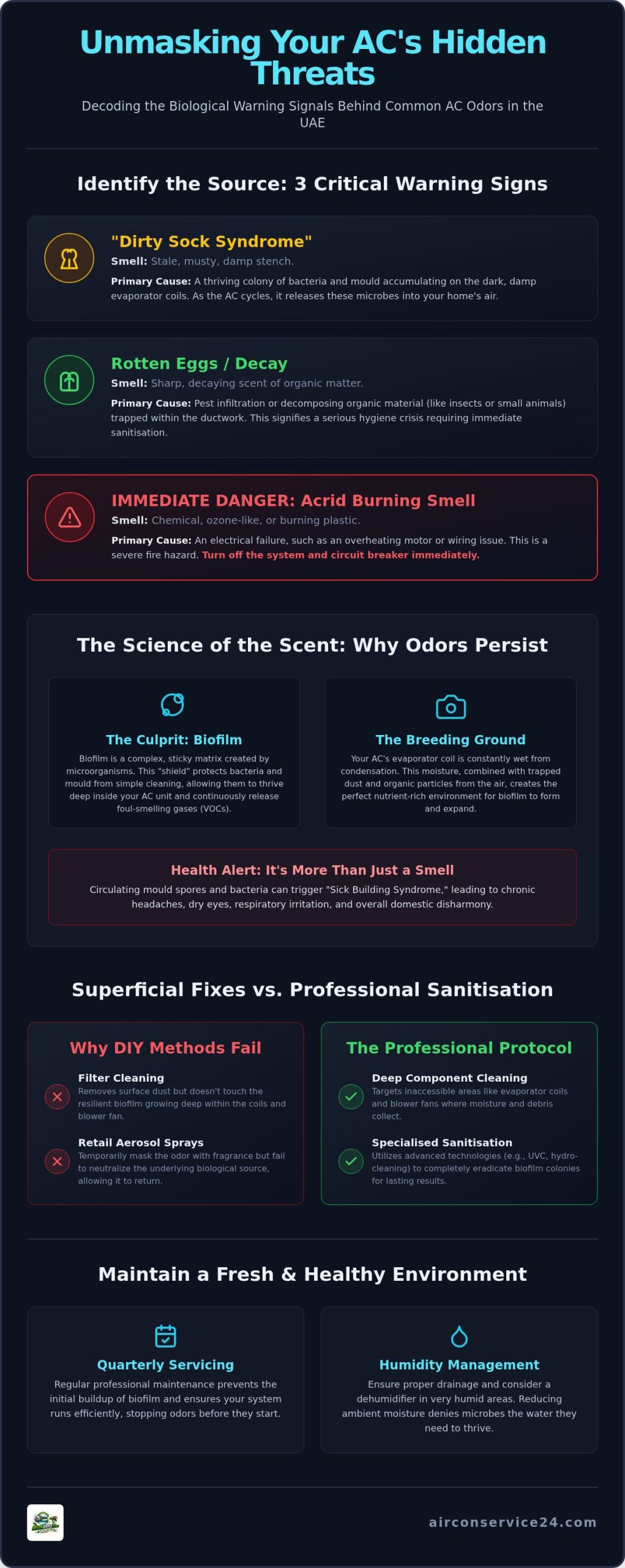
Restoring a home’s air quality requires more than just effort; it demands a disciplined, military-grade sequence of actions. Our protocol for ac odour removal dubai isn’t a generic cleaning checklist. It’s a targeted intervention designed to neutralize biological threats at their source. We approach every unit with a “ready-to-act” energy, ensuring that no pocket of bacteria remains to compromise your domestic harmony. By following a structured workflow, AirConService24.com eliminates the guesswork and provides a predictable, high-quality result for every resident.
Our five-step methodology ensures total system hygiene:
- Step 1: Comprehensive Diagnostic: We identify the specific odour profile, distinguishing between microbial growth, mechanical failure, or pest-related issues.
- Step 2: Deep Pressure Washing: Using specialized nozzles, we blast away the accumulated grime from the evaporator coils and the blower fan.
- Step 3: Medical-Grade Sanitisation: We treat the condensate tray and drain line to dissolve the biological sludge that standard cleaning misses.
- Step 4: Internal Cabinet Disinfection: The entire internal housing and accessible ventilation ducts are treated with high-efficacy biocides.
- Step 5: Final Air Quality Verification: We perform a final test to ensure the airflow is fresh, clean, and free of volatile organic compounds.
Targeting the Evaporator and Drain Line
The “rotten egg” smell often originates from a thick, jelly-like sludge that builds up in the condensate drain line. This substance is a concentrated form of the biofilm we discussed earlier. It traps stagnant water, creating a septic environment right inside your cooling system. Our technicians use high-pressure flushing to clear these blockages completely. By ensuring that condensate flows freely, we remove the moisture reservoir that mould requires to survive. This isn’t just about removing a smell; it’s about re-engineering the internal environment to prevent future growth.
Medical-Grade Disinfection for Lasting Results
Mechanical removal is only half the battle. To prevent the rapid return of odours, we apply non-toxic, professional-grade biocides that penetrate the microscopic crevices of your HVAC system. Professional sanitisation eliminates 99.9% of odour-causing bacteria on contact. These agents reach deep into the ductwork, neutralizing spores that have migrated away from the main unit. This level of thoroughness ensures that the freshness lasts long after our team has left your property. If you’re ready to secure your home’s air quality, you can book our specialist odour removal service today to experience the difference of a truly clinical clean.
Maintaining a Fresh Environment: Prevention Strategies for the UAE
Sustaining a pristine indoor environment in the UAE’s climate requires a shift from reactive repairs to disciplined prevention. Once you’ve invested in a professional ac odour removal dubai service, the objective is to ensure the biological triggers for foul scents never return. In a region where air conditioning accounts for approximately 70% of a home’s total electricity usage, maintenance is a matter of both hygiene and financial prudence. Neglect leads to rapid biofilm accumulation; vigilance leads to lasting domestic harmony.
A fresh home environment is built on four pillars of prevention:
- Quarterly Servicing: Dubai’s dust and humidity demand professional intervention every three months to prevent microbial colonies from establishing a foothold.
- Humidity Control: Keep indoor humidity levels below 60% to inhibit mould germination in the dark recesses of your ductwork.
- High-Efficiency Filtration: Use filters with a high MERV rating to trap the organic “food” that bacteria need to thrive.
- Early Detection: Act at the first sign of stale air or moisture beads on your vents before a minor issue evolves into a full-scale odour crisis.
Proactive Maintenance Plans
Securing an annual maintenance contract is the most effective defence against the return of musty smells. These plans ensure a “disciplined guardian” regularly inspects the evaporator coils and drain lines, clearing away debris before it becomes a septic sludge. Beyond hygiene, routine care is directly linked to system longevity and energy efficiency. By staying ahead of technical degradation, the likelihood of needing Emergency AC Repair Dubai is significantly reduced. You’re not just buying a service; you’re securing the long-term health of your home’s respiratory system.
Daily Habits for Cleaner Air
Your daily interactions with your HVAC system play a critical role in preventing odours. Set your thermostat to “Auto” rather than “On” to ensure the system cycles correctly, allowing the evaporator coils time to drain and dry. Adequate ventilation in high-moisture areas like kitchens and bathrooms is also essential to prevent humid air from being pulled into the central AC return. If you notice even a faint hint of a “dirty sock” scent, don’t wait for it to worsen. Call for an elite specialist immediately to perform a targeted ac odour removal dubai. Early intervention is always faster, more cost-effective, and more successful in preserving the clinical purity of your indoor air.
Secure Your Home’s Environmental Harmony
A fresh, healthy home isn’t an accident; it’s the result of a disciplined approach to domestic hygiene. We’ve explored how complex biofilms and stagnant moisture create the persistent scents that plague many UAE households. While retail sprays only mask the symptoms, our medical-grade protocols address the biological root cause. You now understand that professional ac odour removal dubai requires accessing the deepest components of your HVAC system, including the blower fan and drain pan, to ensure a clinical standard of purity.
Your family’s well-being depends on the quality of the air they breathe every hour. Our expert technicians are specialized in deep cleaning treatments that neutralize contaminants, restoring your sanctuary’s freshness and peace of mind. We remain available 24/7 for emergency air quality crises, providing the rapid, methodical response you deserve. Don’t let persistent smells compromise your domestic comfort or health any longer.
Eliminate AC odours today with our 24/7 expert sanitisation services. It’s time to reclaim the fresh, clean atmosphere your home was meant to provide.
Frequently Asked Questions
Why does my AC smell like rotten eggs in Dubai?
A rotten egg smell is typically a sign of organic decomposition or pest infiltration within your ductwork. In the extreme heat of the UAE, any organic matter trapped in the system decays rapidly, releasing hydrogen sulfide gas. This is a hygiene emergency that requires immediate inspection to locate the source and perform thorough ac odour removal dubai. Ignoring this scent allows bacteria to spread throughout your entire ventilation network.
Is the musty smell from my AC dangerous to my health?
Yes, persistent musty smells are a clear indicator of active mould and bacterial growth within your unit. These microorganisms release spores and volatile organic compounds that can lead to headaches, dry eyes, and respiratory irritation. In the sealed environments of Dubai’s villas and apartments, these pollutants circulate continuously. Professional sanitisation is essential to protect your family’s well-being and prevent the long-term effects of poor indoor air quality.
Can I use household bleach to clean my AC coils?
You should never use household bleach to clean your AC coils. Bleach is highly corrosive and can permanently damage the delicate aluminium fins, leading to expensive repairs or system failure. It also lacks the surfactant properties needed to penetrate a mature biofilm matrix. Instead, we use specialized, non-toxic biocides that are specifically formulated to neutralize microbes without compromising the structural integrity of your air conditioning components.
Why does my AC smell like something is burning?
An acrid burning smell is a critical warning sign of an electrical malfunction or a failing motor. This indicates that components are overheating or short-circuiting, which poses a direct fire hazard to your home. If you detect this scent, turn off your system at the main breaker immediately. Our technicians are available 24/7 to provide a rapid diagnostic and resolve the mechanical failure before it leads to a catastrophic emergency.
How long does a professional AC odour removal service take?
A comprehensive ac odour removal dubai service generally takes between 2 and 4 hours per unit. This timeframe allows our specialists to perform a complete diagnostic, deep pressure wash the evaporator coils, and apply medical-grade sanitisation to the drain lines. The exact duration depends on the level of microbial accumulation and the accessibility of your ductwork. We prioritize a methodical, thorough approach to ensure the freshness is restored permanently.
What is the ‘dirty sock syndrome’ in air conditioners?
Dirty sock syndrome refers to the stale, pungent odour caused by bacterial colonies flourishing on your evaporator coils. This occurs when moisture from condensation mixes with accumulated dust to create a nutrient-rich environment for microbes. These bacteria form a protective biofilm that is resistant to standard cleaning methods. Eliminating this stench requires a disciplined sanitisation protocol that breaks down the biological matrix and restores the unit’s internal hygiene.
How often should I sanitise my AC in the UAE climate?
We recommend a professional sanitisation every 18 to 24 months for most residential properties in the UAE. However, quarterly maintenance checks are essential to monitor for early signs of biological growth. Given Dubai’s high humidity and dust levels, more frequent interventions may be necessary if your system runs continuously. Regular care prevents the buildup of resilient biofilms, ensuring your indoor air remains fresh and your system operates at peak performance.
Will deep cleaning my AC also lower my DEWA or utility bills?
Deep cleaning your AC can lead to a noticeable reduction in your utility bills. When coils are covered in dust and biofilm, the system must work much harder to achieve the desired temperature, consuming more electricity. Since air conditioning accounts for roughly 70% of total energy usage in UAE homes, improving heat exchange efficiency is a direct way to lower DEWA costs. A clean system is an efficient system that saves you money.
Biofilm in AC Units: Hidden Biological Risk in UAE (2026)
Article by
Jon Bonnett
Australian Air Conditioning Specialist with extensive hands-on experience in AC servicing, deep cleaning, maintenance, and troubleshooting. Focused on high-quality workmanship, reliability, and professional service to UAE standards.
What if that persistent musty smell in your living room isn’t just dust, but a living, breathing biological fortress? You’ve likely cleaned your filters and checked the vents, yet the “dirty sock syndrome” remains a constant, unwelcome guest in your home. It’s frustrating to feel like your indoor environment is compromised despite your best efforts. This invisible sludge, known as biofilm in AC unit UAE systems, is a complex microbial colony that thrives in our unique desert humidity and high-condensation environments.
You deserve a home that supports your health rather than challenging it. We’re going to dive into the science of how these bacterial layers form and why standard DIY cleaning only removes about 40% of the surface dirt. You’ll discover how to identify the signs of a biological threat, understand the latest 2026 UAE indoor air quality regulations, and learn the professional sanitisation methods required to restore your system’s efficiency. From high-tech nanobubble removal to silver ion coatings, we’ll show you how to transform your AC from a hidden risk into a source of pure, revitalising air.
Key Takeaways
- Understand why the UAE’s high humidity creates a breeding ground for biological sludge that standard filter cleaning fails to reach.
- Learn how biofilm acts as a reservoir for pathogens and significantly reduces cooling efficiency by insulating internal components.
- Discover why specialized sanitisation is the only effective way to penetrate the resilient protective layers of biofilm in AC unit UAE systems.
- Identify the specific “nose tests” and visual cues, such as jelly-like drain clogs, that signal a biological emergency in your home.
- Explore the professional deep cleaning and odour removal solutions that restore domestic harmony and ensure compliance with 2026 indoor air quality standards.
Understanding AC Biofilm: The “Invisible Sludge” in UAE Cooling Systems
Biofilm isn’t just a layer of common grime. It’s a sophisticated, living community of bacteria, fungi, and other microorganisms that anchor themselves to your air conditioner’s wet internal surfaces. To truly understand the risk, we must ask: What is a biofilm? Scientifically, it’s a collective of one or more types of microorganisms that grow on many different surfaces, creating a protective matrix. In the context of your home, biofilm in AC unit UAE systems appears as a thick, jelly-like sludge that clogs drain lines and pollutes your breathing air.
The UAE climate provides the perfect laboratory for this biological growth. With outdoor temperatures frequently exceeding 40°C and humidity levels spiking, your AC works overtime to maintain comfort. This constant operation creates a steady stream of condensation within the dark, cool recesses of your unit. The condensate drain pan becomes the primary breeding ground. Because most residents run their cooling systems 24/7 to combat the desert heat, these biological colonies never face a “dry” period. This allows them to colonize surfaces at an accelerated rate compared to systems in more temperate climates.
The Anatomy of a Biofilm Colony
These colonies are remarkably resilient because of Extracellular Polymeric Substances (EPS). Think of EPS as a biological “glue” or “jelly” that the bacteria secrete to shield themselves from standard cleaners and environmental stress. This sticky matrix allows the biofilm to grip onto metal evaporator coils and plastic drain lines with incredible tenacity. What begins as a microscopic, invisible layer quickly evolves into a visible, foul-smelling sludge. Once this stage is reached, the buildup can completely obstruct water flow, leading to the sudden indoor leaks many Dubai residents face during peak summer.
Why UAE Homes are Particularly Vulnerable
Our indoor spaces in the Emirates are designed to be airtight to keep the intense heat out. While this is efficient for cooling, it creates a sealed environment where organic particles, skin cells, and pet dander are constantly recirculated. These particles serve as a primary food source for microbes. Additionally, the fine desert dust that inevitably finds its way indoors is rich in minerals that act as nutrients for these colonies. When you combine these nutrients with the heavy condensation caused by humidity swings between coastal areas and the drier desert interior, you create an ecosystem where biofilm in AC unit UAE doesn’t just exist; it thrives. Standard maintenance often misses these deep-seated layers, requiring a more technical approach to environmental hygiene.
The Biological Threat: How Biofilm Degrades Air Quality and Efficiency
Biofilm isn’t merely a mechanical nuisance. It’s a complex, living threat that actively degrades the air you breathe and the efficiency of your cooling system. While many residents associate AC issues with simple dust, the reality of biofilm in AC unit UAE involves a persistent biological colonization that acts as a reservoir for dangerous pathogens. These colonies provide a protective shelter for Legionella bacteria and various mould species, effectively shielding them from environmental changes and many standard cleaning agents. This biological fortress allows contaminants to survive and multiply in areas you might assume are clean.
One of the most immediate signs of this colonization is “Dirty Sock Syndrome.” This occurs when the metabolic processes of the bacteria and fungi within the biofilm release volatile organic compounds (VOCs) into the airstream. These gases produce that unmistakable musty or vinegary odour that persists even after you’ve changed your filters. It’s a clear signal that your indoor environment is being compromised by a living organism. When these smells appear, your system is no longer just cooling your home; it’s actively distributing microbial byproducts throughout your living space.
Indoor Air Quality (IAQ) and Respiratory Health
Microbial metabolism doesn’t just create smells; it releases microscopic fragments and spores into your home. When the blower fan kicks in, these biological particles are blasted into your living spaces, contributing to “Sick Building Syndrome.” Residents often report headaches, eye irritation, and persistent fatigue without realizing their AC is the source. Biofilm acts as a constant source of airborne irritants that can significantly exacerbate chronic respiratory conditions and trigger sudden inflammatory responses. Exposure to the aerosolised microbial fragments found in AC biofilm is a primary environmental trigger for acute asthma attacks in residential settings.
Mechanical Consequences and Energy Waste
Beyond health risks, biofilm is an enemy of mechanical efficiency. It acts as a powerful thermal insulator. When a layer of biofilm in AC unit UAE coats your heat-exchange coils, it prevents the refrigerant from effectively absorbing heat from the air. Your system has to run longer and harder to reach the set temperature, leading to a sharp rise in monthly DEWA or Empower bills. This isn’t just a minor fluctuation; biological fouling can reduce heat transfer efficiency by a measurable margin, forcing the entire system to work under extreme stress.
This biological growth also physically restricts airflow. As the “jelly” thickens, it increases static pressure within the unit, forcing the fan motor to consume more electricity. Over time, the acidic metabolic byproducts produced by these microbes can even corrode sensitive aluminium fins and copper tubing. To prevent these costly mechanical failures, professional sanitisation and deep cleaning are essential to remove the biological “root” of the problem.
Why Standard Maintenance Fails to Eliminate Persistent Biofilm
Many homeowners believe that a quick rinse of the mesh filters is enough to maintain a healthy system. It isn’t. While dust sits loosely on surfaces, biofilm in AC unit UAE systems is a living structure that physically bonds to your unit’s internal architecture using the protective matrix we discussed earlier. Standard maintenance packages often focus on the visible parts, yet the real threat lives in the dark, damp crevices of the evaporator coils and deep within the drain lines. These areas are frequently ignored during a basic service, allowing the biological “seed” to remain and regrow.
Flushing a drain line with water might clear a temporary blockage, but it rarely eradicates the root cause. Biofilm is notoriously resistant to common household detergents and light chemical sprays. The protective “jelly” layer acts as a chemical shield. It allows the bacteria beneath to survive even after a surface-level cleaning. Without the right mechanical agitation and specialised chemicals, you’re simply trimming the top of a weed while leaving the roots to flourish. This is why many residents find themselves calling for help just weeks after a supposed “full service.”
Basic Service vs. Deep Sanitisation
There’s a vast difference between a 30-minute “check-up” and a professional 4-hour deep decontamination. A routine inspection might confirm the unit is running, but it won’t address the hidden colonization on the blower wheel or the back of the evaporator coils. These hidden components are critical because they are in the direct path of the airflow. Professional-grade biocides are necessary for complete eradication. These aren’t your typical grocery store cleaners; they’re specifically formulated to dissolve the EPS matrix and neutralise pathogens at the molecular level, ensuring the biofilm in AC unit UAE is truly eliminated rather than just suppressed.
The Danger of Incomplete Cleaning
Superficial cleaning can actually be counterproductive. When a technician uses high-pressure air or water without proper sanitisation, they risk aerosolizing the disturbed microbes. These biological fragments are then pushed back into your living space the moment the unit is turned on. This explains why that musty, vinegary smell often returns within 48 to 72 hours of a basic service. To achieve a lasting result and protect your family’s health, understanding the importance of professional AC maintenance UAE is vital. A comprehensive approach ensures that every internal component is stripped of its biological load, preventing the rapid re-colonization that follows incomplete cleaning methods.
Identifying the Warning Signs and the Path to Professional Removal
Recognizing the early signals of biological colonization can save you from a major cooling crisis. The most reliable diagnostic tool you have is your sense of smell. A sharp, vinegary or musty odour that intensifies when the unit first starts is a classic indicator of biofilm in AC unit UAE. If you detect a sulfurous or “rotten egg” scent, it suggests anaerobic bacteria are thriving in stagnant water deep within your drain lines. These aren’t just unpleasant smells; they’re active distress signals from your HVAC system.
Visual confirmation often follows the olfactory warning. Inspect your condensate drain tray or the area around your indoor unit. If you see a thick, translucent, or greyish “jelly,” you’ve found the biofilm matrix. You might also notice small black spots or “speckling” on your supply vents. These aren’t always mould spores; they’re often dried fragments of the biofilm that have been ripped from the internal components and blasted into your room. When these fragments appear, the colonization is already advanced and requires immediate intervention.
A Homeowners Checklist for Biofilm Detection
Proactive monitoring is the best way to maintain a healthy indoor environment. Use this structured checklist to evaluate your system’s biological status regularly:
- Inspect Supply Vents: Look for dark staining or sticky residue on the louvres that doesn’t wipe away easily like dry dust.
- Monitor Drain Blockages: If your AC drain line clogs more than once every six months, a biological sludge is likely the culprit rather than simple debris.
- Track Energy Consumption: Compare your monthly DEWA or Empower bills. An unexplained spike in cooling costs often points to biological fouling on the coils that forces the compressor to work harder.
The Deep Cleaning and Sanitisation Workflow
Eradicating a mature colony requires more than a spray bottle and a cloth. Our technicians use advanced equipment to perform high-pressure coil washing that physically strips the biofilm away. We don’t just rinse; we apply mechanical agitation to the drain pan and lines to break the resilient biological bond. This is followed by the application of UAE-approved sanitisation agents that are specifically formulated to neutralise microbial “seeds” and prevent rapid regrowth. This methodical approach ensures your system meets the strict indoor air quality standards set by Dubai Municipality under the DM-HSD-GU119-IAQ guidelines.
Don’t let a hidden biological threat compromise your home’s comfort and air quality. If you’ve noticed any of these warning signs, it’s time to act before a minor clog becomes a major repair. Book a professional sanitisation and deep clean today to secure your indoor environment and restore your system’s efficiency.
Restoring Domestic Harmony: Specialist Deep Cleaning Solutions
Eliminating the invisible sludge requires more than just intent; it requires a methodical, high-stakes response. We don’t just treat symptoms. At AirConService24.com, we target the biological root cause of biofilm in AC unit UAE systems. Our process focuses on complete environmental restoration. By removing the protective matrix that bacteria build, we ensure your home returns to a state of domestic harmony. This isn’t a mechanical luxury. It’s a fundamental requirement for a healthy, comfortable lifestyle in the Emirates. Our specialised odour removal treatments don’t just mask the “dirty sock” smell with perfumes; they neutralise the volatile organic compounds at their source. This precise methodology ensures the air exiting your vents is as fresh as it is cool.
The AirConService24.com Difference
Our “Disciplined Guardian” approach means we treat your indoor air quality with the gravity it deserves. We use advanced sanitisation protocols designed to eliminate 99.9% of biological threats, including the pathogens that thrive in sealed desert environments. We remain calm and methodical even when a system failure feels like an emergency. If a biological clog leads to a sudden flood or total system shutdown, our 24/7 availability ensures that urgent biofilm-related failures are resolved before they escalate into costly structural damage. We provide the professional reassurance you need during a cooling crisis, delivering results that meet the highest modern standards of excellence.
Long-term Prevention Strategies
In the UAE’s demanding climate, professional AC cleaning is recommended at a minimum of every six months for residential properties. For commercial spaces, quarterly service is the advised standard for maintaining biological control. Investing in an annual maintenance contract provides the structured oversight needed to prevent the return of biofilm in AC unit UAE. These agreements offer a sense of order and predictability, ensuring your system runs efficiently without biological buildup. If your system has already reached a breaking point due to a severe blockage or mechanical stress, you may need Emergency AC Repair for high-stakes cooling crises to restore immediate functionality.
The path to a healthier home begins with a comprehensive system audit. Let our experts assess your unit’s biological load and provide a clear, transparent roadmap to total decontamination. We’re ready to act. Scheduling an audit today is the first step toward a system that runs with peak precision, protecting both your health and your cooling efficiency for the long term.
Securing a Healthier Indoor Future
Biofilm is more than a mechanical hurdle; it’s a complex biological challenge that demands a sophisticated solution. We’ve explored how this resilient sludge compromises your breathing air and drives up energy costs, often remaining untouched by basic maintenance routines. Eradicating biofilm in AC unit UAE requires a methodical approach that combines technical expertise with advanced decontamination. We’re ready to act. By identifying the early warning signs of “dirty sock syndrome” and acting decisively, you protect your family’s respiratory health and your system’s longevity.
Our team stands ready as your disciplined guardian, offering comprehensive deep decontamination protocols and 24/7 emergency technical support. As specialised odour removal experts, we ensure your home remains a sanctuary of fresh, clean air. Protect your home with professional AC Deep Cleaning and Sanitisation to eliminate hidden risks for good. You deserve a living space that supports your well-being with every breath.
Frequently Asked Questions
What exactly is biofilm in an AC unit and why is it dangerous?
Biofilm is a complex, living community of microorganisms that anchors itself to your unit’s wet internal surfaces using a protective, sticky matrix. It’s dangerous because it acts as a resilient shield for pathogens like Legionella and various mould species, effectively protecting them from standard cleaning agents. Once established, these colonies release harmful biological fragments and gases directly into your home’s air supply, compromising your respiratory health.
How do I know if my AC has biofilm or just normal dust?
Biofilm is characterized by a wet, jelly-like texture and a persistent musty or vinegary odour. Unlike normal dust, which is dry and powdery, biofilm in AC unit UAE systems forms a sticky sludge that bonds to drain pans and coils. If you see translucent or greyish slime in your condensate tray, you’re dealing with a biological colony rather than simple environmental dirt.
Can biofilm cause my AC to leak water inside my home?
Yes, biological sludge is a primary cause of indoor water leaks in the Emirates. As the biofilm grows, it creates thick clogs within the narrow condensate drain lines that water cannot pass through. When moisture can’t exit the system through the dedicated plumbing, it overflows the internal drain pan and leaks into your living space, potentially causing significant structural damage to ceilings and walls.
Why does my AC smell musty even after I clean the filters?
Cleaning your filters only removes surface dust, not the microbial colonies living deep inside the unit’s core. The “dirty sock syndrome” smell is caused by the metabolic processes of bacteria and fungi thriving on your evaporator coils and drain pan. These organisms release volatile organic compounds (VOCs) that bypass your filters and contaminate your indoor environment regardless of how clean the mesh appears.
Is a standard AC service enough to remove biofilm in the UAE?
No, a basic check-up typically lacks the intensity required to penetrate a biological matrix. Standard maintenance often focuses on surface cleaning and basic mechanical checks. To truly eradicate biofilm in AC unit UAE, you need a deep sanitisation process that utilizes professional-grade biocides and mechanical agitation to break the resilient bonds of the colony and prevent rapid regrowth.
How often should I have a deep cleaning to prevent biofilm growth?
Residential properties in the UAE should undergo professional deep cleaning every six months to stay ahead of biological growth. For commercial spaces or high-occupancy buildings, quarterly service is the recommended standard. This frequency ensures that condensation doesn’t have enough time to foster mature microbial colonies during the intense summer humidity when cooling systems run 24/7.
Are the chemicals used in AC sanitisation safe for my family?
Yes, professional technicians use UAE-approved sanitisation agents that are specifically formulated for indoor environments. These biocides are designed to be lethal to bacteria and fungi while remaining non-toxic to humans and pets when applied correctly. They effectively neutralise biological threats without leaving harmful residues, ensuring your home’s air remains safe and healthy for everyone after the service is complete.
Can biofilm buildup increase my monthly DEWA or utility bills?
Yes, biological fouling significantly inflates your utility costs by acting as a thermal insulator on your heat-exchange coils. When biofilm coats these components, it prevents the system from absorbing heat efficiently from the air. Your AC must run for much longer periods and consume more electricity to reach the desired temperature, leading to a measurable spike in your monthly DEWA or Empower consumption.
AC Maintenance UAE: The Complete 2026 Reference for Homeowners
Article by
Jon Bonnett
Australian Air Conditioning Specialist with extensive hands-on experience in AC servicing, deep cleaning, maintenance, and troubleshooting. Focused on high-quality workmanship, reliability, and professional service to UAE standards.
Did you know that air conditioning accounts for approximately 70% of the total electricity usage in your home? It’s a staggering figure that explains those punishing monthly bills, especially when you’re also battling musty odors and the constant threat of a system failure during a 45°C heatwave. We understand that in this climate, your cooling system isn’t a luxury; it’s a critical lifeline for your family’s health and domestic harmony.
By mastering the modern standards for AC maintenance UAE, you can reclaim total control over your indoor environment. This guide provides the definitive 2026 reference for homeowners to ensure peak cooling performance, eliminate indoor allergens, and extend the lifespan of your expensive HVAC equipment. You’ll discover the precise steps for deep cleaning, the importance of professional sanitisation, and how to align your home with the latest federal environmental regulations. We’ll show you how to transform your AC from a source of anxiety into a high-performance asset that delivers clean air and predictable costs all year round.
Key Takeaways
- Understand how the UAE’s extreme heat and fine dust impact your system and why proactive care is essential for domestic harmony.
- Learn the specific sequence of a professional technical inspection, including critical safety checks on electrical components like capacitors and contactors.
- Distinguish between basic servicing and restorative deep cleaning to choose the right level of AC maintenance UAE for your home’s air quality.
- Identify the optimal pre-summer maintenance window to maximize energy efficiency and prevent sudden system failures during peak heat.
- Discover how specialized sanitisation and odour removal techniques create a healthier, allergen-free indoor environment. It’s about more than just cooling.
The Critical Role of AC Maintenance in the UAE Climate
In the Emirates, air conditioning is the invisible heartbeat of every home. Professional AC maintenance UAE is far more than a simple check-up; it’s a vital technical and hygienic intervention designed to protect complex HVAC systems from a hostile environment. While residents see a cooling vent, engineers see a machine battling three relentless forces: extreme ambient temperatures, fine particulate desert sand, and high coastal humidity. When you neglect these systems, you aren’t just risking a breakdown. You’re inviting a financial and health crisis into your living space.
The financial consequences are immediate. Neglected units force compressors to work significantly harder to achieve the same cooling effect, which directly inflates your DEWA or utility consumption. Research indicates that air conditioning accounts for approximately 70% of total electricity usage in the UAE. However, consistent maintenance can reduce this consumption by 20% to 30%. This turns a technical necessity into a savvy financial strategy that pays for itself through lower monthly overheads.
Environmental Impact on Mechanical Components
The UAE climate is uniquely aggressive toward mechanical parts. Fine desert sand acts as a relentless abrasive on moving components and quickly clogs the delicate aluminium fins of your condenser. When temperatures soar above 50°C, refrigerant pressures spike and oil viscosity changes, which often leads to premature compressor failure. High humidity levels in coastal areas also accelerate corrosion on outdoor units, eating away at the very components meant to keep you safe from the heat. Without a disciplined guardian overseeing these parts, the lifespan of your unit can drop by as much as five years.
The Health Connection: Indoor Air Quality (IAQ)
Your AC system functions as the “lungs of the home.” In a region where residents spend about 90% of their time indoors, the quality of the air circulating through your vents is a primary health factor. Unmaintained systems become traps for pollen, skin cells, and mould spores, contributing to what is known as “Sick Building Syndrome.” For UAE residents, Indoor Air Quality (IAQ) is the precise measurement of airborne pollutants and humidity levels within a closed-loop ventilation system. Maintaining this balance is essential for respiratory health and domestic well-being, especially when specialised AC equipment is involved in filtering out the 2 to 5 kilograms of dust that can accumulate in a typical villa’s ductwork annually.
The Anatomy of a Professional AC Maintenance Visit
A professional visit is a surgical strike against heat and dust. It follows a rigorous, methodical sequence designed to pre-empt system failure before it occurs. High-quality AC maintenance UAE isn’t just about cleaning filters; it’s a deep-dive diagnostic of the system’s electrical and mechanical integrity. Technicians begin with a comprehensive electrical safety audit. They inspect contactors for pitting and test capacitors to ensure they meet precise microfarad ratings. Loose terminals are a significant fire hazard in the high-vibration environment of an HVAC system, so every connection is torqued to professional standards to ensure total reliability.
Mechanical verification follows this electrical check. Blower motors are assessed for bearing wear, and vibration isolation pads are checked to ensure they haven’t degraded under the punishing UAE sun. Refrigerant management is perhaps the most critical technical step in the process. Identifying micro-leaks early prevents the “low gas” scenarios that lead to frozen coils and catastrophic compressor burnout. With the 2026 federal regulations on greenhouse gas emissions now in full effect, proper refrigerant handling is also a legal necessity for environmentally conscious homeowners who value sustainability as much as comfort.
Indoor Unit (IDU) Technical Protocols
The indoor unit requires a high level of hygiene to maintain good indoor air quality. Simple rinsing is insufficient; professional-grade sanitisation is required to eliminate the biofilm and bacteria that thrive in dark, damp evaporator coils. Technicians flush the drain lines with high pressure to prevent the “indoor waterfall” effect caused by algae clogs. Finally, thermostat calibration ensures your AC equipment reads room temperatures accurately, preventing the system from overworking due to faulty sensor data. If you haven’t had your sensors checked lately, you might be paying for cooling you don’t actually need — and if calibration errors are a recurring issue, a dedicated AC thermostat repair UAE specialist can diagnose and resolve the root cause precisely.
Outdoor Unit (ODU) Technical Protocols
The outdoor condenser is the frontline soldier against the desert heat. Coil cleaning is vital to remove the salt and dust crust that insulates the unit and prevents efficient heat exchange. A compressor health check involves measuring the amperage draw; an elevated reading is a clear warning sign of impending mechanical failure. Technicians also inspect fan blades for balance and debris, as even a small wobble can lead to motor failure during a peak July afternoon. If you notice unusual noises or reduced cooling, it’s time to book a professional inspection before a minor issue becomes a total system replacement.
Deep Cleaning vs. Basic Servicing: Choosing the Right Level
Choosing between a basic service and a comprehensive deep clean is often the difference between mere survival and true domestic comfort. Basic servicing acts as a routine technical check-up. It’s designed for functional systems that require standard preventative care, such as filter rinsing and electrical safety checks. However, deep cleaning is a restorative technical intervention. It targets the internal contamination that a standard visit cannot reach. While basic care keeps the machine running, deep cleaning ensures the air you breathe remains sterile and revitalizing.
A common misconception among residents is that cold air equals a healthy system. You might feel the chill, but if the internal coils are coated in biofilm, your unit is working twice as hard and circulating invisible pollutants. Professional AC maintenance UAE must eventually include a deep clean to strip away the layers of dust and organic matter that accumulate over time. This process isn’t just about cooling; it’s about reclaiming the biological safety of your home. If you wait until the system fails to cool, you’ve already allowed the hardware to sustain unnecessary wear.
When to Opt for Deep Cleaning and Sanitisation
There are undeniable signals that your system has moved beyond the help of a basic service. The most notorious is the “dirty sock” smell. This unpleasant odour is a direct byproduct of bacterial colonies thriving on your damp evaporator coils. You should also inspect your vents and blower wheels for visible dark spots or mould growth. If your family is experiencing unexplained sneezing, itchy eyes, or sudden respiratory irritation, your AC is likely no longer a cooling device but a source of contamination that requires immediate sanitisation.
The Science of Sanitisation and Odour Removal
Effective sanitisation requires more than a simple rinse. Technicians utilize professional-grade biocides specifically formulated to dissolve stubborn biofilm without corroding the delicate aluminium fins of your unit. This scientific approach ensures that pathogens are eliminated at the source rather than simply being washed further into the system. At AirConService24.com, we specialize in these advanced odour removal and sanitisation protocols. We don’t just mask smells with temporary perfumes; we technically restore the fresh, neutral environment your home deserves. It’s a methodical process that combines chemical precision with mechanical thoroughness to protect your family’s well-being and domestic harmony.
Maximizing Efficiency: Maintenance Schedules and Energy Savings
Consistency is the foundation of mechanical reliability. In a climate where systems run for over 3,000 hours annually, a “set and forget” mentality is a recipe for financial waste. Effective AC maintenance UAE requires a transition from reactive repairs to a disciplined, scheduled strategy. For most residential properties, a bi-annual professional intervention is the bare minimum, while larger villas or those with high occupancy benefit significantly from quarterly check-ups. This proactive approach ensures that minor component wear is identified before it triggers a total system shutdown during the most punishing months of the year. Homeowners looking to eliminate unpredictable repair costs entirely should consider the structured protection offered by an annual AC maintenance contract UAE providers recommend for comprehensive year-round coverage.
The “Pre-Summer Peak” window, stretching from February to April, is the most critical period for your HVAC strategy. During these months, ambient temperatures are moderate, allowing technicians to perform deep cleans and restorative work without leaving your home in unbearable heat. Waiting until May or June often means joining a long queue of emergency callers, usually at a time when your system is already under maximum stress. Annual Maintenance Contracts (AMCs) offer a solution for predictable budgeting, providing the peace of mind that comes with pre-scheduled visits and priority response times during crises.
The 2026 Recommended Maintenance Calendar
- Quarter 1 (Jan – Mar): Focus on the Pre-Heat Deep Clean. This involves restorative coil sanitisation and system prep to clear out winter dust accumulation.
- Quarter 2 & 3 (Apr – Sept): Shift to performance monitoring. Clean or replace filters every 30 days and monitor amperage draw to ensure the system handles the peak load efficiently.
- Quarter 4 (Oct – Dec): Execute post-summer recovery. This is the time for winter mode settings and checking for any wear sustained during the high-heat cycle.
Energy Saving Strategies for UAE Residents
Your thermostat habits directly dictate your utility overheads. Raising your setting by just 1°C can reduce your cooling bill by approximately 6% without significantly compromising thermal comfort. This efficiency is only possible, however, when your mechanical components are pristine. Clean coils facilitate rapid heat exchange, which reduces the overall compressor run-time and prevents the unit from “cycling” unnecessarily. If unpredictable temperatures or short-cycling are affecting your efficiency, understanding the full scope of AC thermostat repair UAE homeowners rely on can help you resolve calibration errors before they inflate your bills further. The return on investment for scheduled care is undeniable; the cost of a routine visit is a mere fraction of the investment required for an emergency AC repair when a system fails on a 48°C afternoon. To secure your home against the upcoming heat, you should enquire about our professional maintenance packages today.
Reliable AC Maintenance with AirConService24.com
AirConService24.com isn’t just another service provider. We are the disciplined guardians of your home environment. In the high-stakes reality of a UAE summer, you need more than a technician; you need a methodical partner who remains calm and precise when the mercury hits 50°C. Our approach to AC maintenance UAE is built on a foundation of professional reassurance and technical excellence. We eliminate the anxiety of system failure by providing clear expectations and delivering results that go beyond simple cooling. It’s about restoring domestic harmony through elite care.
Our 24/7 emergency response capability isn’t a bonus feature; it’s a standard of reliability. We understand that a midnight breakdown is a crisis for your family’s well-being. Our specialists are always ready to act, bringing a sophisticated, quality-focused demeanor to every call. Transparency and integrity define our workflow. Every inspection is documented, every recommendation is justified, and every action is aimed at extending the lifespan of your critical HVAC assets. You’ll never have to wonder about the status of your cooling or the value of your investment.
Why National Coverage Matters for UAE Property Owners
Operating under PANKOBAU Building Maintenance LLC, we provide a centralized standard of excellence across the entire nation. Whether you own a villa in Dubai or an apartment in Abu Dhabi, you receive the same elite level of care. Our deep understanding of UAE-wide environmental challenges, from coastal humidity to inland desert sand, allows us to tailor our maintenance to the specific stressors of your location. This national reach ensures that our quality control remains rigorous and our response times stay optimized for the efficiency you expect from a premium specialist. We bring a unified, expert perspective to every building type in the Emirates.
Getting Started: Your Path to a Cooler Home
Securing your domestic harmony begins with a simple, structured booking process. When you schedule a professional assessment, you won’t receive guesswork or vague estimates. Our first visit focuses on a comprehensive technical diagnosis, identifying the root causes of inefficiency or odour. We provide a logical, step-by-step progression of the work required, ensuring you have total clarity before we begin. Protect your home, your health, and your monthly budget by choosing a service that prioritizes precision over speed. It’s time to invest in the longevity of your system and the comfort of your family. Contact us today to secure your environment against the heat.
Secure Your Comfort for the Seasons Ahead
Your air conditioning system is the most critical asset in your home. It’s the technical heartbeat of your domestic harmony. By shifting from reactive fixes to a disciplined schedule, you’ve taken the first step toward lower energy bills and superior indoor air quality. We’ve explored how professional AC maintenance UAE transforms your living space through technical precision and hygienic restoration. Whether it’s the meticulous electrical checks of a standard visit or the deep sanitisation required to eliminate persistent odours, every action protects your family’s well-being.
You don’t have to manage these complexities alone. Our expert technicians are available for all system types, providing specialized odour removal and sanitisation that standard services often overlook. With 24/7 emergency support nationwide, we stand as the reliable responder you can trust during the peak of summer heat. Secure your home’s cooling with professional AC maintenance from AirConService24.com and enjoy the peace of mind that comes with a high-performance home. Take control of your environment today and breathe easier knowing your cooling is in expert hands.
Frequently Asked Questions
How often should I perform AC maintenance in the UAE?
Professional maintenance is required at least twice a year to ensure system reliability. In the extreme UAE climate, we recommend a major service during the pre-summer window between February and April, followed by a secondary check in autumn. Monthly filter cleaning is a critical DIY task that prevents dust accumulation and maintains airflow between these professional technical interventions.
Why is my AC blowing air but not cooling the room?
This issue typically indicates a refrigerant leak, a failed capacitor, or heavily soiled condenser coils that can no longer exchange heat. When the fan works but the air remains warm, the cooling cycle has been compromised. It is a high-stakes situation that requires an immediate technical diagnosis to prevent the compressor from overheating and sustaining permanent mechanical damage.
What is the difference between AC cleaning and AC sanitisation?
Cleaning focuses on the mechanical removal of visible dust and debris, while sanitisation utilizes professional-grade biocides to eliminate microscopic bacteria and mould. While basic cleaning improves system efficiency, sanitisation is a restorative process for the biological health of your home. It is an essential component of AC maintenance UAE for residents who prioritize superior indoor air quality and domestic hygiene.
Can regular maintenance really lower my electricity bills in the UAE?
Yes, consistent maintenance can reduce your monthly electricity consumption by 20% to 30%. Clean evaporator coils and calibrated thermostats allow your system to reach the target temperature much faster, which significantly reduces the compressor’s total run-time. This technical efficiency directly translates into lower utility bills and a smaller environmental footprint for your household.
What are the signs that my AC needs an emergency repair?
Immediate signs include total system failure during peak heat, a burning smell, or loud grinding noises from the outdoor unit. You should also watch for water leaking near electrical panels or the unit repeatedly tripping your circuit breaker. These are critical safety warnings that require a 24/7 specialist to intervene before a minor mechanical fault becomes a dangerous electrical hazard.
Is AC duct cleaning necessary every year?
Professional duct cleaning is generally recommended every one to two years for most UAE properties. A typical villa’s ductwork can accumulate between 2 and 5 kilograms of dust annually, which eventually circulates back into your living space. If you notice visible mould growth on your vents or suffer from unexplained allergies, you should schedule a technical inspection regardless of your last service date.
How long does a professional AC maintenance visit typically take?
A standard professional maintenance visit for a single split or package unit usually takes between 45 and 90 minutes. However, a restorative deep cleaning or specialized sanitisation process can extend this duration to approximately three hours. The exact time depends on the current contamination levels of the system and the complexity of the technical protocols required to restore peak performance.
Why does my AC smell like rotten eggs or musty socks?
Musty odours are caused by bacterial colonies thriving on damp coils, while a rotten egg smell often indicates a dead pest or a drainage issue. These unpleasant scents are clear indicators that your system’s hygiene has been compromised. You need professional odour removal and sanitisation to technically eliminate the organic source of the smell rather than simply masking it with temporary perfumes.