Professional AC Sanitisation Service: The Definitive Guide to HVAC Hygiene 2026

Article by
Jon Bonnett
Australian Air Conditioning Specialist with extensive hands-on experience in AC servicing, deep cleaning, maintenance, and troubleshooting. Focused on high-quality workmanship, reliability, and professional service to UAE standards.
What if the very system designed to keep your family comfortable is actually the primary source of the invisible pathogens causing those persistent morning allergies? It’s a common frustration for many homeowners. You invest in a professional ac sanitization service expecting results, yet if the process isn’t clinical, the musty odours and heavy air never truly disappear. You’re right to feel concerned about the health of your children and elderly family members when the indoor environment feels compromised. A simple filter rinse is rarely enough to tackle deep-seated mould and microbial growth.
This definitive guide from AirConService24.com explains why true sanitisation is a clinical intervention rather than a basic chore. By targeting the biological infrastructure within your HVAC system, you can eliminate stubborn odours and restore domestic harmony. We will detail the advanced methodologies used to achieve scientifically cleaner air, improve system efficiency, and provide the professional reassurance your home deserves. It’s time to move past temporary fixes and embrace a methodical, elite approach to environmental hygiene for 2026.
Key Takeaways
- Understand that standard cleaning only removes dust, while a professional ac sanitization service targets the microscopic biofilm and pathogens that compromise your health.
- Identify sensory red flags such as musty or rotten egg odours, which indicate active bacterial metabolism and the need for immediate clinical intervention.
- Learn the methodical, step-by-step workflow experts use, moving from deep-reach inspection to final microbial testing for guaranteed air quality.
- It’s important to differentiate between simple surface cleaning and clinical sanitisation to ensure your home remains a sanctuary of domestic harmony.
- Discover why elite, 24/7 responder support is essential for managing high-stakes hygiene crises and maintaining long-term HVAC efficiency throughout the UAE.
Beyond Surface Cleaning: The Science of Professional AC Sanitisation
Professional AC sanitisation is far more than a routine maintenance task. It’s a clinical intervention designed to dismantle the biological infrastructure that develops within your HVAC system. While standard cleaning focuses on visible dust and debris, a professional ac sanitization service addresses the microscopic pathogens that thrive in the dark, damp recesses of your unit. In the UAE, where high humidity and intense heat create a constant moisture cycle within cooling coils, your AC can quickly become a petri dish for microbial proliferation. We act as the disciplined guardian of your home, moving beyond surface-level aesthetics to ensure your environmental hygiene meets medical-grade standards.
The Problem with Biofilm and Bacterial Colonies
Biofilm is the primary reason why musty odours return shortly after a basic cleaning. It’s a complex, protective matrix of extracellular polymers that shelters bacterial colonies from standard detergents. Think of it as a biological fortress. Basic wiping or vacuuming only disturbs the top layer, leaving the root cause intact. When these colonies remain, they continue to metabolize organic matter, releasing volatile organic compounds (VOCs) that cause that distinct “dirty sock” smell. Circulating these airborne pathogens isn’t just unpleasant; it’s a direct threat to the respiratory health of your family.
Why Sanitisation is a Health Necessity, Not a Luxury
Indoor air quality is the foundation of domestic harmony. If your home feels heavy or triggers unexplained sneezing and fatigue, you might be experiencing “Sick Building Syndrome.” This condition occurs when stagnant biological contaminants accumulate to toxic levels. A professional ac sanitization service provides an immediate remedy by neutralizing these threats at the source. It’s not about luxury; it’s about reclaiming your living space from invisible invaders. Professional sanitisation is the only way to ensure your AC breathes as cleanly as you do. By utilizing specialized equipment, experts can reach the deep internal components where these colonies hide, restoring both system efficiency and your peace of mind.
The Sanitisation Workflow: How Experts Restore Your Indoor Environment
Most providers treat sanitisation as a “spray-and-walk-away” step. We don’t. A true professional ac sanitization service follows a rigorous, methodical progression to ensure every pathogen is neutralized. It requires precision and a deep understanding of HVAC mechanics. Our technicians handle delicate internal components with care while applying high-pressure treatments. This clinical approach ensures your system doesn’t just look clean but is biologically safe for your family. We use medical-grade, non-toxic disinfectants that are powerful enough to kill microbes but safe for domestic environments.
Step-by-Step Methodology for Deep Disinfection
The process begins with a comprehensive initial assessment. We identify specific hotspots for mould and bacterial growth, often hidden deep within the unit’s chassis. Next comes mechanical agitation. We use specialized tools to physically break down the biofilm structure. Without this step, chemical agents simply slide off the surface. Once the biological fortress is breached, we apply our sanitising agents. This ensures 100% coverage of coils, pans, and blowers, killing microbes on contact. We leave nothing to chance.
Component-Level Sanitisation: Coils, Trays, and Filters
We focus on three critical areas to restore domestic harmony. First, we perform deep cleaning of the evaporator coil. This restores heat exchange efficiency and can help lower energy consumption. Second, we sanitize the drain tray. This is where standing water often leads to sludge and “rotten egg” smells. Finally, we treat the filters and vents. This provides a final barrier against airborne contaminants before the air reaches your living space. Each component is treated as a vital link in your home’s health chain.
Our teams rely on advanced equipment designed for deep-reach sanitisation. These tools allow us to access areas that standard vacuums cannot reach. This level of thoroughness is what defines an elite responder in the UAE’s demanding climate. If you suspect your system is circulating more than just cool air, it may be time for a professional hygiene intervention to protect your family’s well-being and restore your home’s air quality.
Professional Sanitisation vs. Standard Deep Cleaning: The Critical Differences
Standard cleaning and professional sanitisation are often confused; however, they serve entirely different purposes. Cleaning is essentially cosmetic. It removes the visible grey dust from your vents and filters. In contrast, a professional ac sanitization service is a clinical intervention. It’s designed to kill what you can’t see. When your system is compromised by biological growth, a simple vacuum won’t suffice. You need a “Ready-to-Act” response that treats the HVAC system as a health-critical environment rather than just a mechanical appliance. We provide transparent reporting and post-service verification so you can be certain the pathogens are gone.
When to Choose Sanitisation Over a Basic Service
Persistent musty smells are the most common trigger for an emergency hygiene intervention. If you’ve had a basic cleaning and the odour returns within days, you’re dealing with a biological colony, not just dust. Allergy flare-ups among children or elderly residents are another clear signal that your indoor air quality is compromised. In the intense UAE heat, systems that haven’t been properly treated for over a year often require deep disinfection to reset their baseline hygiene. Integrating this into your regular AC maintenance UAE schedule ensures that microscopic threats never have the chance to establish a foothold.
Evaluating the Value Proposition and ROI
The return on investment for sanitisation goes beyond simple health benefits. A sterile internal environment allows for maximum airflow, which directly impacts your system’s efficiency. When cooling coils are free from biofilm, the heat exchange process happens faster. This reduces the load on your compressor and leads to lower monthly utility bills. By preventing the corrosive effects of mould and sludge in the drain lines, you’re also avoiding the high costs of major mechanical repairs. Ultimately, the primary return is peace of mind. Knowing that your domestic sanctuary is protected by a disciplined guardian of hygiene is invaluable for any homeowner. We don’t just clean; we restore the integrity of your home’s air.
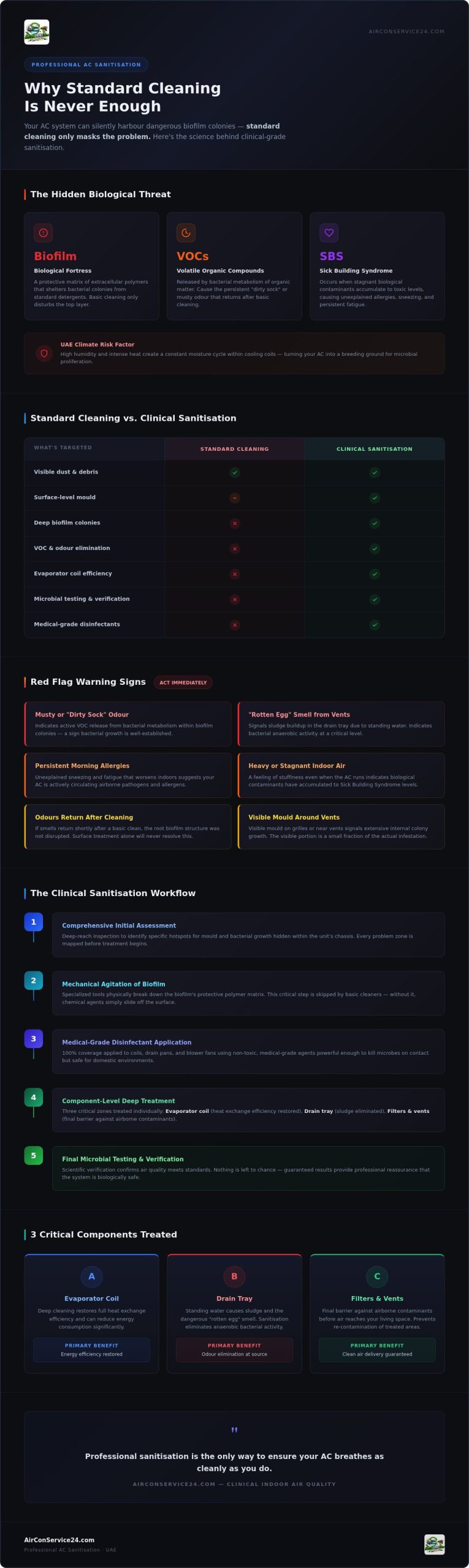
Your air conditioner communicates its internal health through every breath of air it circulates. When that air carries a distinct scent or triggers a physical reaction, it’s a signal that the biological baseline of your home has shifted. Ignoring these indicators allows microscopic pathogens to colonize your ductwork and internal components. A professional ac sanitization service becomes necessary the moment these sensory warnings appear. Acting with urgency prevents a localized hygiene issue from becoming a building-wide contamination crisis. We recommend monitoring your system closely for these specific red flags.
Deciphering AC Odours: What Your System is Telling You
Different scents indicate specific biological or mechanical failures. A persistent musty or damp smell is the classic signature of fungal growth and mould spores. These organisms thrive in the condensation on your cooling coils. If you detect a sulfuric or rotten egg odour, you’re likely smelling the byproduct of bacterial metabolism. This typically occurs in stagnant drain water where colonies have established a thick sludge. While these biological issues require deep disinfection, a sharp chemical or burning smell suggests a mechanical emergency. In such cases, you should seek emergency AC repair to address potential electrical faults or motor failure before proceeding with sanitisation.
Physical Indicators of Poor Air Quality
Beyond scent, look for physical evidence of a compromised system. Excessive dust accumulation around your vents shortly after a deep clean suggests that the internal filtration and coil surfaces are saturated with debris. You may also notice visible black spots or a fuzz-like texture on the grill or internal blower fans. This is active mould growth. Another subtle indicator is increased indoor humidity. When an evaporator coil is clogged with biofilm, it can’t effectively dehumidify the air. This leaves your living space feeling clammy and uncomfortable. Residents may also experience physical symptoms like unexplained sneezing, dry eyes, or persistent morning congestion.
Don’t wait for these symptoms to escalate into respiratory distress or system failure. If you recognize any of these red flags, it’s time to schedule a clinical sanitisation to restore the purity of your home environment. We act as the disciplined guardian of your indoor air, ensuring that every breath your family takes is safe and refreshing. Our methodical approach identifies these hidden threats before they can spread through your entire ductwork system.
When indoor air quality becomes a health-critical issue, you need more than a general handyman or an app-based booking service. AirConService24.com operates as an elite specialist for high-stakes hygiene crises across the UAE. We provide a 24/7 rapid response, ensuring that your domestic sanctuary is never left unprotected against microbial growth. Our professional ac sanitization service is built on a foundation of methodical excellence and technical precision. We understand that a compromised HVAC system is a source of significant anxiety. Our role is to restore your peace of mind through transparent, results-driven action that prioritizes your family’s respiratory health.
Our Commitment to Professional Reassurance
Our technicians are trained to act as the “disciplined guardians” of your home environment. This means we don’t just perform a mechanical task; we follow a rigorous, clinical protocol designed to ensure total environmental safety. Clear communication is a cornerstone of our brand integrity. We provide detailed expectations before we begin and transparent reporting once the work is finalized. By adhering to modern hygiene standards and utilizing advanced, environmentally responsible methodologies, we eliminate the uncertainty often associated with home maintenance. This structured approach replaces the fear of invisible pathogens with the quiet confidence of a scientifically clean home.
The AirConService24.com Difference: Reliability and Results
We specialize in the technical challenges that general cleaning companies often avoid, specifically total odour removal and deep-reach internal sanitisation. Our capability to dismantle the biological infrastructure of your AC system sets us apart as a premium provider. Operating under the PANKOBAU Building Maintenance LLC license, we bring a level of professional accountability and integrity that is essential for high-quality maintenance. We don’t rely on temporary masking scents or surface-level wipes. Instead, we use specialized equipment to reach the core of the microbial colonies. This commitment to reliability ensures that your system doesn’t just operate efficiently but actively supports the long-term well-being of every resident.
Don’t let persistent musty odours or rising allergy concerns disrupt your domestic harmony any longer. It’s time to move from anxiety to a state of total environmental comfort with a professional intervention. Secure your home’s air quality today by choosing a team that treats your HVAC hygiene as a clinical necessity. Contact our specialists to restore the purity of your indoor environment and ensure your AC system breathes as cleanly as you do.
Securing Your Home’s Future Air Quality
Maintaining a healthy home in the UAE requires a proactive stance against invisible pathogens. We’ve explored how a professional ac sanitization service moves beyond the superficial to dismantle complex biofilm structures that cause recurring odours. By recognizing the sensory red flags and understanding the clinical workflow required for deep disinfection, you can protect your family from respiratory triggers. Your HVAC system should be a source of comfort; it shouldn’t be a reservoir for mould or bacterial colonies.
AirConService24.com stands ready as your disciplined guardian. We offer 24/7 emergency response across the UAE, utilizing specialized odour removal technology and medical-grade, non-toxic sanitising agents to ensure your safety. It’s time to transition from the anxiety of compromised air to the absolute reassurance of a sterile indoor environment. Restore your home’s air quality with AirConService24.com – Book your sanitisation today!
Take the first step toward a cleaner, more efficient home today. Your well-being depends on the air you breathe, and we’re here to ensure it remains pure and refreshing for every resident.
Frequently Asked Questions
Is professional AC sanitisation safe for children and pets?
Yes, it’s completely safe when performed with the correct medical-grade, non-toxic disinfectants. We prioritize the well-being of your family by selecting agents that neutralize pathogens without leaving harmful chemical residues. This is essential for households with children or elderly residents who are more sensitive to air quality. Our disciplined approach ensures that once the process is complete, the air is not just cooler, but biologically safer for every occupant in your home.
How often should I book a professional sanitisation service in the UAE?
We recommend booking a professional ac sanitization service at least every six months to combat the rapid microbial growth caused by the UAE’s extreme humidity. Dust and moisture accumulate quickly in cooling coils, creating a persistent breeding ground for biofilm. Regular interventions maintain a sterile environment and prevent the buildup of allergens. For homes with high occupancy or residents suffering from respiratory issues, more frequent sessions may be necessary to ensure consistent domestic harmony.
Can sanitisation help reduce my monthly electricity bills?
Yes, sanitisation directly impacts your system’s energy consumption by restoring heat exchange efficiency. Biofilm and sludge on the evaporator coils act as insulators, forcing the compressor to work harder and run longer to reach the desired temperature. By removing these biological barriers, airflow is maximized and the cooling cycle is shortened. This methodical restoration of mechanical performance leads to a noticeable reduction in monthly utility bills while extending the lifespan of your unit.
What is the difference between AC cleaning and AC sanitisation?
Cleaning is a cosmetic process that removes visible dust and debris from filters and vents. Sanitisation is a clinical intervention designed to kill microscopic pathogens, bacteria, and fungal spores. While cleaning makes the unit look better, only a professional ac sanitization service dismantles the biological infrastructure that causes persistent odours and health issues. It’s the difference between removing surface-level dirt and ensuring your home’s air is scientifically pure and safe to breathe.
How long does a professional AC sanitisation service take?
A standard session typically takes between 1.5 to 3 hours per unit, depending on the current level of contamination and system complexity. Our technicians follow a highly structured, step-by-step workflow to ensure no component is overlooked. This includes inspection, mechanical agitation, and the application of sanitising agents. We prioritize thoroughness over speed to guarantee results, ensuring that every internal hotspot for mould or bacterial growth is successfully neutralized before we conclude the service.
Will sanitisation permanently remove the musty smell from my AC?
Sanitisation effectively removes the current biological colonies responsible for musty odours. However, because the UAE climate constantly introduces new moisture and dust, smells can return over time if the system isn’t maintained. Think of it as a deep hygiene reset. Regular sessions combined with proper filter maintenance are required to keep your environment odour-free. We target the root cause by breaking down biofilm, which provides a much longer-lasting solution than standard surface cleaning.
Do I need to leave my home during the sanitisation process?
You don’t need to vacate your home during the process. We use non-toxic, eco-friendly disinfectants that are specifically formulated for indoor use. While the technicians require access to the units, the rest of your home remains perfectly habitable. Our elite specialists work with precision and order to minimize disruption to your daily routine. We focus on transparency and integrity, ensuring you feel comfortable and informed while we restore the hygiene of your living space.
Can I perform AC sanitisation myself with store-bought products?
DIY attempts often fail because store-bought sprays only reach the surface and cannot dismantle established biofilm. True sanitisation requires specialized equipment to access deep internal components like the evaporator coil and drain pan. Improper handling of delicate parts can also lead to mechanical damage or water leaks. Professional intervention ensures that high-grade disinfectants are applied safely and effectively, providing a level of thoroughness that household products simply cannot achieve for your HVAC system.
AC Humidity Control Dubai: A National Guide to UAE Indoor Air Quality
Article by
Jon Bonnett
Australian Air Conditioning Specialist with extensive hands-on experience in AC servicing, deep cleaning, maintenance, and troubleshooting. Focused on high-quality workmanship, reliability, and professional service to UAE standards.
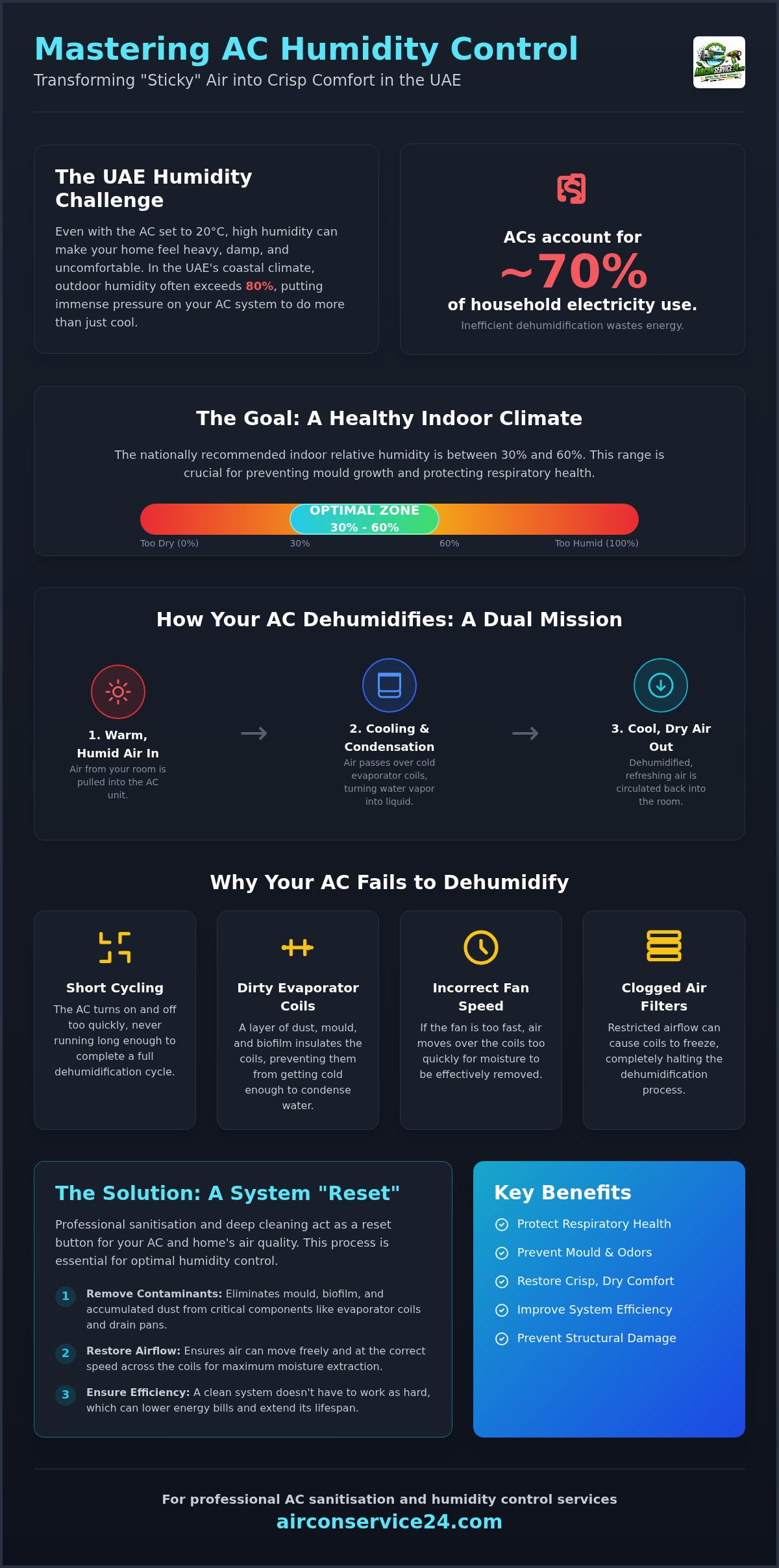
What if your air conditioner is actually making your home less comfortable? Many residents in the UAE lower their thermostats to 20 degrees only to find the air feels heavy and “sticky” rather than truly refreshing. This happens because cooling isn’t the same as dehumidifying. Achieving effective ac humidity control dubai requires more than just a low temperature setting; it demands a precise balance of mechanical performance and environmental hygiene. When your system fails to extract moisture, you aren’t just dealing with discomfort. You’re inviting musty odors and visible mould growth into your primary living spaces.
We recognize the frustration of facing high utility bills for a home that still feels damp and oppressive. Since air conditioning accounts for approximately 70% of the total electricity usage in a typical UAE household, your system must work with absolute precision. This guide will help you master the science of moisture management to eliminate “wet” air for good. We will preview how to maintain the ASHRAE-recommended indoor humidity level of 30% to 50% through advanced sanitisation and deep cleaning. You’ll discover the exact steps to ensure a dry, crisp indoor environment that protects your family’s respiratory health while restoring domestic harmony.
Key Takeaways
- Understand why the UAE’s extreme coastal humidity requires your AC to function as a high-precision dehumidifier to maintain a healthy indoor environment.
- Identify critical system failures, such as short cycling or dirty evaporator coils, that leave your air feeling heavy and “sticky” despite low temperature settings.
- Master the essential maintenance protocols for ac humidity control dubai to ensure your system effectively extracts moisture during peak summer months.
- Discover how professional sanitisation and deep cleaning act as a “reset button” for your home’s air quality by removing mould, biofilm, and accumulated contaminants.
- Learn to maintain the recommended 30% to 50% relative humidity level to protect your family from respiratory issues and prevent structural mould growth.
The Science of Humidity in the UAE Coastal Climate
Living in Dubai means coexisting with a maritime climate that frequently pushes outdoor humidity levels above 80% during the peak summer months. While the heat is the most obvious factor, the invisible moisture load represents the true challenge for indoor comfort and structural integrity. Standard air conditioning units are often engineered for temperature reduction as a primary function; however, in this region, they must work twice as hard to manage latent heat, which is the energy held in water vapor. Effective ac humidity control dubai isn’t just a matter of comfort. It’s a technical necessity to prevent your living space from becoming a breeding ground for dust mites and mould spores.
When indoor moisture isn’t managed, the health implications are immediate and cumulative. High humidity levels facilitate the growth of allergens that can trigger asthma and other respiratory conditions. To ensure a healthy environment, maintaining a relative humidity level between 40% and 60% is considered the national gold standard. This range is high enough to prevent skin and throat irritation but low enough to inhibit the biological growth that thrives in damp conditions. Achieving this balance requires a system that is both mechanically sound and hygienically clean.
Understanding Relative vs. Absolute Humidity
Many residents believe that dropping the thermostat to a very low setting will solve the “sticky” feeling in the air. In reality, cooling the air without effectively removing the water vapor actually increases the relative humidity. This occurs because colder air has a lower capacity to hold moisture than warm air. If your system doesn’t actively extract water, you reach the dew point faster, causing condensation to form on vents, ceilings, and walls. Relative Humidity is the amount of water vapor present in the air expressed as a percentage of the amount needed for saturation at the same temperature. Understanding How Air Conditioners Control Humidity is essential for anyone living in a high-moisture zone, as it highlights the need for the system to run long enough to complete a full dehumidification cycle.
The Impact of Coastal Air on National Properties
Proximity to the Arabian Gulf accelerates moisture ingress through a process known as vapor pressure, where humid outdoor air naturally moves toward the drier, cooler air inside your home. In Dubai’s coastal communities, the building envelope acts as the first line of defense. Common architectural weak points, such as poorly sealed window frames, degraded balcony door gaskets, and uninsulated ceiling voids, allow humid air to seep into the structure. This constant infiltration places an immense load on your AC equipment, often leading to premature wear and higher energy costs. Achieving consistent ac humidity control dubai requires a combination of a sealed home environment and a perfectly calibrated cooling system that can handle the relentless coastal moisture.
How AC Systems Execute Dehumidification
Your air conditioner is a dual-purpose engine designed to manage both sensible heat (temperature) and latent heat (moisture). In the context of ac humidity control dubai, the cooling process is inseparable from dehumidification. As warm, humid air from your living room is pulled into the unit, it passes over a set of cold evaporator coils. This encounter triggers a thermodynamic reaction where the air’s temperature drops rapidly, forcing water vapor to lose energy and transform into liquid droplets. It’s a technical reality that if your system only cools the air without removing water, the resulting environment will remain heavy and uncomfortable.
The efficiency of this cycle depends entirely on the condition of your AC equipment. Airflow volume serves as the silent partner in this process. If the fan speed is calibrated too high, the air moves across the coils too quickly for condensation to occur. Conversely, restricted airflow due to clogged filters can cause the coils to drop below freezing, halting the dehumidification process entirely. The EPA Guide to Indoor Air Quality highlights that maintaining this mechanical balance is the first step in defending your home against biological contaminants.
The Role of the Evaporator Coil
The evaporator coil must maintain a temperature consistently below the “dew point” of the incoming air to successfully pull water from the atmosphere. This creates the “wet coil” phenomenon, which is actually a sign of a healthy, functioning system. As moisture clings to the coil, it also traps fine dust particles, essentially washing the air before it’s recirculated. The relationship between refrigerant pressure and moisture extraction is absolute; lower suction pressure results in a colder coil surface, which increases the moisture removal capacity up to the point of coil icing. If you notice your home feels damp despite the AC running, a professional AC inspection can determine if your refrigerant levels are correctly balanced for Dubai’s specific humidity loads.
Condensate Management and Drainage
Once moisture is extracted, it must be safely removed from the building. The journey of water follows a specific path:
- Collection: Droplets drip from the evaporator coils into a primary condensate tray.
- Transport: The water flows through a drainage line, often assisted by a condensate pump in high-rise apartments where gravity alone is insufficient.
- Discharge: The fluid is expelled into the building’s main drainage system or an external drain point.
In Dubai’s high-density residential towers, drainage efficiency is directly linked to indoor air quality. A blockage in this system doesn’t just cause leaks; it creates a reservoir of stagnant water that can lead to bacterial growth and musty odors. Ensuring these lines are clear is a non-negotiable part of effective ac humidity control dubai.
Troubleshooting Excess Moisture and Sticky Air
Troubleshooting a “sticky” home environment starts with understanding that cooling and dehumidifying are two separate mechanical outcomes. If your unit is oversized for the room, it may reach the target temperature in just a few minutes and shut off before the moisture is effectively extracted. This “short cycling” leaves water vapor suspended in the air, resulting in a cold but damp atmosphere. For effective ac humidity control dubai, your system requires longer, more consistent run times at a lower intensity to pull water from the air. A unit that cycles on and off too rapidly never gives the evaporator coil enough time to complete the condensation process.
A common culprit behind poor moisture removal is the “dirty coil” barrier. Over time, fine desert dust and grime accumulate on the evaporator fins, creating a thick insulating layer. This prevents the warm indoor air from making direct contact with the cold metal, which is the physical requirement for condensation to occur. Similarly, low refrigerant levels can mean the coil never reaches the dew point, even if the air blowing out still feels somewhat cool. Ignoring these early warning signs leads to catastrophic system failure and potential mould infestation. This is why following a rigorous schedule for preventive AC maintenance UAE is vital for long-term comfort and equipment longevity.
The Hidden Threat of Biofilm and Sludge
Inside the dark, damp environment of your AC unit, a complex layer of bacteria known as biofilm can form. This biological “sludge” often clogs the primary drain line, causing water to back up into the collection tray. This stagnant water increases local humidity levels within the ductwork and is the primary source of the musty “AC smell” that plagues many Dubai apartments. Adhering to ASHRAE Ventilation and Air Quality Standards ensures your system is not just moving air, but maintaining a hygienic environment that resists these biological loads. This level of ac humidity control dubai requires a disciplined approach to internal cleanliness.
Thermostat and Sensor Calibration Errors
Sometimes the issue is digital rather than mechanical. Faulty humidity sensors can provide inaccurate data to the system, causing it to cycle off prematurely while the air is still heavy. You can improve performance by checking your fan settings; keeping the fan on “Auto” ensures that when the compressor stops, the fan also stops. This prevents moisture sitting on the wet coils from being evaporated back into the room. Modern smart thermostats can also be programmed to prioritize dehumidification, running the system specifically to manage moisture levels regardless of the temperature reading.
Maintenance Protocols for Optimal Humidity Control
Maintaining a dry indoor environment in the UAE requires a methodical approach that goes beyond simple temperature adjustments. Routine care is the primary defense against the relentless moisture of the coastal climate. By adopting a disciplined maintenance schedule, you can ensure your system operates at peak efficiency, which typically reduces electricity consumption by 20% to 30%. Consistent ac humidity control dubai depends on the integrity of your system’s components, starting with the filtration quality and ending with the precise calibration of cooling cycles.
High-MERV filters play a critical role in this process by capturing fine, moisture-laden particles that standard filters might miss. These particles often act as the “seeds” for mould growth when they settle on damp internal surfaces. For national homeowners, the most important date on the calendar is the pre-summer peak service, ideally scheduled between February and April. This proactive inspection ensures that your coils, sensors, and drainage lines are fully prepared for the extreme latent heat loads of July and August. If you encounter sudden visible mould or a complete failure in moisture extraction, you should contact a specialist for 24/7 emergency AC repair to protect your home’s hygiene and structural integrity.
Essential Filter and Vent Care
Cleaning your filters is a simple yet powerful way to maintain the airflow required for moisture removal. Follow these steps to ensure thorough care:
- Remove and Vacuum: Carefully slide out the filter and use a soft brush attachment to remove surface dust.
- Wash: Rinse with lukewarm water; avoid harsh chemicals that can degrade the delicate mesh.
- Dry Completely: Ensure the filter is bone-dry before reinsertion to prevent immediate bacterial growth.
During UAE sandstorm seasons, you must check your filters at least once a week to prevent dust accumulation from choking the system’s ability to dehumidify. Additionally, verify that supply and return vents are free from obstructions like heavy curtains or furniture, which can disrupt the balanced airflow required for effective ac humidity control dubai.
Optimising Fan and Cooling Cycles
The settings on your thermostat dictate how effectively your system handles water vapor. Using the “Auto” fan setting is superior for moisture removal because it stops the fan as soon as the cooling cycle ends, preventing moisture on the wet coil from being blown back into the room. Many modern units also feature a “Dry Mode,” which runs the compressor at a lower speed while maintaining a cold coil surface to maximize condensation without over-cooling the space. To avoid the risk of coil freezing and subsequent water leaks, set realistic temperature targets between 22°C and 24°C. If your system still feels sluggish or the air remains heavy, a professional maintenance check can recalibrate your sensors for optimal performance.
Sanitisation represents the final, critical step in mastering ac humidity control dubai. While mechanical repairs address how the system runs, deep cleaning addresses the environment in which it operates. AirConService24.com treats a comprehensive sanitisation as a “reset button” for your property’s indoor air quality. By removing the accumulated layers of dust and biological growth from internal components, we restore the system’s native ability to manage moisture. This process ensures that the air circulating through your home is not only cool but also hygienically safe and crisp.
Our technicians follow a rigorous protocol that utilizes professional-grade biocides. These agents are specifically formulated to eliminate microscopic spores and stubborn biofilm without compromising the air you breathe. When the evaporator coil is coated in grime, it loses its ability to transfer heat effectively, which forces the compressor to run longer and harder. By stripping away these contaminants, we restore the heat-exchange efficiency of the coil, allowing it to reach the dew point faster and extract moisture more aggressively. This methodical approach transforms your AC from a potential source of pollution into a disciplined guardian of your home environment.
Specialized Odour and Mould Removal
Many residents struggle with “Dirty Sock Syndrome,” a pungent, musty smell that signals significant bacterial colonies within the unit. Addressing this requires more than a simple surface wipe of the vents. Professional deep-tissue AC cleaning involves disassembling key components to reach the dark, damp recesses where mould and biofilm thrive. It’s a health necessity, not just a cosmetic fix. Eliminating these biological loads is the only way to stop the cycle of recycled spores that can cause persistent respiratory irritation and domestic discomfort.
Ensuring Long-Term System Efficiency
A clean system is an efficient system. When your AC is free from internal obstructions, the workload on the compressor drops significantly, which directly results in lower monthly utility bills and a longer lifespan for your AC equipment. Our service provides the AirConService24.com guarantee of professional reassurance that every part of your system, from the drip tray to the fan blades, has been methodically inspected and restored to a factory-clean standard. We prioritize transparency and integrity, ensuring you understand the exact state of your home’s air quality after every visit.
Don’t let sticky air and musty smells compromise your domestic harmony. Take control of your indoor environment with a specialized service designed for the unique challenges of the UAE climate. Book a professional humidity assessment and deep clean today to ensure your home remains a dry, healthy sanctuary all year round.
Secure Your Home’s Air Quality Today
Mastering your indoor climate requires a shift from simple cooling to comprehensive moisture management. We’ve explored how a clean evaporator coil and balanced refrigerant levels are the true engines of dehumidification. By maintaining your system and ensuring internal hygiene, you eliminate the threat of mould and the “sticky” discomfort that plagues many national properties. Professional ac humidity control dubai is an investment in your family’s health and your home’s longevity.
Our team operates as licensed building maintenance specialists, providing elite sanitisation and specialized odour removal across the UAE. We remain ready to act with a 24/7 emergency response for any cooling or moisture crisis you encounter. Don’t let poor air quality compromise your domestic harmony or well-being. Restore your comfort with professional AC deep cleaning and humidity control. You deserve a home that feels as crisp and refreshing as it looks.
Frequently Asked Questions
Why does my AC run but the house still feels humid?
This usually happens because the system is short cycling or has low refrigerant levels. If the unit is too powerful for the space, it reaches the target temperature quickly and shuts off before it can extract enough water vapor. For effective ac humidity control dubai, the compressor needs to run for extended periods to ensure the evaporator coil pulls moisture from the air. A system that stops too soon leaves the air feeling “sticky” and heavy.
What is the ideal indoor humidity level for UAE homes?
The national gold standard for indoor comfort is a relative humidity level between 40% and 60%. This range is high enough to prevent skin irritation and low enough to inhibit the growth of mould and dust mites. Maintaining this balance is essential for both your health and the structural integrity of your property. Levels consistently above 60% lead to musty odors and potential biological infestations within your ductwork.
Can a dirty AC filter cause high humidity levels?
Yes, a clogged filter restricts the volume of air passing over the evaporator coils. When airflow is limited, the heat exchange process becomes inefficient; the system may even experience coil freezing, which halts all moisture extraction. Regular filter cleaning is a simple but vital step in ensuring your system has the necessary breath to perform its dual role of cooling and dehumidifying effectively. Don’t let a layer of dust compromise your home’s hygiene.
Does “Dry Mode” on my AC actually save energy?
Dry Mode can save energy when the outdoor humidity is high but the temperature is moderate. In this setting, the fan runs at a lower speed while the compressor works to maximize condensation on the coils. This allows the system to lower the humidity without constantly cycling the compressor at high power for cooling. It’s a precise way to maintain comfort without the high utility costs of standard cooling cycles during humid months.
How often should I deep clean my AC for humidity control?
You should schedule a professional deep clean at least once a year, ideally during the pre-summer peak between February and April. In the harsh UAE climate, bi-annual servicing is even better for homes near the coast. Regular sanitisation removes the biofilm and dust that insulate the coils, ensuring your system maintains the high heat-exchange efficiency required for consistent ac humidity control dubai. Proactive care prevents the accumulation of moisture-trapping contaminants.
What causes the musty smell coming from my AC vents?
Musty odors are typically caused by biological growth, such as mould or biofilm, inside the dark and damp sections of your unit. When moisture isn’t drained correctly, stagnant water in the tray becomes a breeding ground for bacteria. This “Dirty Sock Syndrome” isn’t just a cosmetic issue; it’s a sign that your system is recirculating contaminants. Professional sanitisation is required to eliminate these colonies and restore a fresh, neutral scent to your home.
Is high indoor humidity dangerous for my health?
Prolonged exposure to high humidity is a significant health risk. Excess moisture promotes the proliferation of dust mites and mould spores, which are major triggers for asthma and allergic rhinitis. Beyond respiratory issues, damp environments can lead to fatigue and sleep disruption because the body cannot effectively cool itself through sweat. Maintaining a dry indoor environment is a fundamental requirement for a healthy lifestyle and long-term domestic harmony.
Can an oversized AC unit actually make my home more humid?
An oversized unit is a common cause of high indoor humidity. Because the unit is too powerful, it cools the room to the set temperature almost instantly and then shuts down. This prevents the system from running a full dehumidification cycle, which requires time. For proper moisture removal, you need a correctly sized system that runs longer at a steady pace to wring the water out of the air before the compressor cycles off.
Biofilm in AC Units: Hidden Biological Risk in UAE (2026)
Article by
Jon Bonnett
Australian Air Conditioning Specialist with extensive hands-on experience in AC servicing, deep cleaning, maintenance, and troubleshooting. Focused on high-quality workmanship, reliability, and professional service to UAE standards.
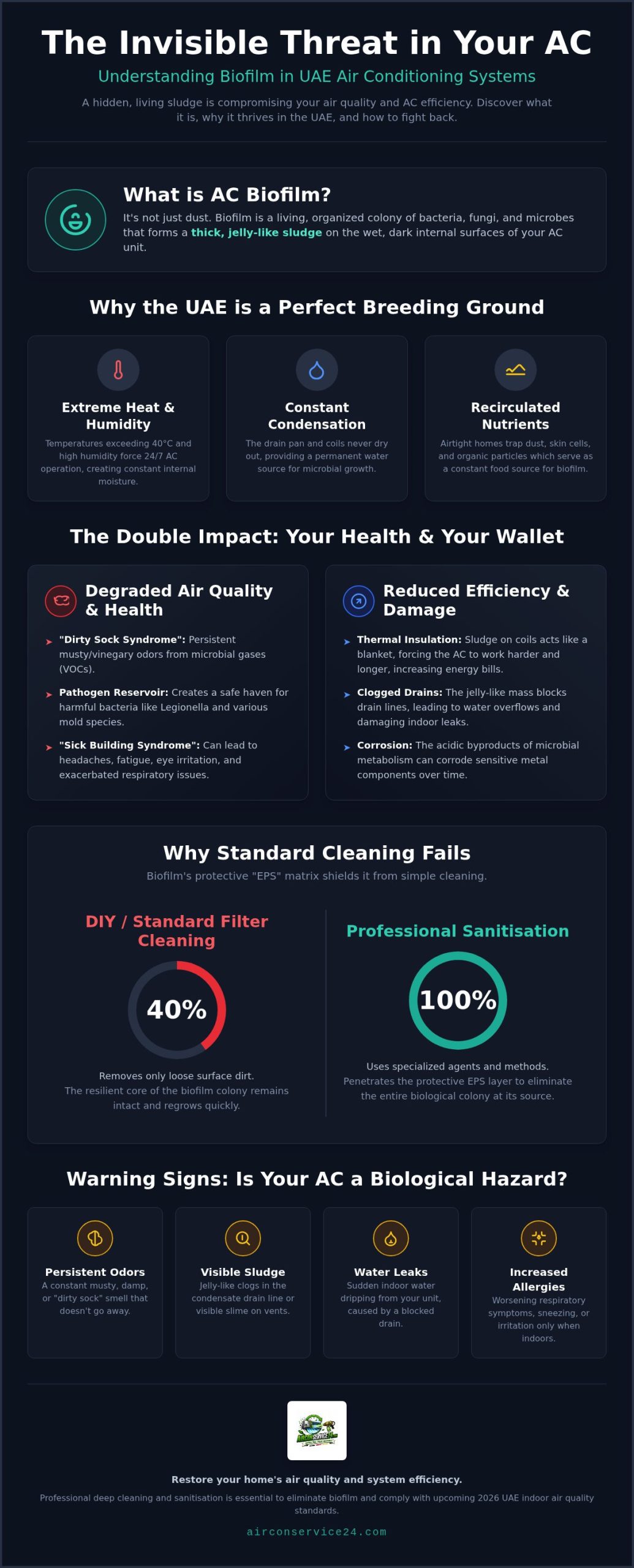
What if that persistent musty smell in your living room isn’t just dust, but a living, breathing biological fortress? You’ve likely cleaned your filters and checked the vents, yet the “dirty sock syndrome” remains a constant, unwelcome guest in your home. It’s frustrating to feel like your indoor environment is compromised despite your best efforts. This invisible sludge, known as biofilm in AC unit UAE systems, is a complex microbial colony that thrives in our unique desert humidity and high-condensation environments.
You deserve a home that supports your health rather than challenging it. We’re going to dive into the science of how these bacterial layers form and why standard DIY cleaning only removes about 40% of the surface dirt. You’ll discover how to identify the signs of a biological threat, understand the latest 2026 UAE indoor air quality regulations, and learn the professional sanitisation methods required to restore your system’s efficiency. From high-tech nanobubble removal to silver ion coatings, we’ll show you how to transform your AC from a hidden risk into a source of pure, revitalising air.
Key Takeaways
- Understand why the UAE’s high humidity creates a breeding ground for biological sludge that standard filter cleaning fails to reach.
- Learn how biofilm acts as a reservoir for pathogens and significantly reduces cooling efficiency by insulating internal components.
- Discover why specialized sanitisation is the only effective way to penetrate the resilient protective layers of biofilm in AC unit UAE systems.
- Identify the specific “nose tests” and visual cues, such as jelly-like drain clogs, that signal a biological emergency in your home.
- Explore the professional deep cleaning and odour removal solutions that restore domestic harmony and ensure compliance with 2026 indoor air quality standards.
Understanding AC Biofilm: The “Invisible Sludge” in UAE Cooling Systems
Biofilm isn’t just a layer of common grime. It’s a sophisticated, living community of bacteria, fungi, and other microorganisms that anchor themselves to your air conditioner’s wet internal surfaces. To truly understand the risk, we must ask: What is a biofilm? Scientifically, it’s a collective of one or more types of microorganisms that grow on many different surfaces, creating a protective matrix. In the context of your home, biofilm in AC unit UAE systems appears as a thick, jelly-like sludge that clogs drain lines and pollutes your breathing air.
The UAE climate provides the perfect laboratory for this biological growth. With outdoor temperatures frequently exceeding 40°C and humidity levels spiking, your AC works overtime to maintain comfort. This constant operation creates a steady stream of condensation within the dark, cool recesses of your unit. The condensate drain pan becomes the primary breeding ground. Because most residents run their cooling systems 24/7 to combat the desert heat, these biological colonies never face a “dry” period. This allows them to colonize surfaces at an accelerated rate compared to systems in more temperate climates.
The Anatomy of a Biofilm Colony
These colonies are remarkably resilient because of Extracellular Polymeric Substances (EPS). Think of EPS as a biological “glue” or “jelly” that the bacteria secrete to shield themselves from standard cleaners and environmental stress. This sticky matrix allows the biofilm to grip onto metal evaporator coils and plastic drain lines with incredible tenacity. What begins as a microscopic, invisible layer quickly evolves into a visible, foul-smelling sludge. Once this stage is reached, the buildup can completely obstruct water flow, leading to the sudden indoor leaks many Dubai residents face during peak summer.
Why UAE Homes are Particularly Vulnerable
Our indoor spaces in the Emirates are designed to be airtight to keep the intense heat out. While this is efficient for cooling, it creates a sealed environment where organic particles, skin cells, and pet dander are constantly recirculated. These particles serve as a primary food source for microbes. Additionally, the fine desert dust that inevitably finds its way indoors is rich in minerals that act as nutrients for these colonies. When you combine these nutrients with the heavy condensation caused by humidity swings between coastal areas and the drier desert interior, you create an ecosystem where biofilm in AC unit UAE doesn’t just exist; it thrives. Standard maintenance often misses these deep-seated layers, requiring a more technical approach to environmental hygiene.
The Biological Threat: How Biofilm Degrades Air Quality and Efficiency
Biofilm isn’t merely a mechanical nuisance. It’s a complex, living threat that actively degrades the air you breathe and the efficiency of your cooling system. While many residents associate AC issues with simple dust, the reality of biofilm in AC unit UAE involves a persistent biological colonization that acts as a reservoir for dangerous pathogens. These colonies provide a protective shelter for Legionella bacteria and various mould species, effectively shielding them from environmental changes and many standard cleaning agents. This biological fortress allows contaminants to survive and multiply in areas you might assume are clean.
One of the most immediate signs of this colonization is “Dirty Sock Syndrome.” This occurs when the metabolic processes of the bacteria and fungi within the biofilm release volatile organic compounds (VOCs) into the airstream. These gases produce that unmistakable musty or vinegary odour that persists even after you’ve changed your filters. It’s a clear signal that your indoor environment is being compromised by a living organism. When these smells appear, your system is no longer just cooling your home; it’s actively distributing microbial byproducts throughout your living space.
Indoor Air Quality (IAQ) and Respiratory Health
Microbial metabolism doesn’t just create smells; it releases microscopic fragments and spores into your home. When the blower fan kicks in, these biological particles are blasted into your living spaces, contributing to “Sick Building Syndrome.” Residents often report headaches, eye irritation, and persistent fatigue without realizing their AC is the source. Biofilm acts as a constant source of airborne irritants that can significantly exacerbate chronic respiratory conditions and trigger sudden inflammatory responses. Exposure to the aerosolised microbial fragments found in AC biofilm is a primary environmental trigger for acute asthma attacks in residential settings.
Mechanical Consequences and Energy Waste
Beyond health risks, biofilm is an enemy of mechanical efficiency. It acts as a powerful thermal insulator. When a layer of biofilm in AC unit UAE coats your heat-exchange coils, it prevents the refrigerant from effectively absorbing heat from the air. Your system has to run longer and harder to reach the set temperature, leading to a sharp rise in monthly DEWA or Empower bills. This isn’t just a minor fluctuation; biological fouling can reduce heat transfer efficiency by a measurable margin, forcing the entire system to work under extreme stress.
This biological growth also physically restricts airflow. As the “jelly” thickens, it increases static pressure within the unit, forcing the fan motor to consume more electricity. Over time, the acidic metabolic byproducts produced by these microbes can even corrode sensitive aluminium fins and copper tubing. To prevent these costly mechanical failures, professional sanitisation and deep cleaning are essential to remove the biological “root” of the problem.
Why Standard Maintenance Fails to Eliminate Persistent Biofilm
Many homeowners believe that a quick rinse of the mesh filters is enough to maintain a healthy system. It isn’t. While dust sits loosely on surfaces, biofilm in AC unit UAE systems is a living structure that physically bonds to your unit’s internal architecture using the protective matrix we discussed earlier. Standard maintenance packages often focus on the visible parts, yet the real threat lives in the dark, damp crevices of the evaporator coils and deep within the drain lines. These areas are frequently ignored during a basic service, allowing the biological “seed” to remain and regrow.
Flushing a drain line with water might clear a temporary blockage, but it rarely eradicates the root cause. Biofilm is notoriously resistant to common household detergents and light chemical sprays. The protective “jelly” layer acts as a chemical shield. It allows the bacteria beneath to survive even after a surface-level cleaning. Without the right mechanical agitation and specialised chemicals, you’re simply trimming the top of a weed while leaving the roots to flourish. This is why many residents find themselves calling for help just weeks after a supposed “full service.”
Basic Service vs. Deep Sanitisation
There’s a vast difference between a 30-minute “check-up” and a professional 4-hour deep decontamination. A routine inspection might confirm the unit is running, but it won’t address the hidden colonization on the blower wheel or the back of the evaporator coils. These hidden components are critical because they are in the direct path of the airflow. Professional-grade biocides are necessary for complete eradication. These aren’t your typical grocery store cleaners; they’re specifically formulated to dissolve the EPS matrix and neutralise pathogens at the molecular level, ensuring the biofilm in AC unit UAE is truly eliminated rather than just suppressed.
The Danger of Incomplete Cleaning
Superficial cleaning can actually be counterproductive. When a technician uses high-pressure air or water without proper sanitisation, they risk aerosolizing the disturbed microbes. These biological fragments are then pushed back into your living space the moment the unit is turned on. This explains why that musty, vinegary smell often returns within 48 to 72 hours of a basic service. To achieve a lasting result and protect your family’s health, understanding the importance of professional AC maintenance UAE is vital. A comprehensive approach ensures that every internal component is stripped of its biological load, preventing the rapid re-colonization that follows incomplete cleaning methods.
Identifying the Warning Signs and the Path to Professional Removal
Recognizing the early signals of biological colonization can save you from a major cooling crisis. The most reliable diagnostic tool you have is your sense of smell. A sharp, vinegary or musty odour that intensifies when the unit first starts is a classic indicator of biofilm in AC unit UAE. If you detect a sulfurous or “rotten egg” scent, it suggests anaerobic bacteria are thriving in stagnant water deep within your drain lines. These aren’t just unpleasant smells; they’re active distress signals from your HVAC system.
Visual confirmation often follows the olfactory warning. Inspect your condensate drain tray or the area around your indoor unit. If you see a thick, translucent, or greyish “jelly,” you’ve found the biofilm matrix. You might also notice small black spots or “speckling” on your supply vents. These aren’t always mould spores; they’re often dried fragments of the biofilm that have been ripped from the internal components and blasted into your room. When these fragments appear, the colonization is already advanced and requires immediate intervention.
A Homeowners Checklist for Biofilm Detection
Proactive monitoring is the best way to maintain a healthy indoor environment. Use this structured checklist to evaluate your system’s biological status regularly:
- Inspect Supply Vents: Look for dark staining or sticky residue on the louvres that doesn’t wipe away easily like dry dust.
- Monitor Drain Blockages: If your AC drain line clogs more than once every six months, a biological sludge is likely the culprit rather than simple debris.
- Track Energy Consumption: Compare your monthly DEWA or Empower bills. An unexplained spike in cooling costs often points to biological fouling on the coils that forces the compressor to work harder.
The Deep Cleaning and Sanitisation Workflow
Eradicating a mature colony requires more than a spray bottle and a cloth. Our technicians use advanced equipment to perform high-pressure coil washing that physically strips the biofilm away. We don’t just rinse; we apply mechanical agitation to the drain pan and lines to break the resilient biological bond. This is followed by the application of UAE-approved sanitisation agents that are specifically formulated to neutralise microbial “seeds” and prevent rapid regrowth. This methodical approach ensures your system meets the strict indoor air quality standards set by Dubai Municipality under the DM-HSD-GU119-IAQ guidelines.
Don’t let a hidden biological threat compromise your home’s comfort and air quality. If you’ve noticed any of these warning signs, it’s time to act before a minor clog becomes a major repair. Book a professional sanitisation and deep clean today to secure your indoor environment and restore your system’s efficiency.
Restoring Domestic Harmony: Specialist Deep Cleaning Solutions
Eliminating the invisible sludge requires more than just intent; it requires a methodical, high-stakes response. We don’t just treat symptoms. At AirConService24.com, we target the biological root cause of biofilm in AC unit UAE systems. Our process focuses on complete environmental restoration. By removing the protective matrix that bacteria build, we ensure your home returns to a state of domestic harmony. This isn’t a mechanical luxury. It’s a fundamental requirement for a healthy, comfortable lifestyle in the Emirates. Our specialised odour removal treatments don’t just mask the “dirty sock” smell with perfumes; they neutralise the volatile organic compounds at their source. This precise methodology ensures the air exiting your vents is as fresh as it is cool.
The AirConService24.com Difference
Our “Disciplined Guardian” approach means we treat your indoor air quality with the gravity it deserves. We use advanced sanitisation protocols designed to eliminate 99.9% of biological threats, including the pathogens that thrive in sealed desert environments. We remain calm and methodical even when a system failure feels like an emergency. If a biological clog leads to a sudden flood or total system shutdown, our 24/7 availability ensures that urgent biofilm-related failures are resolved before they escalate into costly structural damage. We provide the professional reassurance you need during a cooling crisis, delivering results that meet the highest modern standards of excellence.
Long-term Prevention Strategies
In the UAE’s demanding climate, professional AC cleaning is recommended at a minimum of every six months for residential properties. For commercial spaces, quarterly service is the advised standard for maintaining biological control. Investing in an annual maintenance contract provides the structured oversight needed to prevent the return of biofilm in AC unit UAE. These agreements offer a sense of order and predictability, ensuring your system runs efficiently without biological buildup. If your system has already reached a breaking point due to a severe blockage or mechanical stress, you may need Emergency AC Repair for high-stakes cooling crises to restore immediate functionality.
The path to a healthier home begins with a comprehensive system audit. Let our experts assess your unit’s biological load and provide a clear, transparent roadmap to total decontamination. We’re ready to act. Scheduling an audit today is the first step toward a system that runs with peak precision, protecting both your health and your cooling efficiency for the long term.
Securing a Healthier Indoor Future
Biofilm is more than a mechanical hurdle; it’s a complex biological challenge that demands a sophisticated solution. We’ve explored how this resilient sludge compromises your breathing air and drives up energy costs, often remaining untouched by basic maintenance routines. Eradicating biofilm in AC unit UAE requires a methodical approach that combines technical expertise with advanced decontamination. We’re ready to act. By identifying the early warning signs of “dirty sock syndrome” and acting decisively, you protect your family’s respiratory health and your system’s longevity.
Our team stands ready as your disciplined guardian, offering comprehensive deep decontamination protocols and 24/7 emergency technical support. As specialised odour removal experts, we ensure your home remains a sanctuary of fresh, clean air. Protect your home with professional AC Deep Cleaning and Sanitisation to eliminate hidden risks for good. You deserve a living space that supports your well-being with every breath.
Frequently Asked Questions
What exactly is biofilm in an AC unit and why is it dangerous?
Biofilm is a complex, living community of microorganisms that anchors itself to your unit’s wet internal surfaces using a protective, sticky matrix. It’s dangerous because it acts as a resilient shield for pathogens like Legionella and various mould species, effectively protecting them from standard cleaning agents. Once established, these colonies release harmful biological fragments and gases directly into your home’s air supply, compromising your respiratory health.
How do I know if my AC has biofilm or just normal dust?
Biofilm is characterized by a wet, jelly-like texture and a persistent musty or vinegary odour. Unlike normal dust, which is dry and powdery, biofilm in AC unit UAE systems forms a sticky sludge that bonds to drain pans and coils. If you see translucent or greyish slime in your condensate tray, you’re dealing with a biological colony rather than simple environmental dirt.
Can biofilm cause my AC to leak water inside my home?
Yes, biological sludge is a primary cause of indoor water leaks in the Emirates. As the biofilm grows, it creates thick clogs within the narrow condensate drain lines that water cannot pass through. When moisture can’t exit the system through the dedicated plumbing, it overflows the internal drain pan and leaks into your living space, potentially causing significant structural damage to ceilings and walls.
Why does my AC smell musty even after I clean the filters?
Cleaning your filters only removes surface dust, not the microbial colonies living deep inside the unit’s core. The “dirty sock syndrome” smell is caused by the metabolic processes of bacteria and fungi thriving on your evaporator coils and drain pan. These organisms release volatile organic compounds (VOCs) that bypass your filters and contaminate your indoor environment regardless of how clean the mesh appears.
Is a standard AC service enough to remove biofilm in the UAE?
No, a basic check-up typically lacks the intensity required to penetrate a biological matrix. Standard maintenance often focuses on surface cleaning and basic mechanical checks. To truly eradicate biofilm in AC unit UAE, you need a deep sanitisation process that utilizes professional-grade biocides and mechanical agitation to break the resilient bonds of the colony and prevent rapid regrowth.
How often should I have a deep cleaning to prevent biofilm growth?
Residential properties in the UAE should undergo professional deep cleaning every six months to stay ahead of biological growth. For commercial spaces or high-occupancy buildings, quarterly service is the recommended standard. This frequency ensures that condensation doesn’t have enough time to foster mature microbial colonies during the intense summer humidity when cooling systems run 24/7.
Are the chemicals used in AC sanitisation safe for my family?
Yes, professional technicians use UAE-approved sanitisation agents that are specifically formulated for indoor environments. These biocides are designed to be lethal to bacteria and fungi while remaining non-toxic to humans and pets when applied correctly. They effectively neutralise biological threats without leaving harmful residues, ensuring your home’s air remains safe and healthy for everyone after the service is complete.
Can biofilm buildup increase my monthly DEWA or utility bills?
Yes, biological fouling significantly inflates your utility costs by acting as a thermal insulator on your heat-exchange coils. When biofilm coats these components, it prevents the system from absorbing heat efficiently from the air. Your AC must run for much longer periods and consume more electricity to reach the desired temperature, leading to a measurable spike in your monthly DEWA or Empower consumption.