Green Tech from Germany for cleaner air and better living 24/7 emergency air-conditioning service in the UAE

8 Critical Signs of Mold in Air Vents: A Homeowner’s Checklist for 2026

Jon Bonnett

Article by

Jon Bonnett

Australian Air Conditioning Specialist with extensive hands-on experience in AC servicing, deep cleaning, maintenance, and troubleshooting. Focused on high-quality workmanship, reliability, and professional service to UAE standards.

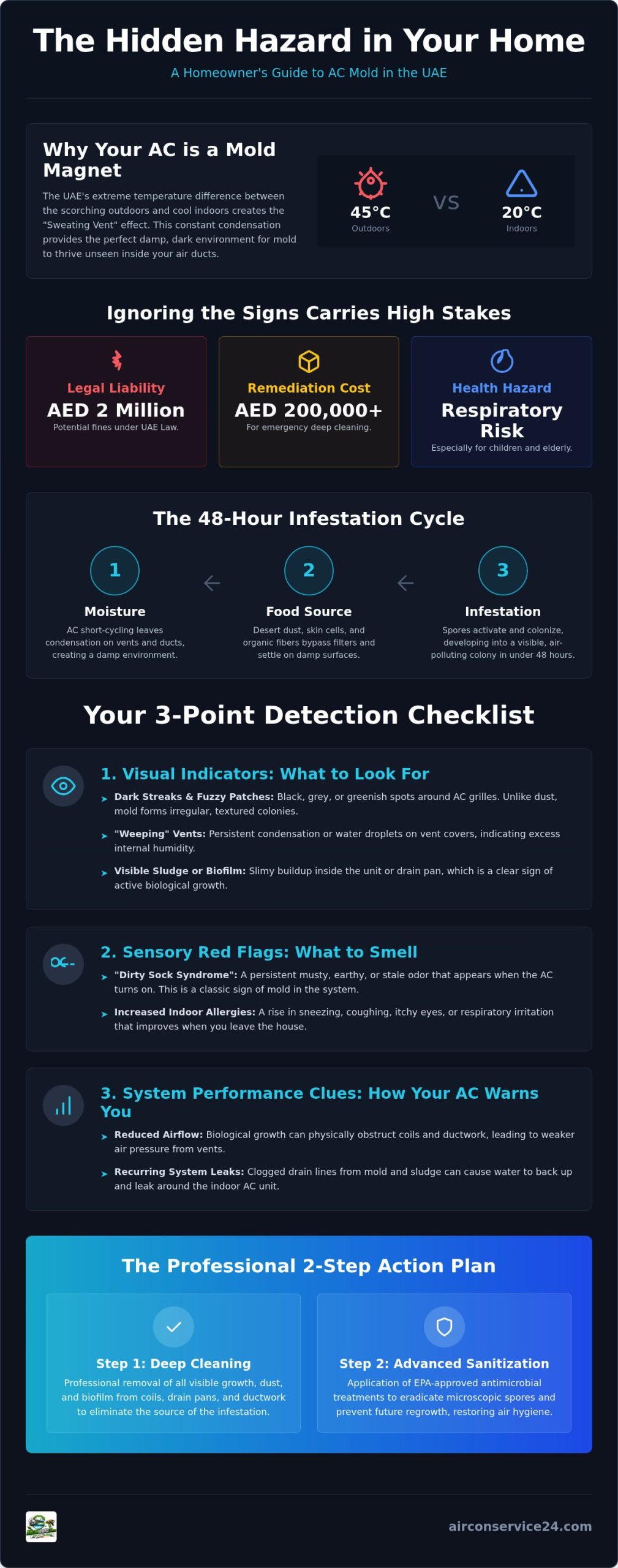
In the UAE, ignoring a musty odor in your living room is no longer just a comfort issue; it’s a legal and financial liability that can result in fines of up to AED 2 million under Law No. (3) of 2026. You’ve likely noticed a persistent, earthy smell or dark spotting around your AC grilles and felt a growing sense of anxiety about your children’s respiratory health. It’s a common concern in our humid climate where condensation cycles create the perfect breeding ground for biological growth. You know that a simple surface wipe isn’t enough to protect your home’s air quality.

This guide will help you identify the critical signs of mold in air vents before these microscopic spores impact your family’s health or lead to emergency remediation costs that can exceed AED 200,000. We’ll provide clear criteria for spotting hidden growth, explain the physiological risks involved, and outline the advanced sanitisation protocols required to restore environmental hygiene. By the end of this checklist, you’ll have a professional roadmap to ensure your cooling system remains a source of comfort rather than a hidden hazard.

Key Takeaways

  • Understand how the UAE’s extreme temperature differentials create the “sweating vent” effect that serves as a primary precursor for biological growth.
  • Identify the specific visual signs of mold in air vents, including dark streaks and fuzzy patches that indicate an active colony.
  • Recognize the sensory red flags, such as the persistent “Dirty Sock Syndrome” odor, which signal compromised air hygiene before health symptoms escalate.
  • Learn why recurring system leaks and reduced airflow are often mechanical indicators of a deeper biological obstruction within your cooling unit.
  • Discover the professional two-step action plan for deep cleaning and sanitisation required to eradicate spores and restore domestic harmony.

The UAE Environment: Why Your Air Vents Are Prone to Mold

The UAE’s climate is a study in physical extremes. During peak summer months, outdoor temperatures frequently surge to 45°C, while indoor living spaces are maintained at a crisp 20°C. This 25-degree differential is the primary driver of moisture accumulation within your cooling infrastructure. When warm, humid air makes contact with the chilled surfaces of your supply grilles, it triggers the “sweating vent” phenomenon. This isn’t just a minor cosmetic nuisance; it’s the critical precursor to a biological infestation. If you’re searching for the early signs of mold in air vents, you must first understand that your AC is effectively a giant dehumidifier that occasionally fails to drain its own success.

HVAC mold is a persistent Indoor mold species that thrives in the dark, damp recesses of your ductwork. Unlike surface mildew that you might find on a bathroom tile, this biological contaminant embeds itself into the porous insulation and dust layers inside your vents. It stays hidden, releasing spores into the airstream every time the compressor kicks in. Recognizing the signs of mold in air vents requires a disciplined approach to home hygiene, acknowledging that your cooling system is a high-performance environment where small moisture imbalances lead to rapid, hidden growth.

The Condensation Cycle in High-Performance ACs

Moisture is the catalyst for every mold colony. In many modern UAE villas and high-rise apartments, AC units often “short-cycle,” which means they turn on and off rapidly to maintain a specific temperature setpoint. While this keeps you cool, it often prevents the system from completing a full dehumidification cycle. Instead of being drained away, moisture clings to the vent supply grills and the internal lining of the plenum. This standing water, trapped in a lightless environment, creates a perfect incubator. If you notice consistent water droplets hanging from your ceiling vents, the internal humidity within your ductwork has already reached a threshold where mold can flourish.

Dust and Debris: The Fuel for Biological Growth

Mold requires more than just water; it needs a steady organic food source. Fine desert dust is ubiquitous across the region, and much of it is small enough to bypass standard AC equipment filters. This dust isn’t merely mineral sand; it’s a complex cocktail of organic matter, including skin cells, fabric fibers, and microscopic plant debris. When these particles settle on damp internal surfaces, they provide the “soil” mold needs to take root.

  • Filter Bypass: Micro-particles accumulate on the evaporator coils and the back of vent louvers.
  • Spore Colonization: Dormant spores land on this damp organic layer and activate almost immediately.
  • Active Infestation: Within 48 hours, a single spore can develop into a visible colony that begins to compromise your air quality.

Maintaining clean vents is no longer about aesthetics. It’s a necessary step in home sanitisation to ensure your mechanical systems don’t become a delivery mechanism for biological pollutants.

Visual Indicators: The Physical Checklist for Mold Detection

A visual inspection serves as your first line of defense in maintaining home hygiene. While many homeowners mistake dark accumulation for simple desert dust, specific physical characteristics distinguish biological growth from inert debris. One of the most telling signs of mold in air vents is the presence of black, grey, or greenish-brown “fuzzy” patches clustered around the edges of the supply grilles. Unlike dust, which settles evenly across surfaces, mold often forms irregular, circular colonies that appear to have a three-dimensional texture. If you notice dark streaks spreading from the grill across your ceiling or adjacent walls, this indicates that spores are being actively transported by the airflow and taking root in the surrounding porous materials.

Persistent moisture is another critical indicator. “Weeping” vents that remain damp even during periods of lower humidity suggest a failure in the system’s ability to manage condensation. This standing water often leads to the accumulation of visible sludge or biofilm within the primary AC equipment. According to EPA guidance on mold in air ducts, substantial visible mold growth is a definitive reason to pursue professional remediation. If you identify these physical markers, a comprehensive sanitisation of your cooling system is necessary to prevent further environmental degradation.

Identifying Different Mold Presentations

Distinguishing between household dust and mold requires a methodical eye. Grey dust is typically dry and breaks apart easily when touched with a gloved finger. In contrast, mold colonies often exhibit a “velvety” or “slimy” texture depending on the moisture levels. It’s also vital to realize that mold frequently initiates on the back of the grill or the internal lip of the plenum where condensation is highest. By the time it becomes visible on the exterior blades, the internal infestation is likely significant. Look for clusters that seem to “bloom” rather than just settle.

Signs of Moisture Damage Around Vents

The area surrounding your vents often tells a story that the metal grilles hide. Watch for peeling paint or bubbling wallpaper immediately adjacent to the air supply, as these are signs of localized high humidity and water intrusion. Yellow or brown water staining on ceiling tiles or drywall suggests that water is pooling within the ductwork and leaking through the joints. You can perform a preliminary check by using a high-powered flashlight to inspect the first few inches of the duct behind the louver. If the internal insulation appears damp or discolored, the biological risk is high and requires immediate professional attention.

Sensory Red Flags: Detecting What You Cannot See

Visual spotting is a late-stage indicator, but your senses often detect the signs of mold in air vents long before a colony becomes visible. The most common sensory red flag is known as “Dirty Sock Syndrome.” This persistent, musty odor is most pungent the moment your AC system starts up after being inactive for several hours. It isn’t just a nuisance; it’s a warning that your cooling system is circulating biological contaminants throughout your living spaces. When your home sanctuary begins to smell like a damp locker room, the environmental hygiene of your property has been compromised.

Beyond odors, your physical well-being provides critical data. Many residents experience persistent headaches, unexplained fatigue, or a general sense of “brain fog” that aligns perfectly with AC usage cycles. If these symptoms dissipate when you leave the house but return within an hour of coming home, the air quality is likely the culprit. This leads to a significant psychological impact, as the fear of invisible health threats creates anxiety and disrupts domestic harmony. Homeowners often report a loss of confidence in their living environment, feeling that their very air is working against their family’s health.

The Anatomy of the Musty Odour

The scent you’re breathing is actually a collection of Microbial Volatile Organic Compounds (mVOCs). These are chemical gases released by mold as it digests organic debris trapped in your vents. The odor is more intense after the system has been dormant because these gases accumulate in the still air of the ductwork. These pungent gases are the chemical signature of active biological metabolic processes occurring within your hidden cooling infrastructure. Relying on air fresheners only masks the symptom; it doesn’t address the source of the gas production.

Health Symptoms to Monitor

Pay close attention to “AC flu,” a condition where family members suffer from chronic sneezing, watery eyes, or a dry cough that only triggers indoors. For residents with pre-existing conditions like asthma or seasonal allergies, these spores can trigger severe respiratory distress.

  • Respiratory Irritation: Chronic throat clearing or a persistent “tickle” that won’t go away.
  • Skin Sensitivities: Unexplained rashes or itchy skin that worsens in air-conditioned rooms.
  • Sleep Disruption: Difficulty breathing at night, leading to poor rest and daytime irritability.

If your children seem to be in a constant state of low-grade illness, it’s time to stop treating the symptoms and start inspecting the air supply. Professional intervention is the only way to ensure these microscopic triggers are permanently removed from your home environment.
8 Critical Signs of Mold in Air Vents: A Homeowner’s Checklist for 2026

System Performance Clues: When Your AC Signals Trouble

Your cooling system often communicates its distress through mechanical failure long before visual evidence appears on the grilles. One of the most overlooked signs of mold in air vents is a noticeable, steady reduction in airflow. When biological growth is left unaddressed, it doesn’t just stay in the ducts; it colonizes the very components responsible for heat exchange. This creates a physical barrier that forces your system to work harder while producing less cooling. If you find yourself constantly lowering the thermostat without a corresponding drop in room temperature, your system is likely fighting an internal biological obstruction.

These performance issues aren’t merely mechanical inconveniences. They’re indicators of a compromised environment. A struggling AC unit consumes more electricity, leading to unexplained spikes in your monthly utility bills. This strain is often the result of the system running for extended periods to compensate for poor heat exchange. Adhering to a disciplined schedule for AC maintenance in the UAE is the only reliable way to identify these performance-robbing contaminants before they lead to a total system breakdown.

Airflow Restriction and Coil Contamination

Mold “mats” are a common but hidden reality in neglected systems. As spores settle on the damp evaporator coils, they weave together with fine dust to form a thick, felt-like layer over the cooling fins. This mat acts as an insulator, preventing the refrigerant from effectively absorbing heat from the air passing through. The feedback loop is destructive: poor cooling leads to longer run times, which generates more condensation, which in turn fuels more mold growth. Eventually, this restricted airflow causes the coils to drop below freezing, leading to ice formation and significant water damage when the unit finally thaws.

The Relationship Between Clogs and Mold

A leaking AC is frequently a biological hygiene problem rather than a simple plumbing issue. Stagnant water in the drain line creates a “mold nursery” where bacteria and fungi thrive, eventually forming a thick, jelly-like substance known as biofilm in AC units. This sludge is the primary cause of frequent water leaks and drain pan overflows. If your condensate pump is struggling or making unusual grinding noises, it’s likely trying to process this biological debris. When water backs up into the system, it provides the final ingredient needed for a full-scale mold explosion within your supply vents. To prevent these mechanical and hygiene failures, you should book a professional AC Deep Cleaning and Sanitisation to clear the system of all biological obstructions.

Professional Action Plan: Eradicating Mold at the Source

Once you have identified the signs of mold in air vents, immediate and methodical intervention is required to prevent further environmental degradation. A superficial response will only allow the colony to regroup. Our professional action plan follows a disciplined, five-step protocol designed to eliminate biological contaminants and restore the integrity of your home’s air supply:

  • Step 1: Comprehensive Diagnostic: We conduct a thorough inspection of the air handler, plenum, and supply vents to map the extent of the infestation.
  • Step 2: Deep Cleaning: This involves the physical removal of mold colonies, dust mats, and biofilm from internal surfaces using specialized vacuum systems.
  • Step 3: Professional Sanitisation: We apply specialized, non-toxic biocides that penetrate porous materials to kill dormant spores without introducing harsh chemicals into your home.
  • Step 4: Advanced Odour Removal: Utilizing molecular neutralizers, we eliminate lingering mVOCs to ensure your living space smells fresh and clean.
  • Step 5: Post-Treatment Verification: A final assessment of airflow and air quality ensures the system is operating at peak efficiency and hygiene standards.

This structured approach moves rapidly from identifying the problem to delivering a comprehensive solution. It ensures that every mechanical component, from the blower fan to the furthest vent, is returned to a state of clinical hygiene.

Why Surface Wiping Fails

Many homeowners attempt to resolve the signs of mold in air vents with a simple cloth and household bleach. This is a critical error. Mold spores are microscopic and often hide deep within the fibrous insulation of your ductwork where a wipe cannot reach. Additionally, household bleach is composed mostly of water; while the chlorine evaporates quickly, the water remains and can actually encourage mold growth on porous surfaces. To truly eradicate an infestation, high-pressure cleaning of the evaporator coils is necessary to remove the “mats” that surface cleaning simply cannot touch.

The Value of Professional Sanitisation

Professional sanitisation goes beyond simple dirt removal. Our treatments create a microscopic protective barrier on your AC equipment, making it difficult for new spores to take root. We utilize eco-friendly disinfectants that are tough on biological growth but safe for your family and pets. This proactive guardianship of your home environment is an essential component of a comfortable lifestyle in the UAE’s challenging climate. Don’t let hidden growth compromise your family’s health. Book your professional AC Deep Cleaning and Sanitisation today to restore your home’s air hygiene.

Securing Your Home’s Environmental Future

Maintaining a healthy indoor environment in the UAE requires constant vigilance against biological contaminants. You’ve learned that the signs of mold in air vents range from subtle musty odours to visible circular colonies and restricted airflow. Ignoring these indicators compromises your family’s respiratory health and leads to significant mechanical strain on your cooling system. Surface cleaning is simply insufficient for eradicating deep-seated spores; true air hygiene demands a professional, methodical approach to sanitisation.

Our team acts as the disciplined guardian of your domestic harmony. With 24/7 Emergency AC Support and Certified Technicians for National UAE Coverage, we’re ready to respond to your home’s needs at any hour. We provide Specialized Sanitisation & Odour Removal to ensure your system remains a source of comfort rather than a hidden hazard. Don’t wait for health symptoms to escalate before taking action. Restore your home’s air hygiene with expert AC Deep Cleaning and reclaim your peace of mind. Your family deserves the highest standard of indoor air quality every day of the year.

Frequently Asked Questions

Is mold in air vents dangerous to my health?

Yes, it’s a significant health risk. Spores use your AC as a delivery system for biological contaminants. When the system runs, it distributes triggers that cause asthma, chronic coughing, and watery eyes. In the UAE’s indoor-centric lifestyle, breathing these spores for extended periods can lead to long-term respiratory sensitivity. Protecting your family’s health requires immediate sanitisation once you identify the signs of mold in air vents.

Can I clean mold out of my air vents myself?

DIY cleaning is generally ineffective because surface wiping cannot reach the microscopic roots embedded in porous insulation. Using household bleach often introduces more moisture, which can actually accelerate fungal growth on porous surfaces. Professional intervention is necessary to access the evaporator coils and internal plenums. Attempting to clean it yourself without specialized equipment often just agitates the spores, spreading the contamination further throughout your living room and bedrooms.

How much does professional AC mold removal cost in the UAE?

Professional costs in the UAE vary depending on the scope of the contamination. Industry data for 2026 suggests that basic residential mold removal services can start around AED 550, while comprehensive remediation for larger systems can range from AED 1,500 upwards. Preventative risk assessments are also available for premium properties. Investing in professional sanitisation is significantly more cost-effective than facing the AED 20,000 to AED 200,000 fees often associated with emergency structural remediation.

Will mold in my air vents spread to the rest of my house?

Yes, your HVAC system acts as a primary vector for cross-contamination. Once mold establishes a colony in the vents, it releases millions of microscopic spores into the airstream. These spores eventually settle on soft furnishings, carpets, and porous wall surfaces throughout your home. In the high humidity of the UAE summer, these settled spores can quickly start new colonies in other rooms, leading to a widespread infestation that requires much more extensive cleaning.

What is the difference between dust and mold in air vents?

Distinguishing between the two is vital for home hygiene. Dust is typically dry, grey, and accumulates uniformly across the vent louvers. In contrast, the signs of mold in air vents include irregular, circular “fuzzy” patches or a slimy, dark biofilm. While dust is an aesthetic issue, mold is a biological contaminant that releases pungent mVOCs. If the dark spots appear to be growing or spreading across the ceiling, you’re dealing with an active colony.

How often should I have my AC vents cleaned to prevent mold?

In the UAE’s extreme climate, we recommend a professional deep cleaning and sanitisation at least every six months. The constant temperature differential between the 45°C outdoors and 20°C indoors creates a permanent condensation cycle. Regular maintenance ensures that fine desert dust doesn’t accumulate to provide a food source for spores. This proactive schedule is the most effective way to prevent biological growth from ever taking root in your cooling infrastructure.

Does a musty smell always mean there is mold in the AC?

A persistent musty odor, often called “Dirty Sock Syndrome,” is a definitive indicator of biological activity. While it can occasionally be caused by stagnant water in a blocked drain line, that water quickly becomes a breeding ground for mold. If the smell is most intense when the system first starts, it confirms that gases from a colony have accumulated in the ductwork. You should never ignore these sensory red flags as they signal compromised environmental hygiene.

What happens if I ignore the signs of mold in my air vents?

Ignoring these signs leads to a dangerous decline in air quality and potential system failure. Mechanically, biological “mats” will eventually freeze your coils and cause expensive water damage. Legally, under the nation’s updated building safety regulations (Law No. 3 of 2026), owners face significant responsibilities for maintenance, with non-compliance fines reaching up to AED 2 million. Beyond the financial risk, the long-term impact on your family’s respiratory well-being is a high price to pay for delayed maintenance.
Musty Smell From Air Conditioner: Causes and Solutions for UAE Homes (2026)

Jon Bonnett

Article by

Jon Bonnett

Australian Air Conditioning Specialist with extensive hands-on experience in AC servicing, deep cleaning, maintenance, and troubleshooting. Focused on high-quality workmanship, reliability, and professional service to UAE standards.

That lingering, damp scent wafting from your vents isn’t just a minor annoyance; it’s a biological warning sign that your home’s air quality is under immediate siege. In the intense humidity of the UAE, a musty smell from air conditioner units often signals the presence of “dirty sock syndrome,” where mold and bacteria have established a stubborn biofilm within your system. You’ve likely tried every retail spray and DIY cleaning hack only to find the odor returns within days, leaving you frustrated and concerned for your family’s respiratory health. It’s an exhausting cycle that compromises your domestic harmony and peace of mind.

We understand the urgency of restoring a clean, safe environment for your loved ones. This guide provides a professional roadmap to identify the root causes of these persistent odors and the advanced sanitization methods required to eliminate them permanently. You’ll discover how to transition from temporary fixes to comprehensive environmental hygiene. We’ll explore the technical reasons behind microbial growth in 2026’s climate and outline a methodical prevention strategy to ensure your living space remains a sanctuary of fresh, healthy air.

Key Takeaways

  • Identify “Dirty Sock Syndrome” as the biological root cause of persistent odors, where bacteria colonize your evaporator coils during the cooling cycle.
  • Understand how the UAE’s high humidity levels in 2026 trap moisture within your system, creating a perpetual breeding ground for mold and mildew.
  • Learn why DIY masking agents are ineffective at removing a musty smell from air conditioner units and how improper cleaning can actually damage sensitive components.
  • Discover the technical process behind professional deep cleaning and the use of hospital-grade sanitisation to permanently break the microbial biofilm.
  • Establish a proactive maintenance schedule to prevent the return of unpleasant smells and safeguard the respiratory health of your household environment.

Understanding the Musty Smell: Is it “Dirty Sock Syndrome”?

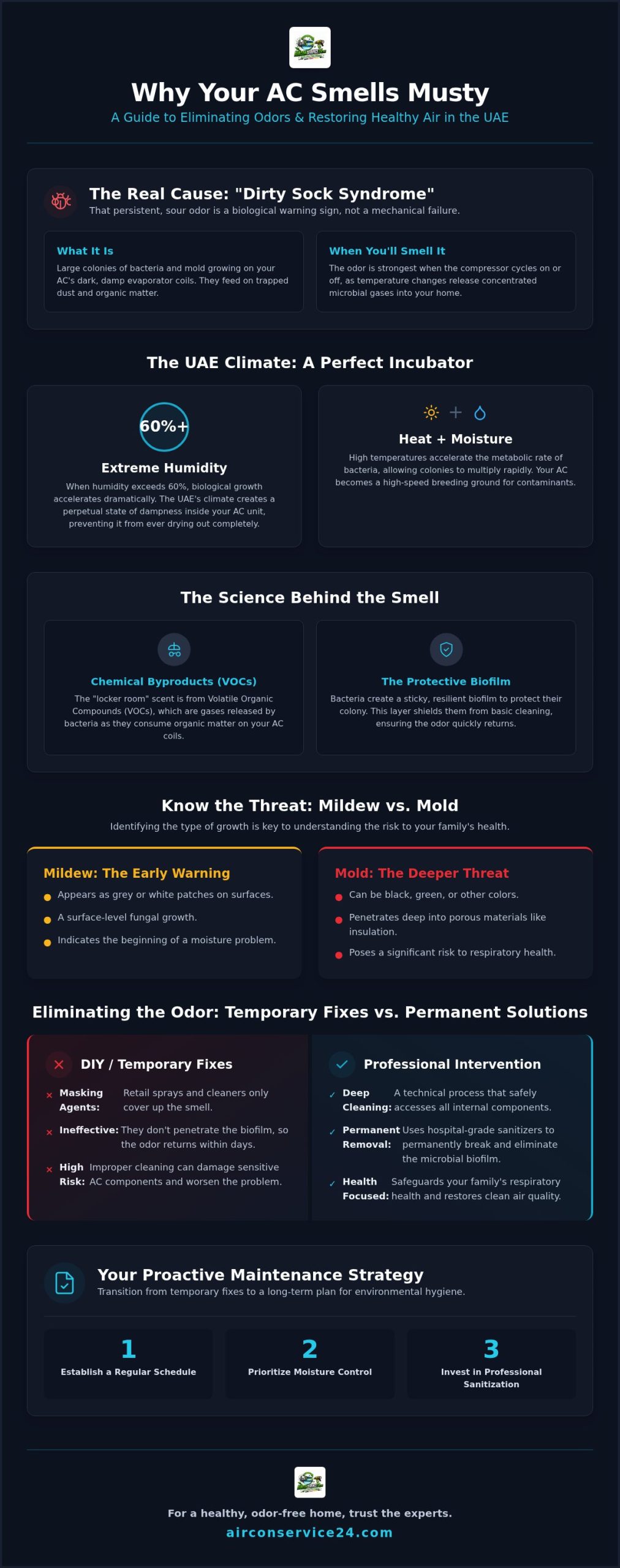
That pungent, sour odor isn’t a mechanical failure; it’s a biological invasion. In the UAE, where cooling systems operate almost continuously, identifying a musty smell from air conditioner units is the first step in defending your home’s environment. This specific scent is professionally known as “Dirty Sock Syndrome.” It occurs when large colonies of bacteria and mold settle on your system’s evaporator coils. These microorganisms thrive in the dark, damp spaces of your unit, feeding on dust and skin cells trapped within the fins. Unlike a temporary “dusty” smell that vanishes after five minutes of operation, this biological odor is persistent, aggressive, and potentially hazardous.

You’ll notice the scent most intensely when the compressor cycles on or off. During these transitions, the temperature of the coils shifts, causing moisture to evaporate or settle. This process releases concentrated odors into the airflow. While some manufacturers suggest these smells are normal during seasonal startups, that logic doesn’t apply to the UAE’s year-round cooling demands. If you smell it now, the microbial growth is already active. This means your family is breathing in air that has passed through a living layer of contaminants, directly impacting your indoor air quality and domestic comfort.

The Science of Indoor Odours

The “locker room” scent is actually a chemical byproduct. As bacteria consume organic matter on your internal equipment, they release Volatile Organic Compounds (VOCs) through their metabolic processes. These gases are what your nose detects as a foul odor. Biofilm is the protective layer bacteria create to survive on AC components. This sticky, resilient film shields the colony from basic cleaning attempts, allowing the odor to return even after you’ve wiped down the visible exterior of the unit.

Mildew vs. Mould: Identifying the Threat

Differentiating between these two is vital for your response strategy. Mildew is typically a surface-level growth that appears as grey or white patches. It’s an early warning sign. Mould, however, is a more sophisticated fungi that can penetrate deep into the porous components of your AC system, including insulation and gaskets. Both represent a significant threat to vulnerable residents. Children, the elderly, and those with pre-existing respiratory conditions are at the highest risk when a persistent musty smell from air conditioner systems is ignored. In 2026, we recognize that these biological presence requires immediate, methodical intervention to prevent long-term health issues and system degradation.

The UAE Climate Factor: Why High Humidity Triggers AC Odours

The national humidity levels in the UAE often exceed the 60 percent threshold, which is the critical point where biological growth accelerates. Because the ambient air remains saturated, your system’s internal components never have the opportunity to dry out completely. This creates a perpetual state of dampness that is invisible from the outside but devastating within the unit. Experts agree that the key to mold control is moisture control, yet our local climate makes this a constant challenge. Your air conditioner essentially acts as the lung of your home, and in 2026, we recognize that a “lung” saturated with moisture is a primary catalyst for respiratory discomfort.

Extreme heat further complicates this environmental struggle. High temperatures accelerate the metabolic rate of bacteria, allowing colonies to double in size within hours. When this heat meets a damp cooling system, it creates a perfect incubator. A musty smell from air conditioner vents isn’t just a sign of age; it’s a sign that your system’s hygiene has been compromised by the very climate it’s designed to combat. Maintaining domestic harmony requires a shift in perspective, viewing your AC as a sensitive environmental guardian that demands rigorous, professional sanitisation to function safely.

How Condensation Becomes a Breeding Ground

The physics of cooling in a desert environment is relentless. Warm, humid air hits the freezing evaporator coils, causing immediate water runoff. While the condensate cycle is designed to channel this water away, stagnant pools often form in the drain pan due to minor blockages or poor levelling. These pools quickly become a high-speed breeding ground for microbial life. This is precisely why regular AC maintenance is no longer optional; it’s a fundamental requirement for maintaining a healthy living space. If you notice water isn’t draining efficiently, an odour will inevitably follow.

The Role of Dust and Sandstorms

Regional sandstorms introduce microscopic particles that easily bypass standard residential filters. These fine grains settle onto the damp surfaces of your internal coils, creating a thick, organic sludge. This dust serves as the primary food source for the fungi and bacteria that produce a musty smell from air conditioner units. Even in a home that appears spotless, the internal components of your AC can be “feeding” a massive microbial colony. Our specialized odour removal protocols are designed to strip away this nutrient layer, ensuring the biological cycle is broken at its source.

Locating the Source: Where Is the Smell Coming From?

Identifying the exact origin of a musty smell from air conditioner units is a technical challenge because the source is almost always hidden behind the internal casing. While you might expect to see visible mold, the biological culprits are often microscopic colonies tucked away in inaccessible corners. To begin your assessment, follow this diagnostic checklist:

  • Is the odor localized to one specific room or present at every vent?
  • Does the scent peak during the first few minutes of operation?
  • Are there visible signs of moisture or “sweating” on the unit’s exterior?
  • Is the smell purely musty, or does it have a metallic or sulfurous edge?

Distinguishing between a unit-specific issue and whole-house distribution is critical. If the scent is isolated, the problem likely resides in the indoor unit’s coils or pan. If it’s everywhere, the contamination has likely migrated into the ductwork, where it can circulate spores through every room, compromising the health of the entire household. Ignoring these early olfactory warnings allows the colonies to expand, eventually requiring more invasive and costly repairs than a standard sanitisation.

Blocked Condensate Lines and Stagnant Drain Pans

The condensate drain system is a frequent site for “algae bloom,” a thick microbial sludge that obstructs water flow. When water cannot exit the system, it pools in the drain pan, becoming stagnant. This creates a specific variation of the musty smell from air conditioner vents that often carries a sharp, rotten egg undertone. Beyond the odor, a blocked line presents a high-stakes risk of secondary water damage. If the pan overflows, it can lead to ceiling leaks and structural dampness, further complicating your home’s environmental hygiene and domestic harmony.

The Evaporator Coil: The Core of the Problem

The evaporator coil is the epicenter of cooling and, unfortunately, the primary site for Dirty Sock Syndrome. Its intricate network of aluminum fins is designed to maximize surface area for heat exchange, but these tight spaces also trap moisture and organic dust. As we discussed earlier, this combination creates the perfect substrate for biofilm. Removing this growth is a delicate task; you cannot simply scrub these components without risking permanent damage to the fins. Specialized AC equipment and precision pressure-washing tools are required to penetrate the coil’s depth and flush out the accumulated contaminants without compromising the system’s mechanical integrity.

Musty Smell From Air Conditioner: Causes and Solutions for UAE Homes (2026)

How to Eliminate Musty Odours: DIY Steps vs. Professional Intervention

Eliminating a musty smell from air conditioner units starts with understanding the boundaries of safe home maintenance. As a homeowner, your primary responsibility is maintaining the first line of defense: the air filters. You can also safely wipe down visible plastic louvers and the external chassis with a damp, lint-free cloth to remove surface dust. However, you must avoid the temptation to spray household perfumes, essential oils, or bleach-based cleaners directly into the air intake. These substances don’t just fail to kill the underlying microbial colonies; they can also corrode sensitive aluminum components and introduce volatile organic compounds into your family’s breathing zone.

Masking an odor with plug-in air fresheners or aerosol sprays is a dangerous strategy. These products merely overwhelm your olfactory senses while the biological threat inside the unit continues to multiply and release spores. If a musty smell from air conditioner vents persists for more than 24 hours after you’ve cleaned the filters, you’ve reached the threshold where professional intervention is mandatory. Continuing to operate a contaminated system without proper sanitisation risks spreading contaminants deeper into your home’s infrastructure and compromising your respiratory health.

Cleaning Your Filters: The First Line of Defence

Correct filter maintenance is essential in the UAE’s dusty environment. Follow this methodical 3-step process to ensure peak performance:

  1. Carefully remove the filters and vacuum away loose debris to prevent clumping.
  2. Wash them with mild soap and lukewarm water, avoiding high-pressure streams that can tear the delicate mesh.
  3. Allow them to dry completely in a shaded, clean area before reinstalling to prevent moisture buildup.

In 2026, UAE residents should perform this task every 2-4 weeks to combat high particulate levels. While this removes large debris, standard filters are often porous enough to allow microscopic mold spores to pass through and settle on the damp internal coils, where they begin to form a biofilm.

When a Simple Filter Change Isn’t Enough

Odours frequently originate from the biofilm layers residing behind the filter, specifically on the evaporator coil and the blower fan assembly. DIY tools like vacuum attachments or long brushes are inadequate for reaching these deep recesses or the dark interior of the ductwork. Attempting to force tools into these areas can lead to expensive mechanical damage to the fan blades or coil fins. Adopting a “disciplined guardian” approach means recognizing when the problem requires the precision of specialized environmental hygiene. If your DIY efforts haven’t restored total freshness, it’s time for a definitive solution. Don’t compromise your domestic harmony with ineffective fixes; contact us for professional odour removal and restore your home’s air quality today.

Professional Deep Cleaning and Sanitisation: The Permanent Solution

When DIY efforts fail, the situation requires a transition from basic maintenance to advanced environmental restoration. A persistent musty smell from air conditioner units indicates that microbial colonies have matured into a resilient biofilm that standard cleaning cannot penetrate. At AirConService24.com, we act as the elite responder for these biological crises. Our professional deep cleaning protocol is a methodical, multi-stage process that goes far beyond a surface-level wipe. We begin by carefully dismantling the unit to expose the internal architecture, followed by precision pressure washing and the application of hospital-grade disinfection agents. This rigorous approach ensures that every square centimeter of your system is returned to a state of clinical hygiene.

Domestic harmony depends on the air you breathe. By utilizing specialized AC equipment, our technicians can reach the dark, damp recesses where odors originate. This isn’t just about comfort; it’s a commitment to the well-being of your household. In the 2026 UAE climate, a clean AC system is a fundamental component of a healthy lifestyle. We don’t just mask the scent; we eliminate the biological engine driving the odor, providing a permanent solution that restores your peace of mind and ensures your home remains a sanctuary.

The Science of Professional AC Sanitisation

Professional-grade disinfectants are engineered to break down the molecular structure of odours at their source. These hospital-grade agents penetrate the sticky biofilm that protects bacteria, effectively neutralising the metabolic byproducts that cause the “dirty sock” scent. Once the system is clean, we apply a sanitisation barrier that inhibits the immediate regrowth of mold and fungi. This comprehensive scope includes the blower motor, the intricate fan blades, and the drainage tray, ensuring no hidden pocket of contamination remains to restart the cycle. The result is a system that is biologically inert and mechanically optimized.

Restoring Your Indoor Environment

The improvement in your living environment is immediate and profound. Post-cleaning, you’ll notice a sharp increase in cooling efficiency and air velocity, as the removal of organic sludge allows for unobstructed heat exchange. This translates to significant long-term cost savings on your energy bills, which is vital in a region where cooling accounts for a major portion of household expenditure. Beyond the finances, the elimination of a musty smell from air conditioner vents removes the anxiety associated with poor indoor air quality. Your home will once again feel fresh, safe, and welcoming. Contact AirConService24.com for specialized odour removal today and reclaim your domestic comfort.

Secure Your Home’s Environmental Health

You shouldn’t have to compromise on the quality of the air your family breathes. A persistent musty smell from air conditioner units is a clear signal that the biological balance in your home has shifted. As we’ve explored, the UAE’s unique climate in 2026 demands more than just mechanical maintenance; it requires a disciplined approach to environmental hygiene. By identifying the root cause of “Dirty Sock Syndrome” and moving beyond superficial DIY masking, you’re choosing to protect both your system’s efficiency and your household’s long-term respiratory well-being.

Our elite team of expert UAE technicians is ready to act as the proactive guardian of your domestic harmony. We specialize in precision biofilm elimination using hospital-grade sanitisation protocols that restore your unit to a state of clinical purity. Whether you’re facing an immediate air quality crisis or seeking to prevent the return of foul odours, our 24/7 emergency odour removal services ensure you’re never left without a professional solution. Take the definitive step toward a healthier, fresher living environment today.

Eliminate AC Odours Today with Our Expert Sanitisation Services. Fresh, healthy air is just one methodical cleaning away.

Frequently Asked Questions

Is a musty smell from my AC dangerous to my health?

Yes, a persistent odor is a biological warning that your indoor air quality is compromised. The smell originates from active colonies of mold and bacteria growing on your evaporator coils. Inhaling these spores and metabolic byproducts can trigger respiratory distress, asthma attacks, and allergic reactions in vulnerable residents. Ignoring the problem allows these contaminants to circulate freely, turning your living space into a health hazard rather than a sanctuary of domestic harmony.

Can I use air fresheners to get rid of the AC smell?

No, air fresheners only mask the underlying issue without addressing the biological source. Using aerosols or plug-ins introduces volatile organic compounds into your home, which can react with existing mold spores to further degrade your air quality. This approach is a temporary distraction that allows the microbial biofilm to continue growing unchecked. Real domestic harmony requires professional sanitisation to eliminate the odor permanently rather than simply covering it up with synthetic scents.

How long does a professional AC odour removal service take?

A standard professional session typically requires between 90 minutes and three hours per unit. This duration allows our expert technicians to perform a methodical dismantling, pressure wash the internal components, and apply hospital-grade sanitisation treatments. The exact time depends on the level of microbial accumulation and the complexity of your specific system. We prioritize precision over speed to ensure every pocket of contamination is neutralized, restoring fresh air to your home efficiently.

Why does my AC smell like dirty socks even after I changed the filters?

This occurs because the musty smell from air conditioner units often resides deep within the internal components where standard filters cannot reach. While new filters improve airflow, they don’t remove the established biofilm on the evaporator coils or the blower fan. These dark, damp areas serve as the primary breeding ground for “Dirty Sock Syndrome.” Until these surfaces are professionally deep cleaned and disinfected, the odor will continue to permeate your living environment.

What happens if I ignore a musty smell in my air conditioner?

Ignoring the scent allows microbial colonies to migrate into your ductwork and structural components, making eventual removal far more complex and expensive. Over time, the accumulation of organic sludge on the coils forces the system to work harder, leading to higher energy consumption and premature mechanical failure. More importantly, prolonged exposure to these contaminants can lead to chronic respiratory issues for your family, compromising the safety and comfort of your home environment.

How often should I have my AC deep cleaned in the UAE?

In the intense climate of the UAE, we recommend a professional deep cleaning at least twice per year. The high humidity levels and frequent sandstorms characteristic of 2026 create a constant supply of moisture and organic food for bacteria. Regular maintenance acts as a disciplined guardian for your system, preventing the buildup of biofilm before it can produce a foul odor. Homes with pets or residents with allergies may require more frequent sanitisation.

Will a musty smell go away on its own if I lower the temperature?

Lowering the temperature will not eliminate the problem; it may actually worsen the situation by increasing condensation within the unit. While colder air might temporarily dampen your ability to detect the scent, the underlying mold and bacteria remain active and continue to multiply. A musty smell from air conditioner vents requires a targeted chemical intervention to break the biological cycle. Relying on thermostat adjustments only delays the necessary professional sanitisation your system needs.

Can a blocked drain line cause my AC to smell like rotten eggs?

Yes, a blocked condensate line often results in stagnant water pooling in the drain pan, which facilitates the growth of sulfur-producing bacteria. This creates a distinct “rotten egg” or sulfurous variation of the typical musty odor. Beyond the unpleasant scent, a blockage presents a high-stakes risk of water overflow and secondary damage to your ceilings or walls. Clearing the line and disinfecting the pan are essential steps in our comprehensive odour removal process.

WhatsApp