AC Humidity Control (Dubai & UAE): The National Guide to Indoor Comfort

Article by
Jon Bonnett
Australian Air Conditioning Specialist with extensive hands-on experience in AC servicing, deep cleaning, maintenance, and troubleshooting. Focused on high-quality workmanship, reliability, and professional service to UAE standards.
Why does your home feel like a sauna even when the thermostat is set to a crisp 22°C? It is a common frustration for residents across the Emirates who find their AC not reducing humidity effectively, despite the system running at full capacity. You are likely dealing with the discomfort of sticky skin, damp air, and the faint, unsettling scent of musty odours that signal a system in distress. This is not merely a matter of comfort; it is a critical issue for your home’s hygiene and your family’s respiratory health.
You already know that living in this extreme climate requires more than just a cooling unit. You need a precision-tuned environment that acts as a sanctuary against the intense outdoor conditions that define the UAE summer. We promise to help you master the science of indoor moisture management. By understanding the relationship between airflow and latent heat, you can reclaim your domestic harmony and ensure your cooling system performs as a disciplined guardian of your well-being.
This guide provides a comprehensive roadmap to achieving a crisp, dry indoor environment. We will detail how professional sanitisation and expert maintenance eliminate condensation on vents, prevent mould-related risks, and lower your monthly energy bills through superior system efficiency. Discover how to transform your air conditioner into a high-performance tool for total environmental control.
Key Takeaways
- Understand the unique humidity paradox of the UAE’s coastal desert climate and how it impacts your indoor thermal comfort.
- Identify technical system failures, such as evaporator coil issues, that result in your ac not reducing humidity dubai effectively.
- Recognise the critical health risks associated with biofilm and “Dirty Sock Syndrome” when indoor moisture levels surpass 60%.
- Master practical operational strategies, including the “Auto” fan setting and optimal thermostat ranges, to maximise dehumidification.
- Discover how professional deep sanitisation and precise maintenance protocols protect your home from persistent musty odours and mould.
The Science of Humidity in the UAE Climate
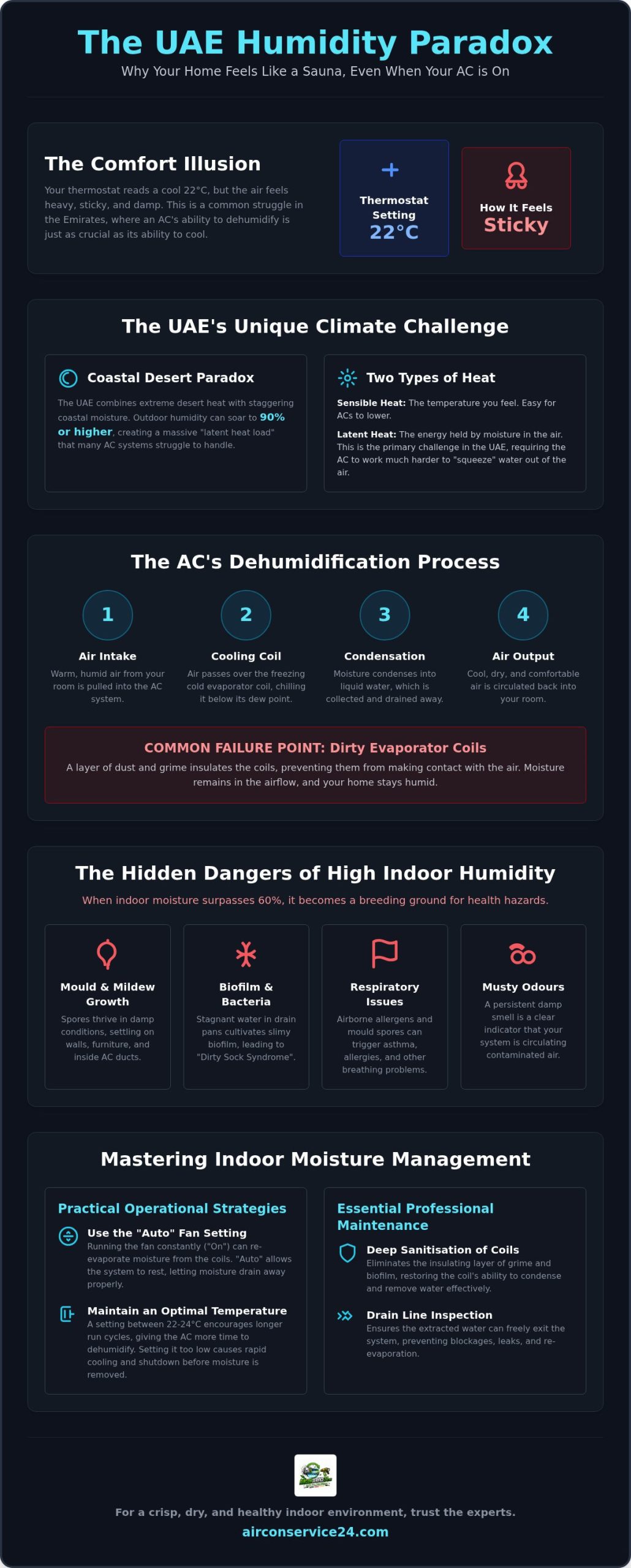
The UAE presents a unique atmospheric challenge. It is a coastal desert where extreme heat meets staggering moisture levels. During the summer months, outdoor humidity can soar to 90% or higher. This creates a “Humidity Paradox” where your home may feel cold but remains oppressively sticky. When you find your ac not reducing humidity dubai, it’s often because the system is struggling to manage the sheer volume of water vapour in the air.
Comfort is not just about the numbers on a thermostat. While a setting of 22-24°C is recommended for residents who spend 90% of their time indoors, temperature is only half the battle. The building envelope, which includes your walls, windows, and seals, acts as the primary barrier against the elements. If this envelope is compromised, or if the AC system is not calibrated for the local climate, moisture will infiltrate your living space. This leads to that “clammy” feeling that disrupts domestic harmony and ruins indoor air quality.
Latent vs. Sensible Heat Loads
Your air conditioning unit deals with two distinct types of heat. Sensible heat is what you feel as temperature, while latent heat refers to the energy held by moisture in the air. Understanding how air conditioners remove humidity is essential for every homeowner. The system must cool the air below its dew point to trigger condensation, effectively “squeezing” the water out of the air before it enters your rooms.
In the UAE, the latent load is exceptionally high. Your AC must work significantly harder to extract water than it does to lower the temperature. If the system is oversized or poorly maintained, it might cool the room too quickly and shut off before it has finished the dehumidification process. This imbalance places immense strain on mechanical components and shortens the lifespan of your specialised equipment.
National Climate Challenges for HVAC Systems
The geographical reality of the UAE dictates a more aggressive maintenance schedule than in other parts of the world. Coastal proximity means the air is constantly laden with moisture and salt, which can accelerate the degradation of evaporator coils. Unlike cooler climates, the seasonal shift here often brings humidity peaks when they are least expected, catching unmaintained systems off guard and leading to rapid mould proliferation.
Standard maintenance routines designed for temperate regions are insufficient here. Our extreme environment requires a disciplined approach to ensure the system remains a reliable responder. This includes:
- Frequent inspection of drain lines to prevent blockages from high condensation levels.
- Deep sanitisation of coils to ensure efficient heat exchange and moisture removal.
- Regular monitoring of refrigerant levels to maintain the correct dew point for water extraction.
A proactive approach is the only way to ensure your indoor environment remains a crisp, dry sanctuary against the relentless outdoor humidity.
How AC Systems Control Indoor Moisture
Your air conditioner is a dual-purpose machine. It doesn’t just lower the mercury; it acts as a mechanical sponge. If you notice your ac not reducing humidity dubai, the system is failing its secondary, and arguably more important, role. Effective dehumidification requires the system to run long enough to pull water from the air, a process that relies on precise mechanical harmony between airflow and refrigerant temperature.
The Evaporator Coil and Heat Exchange
The evaporator coil serves as the primary site where moisture condensation occurs. As warm, humid air from your home is pulled over these freezing cold metal fins, it reaches its dew point. This causes the water vapour to transform into liquid droplets, which then exit the air stream. If your coils are coated in a layer of dust or grime, they become insulated. This layer of filth prevents the air from making direct contact with the cold metal, meaning the moisture stays suspended in the air and continues to circulate through your home.
Once the water is successfully “squeezed” out, it must be removed from the property. It drips into a condensate pan and flows out through a dedicated drain line. A blockage here doesn’t just cause potential leaks; it keeps a reservoir of stagnant water inside your unit, which can re-evaporate back into the airflow. Failing to manage this process effectively increases the health risks of high indoor humidity, such as the rapid growth of allergens and mould that thrive in damp ductwork.
The Problem of Short Cycling
Bigger isn’t always better when it comes to HVAC. In the UAE, many homes are fitted with oversized AC units that cool the room to the target temperature in minutes and then shut off. This is known as short cycling. Because the unit reaches the temperature setpoint so quickly, it never runs long enough to complete a full dehumidification cycle. It takes time for the coils to stay cold enough to pull significant moisture from the air. This is a primary reason why residents find their ac not reducing humidity dubai despite the air feeling physically cold.
This “Cold but Clammy” phenomenon is a hallmark of an imbalanced HVAC setup. Modern solutions, such as variable speed compressors or inverter technology, solve this by running at lower, consistent speeds to maintain a steady dew point without constantly shutting down. If your current system is struggling to balance these loads, a professional assessment of your specialised equipment can identify if a repair or a configuration change is needed. For precision diagnostics and to restore domestic harmony, you can consult the specialists at AirConService24.com to ensure your system is perfectly calibrated for the coastal desert climate.
The Risks of High Indoor Humidity and Biofilm
Allowing indoor moisture levels to climb unchecked is a biological emergency. When your ac not reducing humidity dubai, you aren’t just dealing with personal discomfort; you’re hosting an environment that facilitates rapid microbial proliferation. Research indicates that once relative humidity exceeds 60%, the risk of mould growth and bacterial colonies increases exponentially. This threshold is critical because UAE residents spend approximately 90% of their time indoors, making the quality of that air a fundamental pillar of health and domestic harmony.
High humidity doesn’t only affect your lungs. It actively attacks the structural integrity of your home. Persistent moisture causes wallpaper to peel, timber flooring to warp, and delicate electronics to succumb to internal corrosion. These are not just aesthetic issues; they represent significant financial liabilities that can be avoided through precise environmental control and proactive maintenance.
Biofilm and Microbial Proliferation
One of the most insidious consequences of moisture mismanagement is the development of biofilm. This is a resilient, slimy layer of bacteria and fungi that adheres to your AC drain pans and evaporator coils. Biofilm is the primary culprit behind “Dirty Sock Syndrome,” a condition where your vents emit a persistent, musty odour that permeates every room. If you find your ac not reducing humidity dubai, the resulting dampness acts as a catalyst for these pathogens, creating a self-sustaining cycle of contamination.
Simple air fresheners or surface sprays are useless against this. They merely mask the scent while the underlying biological colony continues to thrive. Eliminating these odours requires a disciplined approach to deep cleaning and sanitisation. Without professional intervention to remove the biofilm at its source, the bacteria will continue to recirculate, triggering allergies and compromising the well-being of everyone in the household.
Protecting Indoor Air Quality (IAQ)
Maintaining superior Indoor Air Quality (IAQ) is a necessity for a healthy lifestyle. High indoor moisture is a known trigger for respiratory issues and can lead to Sick Building Syndrome, where occupants experience headaches and fatigue without a clear cause. By mastering humidity control, you ensure your home remains a sanctuary rather than a source of stress. Dry air leads to better sleep, fewer allergens, and a more energetic daily life. Learn about the specialised equipment we use to monitor and manage these critical environmental factors with precision.
Adhering to local standards, such as the Dubai Municipality guidelines for suspended particulates and TVOC levels, is easier when your AC system is functioning as a dehumidifier. A well-maintained system doesn’t just cool; it filters and dries, ensuring that PM2.5 and PM10 concentrations remain within safe limits. This commitment to environmental hygiene is what separates a standard living space from a high-performance home.
Strategies for Maximising AC Dehumidification
Operational precision is the first line of defence against the UAE’s relentless moisture. If you find your ac not reducing humidity dubai, the solution often lies in how you interact with your system’s controls. Small adjustments to your daily habits can prevent your home from becoming a reservoir for unwanted water vapour. It’s about working with the physics of your machine rather than against it.
Thermostat Optimization and Fan Settings
The debate between “Auto” and “On” fan settings is settled by the physics of moisture. When you set your thermostat fan to “On”, the blower runs continuously, even when the compressor is idle. This is a critical mistake. As the compressor shuts off, the evaporator coils remain drenched with recently condensed water. A continuous fan will blow air over these wet fins, re-evaporating that moisture and pushing it straight back into your rooms. Always select the “Auto” setting to ensure the fan only operates during the cooling cycle, allowing moisture to drain away properly.
Maintaining a thermostat range between 22°C and 24°C is optimal for national residences. This range balances thermal comfort with the system’s ability to run long enough for effective dehumidification. Smart thermostats provide an additional layer of protection, allowing you to monitor relative humidity in real time and adjust settings before dampness leads to musty odours. Keeping humidity between 40% and 60% is the gold standard for domestic harmony and health.
The Necessity of Deep Cleaning
Surface cleaning is merely a cosmetic fix. To truly manage humidity, you must invest in professional coil sanitisation. Over time, layers of dust and biofilm build up on the evaporator fins, creating an insulating barrier that prevents the refrigerant from absorbing heat and moisture effectively. Deep cleaning restores this heat exchange efficiency, ensuring your system removes every possible drop of water from the air. For a detailed breakdown of how to protect your system, consult our AC Maintenance UAE: The Complete 2026 Reference.
Don’t let outdoor air infiltration undermine your efforts. Ensure that windows and doors are sealed tightly and that exhaust fans in kitchens and bathrooms are used sparingly, as they can pull humid outdoor air into the building through small gaps. If your system still struggles to maintain a dry environment, it’s time for a professional intervention. You can book a comprehensive sanitisation and maintenance service with our elite technicians to restore your home’s environmental hygiene and ensure long term performance.
Professional Sanitisation and Repair Solutions
AirConService24 operates as a disciplined guardian of your indoor environment. When standard maintenance fails and you find your ac not reducing humidity dubai, the situation requires more than a simple filter change. It demands a methodical investigation into the mechanical integrity and biological hygiene of your HVAC system. We restore domestic harmony by combining technical expertise with a proactive, results-oriented methodology that addresses the root cause of moisture imbalance.
Our approach is built on transparency and precision. We don’t just guess at the problem; we use advanced diagnostics to identify why your system is failing to reach the necessary dew point. Whether the issue stems from a faulty expansion valve, a refrigerant imbalance, or a compromised evaporator coil, our technicians remain calm and methodical under pressure, ensuring your home returns to a state of equilibrium as quickly as possible.
Advanced Odour Removal Treatments
We eliminate the root cause of musty smells through a rigorous workflow that goes beyond surface cleaning. Our technicians utilise medical-grade disinfectants specifically formulated for residential AC systems to dissolve the resilient biofilm colonies mentioned in previous sections. This level of sanitisation is essential for ensuring long-term fresh air and preventing the recurrence of “Dirty Sock Syndrome.” By employing specialised equipment for deep sanitisation, we ensure that every square centimetre of your evaporator coils and drain pans is free from contaminants.
24/7 Support for Cooling Crises
Humidity spikes in the UAE are not just an inconvenience; they are an emergency that can lead to rapid mould proliferation and respiratory distress. Our rapid response methodology ensures that elite specialists are available to intervene the moment your indoor climate begins to deteriorate. We understand the high-stakes nature of a failing system in this environment, which is why we prioritise speed and precision in every repair. If your home has become a sauna due to mechanical failure, you can rely on our Emergency AC Repair Dubai: Fast Cooling Relief service to restore your comfort immediately.
Our commitment to results means we provide comprehensive mechanical repairs that recalibrate your system for the specific demands of the coastal desert. We don’t just patch problems; we solve them. From refrigerant leak detection to compressor optimisation, our goal is to ensure your air conditioner operates at peak efficiency. This protects your health, your home’s structural integrity, and ensures that your ac not reducing humidity dubai becomes a problem of the past.
Reclaim Your Indoor Environment
Mastering the UAE’s challenging climate requires more than just lowering the temperature. It demands a sophisticated understanding of latent heat loads and the biological risks of moisture. Maintaining a dry, crisp home relies on precise mechanical calibration and the elimination of resilient biofilms that thrive in damp conditions. When you find your ac not reducing humidity dubai, it’s a signal that your system’s mechanical and biological balance has been compromised, requiring immediate professional intervention to protect your health and domestic harmony.
AirConService24 stands ready as your disciplined guardian. We combine national UAE technical expertise with a methodical approach to deep sanitisation and mechanical restoration. Whether you require a 24/7 emergency professional response or specialised odour removal to eliminate persistent musty scents, our technicians are equipped to restore your system’s precision. Don’t let high humidity dictate your quality of life or compromise your home’s structural integrity.
Restore your indoor comfort with expert AC sanitisation and repair and enjoy the peace of mind that comes with a perfectly balanced environment. Your journey to a healthier, more comfortable home begins with a single proactive step. We are ready to act when you need us most.
Frequently Asked Questions
Why is my AC running but the house still feels humid?
Your system might be cooling the air without effectively removing moisture, which is a common reason for your ac not reducing humidity dubai. This happens when the evaporator coil doesn’t stay cold enough for a sufficient duration. It’s often caused by low refrigerant levels or restricted airflow. If the compressor shuts off too early, the water vapour remains suspended in the air. This creates a sticky environment that disrupts your domestic harmony and well-being.
What is the ideal indoor humidity level for UAE homes?
The optimal relative humidity range for national residences is between 40% and 60%. Maintaining this balance is essential to prevent the growth of mould and bacteria. If levels exceed 60%, biological contaminants like biofilm begin to thrive. Conversely, levels below 40% can cause dry skin and respiratory irritation. Using a smart thermostat or hygrometer helps you monitor these levels to ensure your home remains a healthy, disciplined sanctuary.
Does a dirty AC filter cause high humidity?
A clogged filter restricts the volume of air passing over the evaporator coils. This slows down the heat exchange process and prevents the system from reaching the necessary dew point for water extraction. When airflow is compromised, the AC works harder but removes less moisture. Regular maintenance and filter replacement are basic but vital steps in ensuring your system functions as a high-performance dehumidifier rather than just a simple cooling fan.
Why does my AC smell musty when it first turns on?
This odour is typically caused by biofilm and microbial growth on the evaporator coils or in the drain pan. It’s often referred to as “Dirty Sock Syndrome.” Moisture trapped in the system creates a breeding ground for bacteria that release foul scents when the fan starts. Professional sanitisation and specialised odour removal are required to eliminate these colonies. Simple sprays won’t solve the issue; you need deep cleaning to restore environmental hygiene.
Can an oversized AC unit actually make my home more humid?
Oversized units cool spaces too rapidly and then shut down. This is known as short cycling. Because the cooling cycle is so brief, the system doesn’t have enough time to pull moisture from the air and drain it away. This results in a “Cold but Clammy” feeling where the temperature is low but the humidity remains high. Correct system sizing and professional installation are critical for maintaining a crisp, dry indoor environment throughout the year.
How often should I have my AC deep cleaned for moisture control?
In the intense UAE climate, you should schedule a professional deep cleaning every six months. The high levels of airborne dust and coastal moisture lead to rapid debris buildup on internal components. Regular sanitisation ensures that evaporator coils remain efficient and drain lines stay clear. This proactive approach prevents the formation of biofilm and ensures your system continues to manage latent heat loads effectively during the peak summer months.
What is the best thermostat setting for humid weather?
Set your thermostat between 22°C and 24°C and always keep the fan on the “Auto” setting. If you use the “On” setting, the fan runs continuously. This causes moisture that has condensed on the coils to re-evaporate back into your home during the compressor’s off-cycle. The “Auto” mode ensures that the fan only blows when the system is actively cooling and dehumidifying, which is vital for maintaining domestic comfort and air quality.
Is condensation on my AC vents a sign of a serious problem?
Visible condensation on your vents suggests that warm, humid air is meeting a cold surface. This often indicates a leak in the building envelope or a restriction in airflow that is causing the vents to become excessively cold. If left unaddressed, this moisture will lead to mould growth and potential structural damage. Immediate professional inspection is necessary to identify the source of the infiltration and restore your system’s precision and performance.
Professional AC Drain Line Cleaning Service: Prevent Water Damage & Mould (2026)
Article by
Jon Bonnett
Australian Air Conditioning Specialist with extensive hands-on experience in AC servicing, deep cleaning, maintenance, and troubleshooting. Focused on high-quality workmanship, reliability, and professional service to UAE standards.
You wake up to a damp, discoloured patch spreading across your ceiling while the rhythmic sound of water hitting your furniture echoes through the room. In the intense UAE heat of 2026, a simple blockage in your cooling system can quickly escalate into a domestic crisis. You aren’t alone if you’ve felt the sudden anxiety of a leak or the frustration of a persistent, musty “dirty sock” odour that just won’t go away. We understand that your home is your sanctuary, and a failing AC system disrupts that essential sense of domestic harmony.
Discover how a professional ac drain line cleaning service acts as a disciplined guardian for your property, protecting your investment from expensive water damage and hidden mould growth. By employing methodical, high-pressure jetting and advanced sanitisation, you can restore your system’s peak cooling performance and breathe cleaner air. This article details the specialized protocols that eliminate foul odours and ensure your home remains a dry, leak-free environment. We will explore the technical precision required to clear obstructions and the modern standards of excellence that keep your living space healthy and comfortable all year round.
Key Takeaways
- Understand why the UAE’s high humidity requires your AC to extract gallons of water daily, making a clear condensate path essential for property safety.
- Identify the biological “sludge” and biofilm that cause blockages and learn how they impact your home’s air quality and respiratory health.
- Discover why a professional ac drain line cleaning service using high-pressure jetting provides a more thorough, lasting solution than basic vacuum flushing.
- Learn to spot the early warning signs of a clogged line, including the “musty smell” test, to prevent catastrophic leaks and ceiling damage.
- Gain insights into the advanced sanitisation protocols that eliminate the root cause of mould and ensure peak cooling efficiency throughout 2026.
The Critical Role of AC Drain Lines in the UAE Climate
The condensate drain line is the unsung hero of your home’s climate control system. It serves as the primary escape route for the massive volume of moisture pulled from your indoor air during the cooling process. In the unique UAE climate of 2026, where humidity can reach extreme levels, this small PVC pipe carries a heavy burden. If it fails, the consequences are immediate and destructive. Most systems are designed with a primary line and a secondary emergency line. The latter is a fail-safe; if you see water dripping from an unusual exterior pipe, it’s a signal that your primary system has already collapsed under the weight of a blockage.
Utilizing a professional ac drain line cleaning service ensures these pathways remain clear. It’s a methodical approach to preventing “ceiling rain,” a common catastrophe where water overflows the internal drain pan and compromises your property’s structural integrity. A functioning drain line is the difference between a cool, dry home and a costly emergency restoration project.
The Science of Condensation in High-Heat Environments
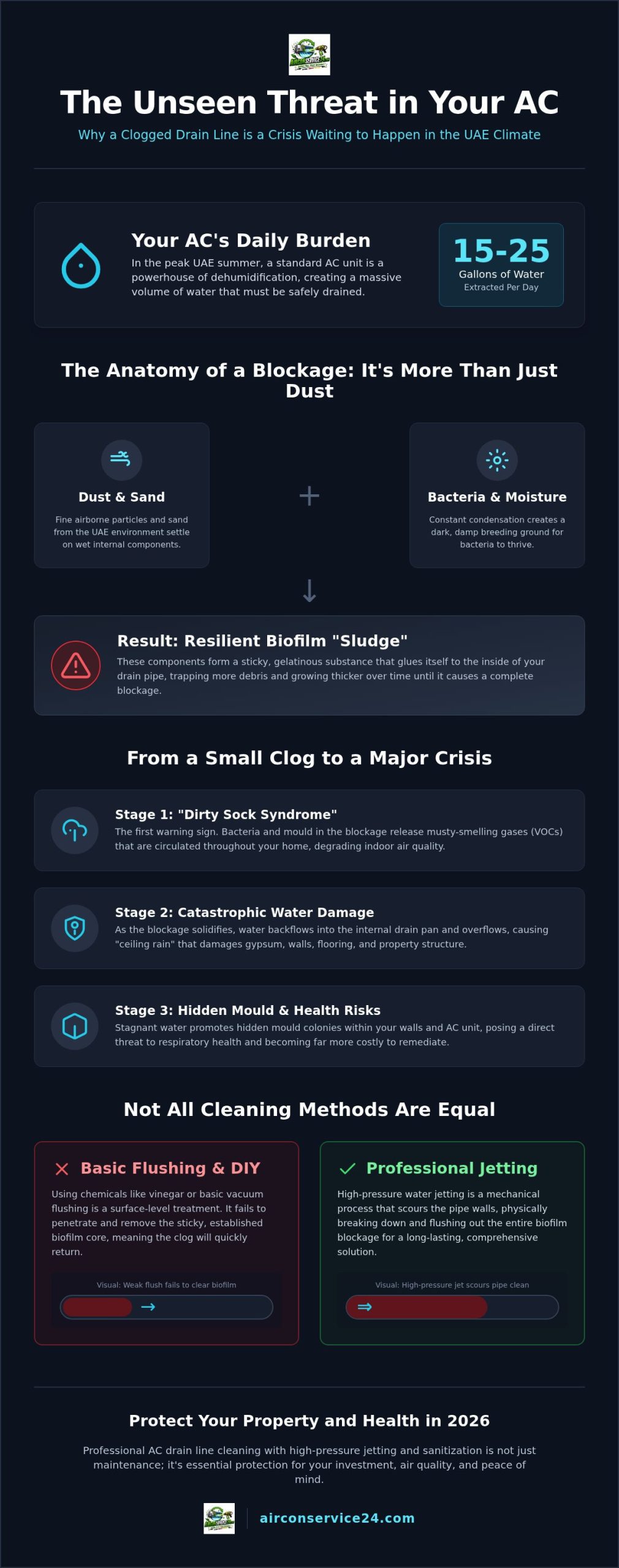
Your AC’s evaporator coil acts like a magnet for moisture. As warm, humid air passes over the cold coils, water vapor transforms into liquid droplets. In the peak UAE summer, a standard 2-ton AC unit can extract between 15 and 25 gallons of water every single day. This volume is staggering for a gravity-fed system. Without consistent maintenance, this water becomes stagnant. Gravity alone isn’t enough to push through the thick biofilm and debris that accumulate in high-heat conditions, leading to rapid system shutdowns.
Property Protection: Beyond Just a Leaky Pipe
A blocked line leads to water soaking into gypsum ceilings and expensive marble flooring. This moisture doesn’t just damage aesthetics; it weakens the very fabric of your home. Stagnant water in drain pans also attracts pests and promotes the growth of hidden mould. By using specialized equipment to clear these lines, you protect your investment. Investing in a proactive ac drain line cleaning service is a calculated financial decision. It’s far more cost-effective than the high-stakes restoration required after a major ceiling collapse or a widespread mould infestation. We view this service as an essential component of domestic harmony and long-term health.
The Anatomy of a Blockage: Biofilm, Sludge, and Dust
Understanding what actually clogs your cooling system is the first step toward effective prevention. While many believe a simple accumulation of dust is the primary culprit, the reality is far more complex and biological. Inside the dark, damp confines of your drain pipe, a gelatinous “sludge” forms that acts like a magnet for every particle that passes through your unit. This isn’t just a physical obstruction; it’s an active breeding ground for mould colonies that thrive in the constant humidity of 2026. These colonies grow rapidly, eventually narrowing the pipe until water has nowhere to go but back into your living space.
Generic maintenance providers often suggest standard chemical flushes, but these surface-level treatments rarely penetrate established biological mats. To truly clear the system, a comprehensive ac drain line cleaning service is required to break down the resilient structures that a simple cup of vinegar or bleach cannot touch. Without mechanical intervention, the core of the blockage remains, ready to trap new debris within days of a basic flush.
The Growth of “AC Sludge”
The formation of “AC sludge” begins when fine UAE sand and airborne dust settle on the wet surfaces of your drain pan. When these inorganic particles mix with bacteria and constant condensation, a sticky biological reaction occurs. Biofilm acts as a powerful glue, trapping larger debris and solidifying the clog until water can no longer pass through. Biofilm is a complex colony of microorganisms that creates a waterproof barrier inside pipes. This barrier protects the bacteria from light cleaning agents, allowing the blockage to grow thicker and more stubborn over time. It requires professional-grade pressure to dislodge this “glue” from the PVC walls.
Odour Origins: Why Your AC Smells Musty
If you’ve noticed a persistent smell often referred to as “Dirty Sock Syndrome,” your drain line is likely the source. As bacteria and mould multiply within the blockage, they release microbial Volatile Organic Compounds (VOCs) into the air stream. These gases are then circulated throughout your home, compromising your indoor air quality and respiratory health. Effective removal requires more than just mechanical clearing; it demands professional sanitisation to kill the microbes at their source. Our team specializes in deep cleaning and sanitisation to ensure these foul odours are permanently eliminated. By combining high-pressure clearing with targeted treatments, we restore your home’s domestic harmony and ensure the air you breathe is as fresh as it is cool.
Professional Pressure Jetting vs. Basic Drain Flushing
Many general maintenance companies rely on a standard “vacuum and flush” technique. This approach involves suctioning visible debris from the drain opening and pouring water through the pipe. While this might clear a minor obstruction, it leaves the resilient biological matting untouched on the pipe walls. Without dislodging this sticky foundation, new dust and sand will quickly re-attach, leading to a repeat blockage within weeks. A professional ac drain line cleaning service utilizes high-pressure jetting to move beyond these superficial fixes. It’s a surgical approach that strips away the root cause of clogs without compromising the integrity of the PVC.
Homeowners often attempt a “DIY bleach pour” to save costs. This is a dangerous practice. Bleach is highly corrosive and can degrade the rubber seals and PVC joints within your AC system over time. It also fails to provide the mechanical force needed to clear established sludge. Trusting a specialized ac drain line cleaning service ensures the job is done safely and thoroughly, protecting your home’s air and its structural health.
The Professional Equipment Advantage
Precision is the hallmark of elite maintenance. Unlike industrial jetting that can crack residential pipes, we use specialized nozzles tailored for the narrow 1/2 inch to 1 inch lines found in UAE homes. These tools provide 360-degree coverage to scrub the interior surface of the pipe clean. For immediate, high-stakes obstructions, CO2 flushing offers a safe and powerful burst of pressure to clear the line instantly. You can learn about the advanced AC equipment we use to maintain these high standards of domestic harmony. This technical precision ensures your system is restored to peak performance without the risk of collateral damage to your walls or flooring.
Why Chemical Sanitisation is Non-Negotiable
Clearing a pipe is only half the battle. If the underlying bacteria remain, they will immediately begin rebuilding the biofilm barrier. Professional sanitisation involves the application of eco-friendly, non-corrosive biocides that kill microorganisms on contact. This step is essential for long-term health and air quality. It extends the time between required cleanings by creating a hostile environment for mould and bacteria. We don’t just clear the path; we disinfect it. This methodical process eliminates the “dirty sock” odours at their source and prevents the rapid return of clogs. By prioritizing hygiene over simple mechanical clearing, we provide a solution that lasts through the most humid months of the year.
When to Book an AC Drain Line Cleaning Service
Waiting until water cascades from your ceiling is a high-stakes gamble that often results in expensive restoration costs. While dripping water is the most obvious red flag, your system often provides subtle warnings before a total failure occurs. A proactive ac drain line cleaning service is designed to catch these issues during the “warning phase” rather than the “crisis phase.” One common sign is your AC unit suddenly shutting down without warning. Most modern systems in the UAE are equipped with a float switch. This safety device “trips” the power when the drain pan fills with water, preventing an immediate overflow but leaving you without cooling in the intense 2026 heat.
The “Musty Smell” test is another reliable indicator of impending trouble. If you detect a damp, earth-like odour when the unit starts, biological growth is already established in the drain line. This occurs long before the pipe is completely blocked. Identifying these microbial Volatile Organic Compounds early allows for a methodical clearing of the system before structural damage begins. Regular monitoring of these signs is essential for maintaining domestic harmony and ensuring your sanctuary remains dry and healthy.
Early Warning Signs of Drainage Failure
Beyond the obvious leaks, several physical symptoms indicate your drainage system is struggling. Keep a close watch for these indicators to avoid a system-wide shutdown:
- Increased Indoor Humidity: If your home feels “sticky” despite the AC running, stagnant water in the drain pan may be preventing effective dehumidification.
- Gurgling Noises: Strange sounds coming from your AC unit or behind the walls suggest that air is struggling to pass through a pipe partially restricted by sludge.
- Visible Slime: Any green or brown algae growth around the external drain outlet is a clear marker that biofilm has colonised the interior of your pipes.
Integrating Drain Care into Annual Maintenance
For UAE properties, we strictly recommend a 6-month rule for drain line inspections. The unique combination of fine desert dust and high humidity makes semi-annual clearing a necessity rather than a luxury. This shouldn’t be treated as an optional add-on. It’s a core component of elite home management. You can find more detailed guidance in our guide on The Complete Reference for AC Maintenance in the UAE. Regular attention prevents the need for emergency 24/7 repair calls and ensures your cooling remains uninterrupted during the most demanding months of the year.
Don’t wait for a ceiling leak to compromise your home’s safety and air quality. Secure your property by booking a professional ac drain line cleaning service to ensure peak performance and total peace of mind.
At AirConService24.com, we treat every ac drain line cleaning service as a high-stakes sanitisation protocol rather than a simple maintenance task. Our team operates as a disciplined guardian of your home environment, ensuring that the moisture extraction process remains invisible and efficient throughout the most humid months. We replace guesswork with methodical precision. Transparency isn’t just a promise; it’s our standard operating procedure. Every client receives before and after verification, providing clear evidence that the biological barriers and dust accumulations have been entirely removed from the system. This commitment to integrity eliminates customer anxiety and sets a new benchmark for professional maintenance across the UAE.
Our specialized odour removal treatments go beyond surface-level sprays. We target the microbial colonies living deep within your drainage network. By neutralizing the Volatile Organic Compounds produced by bacteria, we restore a fresh, neutral indoor environment. We understand that a drainage crisis doesn’t follow a schedule. That’s why we maintain a 24/7 emergency response capability, ensuring we’re ready to act the moment a leak threatens your property’s domestic harmony. Our responders remain calm and methodical even in the most urgent situations, prioritizing results and customer clarity above all else.
Step-by-Step Professional Workflow
Our process begins with a comprehensive diagnostic of the drain pan and primary line integrity. We don’t just look for clogs; we assess the entire system for potential weak points or structural fatigue that could lead to future failures. Once identified, we perform precision clearing using controlled pressure. This step is critical; using the wrong pressure can lead to pipe bursts behind your walls. We utilize specialized equipment designed specifically for residential AC lines to dislodge the most stubborn obstructions. Finally, we apply medical-grade sanitizers. These powerful agents kill mould spores on contact, preventing the rapid regrowth that typically follows a basic water flush.
Restoring Domestic Harmony
A clean drainage system is an essential component of a healthy, comfortable lifestyle. Our service effectively eliminates the persistent fear of water damage to your furniture and expensive flooring. Beyond property protection, the health benefits are immediate. By removing the source of biological contaminants, we significantly improve the air quality for your family. We don’t consider the job finished until we perform a final system test. We verify a 100% flow rate, ensuring that your AC can handle the maximum condensate load of a UAE afternoon. This methodical approach ensures that when we leave, your home isn’t just dry; it’s restored to its peak performance standard, allowing you to focus on the things that truly matter.
Protect Your Property and Respiratory Health Today
Maintaining a clear condensate path is a non-negotiable aspect of home management in the UAE. We’ve explored how the complex combination of high humidity and biological biofilm creates stubborn blockages that basic flushing simply can’t resolve. By investing in a professional ac drain line cleaning service, you move beyond temporary fixes to a comprehensive sanitisation protocol that ensures peak cooling efficiency and eliminates musty odours.
Our expert technicians are trained in advanced sanitisation and specialized odour removal to restore your domestic harmony immediately. Whether you’re facing an active leak or want to prevent a future crisis, our 24/7 emergency response team is always ready to act with precision and transparency. Don’t let a clogged drain compromise your sanctuary or your well-being. Take a proactive step toward a dry, healthy home environment where your cooling system operates exactly as it should. We’re here to ensure your peace of mind remains as constant as your comfort.
Book Your Professional AC Drain Line Cleaning Now
Frequently Asked Questions
How often should I have my AC drain line cleaned in the UAE?
Professional standards for UAE properties require a comprehensive cleaning every six months. The combination of intense humidity and fine desert dust accelerates the formation of biological biofilm, making semi-annual clearing essential. While annual maintenance is common in milder climates, the extreme load on UAE systems during the long summer months demands more frequent attention. Regular clearing ensures your drainage pathways remain open before the peak heat causes a system failure.
Can a clogged AC drain line cause the unit to stop cooling?
A blockage will often trigger a total system shutdown to protect your property. Most modern AC units in the UAE are equipped with a float switch in the drain pan. When water levels rise due to a clog, this safety mechanism cuts power to the compressor to prevent an immediate overflow. If your unit stops cooling while the fan continues to run, it often indicates that stagnant water has tripped the system.
Why does my AC smell like dirty socks or vinegar?
These foul odours are caused by microbial Volatile Organic Compounds released by bacteria and mould colonies. When your drain line is restricted, stagnant water becomes a breeding ground for these organisms. The resulting gases are pulled into the air stream, leading to what is known as “Dirty Sock Syndrome.” Our ac drain line cleaning service utilizes specialized sanitisation to kill these microbes at their source, permanently eliminating the odour and restoring air quality.
Is it safe to use bleach to clean my own AC drain line?
Using bleach is not recommended as it can cause long-term damage to your cooling system. Bleach is highly corrosive and can degrade PVC joints and internal rubber seals over time. Furthermore, a simple liquid pour lacks the mechanical force required to dislodge thick biological sludge. It’s safer to rely on professional methods that use controlled pressure and non-corrosive, medical-grade sanitizers to clear the line without risking your equipment.
What are the signs that my AC drain pan is overflowing?
Visible water dripping from the indoor unit or damp, discoloured patches on your ceiling are the most urgent red flags. You might also hear gurgling sounds as air struggles to pass through pipes restricted by biofilm. If you notice water exiting from a secondary emergency pipe on an exterior wall, it’s a clear signal that your primary drain has failed. This requires immediate professional intervention to prevent structural damage to your home.
How much water should normally come out of an AC drain line?
In the peak UAE summer, a standard 2-ton AC unit can extract between 15 and 25 gallons of water every day. The exact volume depends on your indoor humidity levels and thermostat settings. You should observe a consistent, steady drip from the external outlet while the unit is operational. A dry outlet during periods of high heat is often a warning sign that an internal blockage is preventing the water from escaping.
Can a blocked drain line lead to mould in my walls?
Persistent moisture from a slow, undetected leak creates the perfect environment for hidden mould growth. When water seeps into gypsum partitions or behind wall coverings, it becomes trapped and allows fungal colonies to spread rapidly. This doesn’t just compromise your home’s structural integrity; it also releases harmful spores into your living space. Professional ac drain line cleaning service is essential to prevent these health risks and avoid expensive mould remediation costs.
What is the difference between a primary and secondary AC drain?
The primary drain is the main pathway for daily moisture removal from your system. The secondary, or emergency drain, serves as a critical fail-safe backup. It’s typically positioned in a visible exterior location, such as above a window or door. If you see water dripping from the secondary pipe, it’s a warning that the primary line is completely blocked. You should seek expert assistance immediately to clear the obstruction before an overflow occurs.
Fixing AC Water Leaks in Walls: UAE Homeowner Guide
Article by
Jon Bonnett
Australian Air Conditioning Specialist with extensive hands-on experience in AC servicing, deep cleaning, maintenance, and troubleshooting. Focused on high-quality workmanship, reliability, and professional service to UAE standards.
That faint damp patch on your hallway wall isn’t just a cosmetic flaw; it is a high-stakes warning that your home’s hygiene and structural integrity are under immediate threat. In the intense 2026 UAE summer humidity, a hidden moisture trail can transform into a colony of mould within hours. You’re likely feeling a mix of anxiety as you search for a way to fix ac water leak in wall issues before the paint bubbles and the masonry rots. It’s a stressful situation that demands a methodical, professional response to protect your property and your family’s health.
This guide provides the technical clarity you need to diagnose the problem before it escalates into a costly remediation project. You’ll discover how to perform immediate triage to stop the flow, identify the root cause with precision, and implement permanent solutions for a dry, safe home. We’ll explore everything from emergency drainage clearing to the role of professional deep cleaning in preventing future failures. By the end of this article, you’ll have a clear, step-by-step roadmap to restore domestic harmony and ensure your cooling system operates with the reliability you deserve.
Key Takeaways
- Distinguish between minor unit drips and deep-seated wall saturation to prevent structural rot and high-stakes remediation costs.
- Understand how the UAE’s intense humidity and fine sand combine to form a restrictive biofilm that compromises your condensate drainage system.
- Master the professional triage process to fix ac water leak in wall hazards using non-invasive technology like thermal imaging to protect your masonry.
- Recognize the limitations of DIY fixes and why professional diagnostic tools are essential for identifying hidden mould colonies before they affect your health.
- Transition to a proactive maintenance model where specialized deep cleaning acts as the ultimate safeguard against future internal leaks and structural damage.
Identifying the Source: Is Your AC Leaking Inside the Wall?
The first sign of trouble isn’t always a puddle on the floor. An in-wall AC leak occurs when the internal drainage or condensation management system fails within the building’s structure. Unlike a visible drip from the front of your unit, this involves water escaping the insulated piping or the primary drain line before it reaches its external exit. It’s a silent, destructive process that saturates the masonry or gypsum from the inside out. Understanding this distinction is the first step toward a permanent resolution.
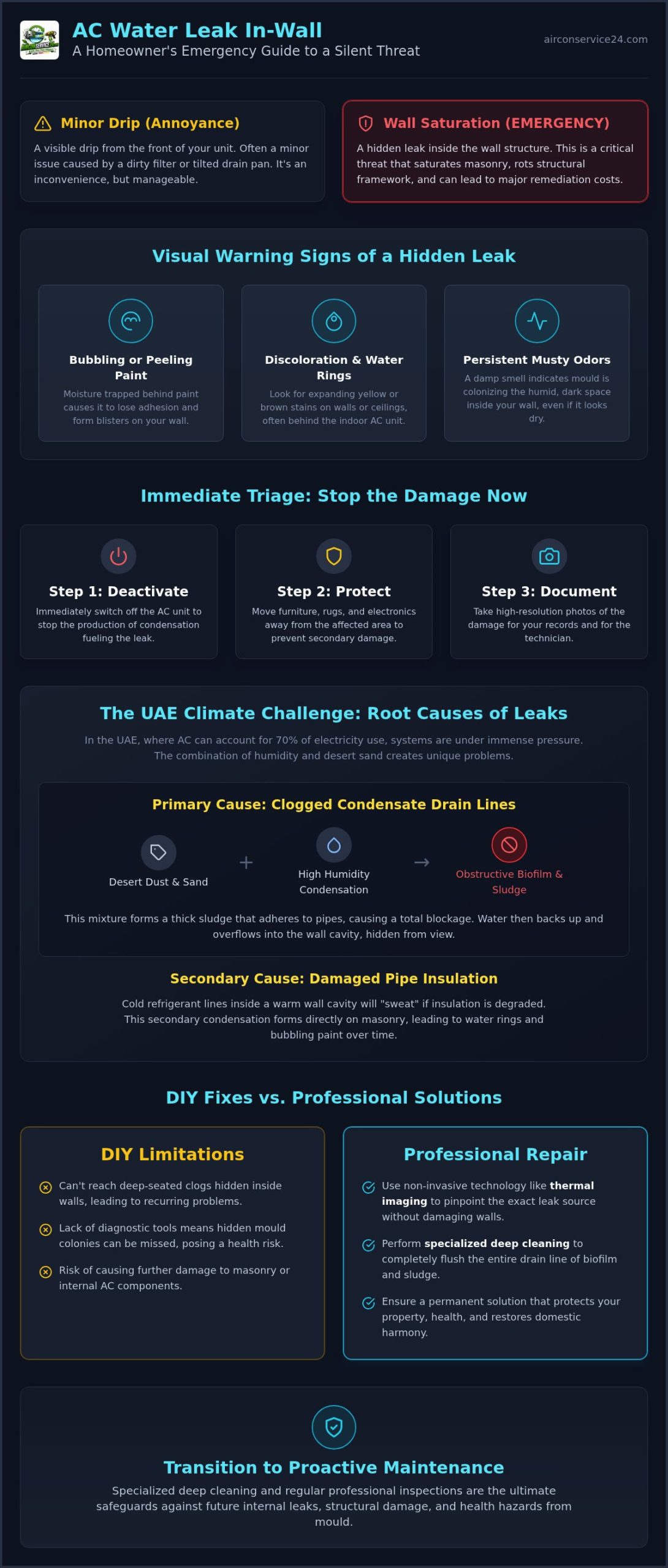
A surface-level drip is often a minor annoyance, usually caused by a dirty filter or a tilted drain pan. However, deep-seated wall saturation is a critical emergency. When water infiltrates the wall cavity, it compromises the structural integrity of your home. In the UAE’s 2026 climate, where air conditioning accounts for roughly 70% of the country’s electricity usage, these systems are under constant pressure. A leak inside the wall isn’t just a mechanical failure; it’s a direct threat to your domestic harmony and indoor air quality. If you don’t act quickly to fix ac water leak in wall issues, the moisture can lead to irreversible rot in the wall’s internal framework.
Visual Signs of a Hidden Water Leak
Detection requires a vigilant eye and a proactive mindset. Look for these specific indicators near your AC mounting points:
- Bubbling or peeling paint: Moisture trapped behind the paint layer causes it to lose adhesion, creating a blistered appearance.
- Discolouration: Watch for yellow or brown “water rings” that expand outward. These often appear on the ceiling or the wall directly behind the indoor unit.
- Musty odours: A persistent damp smell suggests that mould is already colonising the dark, humid spaces behind your unit, even if the wall looks dry.
Immediate Triage: Stop the Damage Now
When you suspect a leak, you must act with the precision of a disciplined guardian. Follow these steps to contain the situation before professional help arrives:
Step 1: Deactivate the system. Switch off the AC unit immediately. This stops the cooling cycle and prevents the continuous production of condensation that is fueling the leak. This is the most effective way to temporarily fix ac water leak in wall progression.
Step 2: Protect your assets. Clear the area below the leak. Move furniture, rugs, and electronics to prevent secondary water damage from falling plaster or dripping water.
Step 3: Create a record. Document the visible damage with high-resolution photos. This provides your technician with a clear history of the event and is essential for insurance or maintenance records.
Common Causes of AC Water Leaks in the Wall
The 2026 UAE climate presents a unique challenge for residential HVAC systems. High humidity levels mean your unit extracts significant volumes of water from the air every hour. This moisture must travel through a complex network of internal pipes to exit the building safely. If these pathways are compromised, you’ll eventually have to fix ac water leak in wall damage. Most homeowners don’t realize that the primary cause is often a combination of environmental factors and mechanical neglect.
Dust and fine desert sand are unavoidable in this region. When these particles bypass filters and enter the unit, they mix with condensation to form a thick, biological “sludge” or biofilm. This substance is remarkably resilient. It adheres to the inner walls of the pipes, narrowing the passage until a total blockage occurs. It’s a silent process that slowly builds up over months of operation.
Clogged Condensate Drain Lines
When a drain line is obstructed, the “back-up effect” begins. Water fills the internal drain pan and, having no other exit, overflows into the wall structure. This is particularly dangerous because the leak often starts behind the unit where it remains invisible for weeks. Standard cleaning routines often miss these deep-seated clogs in the wall-embedded sections. You need a more thorough approach to ensure the entire line is clear of obstructive biofilm and sand deposits.
Damaged or Inadequate Pipe Insulation
Physics plays a major role in hidden leaks. Refrigerant lines are cold. When they meet warm, humid air inside a wall cavity, they “sweat.” This is known as secondary condensation. If the pipe insulation is degraded or was poorly installed, this moisture forms directly on the masonry. Over time, this leads to yellow water rings and bubbling paint. Shifting units or building settlement can also ruin the necessary gradient of the drain pipe. Without a proper downward slope, gravity cannot pull the water away. This is why a professional AC maintenance check is vital to verify the integrity of hidden components.
DIY Troubleshooting: Can You Fix the Wall Leak Yourself?
Attempting a DIY repair on a hidden leak is a calculated risk. While some obstructions are accessible, others are buried deep within the masonry or gypsum. Transparency is central to our process; we believe you should know when a simple fix is possible and when technical expertise is mandatory. Before you attempt to fix ac water leak in wall complications, ensure you have the right mindset: methodical, calm, and safety-conscious. Neglecting the precision of your AC equipment can lead to more expensive repairs later.
Most homeowners feel a sense of urgency when they see water marks, but rushing into a complex mechanical system without a plan often backfires. Your goal is to triage the situation without causing further damage to the internal components or the wall itself. If these simple checks don’t resolve the issue, it’s a clear signal that the problem is rooted deep within the building’s infrastructure.
Clearing the Primary Drain Port
Start by inspecting the indoor unit’s drain pan. If you see standing water or visible debris like dust clumps, the blockage is likely nearby. One effective DIY method is using a high-powered wet/dry vacuum. Attach the nozzle to the external exit of the condensate line, usually found on a balcony or near the outdoor compressor. Seal the connection with a damp cloth and run the vacuum for 30 seconds. This gentle suction often dislodges minor “sludge” or sand clogs without damaging the system. Do not use compressed air canisters or high-pressure pumps. These can easily burst internal pipe joints hidden inside your walls, turning a minor clog into a major structural flood.
When to Stop and Call a Specialist
Knowing your limits is a hallmark of a disciplined guardian of the home. If the leak persists after you’ve cleared the external line, the problem is likely more complex. Water appearing several feet away from the unit is a significant red flag. This suggests a failure in the pipe insulation or a crack in the line itself, which requires non-invasive diagnostic tools to locate. If you notice an oily residue in the water or a hissing sound, you may be dealing with a refrigerant leak. These situations involve high-pressure gases and chemical components that demand professional handling. Similarly, a cracked internal drain pan cannot be patched; it requires a precise replacement to ensure a watertight seal. If your efforts don’t yield a dry wall within an hour, prioritize the health of your home and seek expert intervention.
The Professional Repair Process: Restoring Domestic Harmony
When DIY efforts fail, a methodical professional intervention is the only way to permanently fix ac water leak in wall issues. We don’t guess; we diagnose. Elite specialists use a disciplined guardian approach, treating your home’s infrastructure with the same precision as a surgical environment. This isn’t just about stopping a drip. It’s about restoring domestic harmony through advanced technology and meticulous workflows. A professional fix is a long-term investment in your home’s health and your family’s well-being.
Advanced Diagnostic Techniques
We utilize thermal imaging cameras to trace water paths behind masonry without destructive demolition. This allows us to see the heat signature of moisture moving through your wall in real time. Moisture meters determine the exact saturation levels, ensuring we know when the structure is truly dry. For hidden pipe damage, borescope inspections allow us to look inside wall cavities through tiny access points. Finally, pressure testing the drain line identifies microscopic cracks or loose fittings that standard visual checks miss entirely.
Often, the root cause is a persistent clog that requires a specialized Deep Cleaning service. This process removes the entire colony of biofilm and sand sludge that standard maintenance leaves behind. It’s an essential step to fix ac water leak in wall recurrences. Once the leak is resolved, the focus shifts to sanitisation. We treat affected areas with anti-fungal solutions to neutralize mould spores before they enter your air supply.
Structural Remediation and Sanitisation
A critical part of the repair is ensuring the unit’s physical alignment. Over time, building settlement can shift the unit, ruining the gravity-fed gradient. Our technicians re-level the system to guarantee water flows exactly where it should. If dampness has left a lingering scent, specialized odour removal services eliminate the biological source of the smell rather than just masking it. This comprehensive approach transforms a mechanical necessity into a high-quality restoration of your living environment.
If you suspect a hidden leak is compromising your home, our elite team is ready to act. You can book an expert AC Repair and sanitisation service today to secure your property and restore your peace of mind.
Preventing Future Leaks: The Proactive Maintenance Plan
Transitioning from a state of crisis to one of total control requires a fundamental shift in strategy. Waiting for a visible damp patch to appear on your masonry is a high-risk gamble with your property’s value and your family’s health. In the UAE, where cooling systems handle extreme thermal loads, disciplined prevention is the only logical path to follow. By the time you need to fix ac water leak in wall damage, the structural remediation has already become a complex, multi-day project that involves more than just mechanical repair. Professional AC maintenance in the UAE isn’t a luxury; it’s a structural necessity for modern living in 2026.
AirConService24.com acts as the elite guardian of your domestic environment. Our approach moves beyond basic surface cleaning to address the technical root causes of drainage failure before they escalate. A proactive strategy ensures you never have to scramble to fix ac water leak in wall emergencies during the peak of the summer heatwaves. We focus on maintaining the integrity of every hidden component, from the internal drain pan to the wall-embedded insulation, ensuring your system remains efficient and your walls stay dry.
The Power of Regular Deep Cleaning
Standard servicing often overlooks the microscopic organic matter that accumulates in the dark, humid recesses of your unit. We advocate for a specialized Deep Cleaning protocol at least twice a year to maintain optimal environmental hygiene. This process removes the biofilm and sand “sludge” before it has the chance to solidify into a pipe-blocking mass. By thoroughly sanitising the evaporator coils, we ensure optimal condensation management, which prevents water from ever backing up into your walls. Maintaining clean filters reduces the overall strain on the drainage system, as it prevents dust from entering the internal moisture pathways and creating new obstructions.
Annual Maintenance Contracts
Securing an Annual Maintenance Contract (AMC) provides the ultimate peace of mind for homeowners. These scheduled inspections are designed to catch microscopic drips and insulation degradation before they manifest as visible wall saturation or bubbling paint. During the extreme 2026 summer heatwaves, your system will be pushed to its absolute limit; having a professional team monitor your drainage gradients and pipe integrity is the best insurance against structural rot. This methodical, recurring oversight transforms your home into a dry, safe, and mould-free sanctuary while extending the overall lifespan of your mechanical equipment. Don’t wait for the next leak to compromise your domestic harmony. Schedule your professional AC inspection today and secure your property with our elite maintenance standards.
Securing Your Home Against Hidden Moisture Damage
We’ve explored the silent progression of internal saturation and the specialized methods required to reverse it. From identifying the first yellow ring to employing advanced non-invasive diagnostics, the goal is always the same: total protection of your home environment. While DIY triage serves as a valuable first step in an emergency, a technical intervention is necessary to fix ac water leak in wall issues at their source, especially when biofilm or degraded insulation is involved. Transitioning from reactive repairs to a disciplined prevention plan is the final step in securing your property’s long-term health.
AirConService24.com serves as your elite guardian in these high-stakes situations. We bring 24/7 Emergency Response, Expert Thermal Imaging Diagnostics, and Comprehensive Mould & Odour Removal to every call, ensuring your domestic harmony is restored with methodical precision. Don’t allow a hidden drip to dictate the safety of your household or the integrity of your walls. Secure Your Home with Professional AC Leak Repair today and experience the confidence that comes with elite technical care. Your dry, safe, and mould-free home is just one professional inspection away.
Frequently Asked Questions
Is an AC water leak in the wall an emergency?
Yes, an in-wall leak is a mechanical emergency that requires immediate intervention. In the 2026 UAE climate, moisture trapped within a wall cavity creates an ideal breeding ground for toxic mould within 24 to 48 hours. Ignoring the issue leads to high-stakes structural remediation costs later. You should deactivate the system and seek professional help to fix ac water leak in wall hazards before the saturation compromises your masonry or electrical wiring.
Can a leaking AC cause structural damage to my home?
Persistent leaks definitely cause structural damage to both gypsum and masonry walls. Water saturation weakens the internal framework, leading to crumbling plaster and compromised paint adhesion. Over time, this moisture can even reach electrical conduits, creating a significant fire hazard. By the time you see bubbling on the surface, the internal damage is often already extensive. Addressing the root cause early is the only way to preserve your property’s long-term value.
How much does it cost to fix an AC leak inside a wall in the UAE?
The cost to resolve an in-wall leak in the UAE varies based on the complexity of the blockage and the extent of the moisture damage. Simple drain line clearing is generally more affordable than repairs involving pipe insulation replacement or structural sanitisation. Factors such as the accessibility of the wall-embedded pipes and the need for thermal imaging diagnostics will influence the final investment. It’s best to request a technical inspection for a precise, transparent quote.
Why does my AC leak water only when it’s humid outside?
High humidity forces your air conditioner to extract significantly more moisture from the indoor air. During peak humidity in the UAE, a partially obstructed drain line might manage a small trickle but will overflow when the condensation volume increases. This is why leaks often manifest during extreme summer heatwaves. Regular deep cleaning ensures your drainage system has the capacity to handle these maximum loads without backing up into your wall structure and causing damage.
Will my insurance cover water damage from a leaking air conditioner?
Insurance coverage for water damage typically depends on whether the leak was sudden or caused by a lack of maintenance. Many UAE home insurance policies cover accidental damage from burst pipes but may exclude claims resulting from gradual seepage or neglected service. You should review your specific policy documents to understand the exclusions. Maintaining a record of professional service and deep cleaning can often support your case during the insurance claims process.
How do I know if the leak has caused mould behind the unit?
Visible indicators like dark spots or fuzzy textures on the wall are clear signs of mould, but hidden growth is often identified by a persistent musty odour. If you experience unexplained respiratory issues or allergies when the AC is running, mould may be colonising the dark spaces behind your unit. Professional technicians use moisture meters and borescopes to confirm the presence of biofilm and fungal growth without needing to break your walls or masonry.
How often should I clean my AC drain line to prevent wall leaks?
You should have your AC drain line professionally inspected every three to six months to ensure it remains clear of sand and biofilm. In the UAE’s dusty environment, a specialized deep cleaning service twice a year is the most effective preventative measure. This proactive schedule prevents the sludge from ever reaching a critical mass that could trigger a backup. Consistent maintenance is far more cost-effective than an emergency repair to fix ac water leak in wall damage.
Can a refrigerant leak look like a water leak in the wall?
A refrigerant leak can indirectly cause what looks like a water leak. When refrigerant levels are low, the evaporator coils and internal lines can freeze or become excessively cold. This causes the pipes to sweat profusely as they meet warm air inside the wall, leading to secondary condensation. If you notice ice on the unit or a hissing sound alongside the damp wall, it’s a strong indicator of a refrigerant-related failure rather than a simple clog.