AC Pipe Insulation Repair: Restoring Cooling Efficiency in the UAE Heat

Article by
Jon Bonnett
Australian Air Conditioning Specialist with extensive hands-on experience in AC servicing, deep cleaning, maintenance, and troubleshooting. Focused on high-quality workmanship, reliability, and professional service to UAE standards.
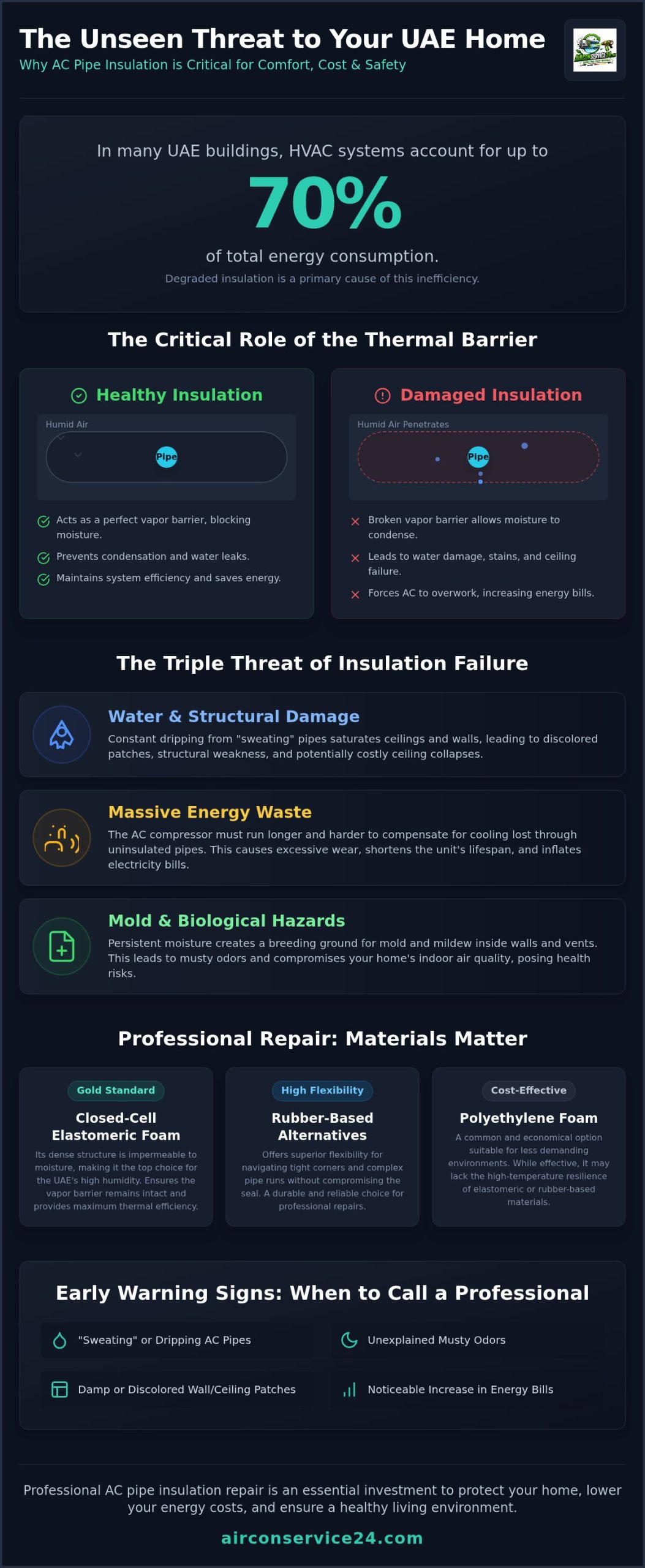
Did you know that HVAC systems account for up to 70% of energy consumption in many UAE buildings? It’s a staggering reality that underscores the immense pressure on your cooling infrastructure during the peak summer months. You’ve likely felt the frustration of discovering a damp patch on a ceiling or smelling that unmistakable musty odor of mold growth in your vents. These issues often stem from a single, overlooked failure: degraded thermal barriers. Professional ac pipe insulation repair is not merely a cosmetic fix; it’s a technical necessity to restore your system’s integrity. We understand the urgency of protecting your home from water damage and rising utility costs. This article explores how specialized repair techniques prevent condensation leaks, eliminate biological hazards, and significantly lower your energy consumption. You’ll discover why a robust vapor barrier is your first line of defense against the UAE’s extreme humidity and how modern standards, like the Al Sa’fat 2.0 Silver rating, are shaping the future of domestic efficiency.
Key Takeaways
- Understand how insulation serves as a critical vapor barrier that prevents humid air from causing condensation and structural damage.
- Recognize the financial impact of thermal loss, which can drastically increase electricity consumption in the extreme UAE climate.
- Determine if your system requires a targeted ac pipe insulation repair or a complete overhaul based on the extent of moisture intrusion.
- Identify early warning signs like sweating pipes and discolored wall patches before they lead to costly ceiling failures.
- Learn why combining insulation restoration with professional sanitisation is essential for maintaining a mold-free and healthy home environment.
AC Pipe Insulation: Why is it Critical in the UAE?
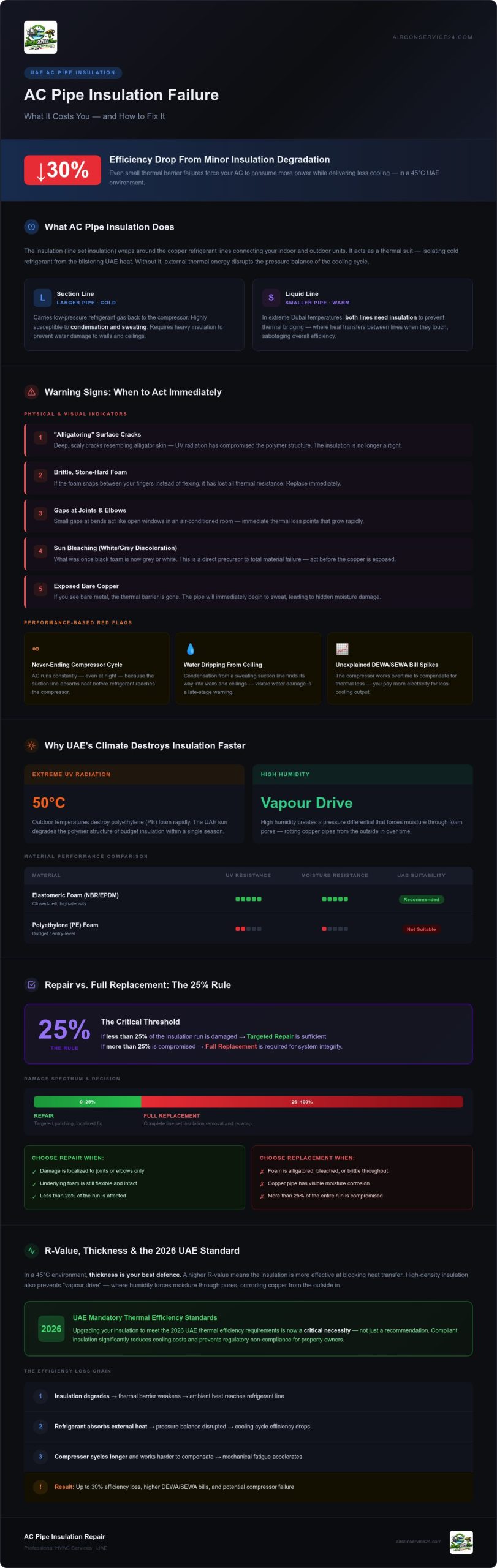
In the extreme climate of the UAE, AC pipe insulation is far more than a simple foam sleeve. It is a precision-engineered thermal cladding designed to wrap around your system’s refrigerant lines. This barrier serves two vital purposes: it prevents heat from entering the cold refrigerant and stops moisture from condensing on the pipe’s surface. Without this protection, your air conditioner works twice as hard to achieve the same cooling effect, leading to a rapid decline in system performance and an inevitable spike in utility costs.
The core of this technology lies in the “Vapor Barrier” concept. Because refrigerant pipes carry fluids at temperatures significantly lower than the surrounding air, they naturally attract moisture. In a high-humidity environment, this leads to immediate condensation. A high-quality insulation layer acts as a shield, keeping humid air away from the cold copper. When this shield fails, ac pipe insulation repair becomes a high-stakes priority to prevent the system from essentially “raining” inside your walls or ceiling voids.
The Role of Refrigerant Lines in Your Cooling Cycle
Your cooling system relies on a continuous loop where cold liquid refrigerant travels from the outdoor condenser unit to the indoor evaporator coil. The physics of “sweating” are relentless in the UAE. When these cold lines are exposed to heavy, moisture-laden air, water droplets form instantly. This moisture doesn’t just sit there; it migrates, saturating surrounding materials and creating a breeding ground for biological growth. Thermal bridging occurs when heat bypasses insulation through highly conductive materials, such as exposed copper pipes, directly compromising the system’s cooling capacity. This phenomenon forces the compressor to run longer cycles, shortening its lifespan and driving up energy bills.
Types of Insulation Materials Used in Professional Repairs
Selecting the right material is the first step in a successful ac pipe insulation repair. Professional Pipe Insulation standards in the region prioritize materials that can survive the intense UV exposure and ambient heat that define the local climate. We utilize several specific types of insulation to ensure longevity:
- Closed-cell elastomeric foam: This is the gold standard for UAE conditions. Its dense structure prevents moisture from passing through the material, ensuring the vapor barrier remains intact even if the outer surface is scuffed.
- Polyethylene foam: A cost-effective alternative often used in less demanding environments, though it lacks the high-temperature resilience of rubber-based products.
- Rubber-based alternatives: These offer superior flexibility and are excellent for navigating tight bends in the refrigerant path.
Our technicians are trained to identify the specific failure points in your existing cladding. We don’t just patch the surface. We ensure the new material is perfectly sealed at every joint. Our team utilizes specialized AC equipment and materials to ensure every repair meets these rigorous environmental demands, restoring your system to its peak operational efficiency.
The High Cost of Damaged Insulation: Condensation, Energy Loss, and Mold
Damaged insulation is a silent drain on your resources. When the thermal barrier fails, the cold refrigerant lines absorb heat from the ambient air before they ever reach your indoor unit, forcing the entire system to work harder. This is a high-stakes failure. Implementing a proper energy saving measure through a professional ac pipe insulation repair is the only way to stop this thermal bleed and restore your system’s efficiency.
Water damage is the most immediate physical consequence of insulation failure. A single breach in the foam leads to “sweating,” where droplets accumulate and eventually saturate gypsum ceilings. What starts as a small, discolored spot can quickly escalate into a structural failure. We’ve seen entire ceiling sections collapse because a minor drip was ignored for too long. These repairs are far more expensive than the simple maintenance required to keep your pipes shielded.
Your AC compressor carries the heaviest burden when insulation is compromised. Poor thermal protection forces the system to run longer cycles to compensate for the lost cooling capacity. This constant overworking increases mechanical wear, shortens the unit’s lifespan, and ensures your electricity bills remain unnecessarily high. You’re effectively paying to cool the voids in your walls rather than your living space.
Vapor Drive and the Humidity Factor
The UAE’s high humidity creates a relentless “vapor drive.” This physical force pushes moisture from the humid outdoor air into the cold, low-pressure environment inside the insulation. If the outer skin is punctured or cracked, the material absorbs water like a sponge. This creates an invisible threat: the refrigerant pipes begin to corrode underneath the wet foam. This external corrosion can lead to pinhole leaks that compromise your entire cooling circuit, necessitating a complex and costly intervention.
Health Risks of Mold-Infested Insulation
Damp insulation is the ideal environment for mold spores to flourish. Once colonies establish themselves in the dark, moist spaces behind your walls, they release spores that can be drawn into your air supply via the fan coil unit. If you notice a persistent musty smell, it’s often a sign of insulation failure. Professional AC sanitisation is vital in these cases to eliminate the biological hazard. A prompt ac pipe insulation repair ensures your home remains a healthy sanctuary rather than a source of respiratory irritation. You can book a professional inspection to identify these hidden failures before they become a threat to your family’s well-being.
AC Pipe Insulation Repair vs. Full Replacement: A Comparison
Deciding whether to patch a specific area or overhaul the entire refrigerant line requires a methodical assessment. We don’t believe in unnecessary replacements. Our technicians focus on three critical factors: the age of the material, the depth of moisture penetration, and the structural integrity of the foam. A disciplined approach ensures you don’t overspend on a full replacement when a targeted ac pipe insulation repair is perfectly viable.
A targeted repair is sufficient when the damage is localized. Small tears from a recent maintenance visit, minor joint separations, or surface-level UV damage are prime candidates for a surgical approach. However, replacement is mandatory if the insulation has become water-logged. Once the material acts like a wet sponge, it loses all thermal resistance and becomes a mold hazard. Crumbling or “dusting” foam also indicates that the material has reached the end of its chemical lifespan and can no longer protect the copper lines.
Beware the false economy of DIY patches. Using duct tape to close gaps is a temporary illusion of a fix. Duct tape is not a professional vapor seal. It lacks the thermal properties and adhesive strength to withstand the relentless vapor drive typical of the UAE climate. Professional materials are designed to expand and contract with the pipes, maintaining an airtight seal that household tapes simply cannot provide.
The Professional Repair Process
Our workflow is designed for precision and predictability. We follow a strict three-step protocol to restore your system’s integrity:
- Step 1: We strip back the damaged cladding until we find dry, healthy material to ensure the repair bond is secure.
- Step 2: Our technicians clean and treat the copper pipe for any surface oxidation, ensuring the metal is pristine before re-insulating.
- Step 3: We apply new closed-cell insulation using specialized AC equipment and materials, including vapor-seal adhesives that create a seamless, airtight barrier.
Cost-Benefit Analysis for Homeowners
Professional ac pipe insulation repair pays for itself through improved efficiency. By eliminating thermal loss, you see immediate reductions in your monthly utility consumption. While a repair is a cost-effective short-term solution, a full replacement is often the smarter investment for systems older than eight years. A professional repair can extend the life of existing insulation by several years, whereas a full replacement resets the clock for a decade of optimal performance.
Identifying the Signs: When to Call for Professional AC Repair
Don’t wait for a ceiling to collapse. Early detection is your best defense against structural water damage. One of the most common signs that you need ac pipe insulation repair is visible “sweating” or water dripping from your AC unit or ceiling access panels. When the vapor barrier is compromised, the temperature differential between the cold refrigerant and the humid ambient air causes moisture to accumulate rapidly, leading to the visible dripping you see at access points.
Inspect your walls for subtle changes in texture or color. Discolored patches or peeling paint on walls near the refrigerant line path are clear indicators of a hidden leak. This isn’t just a cosmetic issue; it’s a sign that moisture is migrating through your building’s structure. If the drywall feels damp to the touch, the insulation behind it has likely failed completely, allowing condensation to saturate the surrounding materials.
Ice buildup on the copper pipes is a critical warning sign that should never be ignored. Whether frost appears on the indoor evaporator coil or the outdoor unit’s valves, it indicates that the pipes are completely exposed to humid air or that the system’s thermal balance is lost. This imbalance can lead to catastrophic compressor failure if left unaddressed. Identifying these signs early allows for a targeted ac pipe insulation repair before the damage spreads to more expensive mechanical components.
Physically check the lines where they are accessible. Healthy insulation should feel firm and resilient. If you encounter a crumbling or “spongy” texture when touching the black foam, the material has reached its saturation point. At this stage, the insulation is no longer a barrier; it is a liability that holds water directly against your copper pipes, which can accelerate surface oxidation and eventually lead to refrigerant leaks.
The Outdoor Unit Inspection
The UAE sun acts as a relentless stress test for mechanical components. Inspect the pipes connecting to your outdoor condenser unit. If the insulation appears brittle, cracked, or is turning a chalky white color, UV degradation has destroyed its cellular structure. You might also notice bird or pest damage; small animals often peck at the foam to create nesting material. Leaving these lines exposed significantly increases the risk of emergency AC failure during peak summer heat when the system is under maximum load.
The Indoor Performance Check
Performance drops are often the first sign of hidden insulation gaps. If the air coming out of your vents feels less cold than usual, your system is likely losing its cooling capacity through unshielded pipes. Pay attention to odors. Unexplained musty smells during the first ten minutes of operation suggest that mold is breeding in damp insulation sections. Our technicians use advanced thermal imaging to detect these cold spots and gaps without tearing into your walls, ensuring a non-invasive and precise assessment. If you notice any of these red flags, book a professional AC repair to protect your home’s air quality and cooling efficiency.
Expert Solutions with AirConService24: Restoring Your Home’s Harmony
At AirConService24, we operate as the disciplined guardians of your indoor environment. We understand that a cooling failure in the UAE heat is not just a mechanical glitch; it’s a disruption to your family’s well-being and domestic harmony. Our approach to ac pipe insulation repair begins with a methodical, multi-point inspection. We don’t believe in superficial fixes. Instead, our specialists investigate the full extent of moisture migration and thermal bridging to ensure the root cause of every leak is permanently addressed.
Transparency is the cornerstone of our professional service. Before any work begins, our technicians provide a comprehensive report detailing the exact state of your thermal barriers. We show you the damage and explain the specific technical solution required, eliminating the anxiety of hidden costs. We utilize industrial-grade adhesives and advanced UV-resistant coatings specifically engineered for the high-salinity and extreme heat conditions of the UAE. This ensures that your ac pipe insulation repair outlasts standard aftermarket patches and provides a robust vapor seal for years to come.
A truly effective restoration must be part of a holistic health strategy. Because damp insulation often harbors biological contaminants, we integrate our repairs with professional deep cleaning and sanitisation. This dual approach removes the physical threat of water damage while simultaneously purging your system of mold spores and allergens. We don’t just restore mechanical efficiency; we restore the purity of your home’s air supply.
Why AirConService24 is the Professional Choice
Our team remains ready to act when you need us most. We offer 24/7 availability for urgent leaks and insulation crises, ensuring that a failing vapor barrier doesn’t lead to a collapsed ceiling or structural damage in the middle of the night. Every technician is rigorously trained in the latest HVAC environmental hygiene standards, moving beyond basic maintenance to provide a premium, health-focused service. Our commitment is to your comfort, providing reliable cooling that you can trust through the most punishing summer months.
Schedule Your Insulation Audit Today
Proactive care is the most effective way to manage your home’s cooling infrastructure. Don’t wait for the first drip to appear on your ceiling or for your electricity bills to spiral out of control. A comprehensive AC check-up from our experts includes a detailed audit of your pipe and duct integrity. Identifying a thinning barrier now can save thousands in structural repairs and unnecessary energy consumption later. Secure your cooling efficiency and protect your home’s air quality. Contact AirConService24 today to schedule your professional insulation audit and ensure your system is prepared for the heat.
Protect Your Home with Superior Thermal Integrity
Maintaining your system’s thermal barrier is a fundamental step in safeguarding your property from the UAE’s relentless humidity. Compromised insulation is more than a minor mechanical flaw; it’s a direct path to structural water damage, biological growth, and inflated utility expenses. A timely ac pipe insulation repair restores your system’s efficiency and ensures your living space remains a healthy, mold-free sanctuary for your family.
AirConService24 stands ready to act as your home’s disciplined guardian. We utilize UV-resistant materials specifically designed for maximum desert durability, ensuring your vapor barrier remains intact against the harshest elements. Our comprehensive service includes expert deep cleaning and sanitisation to provide a total health solution. With our 24/7 emergency response available across the UAE, you can rely on us to resolve cooling crises with precision and speed.
Book Your Professional AC Insulation Inspection Today and take definitive control of your indoor climate. Investing in professional restoration now prevents the high-stakes structural emergencies of tomorrow. You deserve a home that is consistently cool, efficient, and safe.
Frequently Asked Questions
Can I repair AC pipe insulation myself with store-bought foam?
You should avoid DIY attempts for this specific technical task. Professional ac pipe insulation repair requires industrial-grade, closed-cell elastomeric foam and specialized vapor-seal adhesives that aren’t typically available in retail stores. Standard foam tapes often fail to create an airtight barrier, allowing humid air to reach the cold copper. This leads to hidden condensation and internal corrosion that can eventually destroy your refrigerant lines and cause expensive leaks.
How long does AC pipe insulation typically last in the UAE?
In the intense climate of the region, outdoor insulation generally lasts between 3 and 5 years. The relentless UV exposure and extreme ambient temperatures cause standard materials to become brittle and crack. Indoor sections can last up to 10 years if the environment remains dry. However, high humidity levels can accelerate degradation, so we recommend annual audits to identify crumbling or spongy sections before they lead to structural water damage.
Why is my AC pipe dripping water even though it’s covered in foam?
Dripping indicates a failure in the vapor barrier. If the insulation has even a microscopic tear or an unsealed joint, humid air penetrates the material and hits the cold pipe. This causes moisture to condense inside the foam, eventually saturating it like a sponge. Once the material is water-logged, it loses all thermal resistance. The resulting “sweating” leads to persistent dripping that can cause your gypsum ceilings to sag or collapse.
Will replacing my AC insulation really lower my electricity bills?
Yes, restoring your thermal barriers is a highly effective way to reduce utility costs. When pipes are poorly shielded, the refrigerant absorbs heat from the surrounding air before reaching the indoor unit. This “thermal loss” forces your compressor to run longer, more frequent cycles to maintain your desired temperature. By completing an ac pipe insulation repair, you ensure the system operates at peak efficiency, which significantly lowers your monthly energy consumption during the summer.
Is the mold inside the AC insulation dangerous to my family’s health?
Mold growth within damp insulation poses a serious risk to your indoor air quality. Spores thrive in the dark, moist environment provided by failed foam and can be drawn into your home’s air supply via the fan coil unit. This often results in persistent musty odors and respiratory irritation. We combine our insulation repairs with professional sanitisation to eliminate these biological hazards, ensuring your home remains a healthy and safe environment for everyone.
What happens if I leave the AC pipes uninsulated for a few weeks?
Leaving pipes exposed for even a short period can lead to immediate and costly consequences. Without protection, the cold lines will produce constant condensation, which will saturate your walls or ceilings and trigger mold growth within days. Mechanically, the system will struggle to provide cold air, putting immense strain on the compressor. This overworking increases the risk of a total system failure during a heatwave, potentially leaving you without cooling when you need it most.
How much does it cost to repair AC pipe insulation in the UAE?
The cost depends on the accessibility of the refrigerant lines and the severity of the moisture intrusion. A targeted repair is a strategic investment that is far less expensive than replacing a water-damaged ceiling or a failed compressor. We prioritize transparency, providing a thorough inspection and a clear report on the damage before any work begins. This ensures you only pay for the specific technical solutions required to restore your system’s integrity and performance.
How can I tell if my insulation is moldy without cutting it open?
You can identify potential mold growth by checking for unexplained musty smells when the AC starts. Physically inspect the foam for dark stains or a spongy, soft texture when pressed. If the material doesn’t bounce back, it’s likely saturated with water, which is a primary indicator of mold colonies. Our specialists use advanced thermal imaging cameras to detect these hidden moisture pockets and insulation gaps accurately, providing a precise diagnosis without damaging your property.