Reduce AC Electricity: 2026 Expert Guide for UAE Residents

Article by
Jon Bonnett
Australian Air Conditioning Specialist with extensive hands-on experience in AC servicing, deep cleaning, maintenance, and troubleshooting. Focused on high-quality workmanship, reliability, and professional service to UAE standards.
Most UAE residents believe that a staggering monthly utility bill is simply the unavoidable price of surviving the desert heat, but your thermostat isn’t the primary culprit behind those soaring costs. It’s a frustrating cycle; you watch the meter spin while your unit struggles to maintain a comfortable temperature against the relentless humidity. You shouldn’t have to choose between financial stability and a cool home environment, especially when dust and allergens are already compromising your indoor air quality.
This 2026 expert guide provides the professional blueprint you need to master how to reduce ac electricity consumption through methodical strategies and smart habits. We’ll move beyond basic tips to address the “thermal resistance” caused by system contaminants that force your machinery to work twice as hard for half the result. By implementing these precise maintenance workflows and efficiency standards, you can secure a significant, measurable reduction in your monthly AED expenses. We will walk through the essential technical upgrades, specialized deep cleaning benefits, and the latest Ministry of Energy recommended settings to ensure your system operates with elite precision and longevity all year round.
Key Takeaways
- Adopt the 24°C Rule and leverage smart thermostats to eliminate cooling overshoot and manage high UAE humidity levels effectively.
- Master professional techniques for how to reduce ac electricity consumption by removing the internal contaminants that create costly thermal resistance.
- Identify and rectify structural cooling gaps, such as duct leakage or blocked vents, to ensure unobstructed airflow throughout your home.
- Invest in specialized deep cleaning for evaporator coils to restore peak heat exchange performance and significantly lower your monthly AED bills.
- Spot the warning signs of invisible electricity thieves, including refrigerant gas leaks and inefficient short-cycling, before they lead to emergency breakdowns.
Understanding the UAE Energy Challenge: Why AC Costs Spike
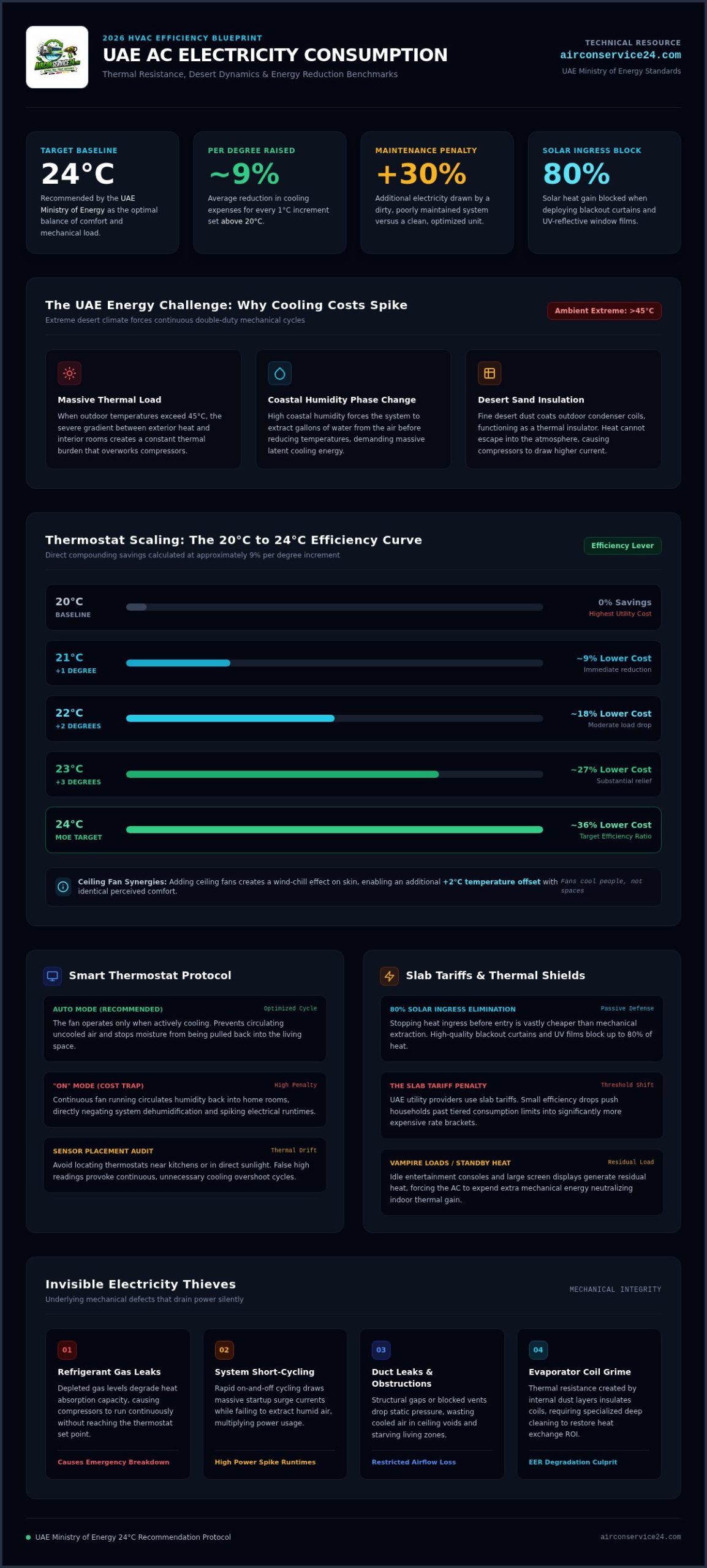
In the UAE, your cooling system isn’t just a comfort; it’s essential life support. When outdoor temperatures exceed 45°C, the temperature differential between the scorching exterior and your desired interior creates a massive “thermal load.” This isn’t just about heat. The high humidity in coastal regions forces your system to perform double duty. It must first extract gallons of water from the air before it can begin lowering the temperature. This phase change requires significant power, which is a fundamental aspect of how air conditioning systems consume electricity.
Neglecting your system carries a heavy financial penalty. Industry research suggests that a poorly maintained unit can consume up to 30% more power than a clean, optimized system. Understanding these mechanics is the first step in learning how to reduce ac electricity consumption effectively. When the internal components are coated in grime, the heat exchange process fails, forcing the compressor to run indefinitely to meet the thermostat’s demands.
The Mechanical Cost of Desert Dust
The fine desert sand common in the UAE acts as a highly effective thermal insulator. When this dust coats the outdoor condenser coils, it prevents heat from being released into the atmosphere. This restriction causes the compressor to draw a higher electrical current to compensate for the lack of airflow. Implementing a rigorous cleaning schedule is vital for anyone searching for how to reduce ac electricity consumption while living in high-dust environments. Don’t be fooled by a unit that looks clean on the outside. True mechanical efficiency depends on the state of the internal fins and coils, which are often hidden behind the specialized equipment housing.
Utility Tariffs and Peak Hours
UAE utility providers typically utilize slab tariffs, meaning your electricity rate increases as your consumption crosses specific thresholds. During the peak summer months, a small drop in efficiency can push your household into a significantly more expensive billing bracket. As systems age without professional intervention, their Energy Efficiency Ratio (EER) naturally declines. This degradation makes it harder to maintain a stable budget without a proactive maintenance strategy that addresses the root causes of energy waste. Monitoring your consumption patterns during peak hours is critical to avoiding these sudden cost spikes.
Smart Habits and Tech: Immediate Steps to Lower Bills
Achieving a sustainable cooling budget starts with the 24°C Rule. The UAE Ministry of Energy recommends this specific setting as the ideal balance between human comfort and mechanical efficiency. For every degree you raise your thermostat above 20°C, you can reduce your cooling costs by approximately 9%. This simple adjustment is one of the fastest ways to master how to reduce ac electricity consumption without expensive hardware upgrades.
Supplementing your unit with ceiling fans allows you to raise the temperature by an additional 2 degrees while maintaining the same perceived coolness. Fans create a wind-chill effect on the skin, although they don’t actually lower the room temperature. Remember to turn them off when you leave the room; fans cool people, not spaces. Additionally, be mindful of “vampire loads” from standby electronics. Large televisions and gaming consoles generate residual heat even when idle, forcing your AC to work harder to neutralize the extra thermal energy.
Mastering Your Thermostat Strategy
Switch your thermostat to ‘Auto’ mode rather than leaving the fan on ‘On’. In ‘Auto’ mode, the fan only runs when the compressor is actively cooling the air. Leaving it ‘On’ circulates uncooled air and can actually pull humidity back into your home, negating the work the system just performed. Smart thermostats further optimize this by preventing “cooling overshoot,” where a system continues to run past the set point due to sensor lag.
Proper sensor placement is critical. If your thermostat is located near a kitchen or in direct sunlight, it’ll register a false high reading and trigger unnecessary cooling cycles. If you suspect your current setup is inefficient, a professional AC maintenance assessment can identify these technical bottlenecks before they inflate your bill.
Reducing Heat Ingress
Stopping heat before it enters your living space is more efficient than removing it later. High-quality blackout curtains and UV-reflective window films can block up to 80% of solar heat gain. This is especially vital for west-facing windows during the intense UAE afternoon sun. Sealing gaps around balcony doors and windows prevents “cool air escape,” ensuring your AC isn’t trying to cool the entire neighborhood.
Internal heat gain also matters. Plan heat-intensive activities like cooking and laundry for the early morning or late evening hours. Modern appliances release significant steam and heat, which spikes the humidity and temperature simultaneously. By managing these daily habits, you create a controlled environment where your cooling system can operate at peak efficiency.
Optimizing Airflow and Structural Cooling
Airflow is the circulatory system of your home environment. When this movement is restricted or misdirected, your unit enters a state of mechanical stress that inflates your utility costs. To understand how to reduce ac electricity consumption, you must look beyond the machine and examine the structure it serves. In standalone villas, the primary challenge is often solar gain through the roof and uninsulated attic spaces. Conversely, high-rise apartments often battle the “stack effect,” where pressure differences pull hot, humid air through elevator shafts and main entry doors. Identifying these structural vulnerabilities is essential for maintaining a cost-effective climate.
Start with a methodical inspection of your ductwork. Look for dust streaks around vent frames or condensation spots on the ceiling; these are clear indicators of insulation gaps or seal failures. You should also evaluate your furniture layout. Placing a large sofa or cabinet directly in front of a return air grille chokes the system, forcing the fan motor to draw more current to maintain the required volume of air. Keep internal doors slightly ajar to ensure balanced pressure throughout the property. This prevents “hot spots” that trigger the thermostat to run longer cycles than necessary.
The Air Filter Maintenance Protocol
In the UAE’s high-dust environment, standard monthly cleaning is insufficient. You must wash your filters every 14 days to prevent fine sand particles from creating a physical barrier to airflow. To do this safely, remove the mesh and rinse it under lukewarm water without using harsh chemicals. Ensure the filters are 100% dry before reinsertion to prevent moisture from seeding mould growth inside the unit. If the mesh appears frayed or the frame is warped, replace the filter immediately to maintain system integrity.
Zoned Cooling Strategies
A common misconception is that closing vents in unused rooms saves money. In reality, modern systems are designed for specific static pressure levels. Closing more than 25% of your vents can actually damage the blower motor and reduce overall efficiency. Instead of sealing vents, use portable cooling solutions for targeted relief in large, open-plan areas. For multi-story villas, balancing the dampers is critical. Since heat rises, you may need to direct more airflow to the upper floors during the day while restricting it slightly on the ground level to achieve a uniform, low-cost temperature.
The ROI of Professional Deep Cleaning and Sanitisation
While the previous sections focused on habits and structural airflow, the internal state of your machinery remains the ultimate factor in energy efficiency. Many residents rely solely on basic filter washing, but this surface-level maintenance doesn’t reach the evaporator coils where the primary cooling happens. Over time, these coils develop a layer of “biofilm,” which is a slimy mix of dust, moisture, and microbial growth. This layer acts as a powerful insulator, preventing the refrigerant from absorbing heat effectively. This is a critical technical hurdle when mastering how to reduce ac electricity consumption in the UAE’s humid climate.
A system struggling against internal grime consumes significantly more power. When heat exchange is compromised, the compressor must run for extended periods, drawing more AED from your wallet every hour. Professional sanitisation removes the physical “drag” on the AC motor, allowing it to move air with minimal resistance. This isn’t just a maintenance task; it’s a proactive cost-saving measure that pays for itself through immediate utility savings and the prevention of expensive emergency repairs.
Deep Cleaning vs. Basic Servicing
A professional deep clean is a methodical restoration process, not just a visual inspection. While basic servicing might involve a quick filter rinse, deep cleaning utilizes specialized pressure washers to penetrate deep into the coil fins. This restores “Heat Exchange Efficiency,” allowing the system to reach your target temperature in much shorter cycles. When you invest in AC Deep Cleaning, you’re ensuring that every watt of electricity translates into actual cooling rather than being wasted as heat within the motor itself.
Odour Removal and Efficiency
Musty or sour smells are more than just a nuisance. They’re a clear indicator of inefficiency. These odors stem from bacterial colonies thriving in the drainage trays and on the damp coils. As these colonies grow, they create physical resistance to airflow. This resistance forces the blower motor to consume more electricity just to move the same volume of air. Professional sanitisation and odour removal eliminate these organic barriers, restoring factory-level performance. By ensuring a sterile internal environment, you protect both your family’s health and your monthly budget from unnecessary spikes.
Deep cleaning pays for itself through immediate energy savings and by preventing the premature aging of expensive mechanical parts. If your unit is struggling to keep up with the heat or emitting unusual scents, it’s already wasting money. You can book a professional deep cleaning and sanitisation today to reset your system’s efficiency and slash your cooling costs immediately.
Identifying Invisible Electricity Thieves
Energy waste in the UAE isn’t always as obvious as a left-open balcony door or a dusty filter. Often, the most significant spikes in your AED utility bill come from internal mechanical failures that remain hidden behind the unit’s casing. These “invisible thieves” force the system into a state of permanent overexertion. Learning how to reduce ac electricity consumption requires a vigilant eye for these technical red flags before they escalate into total system failure. By identifying these issues early, you protect both your domestic harmony and your long-term financial stability.
Short-cycling is one of the most expensive phenomena in the cooling industry. This occurs when your AC unit turns on and off rapidly without completing a full cooling cycle. Since the start-up phase of a compressor requires a massive surge of electrical current, a unit that restarts every few minutes will consume exponentially more power than one running a steady, efficient cycle. This often stems from oversized equipment or faulty sensors, creating a repetitive energy drain that standard habits cannot fix. If your unit is over a decade old and requires constant intervention, it may be more cost-effective to invest in new AC equipment designed for modern efficiency standards.
The Cost of Refrigerant Imbalance
Refrigerant gas is the medium that carries heat out of your home. When a leak occurs, the remaining gas must work significantly harder to achieve the same cooling effect. A 10% loss in refrigerant gas can increase your system’s electricity consumption by as much as 20%. Many residents make the mistake of simply “topping up” the gas every season, but this only masks a deeper problem. A professional must locate and seal the leak to restore the system’s factory-rated efficiency. Relying on annual maintenance contracts ensures these levels are monitored methodically, preventing the slow, silent climb of your monthly bills.
Professional Energy Audits
A professional energy audit goes beyond a simple visual check. Technicians utilize precision instruments to measure the “Delta T,” which is the temperature difference between the air entering the return vent and the air exiting the supply vent. In a healthy UAE system, this split should typically be between 10°C and 12°C. If the split is lower, your system is running but not cooling, effectively throwing money away. For those facing sudden, inexplicable bill spikes, Emergency AC Repair services can provide an immediate efficiency-focused inspection to pinpoint the source of the waste. This methodical approach transforms your AC from a financial burden back into a high-performance asset.
Securing Long-Term Efficiency and Home Comfort
Mastering your home environment in the UAE requires a shift from reactive repairs to methodical maintenance. By adopting the 24°C Rule and ensuring your structural cooling remains uncompromised, you’ve already taken the first steps toward a sustainable utility budget. However, the most significant impact on how to reduce ac electricity consumption comes from eliminating the internal contaminants and mechanical imbalances that silently inflate your AED expenses every month.
Whether it’s restoring heat exchange through specialized deep cleaning or sealing invisible refrigerant leaks, professional intervention is the key to lasting results. Our 24/7 expert technicians provide a transparent, methodical service designed to protect your system’s longevity and your family’s health. Don’t let inefficient machinery dictate your monthly costs. Restore your AC’s efficiency today with our professional maintenance services, including comprehensive deep cleaning and sanitisation. You can enjoy a cooler, more reliable home environment while keeping your electricity bills under control for the long term.
Frequently Asked Questions
What is the most energy-efficient temperature for AC in the UAE?
24°C is the officially recommended setting by the UAE Ministry of Energy for 2026. This specific temperature provides a sustainable balance between resident comfort and mechanical workload. Setting your thermostat lower than this causes the compressor to run almost indefinitely in the desert heat. By maintaining this level, you can avoid the expensive slab tariffs that occur when your monthly consumption crosses into higher usage brackets.
Does turning the AC off when I leave the house actually save money?
It depends on the duration of your absence. If you’re leaving for more than four hours, turning the unit off or raising it to 27°C saves money. For shorter trips, leaving it on at a moderate setting is better. If the indoor temperature rises too much, your AC must work at maximum capacity for hours to remove the stored heat from your walls and furniture.
How often should I professionally clean my AC to save on electricity?
You should schedule a professional deep clean at least twice a year. In the UAE’s high-dust environment, internal coils quickly become coated in sand and biofilm. This buildup creates thermal resistance, which is a major obstacle when learning how to reduce ac electricity consumption. Regular professional intervention ensures that every component operates at factory-rated efficiency, preventing the slow creep of utility costs over time.
Can a dirty AC filter really increase my electricity bill?
A clogged filter is a primary cause of energy waste. When dust blocks the intake, the blower motor must work significantly harder to pull air through the system. This increased resistance leads to higher electrical draw and can eventually cause the evaporator coils to freeze. Cleaning your mesh filters every 14 days is a simple, no-cost habit that protects your motor and keeps your bills stable.
Is it cheaper to leave the AC on all day at a higher temperature?
Maintaining a steady, higher temperature is generally more cost-effective than cooling a hot room from scratch. When you leave the AC on at 25°C, you prevent the “thermal mass” of your home from heating up. If the structure remains cool, the unit only needs to run short, efficient cycles to maintain the set point. This strategy prevents the high-current surges associated with starting a warm system.
Why is my AC bill so high even though I don’t use it much?
High bills with low usage often indicate “invisible thieves” like refrigerant leaks or failing capacitors. If your system has a gas imbalance, the compressor may run at full power even if you only turn it on for an hour. Additionally, poor weather stripping around balcony doors allows cool air to escape, meaning your unit is effectively trying to cool the outdoors whenever it’s active.
Does AC deep cleaning help reduce electricity consumption?
Yes, deep cleaning is one of the most effective ways to lower your costs. It involves removing the microbial slime and dust that settle deep within the coil fins. This process restores the system’s ability to absorb heat quickly. When you prioritize this service, you’re implementing a proven method for how to reduce ac electricity consumption by ensuring the machine doesn’t waste energy fighting internal obstructions.
What are the signs that my AC is wasting electricity?
Watch for a unit that never seems to turn off or one that cycles on and off every few minutes. Other red flags include weak airflow from the vents and inexplicable spikes in your monthly AED expenses. If you notice a musty smell or see ice forming on the copper pipes, your system is definitely wasting electricity and requires an immediate efficiency-focused inspection by a professional.