Restaurant AC Maintenance Plan: The 2026 Commercial Buyer Guide

Article by
Jon Bonnett
Australian Air Conditioning Specialist with extensive hands-on experience in AC servicing, deep cleaning, maintenance, and troubleshooting. Focused on high-quality workmanship, reliability, and professional service to UAE standards.
A standard commercial cooling tune-up won’t protect a busy kitchen from a catastrophic Friday night breakdown. Intense cooking heat, vaporized grease, and negative air pressure demand far more than surface-level servicing. To prevent mid-rush shutdowns, your facility requires a specialized restaurant ac maintenance plan engineered specifically for high-stress commercial food service.
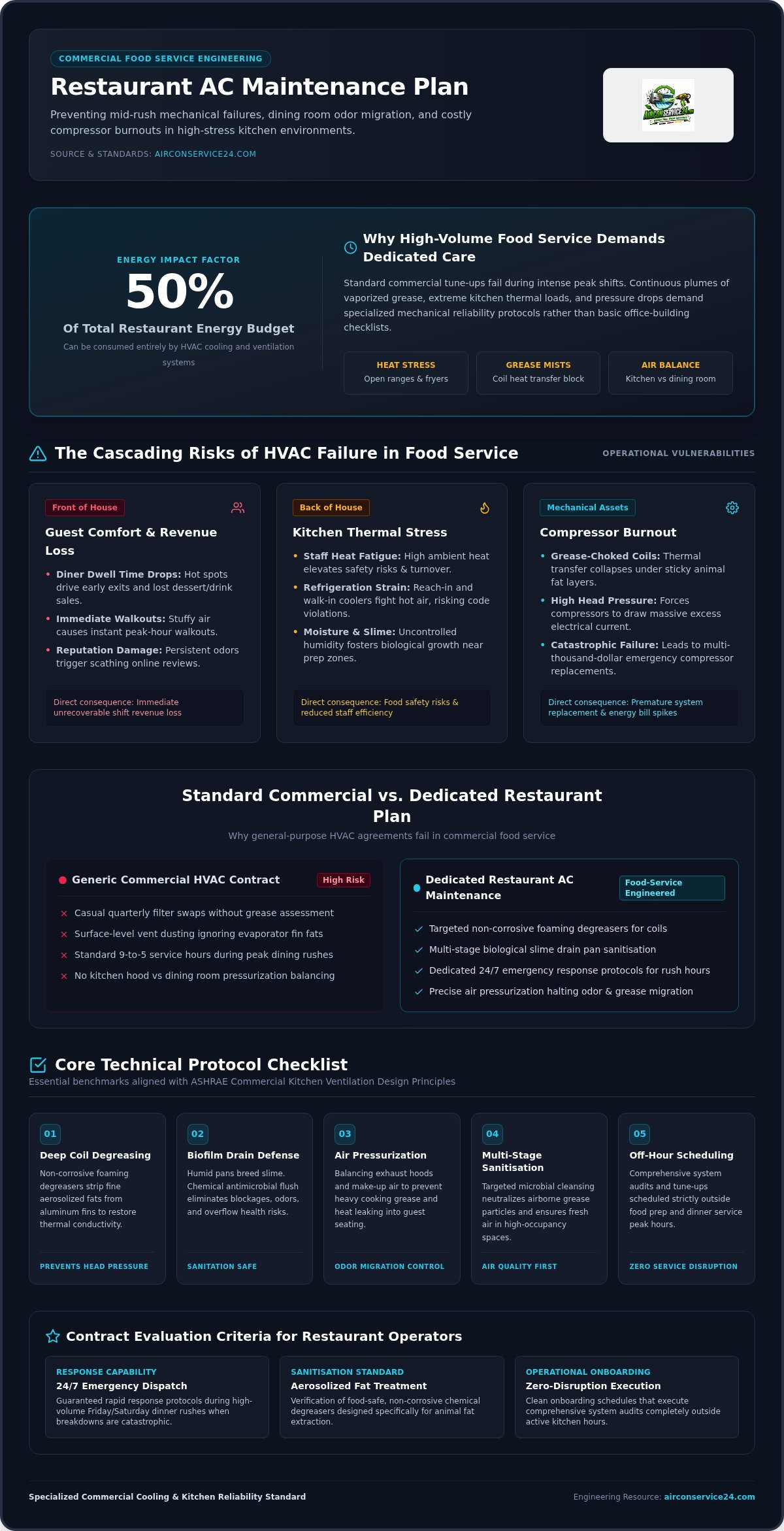
You already know the stakes. When cooling units falter, humid cooking odours migrate straight into the dining room, and frustrated guests walk out within minutes. HVAC systems can swallow up to 50% of a restaurant’s total energy budget. Grease-choked coils and overtaxed compressors don’t just hike utility expenses; they actively jeopardize food safety and shorten equipment lifespans.
Discover how to structure, evaluate, and choose a commercial restaurant AC maintenance plan that protects revenue, food safety, and diner comfort. This 2026 buyer guide details the mechanical benchmarks, specialized deep sanitisation methods, and rapid diagnostic standards necessary to keep your dining rooms crisp and your line cooks safe across peak operating hours.
Key Takeaways
- Learn why high-volume commercial kitchens require a purpose-built restaurant ac maintenance plan rather than generic residential or light-commercial servicing.
- Identify essential technical checkpoints, from targeted coil degreasing to biofilm drain treatments, that prevent mid-shift mechanical failures.
- Master air pressurization balances between kitchen hoods and customer areas to halt the migration of cooking smells, grease, and humidity into the dining room.
- Evaluate service agreements using strict criteria, including dedicated 24/7 emergency response protocols, specialized multi-stage sanitisation, and odour removal capabilities.
- Establish clean onboarding schedules that execute comprehensive system audits and routine tune-ups completely outside food prep and customer service hours.
Why High-Volume Food Service Demands a Dedicated Restaurant AC Maintenance Plan
A generic commercial HVAC contract cannot survive the relentless punishment of a commercial kitchen. High-volume food service spaces generate continuous plumes of vaporized grease, heavy steam, and volatile pressure shifts that quickly overwhelm standard systems. A dedicated restaurant ac maintenance plan is an active mechanical reliability protocol engineered specifically for these brutal operating conditions. While standard office agreements merely inspect filters on a casual quarterly cycle, a food service protocol treats Heating, ventilation, and air conditioning (HVAC) infrastructure as an essential line of defense against catastrophic operational shutdowns.
Protecting Customer Comfort and Dining Room Revenue
Guest hospitality collapses the moment indoor climate control fails. When dining room temperatures creep upward during a packed dinner service, diner dwell time plummets and patrons skip profitable beverage or dessert orders. Even worse, stuffy air and persistent hot spots drive immediate customer walkouts. Losing cooling during peak operating shifts doesn’t just trigger immediate, unrecoverable daily revenue losses; it leaves a trail of scathing online reviews that permanently damage brand reputation.
Managing Extreme Commercial Kitchen Thermal Loads
Commercial cooking equipment produces massive sensible and latent heat loads that ordinary air conditioning can’t handle alone. Open ranges, charbroilers, fryers, and high-temperature dishwashers pour relentless heat into the kitchen envelope every hour. Without continuous mechanical maintenance, this environment quickly degrades:
- Kitchen line cooks face elevated risks of heat stress and fatigue, driving down operational efficiency and fueling staff turnover.
- Reach-in refrigerators and walk-in coolers must fight higher ambient room temperatures, straining their own condensers and risking local food safety code violations.
- Thermal spikes destabilize overall kitchen humidity, accelerating biological growth and condensation around food preparation zones.
Preventing Premature Compressor Burnout and System Wear
Running high-stress cooling equipment without specialized mechanical calibration is an expensive mistake. When rooftop condensers pull in airborne grease and dust, heat transfer efficiency collapses. In extreme ambient outdoor heat, internal head pressures spike, forcing compressors to draw excessive electrical current just to maintain baseline cooling. Systematic preventative care cleans compromised coils, checks refrigerant balance, and protects operators from sudden, multi-thousand-dollar emergency compressor replacements.
Core Technical Checklist: What Every Restaurant Cooling Agreement Must Cover
Generic maintenance checklists focus on dusting vents and swapping basic filters. That strategy falls apart quickly in commercial kitchens, where grease aerosols and heavy moisture demand precise physical restoration. A comprehensive restaurant ac maintenance plan must address the specific mechanical and microbial challenges of high-volume dining operations. In line with the principles outlined in the ASHRAE Design Guide for Commercial Kitchen Ventilation, maintaining peak system performance requires specialized physical procedures rather than administrative tick-boxes.
Deep Coil Cleaning and Aerosolized Grease Extraction
Fine grease mists easily bypass primary return filters, bonding to cold evaporator fins and forming an insulating, sticky barrier. This coating chokes airflow and forces thermal transfer rates into a steep decline. Service teams must apply specialized, non-corrosive foaming degreasers designed to lift stubborn animal fats without degrading delicate aluminum coils. Operations teams should systematically audit their specialised commercial cooling equipment to ensure heavy grease layers do not trigger high-pressure cutouts.
Condensate Drain Pan Clearing and Biological Slime Defense
Dark, humid condensate pans serve as ideal breeding grounds for bacteria, mold, and gelatinous biofilm. Left unchecked, this buildup creates clogs that result in wastewater leaking through dining room ceilings or dripping onto sanitary kitchen surfaces. Routine maintenance must include power-flushing lines, applying broad-spectrum pan treatments, and executing targeted chemical line sanitisation to guarantee free-flowing drainage during peak service.
Air Filtration Upgrades and Blower Motor Calibration
Kitchen particulate control demands high-efficiency filters balanced precisely against airflow requirements. Upgraded filters keep ductwork clean, but they will starve the system if static pressures spike. Every routine visit should include detailed electrical and mechanical diagnostics:
- Measuring supply static pressure and blower motor amp draws to catch motor failure early.
- Inspecting belt tension, replacing cracked serpentine belts, and aligning pulleys to prevent fan motor burnout.
- Testing contactors, relays, and capacitors for pitting or heat fatigue that could halt runtime mid-rush.
- Conducting electronic leak detection and calculating subcooling and superheat levels to confirm proper refrigerant charge.
If recurring cooling problems or unexplained airflow drops disrupt your shifts, having an experienced team like AirConService24 evaluate your air handlers can stop silent mechanical drag before it triggers a system shutdown.
Balancing Dining Room Ambience with Commercial Kitchen Pressurization
Front-of-house hospitality hinges on an unseen mechanical tug-of-war. While dining rooms require stable cooling and whisper-quiet airflow, commercial cooklines depend on massive exhaust fans pulling thousands of cubic feet of air per minute. An effective restaurant ac maintenance plan bridges these two zones. Without continuous calibration, kitchen extraction quickly overpowers the rest of the building, creating negative pressure pockets that suck hot exterior air, dust, and pungent cooking smells straight toward dining tables.
Eliminating Kitchen Odour Migration and Cross-Contamination
Customers notice foul air before the food arrives. When negative building pressure develops, spicy oils, burnt residues, and dish-pit moisture slip past swinging kitchen doors right into dining zones. Dedicated maintenance agreements must incorporate specialized coil deep cleaning, supply duct sanitisation, and targeted odour removal procedures. Eliminating embedded organic compounds restores crisp air quality, directly elevating customer perception and protecting brand value during busy dining services.
Synchronizing Make-Up Air Units (MAU) with Exhaust Volumes
Kitchen exhaust hoods evacuate enormous volumes of heated air, and that air has to be replaced. Make-up air units must replenish roughly 80% to 90% of the exhausted volume, leaving the kitchen under slight negative pressure relative to the dining room. Maintenance inspections must systematically evaluate this balance:
- Verifying that make-up air temper controls are conditioning outside air properly rather than dumping unconditioned outdoor humidity into prep zones.
- Inspecting intake dampers and fan belts to prevent make-up airflow drops that starve the hood and overwhelm central air units.
- Testing pressure thresholds between kitchen doors and dining areas so customer spaces remain slightly positive.
Controlling Relative Humidity to Prevent Biofilm and Mold
High relative humidity ruins a restaurant atmosphere. Unchecked moisture leads to slick dining floors, condensation dripping from diffusers, and rapid bacterial blooms inside ductwork. Technicians tune evaporator temperatures and blower speeds to extend cooling cycles, maximizing latent moisture removal from the air stream. Keeping dining room humidity below 55% stops condensation on cold glass, suppresses biological growth, and ensures guests remain comfortable throughout their meal.
How to Evaluate Commercial Maintenance Contracts: Key Selection Criteria
Most HVAC contracts look identical on paper until a rooftop unit trips during a packed dinner shift. Food service operators cannot afford ambiguous service level agreements that treat a kitchen line the same as an empty office cubicle. Selecting the right restaurant ac maintenance plan requires vetting contractors against rigorous diagnostic capabilities, emergency responsiveness, and hygienic standards rather than baseline labor rates.
Emergency Response Times and 24/7 Availability Guarantees
A four-hour response window is unacceptable when dining room temperatures climb past 26°C and guests begin abandoning half-eaten meals. Your agreement must stipulate rapid dispatch protocols with dedicated 24/7 coordination desks. Look for providers that guarantee immediate escalation for critical failures during lunch and dinner rushes, complete with transparent terms that cover evening, weekend, and holiday emergency mobilizations without hidden delays.
Scope of Work: Surface Cleaning versus Comprehensive Overhaul
Surface-level filter swaps offer zero protection against catastrophic mechanical failures. Demanding a comprehensive scope of work ensures technicians actually inspect and service internal components:
- Verifying motor run capacitors and compressor contactors for electrical pitting to head off sudden electrical shorts.
- Conducting multi-stage coil deep sanitisation and chemical degreasing rather than quick water rinses that leave grease behind.
- Delivering mandatory digital logs that track refrigerant pressures, delta-T temperature splits, and motor operating amperages.
- Supplying dated photographic proof of coil, blower, and drain tray conditions before and after every service visit.
Contract Transparency and Comprehensive Preventive Coverage
Ambiguity breeds unexpected downtime and surprise invoices. High-caliber contracts draw clear operational boundaries between scheduled preventive calibrations and component repair dispatches. Ensure your agreement explicitly details chemical coil treatments, condensate clearing intervals, and specialized odour removal protocols. When vetting prospective partners, choose a specialized commercial provider with nationwide dispatch capability to keep your physical infrastructure running smoothly. To secure proven mechanical oversight across every dining service, partner with AirConService24 for commercial maintenance tailored to the demanding realities of commercial dining.
Onboarding and Implementation: Structuring Your Restaurant Service Schedule
Signing an agreement is only the first step. Rolling out a commercial restaurant ac maintenance plan requires meticulous timing and coordination to avoid disrupting back-of-house operations. A chaotic service visit that interrupts line prep or fills the kitchen with chemical fumes causes the very operational headaches you hired technicians to prevent. Smooth implementation relies on a clear, step-by-step onboarding roadmap that safeguards food safety while maintaining total mechanical accountability.
The Initial System Audit and Mechanical Baseline
Professional onboarding begins with a full physical audit of your physical plant. Technicians catalog serial numbers, refrigerant types, compressor run hours, and remaining warranty coverages for every air handler and rooftop condenser. Using thermal imaging guns, specialists scan the dining room during populated hours to pinpoint airflow dead zones and hot spots. This initial evaluation documents deferred mechanical issues upfront, separating historical damage from future routine performance benchmarks.
Scheduling Maintenance Around Active Kitchen Shifts
Preventative servicing must adapt to restaurant realities, not the other way around. Heavy mechanical maintenance belongs in early morning windows before prep cooks fire up equipment. Strict scheduling rules protect the hospitality environment:
- Execute coil degreasing and duct treatments hours prior to food handling, preventing chemical cross-contamination on sanitary counters.
- Coordinate planned electrical breaker cutoffs with head chefs to protect walk-in coolers and deep chillers from temperature fluctuations.
- Clear all ladders, hoses, and service gear from dining floors at least 45 minutes before front-of-house staff open doors to guests.
Staff Training and Emergency Breakdown Protocols
Shift supervisors serve as your first warning system. Train managers to verify thermostat setpoints twice daily, check for bubbling condensation along diffusers, and recognize unusual compressor vibration hums before equipment fails. Post a laminated emergency response chart directly beside the kitchen expeditor station, listing technician contact lines and immediate unit isolation steps. When you’re ready to protect kitchen performance and dining comfort with disciplined oversight, take action by booking a dedicated commercial AC consultation with certified technicians.
Protect Your Kitchen Uptime and Dining Revenue Today
Commercial food service leaves no room for mechanical guesswork. From balancing aggressive exhaust volumes and eliminating stubborn grease migration to safeguarding food safety during a packed dinner rush, a proactive restaurant ac maintenance plan is an indispensable operational shield. Treating your HVAC infrastructure with specialized deep cleaning, multi-stage sanitisation, and routine electrical calibrations ensures your line cooks stay safe while your dining room remains crisp and welcoming.
Sudden cooling breakdowns don’t have to threaten your shift revenue or reputation. Secure your restaurant cooling with AirConService24 commercial maintenance to gain rapid 24/7 emergency response nationwide, advanced odour removal, and experienced food-service diagnostics. Take control of your physical environment today and ensure your dining spaces stay comfortable, compliant, and consistently profitable.
Frequently Asked Questions
How often should a restaurant AC system be professionally serviced?
Commercial restaurant cooling systems require comprehensive professional servicing at least quarterly, accompanied by monthly filter inspections. Heavy grease vapor and continuous line cooking clog coils much faster than in standard commercial buildings. High-turnover dining rooms running 12 to 16 hours daily often benefit from bi-monthly deep chemical coil cleanings during peak summer months. Regular servicing keeps thermal heat transfer optimal and protects equipment against sudden compressor failure.
Why does a restaurant air conditioning unit freeze up during service hours?
An AC unit freezes up primarily due to restricted airflow or low refrigerant levels caused by micro-leaks. When evaporator coils become blanketed in airborne grease and dust, warm air cannot transfer heat to the refrigerant. The coil temperature plummets below freezing, causing condensation to freeze into a solid ice block. Blower motor failures, collapsed duct dampers, or clogged return filters will also trigger rapid coil freeze-ups during busy shifts.
Can poor AC maintenance cause unpleasant cooking smells in the dining area?
Yes, neglected cooling equipment and uncalibrated ventilation directly cause kitchen aromas to migrate into customer seating. When air filters and return ducts load up with grease, negative air pressure pulls hot frying smells, moisture, and charbroiler fumes through swinging doors. A structured restaurant ac maintenance plan integrates specialized odour removal and supply duct sanitisation, neutralizing trapped organic food particles to keep dining room air neutral, crisp, and welcoming for guests.
What is the difference between residential and commercial restaurant AC maintenance?
Commercial restaurant maintenance focuses heavily on managing aerosolized grease, severe heat loads, and negative air pressure balance, whereas residential servicing only handles light domestic dust. Restaurants demand industrial foaming degreasers, biological drain clearing to eliminate bacteria, and precise makeup air calibration. Residential visits rarely address continuous high static pressures, three-phase electrical components, or health inspection sanitation codes that food service operations must strictly meet every day.
How does regular AC maintenance reduce a restaurant’s monthly electricity costs?
Routine servicing reduces electrical consumption by restoring heat transfer efficiency and lowering continuous compressor workload. When condenser and evaporator coils accumulate grease and grime, compressors run hotter and draw higher electrical current to reach thermostat setpoints. HVAC systems often account for up to half of a restaurant’s total utility bill. Chemical coil washing, proper refrigerant calibration, and belt alignment eliminate unnecessary mechanical drag, trimming utility costs by 5% to 15%.
What immediate steps should staff take if the dining room AC fails during peak service?
Staff should immediately check the breaker panel, verify thermostat power, and contact their 24/7 emergency HVAC repair line. Avoid lowering the thermostat aggressively, which can burn out contactors or freeze strained components. Close kitchen pass-through doors and adjust vestibule curtains to prevent outside humidity and cooking fumes from invading the dining space. Shift managers must reference their emergency breakdown workflow immediately to request dispatch before room temperatures trigger customer walkouts.
Does a restaurant AC maintenance plan include emergency after-hours repairs?
Comprehensive commercial plans typically include prioritized access to emergency 24/7 repair technicians with accelerated dispatch windows. A robust restaurant ac maintenance plan distinguishes itself by protecting operations through night and weekend dinner services. While standard contractors charge steep emergency premiums or leave you waiting until Monday morning, dedicated food service agreements provide round-the-clock emergency diagnostics and guaranteed technician availability to keep mechanical shutdowns from ruining peak customer trade.