AC Blower Motor Repair: Expert Solutions for Restoring Airflow in the UAE

Article by
Jon Bonnett
Australian Air Conditioning Specialist with extensive hands-on experience in AC servicing, deep cleaning, maintenance, and troubleshooting. Focused on high-quality workmanship, reliability, and professional service to UAE standards.
A silent air vent in the middle of a UAE summer is more than a technical failure; it’s a domestic emergency that demands immediate, professional intervention. You’ve likely felt that spike of anxiety when the thermostat drops but the air remains stagnant. Perhaps you’ve noticed a strained, metallic scent wafting through your living room. We recognize that when airflow stops, your sense of domestic harmony disappears. Seeking an ac blower motor repair shouldn’t be a journey into the unknown or a source of financial stress.
Mastering the warning signs of a failing motor allows you to act before a total system shutdown occurs. You’ll learn to distinguish between a simple component fix and a full motor replacement, ensuring you make the most cost-effective decision for your home. We’ll examine the critical intersection of mechanical performance and environmental hygiene. This guide provides a clear roadmap to restore vital airflow and maintain a healthy, reliable cooling system for years to come.
Key Takeaways
- Understand the blower motor’s essential role as the engine of your cooling system and why its failure leaves your home’s air stagnant and unconditioned.
- Identify the critical symptoms of failure, from unusual rattling to weak airflow, so you can act with urgency before a mechanical crisis occurs.
- Master the cost-benefit analysis of an ac blower motor repair versus a full replacement to ensure you’re making the most transparent and effective choice for your budget.
- Discover the professional maintenance and troubleshooting steps that guarantee your system operates with the precision and hygiene required for the UAE climate.
Understanding the AC Blower Motor: The Heart of Your Cooling System
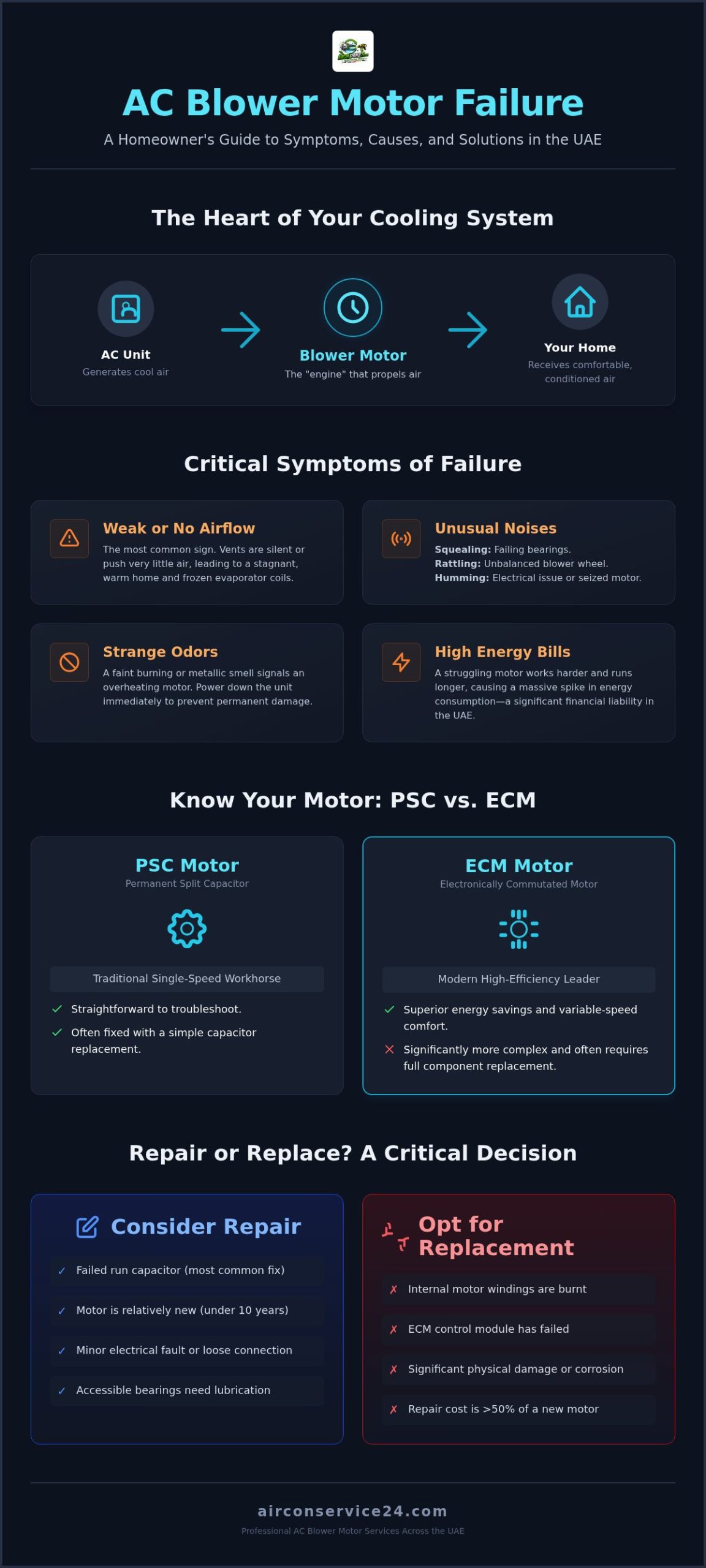
The blower motor acts as the mechanical heart of your HVAC system, serving as the primary mover of indoor climate control. It’s the engine that propels conditioned air through your ductwork and into your living space. Without this critical component, the air your system has worked so hard to chill remains trapped within the evaporator unit. This leads to ice formation on the coils and a rapid rise in indoor temperatures. Understanding the necessity of ac blower motor repair starts with recognizing its dual role in temperature regulation and moisture removal. The motor is typically housed within the Air Handling Unit (AHU), where it must operate with absolute precision to maintain domestic harmony and environmental hygiene.
The Mechanics of Airflow
Airflow is the foundation of energy efficiency in any cooling system. The blower wheel works in direct tandem with the motor to generate the necessary static pressure to move air through long duct runs. It’s vital to distinguish this indoor component from the outdoor condenser fan. While the outdoor fan’s job is to dissipate heat from the refrigerant into the environment, the indoor blower motor is responsible for your immediate comfort. If the indoor airflow is compromised, the entire system must run longer and work harder. This leads to an inevitable spike in energy consumption and premature mechanical strain. Professional maintenance of this equipment ensures that every watt of electricity translates into tangible cooling for your home.
PSC vs. ECM Motors: Which One Is in Your Unit?
Identifying your motor type is the first step in a successful ac blower motor repair strategy. Traditional units typically utilize Permanent Split Capacitor (PSC) motors. These are single-speed workhorses that are relatively straightforward to troubleshoot. Often, a simple capacitor replacement restores them to full functionality. In contrast, modern high-efficiency systems use Electronically Commutated Motors (ECM). These variable-speed leaders provide superior comfort and energy savings but are significantly more complex. Because many ECM units in the UAE market are sealed, a failure in the internal control module often necessitates a full component replacement rather than a modular repair. Understanding these nuances allows for a methodical approach that eliminates anxiety through clear technical expectations.
Common Symptoms and Causes of Blower Motor Failure
Detecting a mechanical struggle before it becomes a total cooling collapse is essential for maintaining domestic harmony. If your vents are silent but the thermostat is calling for cooling, you’re likely facing a critical bottleneck. Weak or inconsistent airflow is the most frequent precursor to an ac blower motor repair. When a motor loses its ability to reach rated RPMs, cooled air pools inside the unit, causing the evaporator coils to freeze. This inefficiency forces the compressor to run indefinitely, leading to a massive spike in energy costs. In the UAE, where cooling accounts for over 70% of building energy consumption according to the Gulf Organization for Research and Development (2024), a struggling motor is a significant financial liability.
Listen for auditory warnings that signal internal distress. A high-pitched squeal typically indicates failing bearings, while a rhythmic rattling suggests an unbalanced blower wheel. A persistent humming sound, often accompanied by a faint burning odor, points to electrical windings overheating or a seized motor. If you detect a metallic scent, it’s vital to power down the unit immediately to prevent permanent damage. Learning how to test a blower motor can help determine if the issue is a simple electrical fault or a terminal mechanical failure.
Environmental Stressors in the UAE
The local climate poses unique challenges to HVAC longevity that standard maintenance often overlooks. Fine desert dust acts as a persistent abrasive, infiltrating motor housings and creating friction that degrades internal components. This dust can also accumulate on the blower wheel, causing an imbalance that vibrates the entire indoor equipment assembly. High humidity further complicates matters by inducing corrosion on sensitive control boards and electrical connectors, which can mimic the signs of total motor failure.
The Role of the Capacitor
A failed run capacitor is the most frequent cause for an ac blower motor repair. This component delivers the electrical torque needed to initiate and sustain rotation. If your unit hums but the fan remains stationary, the capacitor has likely reached its end of life. Never attempt a DIY replacement; these components store lethal electrical charges even when the power is disconnected. You should rely on a specialist in AC maintenance who can safely discharge the system and restore your airflow with precision.
AC Blower Motor Repair vs. Replacement: A Critical Comparison
Deciding between an ac blower motor repair and a total component replacement is a pivotal moment for any property owner. This choice requires a methodical cost-benefit analysis to ensure long-term system reliability and financial integrity. We utilize the 50% Rule as a standard of transparency: if the projected cost of fixing the motor exceeds half the price of a brand-new unit, replacement is the more disciplined choice. This approach eliminates the anxiety of recurring failures and ensures your investment is focused on performance rather than temporary patches.
System age is a non-negotiable factor in this decision framework. While a well-maintained motor can last over a decade, units approaching the 10-year mark often suffer from cumulative wear that a single repair cannot resolve. In these cases, investing in a modern replacement often yields higher returns through improved energy efficiency and reduced strain on the rest of your cooling system. Identifying terminal issues early, such as burnt internal windings or failed control modules, prevents wasted expenditure on components that are fundamentally beyond restoration.
When a Simple Fix Is Sufficient
Many airflow crises are resolved through targeted, low-cost interventions that extend the life of your existing motor. Replacing a failed run capacitor is the most common repair, often restoring full functionality in a single visit. Other repairable issues include securing loose mounting brackets that cause vibration or repairing frayed wiring connectors damaged by heat. Rebalancing the blower wheel is another critical service; by removing accumulated dust and debris, we eliminate the mechanical stress that leads to bearing failure. These precise adjustments restore domestic harmony without the need for a full system overhaul.
The Case for Total Motor Replacement
Modern HVAC units often utilize sealed motors, particularly high-efficiency ECM models, which are designed for performance rather than modular repair. If the internal control board or the copper windings have suffered a catastrophic short, a full replacement is the only viable path to restoring airflow. Upgrading to a newer motor model can provide significant efficiency gains, allowing your system to move more air with less electrical consumption. When selecting a new motor, we prioritize absolute compatibility with your existing HVAC equipment to ensure seamless integration and long-term reliability. This proactive strategy safeguards your home environment against future cooling emergencies during the peak of the UAE summer.
Professional Troubleshooting and Maintenance Protocols
A disciplined approach to ac blower motor repair begins with a rigorous diagnostic protocol. Guessing at component failures leads to unnecessary costs and prolonged downtime, a luxury no one has during a UAE summer. Technicians must follow a structured workflow to eliminate variables and pinpoint the exact source of failure. This methodical sequence prevents the “parts cannon” approach, where components are replaced at random until the system starts. Instead, we focus on precision and customer clarity.
- Step 1: Power Isolation and Safety Discharge. The first priority is the total isolation of the electrical supply. Technicians must safely discharge the run capacitor to prevent accidental shocks, as these components retain high-voltage energy even after the system is off.
- Step 2: Electrical Validation. Using calibrated multimeters, we perform voltage and continuity testing. This identifies if the fault lies in the motor windings, the control board, or the external wiring harness.
- Step 3: Physical Inspection. We examine the blower assembly for physical obstructions or the presence of biofilm. This biological growth creates significant drag, forcing the motor to consume more power and generate excess heat.
These protocols ensure that every action taken is backed by technical data. By identifying the root cause, we provide a reliable solution that restores your home’s comfort without the anxiety of recurring issues.
The Hygiene-Motor Connection
Mechanical performance and environmental hygiene are inseparable. Fine dust and organic buildup on the blower wheel increase rotational resistance, which is a primary cause of motor overheating. Deep cleaning the entire assembly reduces this physical load, allowing the motor to operate within its designed thermal limits. Eliminating these contaminants also removes the source of unpleasant odours that often accompany motor strain. For a detailed breakdown of preventive care, refer to our guide on AC Maintenance UAE to understand how hygiene safeguards your mechanical investments.
Restoring Indoor Air Quality
The blower motor is the primary vehicle for air circulation in your home. If the motor and its housing are neglected, the system effectively distributes dust, allergens, and mould spores through your living spaces. Professional sanitisation serves as the essential final validation of an ac blower motor repair. We ensure the air moving through your vents is not just cool, but medically clean and fresh. This holistic approach protects the well-being of your family while ensuring the long-term reliability of the hardware. Experience the difference of a truly optimized climate by scheduling our professional AC repair and sanitisation services today.
Reliable AC Blower Services Across the UAE
AirConService24.com provides a rapid response for all blower-related emergencies across every emirate. When airflow fails in the middle of a high-heat cycle, our technicians arrive as disciplined guardians of your home’s climate. We recognize that a mechanical breakdown is a disruption to your domestic harmony and a potential risk to your family’s well-being. We don’t just offer a quick fix; we provide a comprehensive technical solution. Our approach integrates ac blower motor repair with deep cleaning and advanced sanitisation. This dual focus ensures that your system doesn’t just move air, but circulates a healthy, purified indoor environment. We prioritize transparency and integrity, eliminating customer anxiety through clear expectations and methodical execution.
Our service is deeply rooted in practical reliability and a “ready-to-act” energy. Whether you’re dealing with a seized motor in a residential villa or a failing AHU in a commercial space, we bring elite technical expertise to every site. We understand the high stakes of a cooling crisis in the UAE. That’s why our 24/7 availability is backed by a sophisticated, quality-focused demeanor. We treat your cooling system as an essential component of a comfortable lifestyle, ensuring every repair meets modern standards of excellence and sustainability.
What to Expect from Our Expert Technicians
Our experts utilize a methodical diagnostic approach powered by modern, precision equipment. You won’t receive vague guesses or “parts cannon” recommendations; you’ll get clear communication and data-driven repair strategies. We believe in the role of the “conscientious innovator,” valuing advanced methods that protect your system’s longevity. Our technicians follow a strict protocol that includes:
- Detailed voltage and mechanical load testing to verify motor health.
- Transparent reporting on the cost-benefit of repair versus replacement.
- A commitment to environmental hygiene, ensuring no dust or biofilm remains in the blower housing.
- Final system validation to confirm peak airflow and energy efficiency.
Securing Your System for the Future
Regular maintenance is the only reliable way to prevent sudden blower failure during the peak summer months. Our proactive protocols ensure your system operates at peak efficiency year-round, significantly reducing the risk of motor burnout and high energy bills. We focus on long-term system reliability rather than temporary patches. If you’ve noticed a drop in airflow or an unusual hum from your vents, act with urgency to protect your indoor climate. Contact us today for Emergency AC Repair and restore your comfort with a service that values precision, speed, and your home’s harmony above all else.
Secure Your Home’s Airflow and Comfort
Restoring your indoor climate requires more than a simple mechanical fix; it demands a comprehensive understanding of how your system interacts with the unique UAE environment. By recognizing the early warning signs of failure and applying a disciplined cost-benefit analysis, you protect both your home’s harmony and your financial interests. It’s vital to remember that a professional ac blower motor repair is most effective when paired with deep cleaning to ensure long-term reliability and medical-grade air hygiene. Our technicians act as elite guardians of your domestic well-being, standing ready to intervene with precision and speed. We provide 24/7 emergency AC repair across the UAE, ensuring that expert deep cleaning and sanitisation are included in every restoration project. Trust in our disciplined, professional technicians who prioritize results and customer clarity above all else. You don’t have to navigate a cooling crisis alone. We’re here to provide the sophisticated, high-quality support your home deserves. Your comfort is our priority.
Restore Your Airflow Today – Contact AirConService24.com
Frequently Asked Questions
Why is my AC blower humming but the fan is not spinning?
A humming sound without rotation typically indicates a failed start capacitor or a seized motor bearing. The capacitor provides the initial electrical torque required to spin the motor. If it fails, the motor attempts to start but lacks the power to overcome inertia. It’s critical to shut the system down immediately to avoid burning the motor windings. A professional ac blower motor repair often begins with testing this component to determine if a simple replacement will suffice.
Can I run my AC if the blower motor is making a grinding noise?
You shouldn’t run your system if you hear a grinding noise from the blower. This sound usually signals that the motor bearings have failed or the blower wheel has become loose and is striking the housing. Continuing to operate the unit can lead to catastrophic mechanical failure or an electrical short. Immediate isolation of the power supply is the most disciplined action to prevent expensive damage to the entire AHU assembly and ensure your home’s safety.
How much does it cost to replace an AC blower motor in the UAE?
The cost of replacing a blower motor in the UAE varies based on the unit’s specifications and technology. Modern Electronically Commutated Motors (ECM) are generally more expensive than traditional Permanent Split Capacitor (PSC) models due to their variable speed capabilities. Other factors include the difficulty of access within your specific property and the need for accompanying services like deep cleaning. We recommend a professional diagnostic visit to receive a transparent recommendation tailored to your system’s requirements and age.
How long should a standard AC blower motor last?
While a blower motor is designed to last between 10 and 15 years, the extreme UAE climate often shortens this window. High ambient temperatures require systems to operate 24/7 during peak summer months, leading to accelerated wear. Fine desert dust also increases internal friction if maintenance is neglected. Regular cleaning and sanitisation are essential to ensure your motor reaches its maximum lifespan by reducing the physical and thermal stress placed on the internal components during operation.
Will a dirty air filter really cause my blower motor to fail?
A dirty air filter is a primary cause of motor failure because it restricts the volume of air the system can pull. This restriction creates high static pressure, forcing the motor to work significantly harder to move the same amount of air. This increased workload leads to overheating and eventual burnout of the electrical windings. Maintaining clean filters is a simple but vital step in avoiding the need for an ac blower motor repair and high energy bills.
What is the difference between a blower motor and a condenser fan?
The blower motor is located in the indoor air handling unit and is responsible for circulating conditioned air through your home’s ductwork. In contrast, the condenser fan is located in the outdoor unit. Its sole purpose is to pull air across the condenser coils to dissipate heat from the refrigerant into the environment. While both are essential for cooling, they operate in different environments and face distinct mechanical stressors, particularly regarding dust and moisture exposure.
Can an AC blower motor be lubricated to stop squealing?
Most modern blower motors utilized in the UAE market are manufactured as sealed units with permanently lubricated bearings. This means they can’t be manually oiled to stop a squealing noise. If the motor is squealing, it usually indicates that the internal lubricant has dried out or the bearings have physically degraded. In these instances, a professional evaluation is necessary to decide if the unit requires a full replacement to restore silent operation and domestic harmony.
How do I know if my capacitor is bad or the motor is dead?
Distinguishing between a bad capacitor and a dead motor requires technical precision. A failed capacitor often results in a distinct humming sound as the motor tries to start without success. If the motor is completely silent and unresponsive despite receiving power, the internal windings have likely failed. Technicians use multimeters to check for electrical continuity and capacitance. This methodical testing ensures we identify the correct fault before recommending any mechanical intervention or total motor replacement.
AC Pipe Insulation Repair: Restoring Cooling Efficiency in the UAE Heat
Article by
Jon Bonnett
Australian Air Conditioning Specialist with extensive hands-on experience in AC servicing, deep cleaning, maintenance, and troubleshooting. Focused on high-quality workmanship, reliability, and professional service to UAE standards.
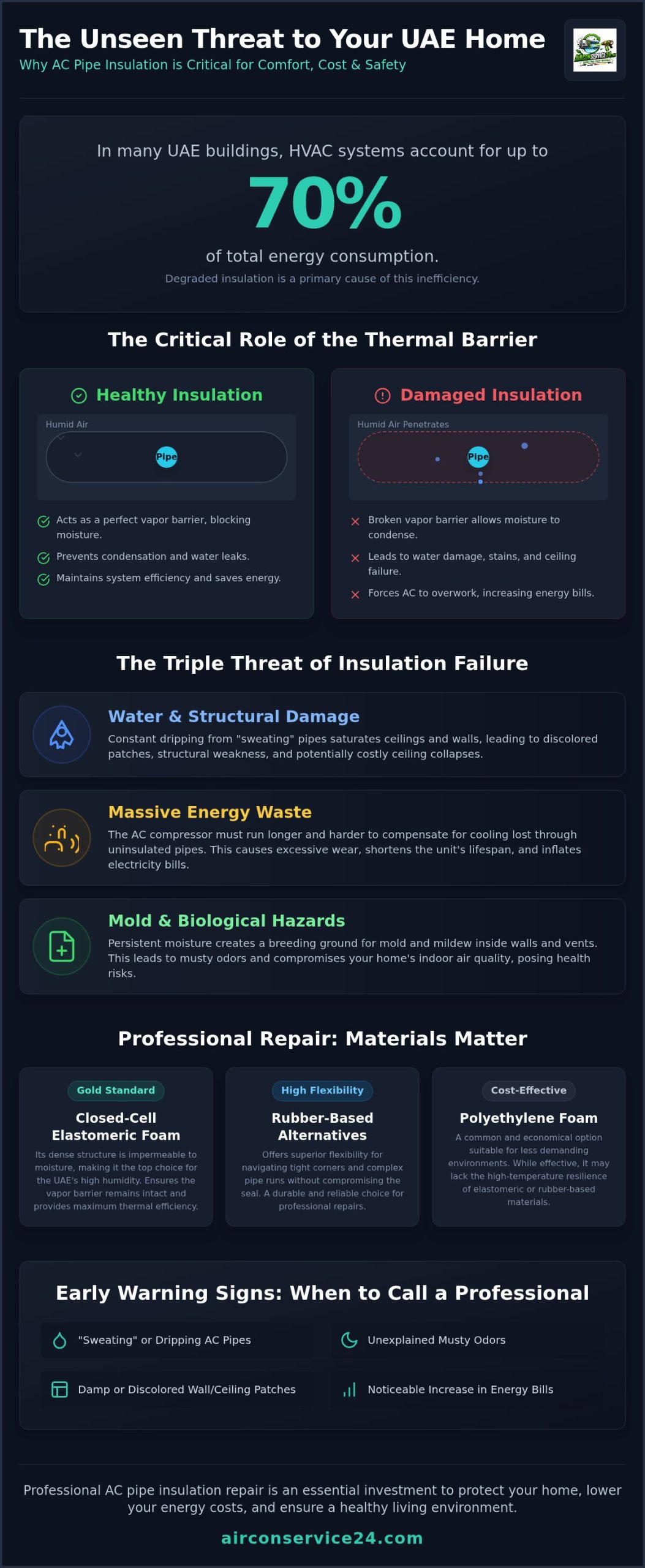
Did you know that HVAC systems account for up to 70% of energy consumption in many UAE buildings? It’s a staggering reality that underscores the immense pressure on your cooling infrastructure during the peak summer months. You’ve likely felt the frustration of discovering a damp patch on a ceiling or smelling that unmistakable musty odor of mold growth in your vents. These issues often stem from a single, overlooked failure: degraded thermal barriers. Professional ac pipe insulation repair is not merely a cosmetic fix; it’s a technical necessity to restore your system’s integrity. We understand the urgency of protecting your home from water damage and rising utility costs. This article explores how specialized repair techniques prevent condensation leaks, eliminate biological hazards, and significantly lower your energy consumption. You’ll discover why a robust vapor barrier is your first line of defense against the UAE’s extreme humidity and how modern standards, like the Al Sa’fat 2.0 Silver rating, are shaping the future of domestic efficiency.
Key Takeaways
- Understand how insulation serves as a critical vapor barrier that prevents humid air from causing condensation and structural damage.
- Recognize the financial impact of thermal loss, which can drastically increase electricity consumption in the extreme UAE climate.
- Determine if your system requires a targeted ac pipe insulation repair or a complete overhaul based on the extent of moisture intrusion.
- Identify early warning signs like sweating pipes and discolored wall patches before they lead to costly ceiling failures.
- Learn why combining insulation restoration with professional sanitisation is essential for maintaining a mold-free and healthy home environment.
AC Pipe Insulation: Why is it Critical in the UAE?
In the extreme climate of the UAE, AC pipe insulation is far more than a simple foam sleeve. It is a precision-engineered thermal cladding designed to wrap around your system’s refrigerant lines. This barrier serves two vital purposes: it prevents heat from entering the cold refrigerant and stops moisture from condensing on the pipe’s surface. Without this protection, your air conditioner works twice as hard to achieve the same cooling effect, leading to a rapid decline in system performance and an inevitable spike in utility costs.
The core of this technology lies in the “Vapor Barrier” concept. Because refrigerant pipes carry fluids at temperatures significantly lower than the surrounding air, they naturally attract moisture. In a high-humidity environment, this leads to immediate condensation. A high-quality insulation layer acts as a shield, keeping humid air away from the cold copper. When this shield fails, ac pipe insulation repair becomes a high-stakes priority to prevent the system from essentially “raining” inside your walls or ceiling voids.
The Role of Refrigerant Lines in Your Cooling Cycle
Your cooling system relies on a continuous loop where cold liquid refrigerant travels from the outdoor condenser unit to the indoor evaporator coil. The physics of “sweating” are relentless in the UAE. When these cold lines are exposed to heavy, moisture-laden air, water droplets form instantly. This moisture doesn’t just sit there; it migrates, saturating surrounding materials and creating a breeding ground for biological growth. Thermal bridging occurs when heat bypasses insulation through highly conductive materials, such as exposed copper pipes, directly compromising the system’s cooling capacity. This phenomenon forces the compressor to run longer cycles, shortening its lifespan and driving up energy bills.
Types of Insulation Materials Used in Professional Repairs
Selecting the right material is the first step in a successful ac pipe insulation repair. Professional Pipe Insulation standards in the region prioritize materials that can survive the intense UV exposure and ambient heat that define the local climate. We utilize several specific types of insulation to ensure longevity:
- Closed-cell elastomeric foam: This is the gold standard for UAE conditions. Its dense structure prevents moisture from passing through the material, ensuring the vapor barrier remains intact even if the outer surface is scuffed.
- Polyethylene foam: A cost-effective alternative often used in less demanding environments, though it lacks the high-temperature resilience of rubber-based products.
- Rubber-based alternatives: These offer superior flexibility and are excellent for navigating tight bends in the refrigerant path.
Our technicians are trained to identify the specific failure points in your existing cladding. We don’t just patch the surface. We ensure the new material is perfectly sealed at every joint. Our team utilizes specialized AC equipment and materials to ensure every repair meets these rigorous environmental demands, restoring your system to its peak operational efficiency.
The High Cost of Damaged Insulation: Condensation, Energy Loss, and Mold
Damaged insulation is a silent drain on your resources. When the thermal barrier fails, the cold refrigerant lines absorb heat from the ambient air before they ever reach your indoor unit, forcing the entire system to work harder. This is a high-stakes failure. Implementing a proper energy saving measure through a professional ac pipe insulation repair is the only way to stop this thermal bleed and restore your system’s efficiency.
Water damage is the most immediate physical consequence of insulation failure. A single breach in the foam leads to “sweating,” where droplets accumulate and eventually saturate gypsum ceilings. What starts as a small, discolored spot can quickly escalate into a structural failure. We’ve seen entire ceiling sections collapse because a minor drip was ignored for too long. These repairs are far more expensive than the simple maintenance required to keep your pipes shielded.
Your AC compressor carries the heaviest burden when insulation is compromised. Poor thermal protection forces the system to run longer cycles to compensate for the lost cooling capacity. This constant overworking increases mechanical wear, shortens the unit’s lifespan, and ensures your electricity bills remain unnecessarily high. You’re effectively paying to cool the voids in your walls rather than your living space.
Vapor Drive and the Humidity Factor
The UAE’s high humidity creates a relentless “vapor drive.” This physical force pushes moisture from the humid outdoor air into the cold, low-pressure environment inside the insulation. If the outer skin is punctured or cracked, the material absorbs water like a sponge. This creates an invisible threat: the refrigerant pipes begin to corrode underneath the wet foam. This external corrosion can lead to pinhole leaks that compromise your entire cooling circuit, necessitating a complex and costly intervention.
Health Risks of Mold-Infested Insulation
Damp insulation is the ideal environment for mold spores to flourish. Once colonies establish themselves in the dark, moist spaces behind your walls, they release spores that can be drawn into your air supply via the fan coil unit. If you notice a persistent musty smell, it’s often a sign of insulation failure. Professional AC sanitisation is vital in these cases to eliminate the biological hazard. A prompt ac pipe insulation repair ensures your home remains a healthy sanctuary rather than a source of respiratory irritation. You can book a professional inspection to identify these hidden failures before they become a threat to your family’s well-being.
AC Pipe Insulation Repair vs. Full Replacement: A Comparison
Deciding whether to patch a specific area or overhaul the entire refrigerant line requires a methodical assessment. We don’t believe in unnecessary replacements. Our technicians focus on three critical factors: the age of the material, the depth of moisture penetration, and the structural integrity of the foam. A disciplined approach ensures you don’t overspend on a full replacement when a targeted ac pipe insulation repair is perfectly viable.
A targeted repair is sufficient when the damage is localized. Small tears from a recent maintenance visit, minor joint separations, or surface-level UV damage are prime candidates for a surgical approach. However, replacement is mandatory if the insulation has become water-logged. Once the material acts like a wet sponge, it loses all thermal resistance and becomes a mold hazard. Crumbling or “dusting” foam also indicates that the material has reached the end of its chemical lifespan and can no longer protect the copper lines.
Beware the false economy of DIY patches. Using duct tape to close gaps is a temporary illusion of a fix. Duct tape is not a professional vapor seal. It lacks the thermal properties and adhesive strength to withstand the relentless vapor drive typical of the UAE climate. Professional materials are designed to expand and contract with the pipes, maintaining an airtight seal that household tapes simply cannot provide.
The Professional Repair Process
Our workflow is designed for precision and predictability. We follow a strict three-step protocol to restore your system’s integrity:
- Step 1: We strip back the damaged cladding until we find dry, healthy material to ensure the repair bond is secure.
- Step 2: Our technicians clean and treat the copper pipe for any surface oxidation, ensuring the metal is pristine before re-insulating.
- Step 3: We apply new closed-cell insulation using specialized AC equipment and materials, including vapor-seal adhesives that create a seamless, airtight barrier.
Cost-Benefit Analysis for Homeowners
Professional ac pipe insulation repair pays for itself through improved efficiency. By eliminating thermal loss, you see immediate reductions in your monthly utility consumption. While a repair is a cost-effective short-term solution, a full replacement is often the smarter investment for systems older than eight years. A professional repair can extend the life of existing insulation by several years, whereas a full replacement resets the clock for a decade of optimal performance.
Identifying the Signs: When to Call for Professional AC Repair
Don’t wait for a ceiling to collapse. Early detection is your best defense against structural water damage. One of the most common signs that you need ac pipe insulation repair is visible “sweating” or water dripping from your AC unit or ceiling access panels. When the vapor barrier is compromised, the temperature differential between the cold refrigerant and the humid ambient air causes moisture to accumulate rapidly, leading to the visible dripping you see at access points.
Inspect your walls for subtle changes in texture or color. Discolored patches or peeling paint on walls near the refrigerant line path are clear indicators of a hidden leak. This isn’t just a cosmetic issue; it’s a sign that moisture is migrating through your building’s structure. If the drywall feels damp to the touch, the insulation behind it has likely failed completely, allowing condensation to saturate the surrounding materials.
Ice buildup on the copper pipes is a critical warning sign that should never be ignored. Whether frost appears on the indoor evaporator coil or the outdoor unit’s valves, it indicates that the pipes are completely exposed to humid air or that the system’s thermal balance is lost. This imbalance can lead to catastrophic compressor failure if left unaddressed. Identifying these signs early allows for a targeted ac pipe insulation repair before the damage spreads to more expensive mechanical components.
Physically check the lines where they are accessible. Healthy insulation should feel firm and resilient. If you encounter a crumbling or “spongy” texture when touching the black foam, the material has reached its saturation point. At this stage, the insulation is no longer a barrier; it is a liability that holds water directly against your copper pipes, which can accelerate surface oxidation and eventually lead to refrigerant leaks.
The Outdoor Unit Inspection
The UAE sun acts as a relentless stress test for mechanical components. Inspect the pipes connecting to your outdoor condenser unit. If the insulation appears brittle, cracked, or is turning a chalky white color, UV degradation has destroyed its cellular structure. You might also notice bird or pest damage; small animals often peck at the foam to create nesting material. Leaving these lines exposed significantly increases the risk of emergency AC failure during peak summer heat when the system is under maximum load.
The Indoor Performance Check
Performance drops are often the first sign of hidden insulation gaps. If the air coming out of your vents feels less cold than usual, your system is likely losing its cooling capacity through unshielded pipes. Pay attention to odors. Unexplained musty smells during the first ten minutes of operation suggest that mold is breeding in damp insulation sections. Our technicians use advanced thermal imaging to detect these cold spots and gaps without tearing into your walls, ensuring a non-invasive and precise assessment. If you notice any of these red flags, book a professional AC repair to protect your home’s air quality and cooling efficiency.
Expert Solutions with AirConService24: Restoring Your Home’s Harmony
At AirConService24, we operate as the disciplined guardians of your indoor environment. We understand that a cooling failure in the UAE heat is not just a mechanical glitch; it’s a disruption to your family’s well-being and domestic harmony. Our approach to ac pipe insulation repair begins with a methodical, multi-point inspection. We don’t believe in superficial fixes. Instead, our specialists investigate the full extent of moisture migration and thermal bridging to ensure the root cause of every leak is permanently addressed.
Transparency is the cornerstone of our professional service. Before any work begins, our technicians provide a comprehensive report detailing the exact state of your thermal barriers. We show you the damage and explain the specific technical solution required, eliminating the anxiety of hidden costs. We utilize industrial-grade adhesives and advanced UV-resistant coatings specifically engineered for the high-salinity and extreme heat conditions of the UAE. This ensures that your ac pipe insulation repair outlasts standard aftermarket patches and provides a robust vapor seal for years to come.
A truly effective restoration must be part of a holistic health strategy. Because damp insulation often harbors biological contaminants, we integrate our repairs with professional deep cleaning and sanitisation. This dual approach removes the physical threat of water damage while simultaneously purging your system of mold spores and allergens. We don’t just restore mechanical efficiency; we restore the purity of your home’s air supply.
Why AirConService24 is the Professional Choice
Our team remains ready to act when you need us most. We offer 24/7 availability for urgent leaks and insulation crises, ensuring that a failing vapor barrier doesn’t lead to a collapsed ceiling or structural damage in the middle of the night. Every technician is rigorously trained in the latest HVAC environmental hygiene standards, moving beyond basic maintenance to provide a premium, health-focused service. Our commitment is to your comfort, providing reliable cooling that you can trust through the most punishing summer months.
Schedule Your Insulation Audit Today
Proactive care is the most effective way to manage your home’s cooling infrastructure. Don’t wait for the first drip to appear on your ceiling or for your electricity bills to spiral out of control. A comprehensive AC check-up from our experts includes a detailed audit of your pipe and duct integrity. Identifying a thinning barrier now can save thousands in structural repairs and unnecessary energy consumption later. Secure your cooling efficiency and protect your home’s air quality. Contact AirConService24 today to schedule your professional insulation audit and ensure your system is prepared for the heat.
Protect Your Home with Superior Thermal Integrity
Maintaining your system’s thermal barrier is a fundamental step in safeguarding your property from the UAE’s relentless humidity. Compromised insulation is more than a minor mechanical flaw; it’s a direct path to structural water damage, biological growth, and inflated utility expenses. A timely ac pipe insulation repair restores your system’s efficiency and ensures your living space remains a healthy, mold-free sanctuary for your family.
AirConService24 stands ready to act as your home’s disciplined guardian. We utilize UV-resistant materials specifically designed for maximum desert durability, ensuring your vapor barrier remains intact against the harshest elements. Our comprehensive service includes expert deep cleaning and sanitisation to provide a total health solution. With our 24/7 emergency response available across the UAE, you can rely on us to resolve cooling crises with precision and speed.
Book Your Professional AC Insulation Inspection Today and take definitive control of your indoor climate. Investing in professional restoration now prevents the high-stakes structural emergencies of tomorrow. You deserve a home that is consistently cool, efficient, and safe.
Frequently Asked Questions
Can I repair AC pipe insulation myself with store-bought foam?
You should avoid DIY attempts for this specific technical task. Professional ac pipe insulation repair requires industrial-grade, closed-cell elastomeric foam and specialized vapor-seal adhesives that aren’t typically available in retail stores. Standard foam tapes often fail to create an airtight barrier, allowing humid air to reach the cold copper. This leads to hidden condensation and internal corrosion that can eventually destroy your refrigerant lines and cause expensive leaks.
How long does AC pipe insulation typically last in the UAE?
In the intense climate of the region, outdoor insulation generally lasts between 3 and 5 years. The relentless UV exposure and extreme ambient temperatures cause standard materials to become brittle and crack. Indoor sections can last up to 10 years if the environment remains dry. However, high humidity levels can accelerate degradation, so we recommend annual audits to identify crumbling or spongy sections before they lead to structural water damage.
Why is my AC pipe dripping water even though it’s covered in foam?
Dripping indicates a failure in the vapor barrier. If the insulation has even a microscopic tear or an unsealed joint, humid air penetrates the material and hits the cold pipe. This causes moisture to condense inside the foam, eventually saturating it like a sponge. Once the material is water-logged, it loses all thermal resistance. The resulting “sweating” leads to persistent dripping that can cause your gypsum ceilings to sag or collapse.
Will replacing my AC insulation really lower my electricity bills?
Yes, restoring your thermal barriers is a highly effective way to reduce utility costs. When pipes are poorly shielded, the refrigerant absorbs heat from the surrounding air before reaching the indoor unit. This “thermal loss” forces your compressor to run longer, more frequent cycles to maintain your desired temperature. By completing an ac pipe insulation repair, you ensure the system operates at peak efficiency, which significantly lowers your monthly energy consumption during the summer.
Is the mold inside the AC insulation dangerous to my family’s health?
Mold growth within damp insulation poses a serious risk to your indoor air quality. Spores thrive in the dark, moist environment provided by failed foam and can be drawn into your home’s air supply via the fan coil unit. This often results in persistent musty odors and respiratory irritation. We combine our insulation repairs with professional sanitisation to eliminate these biological hazards, ensuring your home remains a healthy and safe environment for everyone.
What happens if I leave the AC pipes uninsulated for a few weeks?
Leaving pipes exposed for even a short period can lead to immediate and costly consequences. Without protection, the cold lines will produce constant condensation, which will saturate your walls or ceilings and trigger mold growth within days. Mechanically, the system will struggle to provide cold air, putting immense strain on the compressor. This overworking increases the risk of a total system failure during a heatwave, potentially leaving you without cooling when you need it most.
How much does it cost to repair AC pipe insulation in the UAE?
The cost depends on the accessibility of the refrigerant lines and the severity of the moisture intrusion. A targeted repair is a strategic investment that is far less expensive than replacing a water-damaged ceiling or a failed compressor. We prioritize transparency, providing a thorough inspection and a clear report on the damage before any work begins. This ensures you only pay for the specific technical solutions required to restore your system’s integrity and performance.
How can I tell if my insulation is moldy without cutting it open?
You can identify potential mold growth by checking for unexplained musty smells when the AC starts. Physically inspect the foam for dark stains or a spongy, soft texture when pressed. If the material doesn’t bounce back, it’s likely saturated with water, which is a primary indicator of mold colonies. Our specialists use advanced thermal imaging cameras to detect these hidden moisture pockets and insulation gaps accurately, providing a precise diagnosis without damaging your property.
AC Humidity Control Dubai: A National Guide to UAE Indoor Air Quality
Article by
Jon Bonnett
Australian Air Conditioning Specialist with extensive hands-on experience in AC servicing, deep cleaning, maintenance, and troubleshooting. Focused on high-quality workmanship, reliability, and professional service to UAE standards.
What if your air conditioner is actually making your home less comfortable? Many residents in the UAE lower their thermostats to 20 degrees only to find the air feels heavy and “sticky” rather than truly refreshing. This happens because cooling isn’t the same as dehumidifying. Achieving effective ac humidity control dubai requires more than just a low temperature setting; it demands a precise balance of mechanical performance and environmental hygiene. When your system fails to extract moisture, you aren’t just dealing with discomfort. You’re inviting musty odors and visible mould growth into your primary living spaces.
We recognize the frustration of facing high utility bills for a home that still feels damp and oppressive. Since air conditioning accounts for approximately 70% of the total electricity usage in a typical UAE household, your system must work with absolute precision. This guide will help you master the science of moisture management to eliminate “wet” air for good. We will preview how to maintain the ASHRAE-recommended indoor humidity level of 30% to 50% through advanced sanitisation and deep cleaning. You’ll discover the exact steps to ensure a dry, crisp indoor environment that protects your family’s respiratory health while restoring domestic harmony.
Key Takeaways
- Understand why the UAE’s extreme coastal humidity requires your AC to function as a high-precision dehumidifier to maintain a healthy indoor environment.
- Identify critical system failures, such as short cycling or dirty evaporator coils, that leave your air feeling heavy and “sticky” despite low temperature settings.
- Master the essential maintenance protocols for ac humidity control dubai to ensure your system effectively extracts moisture during peak summer months.
- Discover how professional sanitisation and deep cleaning act as a “reset button” for your home’s air quality by removing mould, biofilm, and accumulated contaminants.
- Learn to maintain the recommended 30% to 50% relative humidity level to protect your family from respiratory issues and prevent structural mould growth.
The Science of Humidity in the UAE Coastal Climate
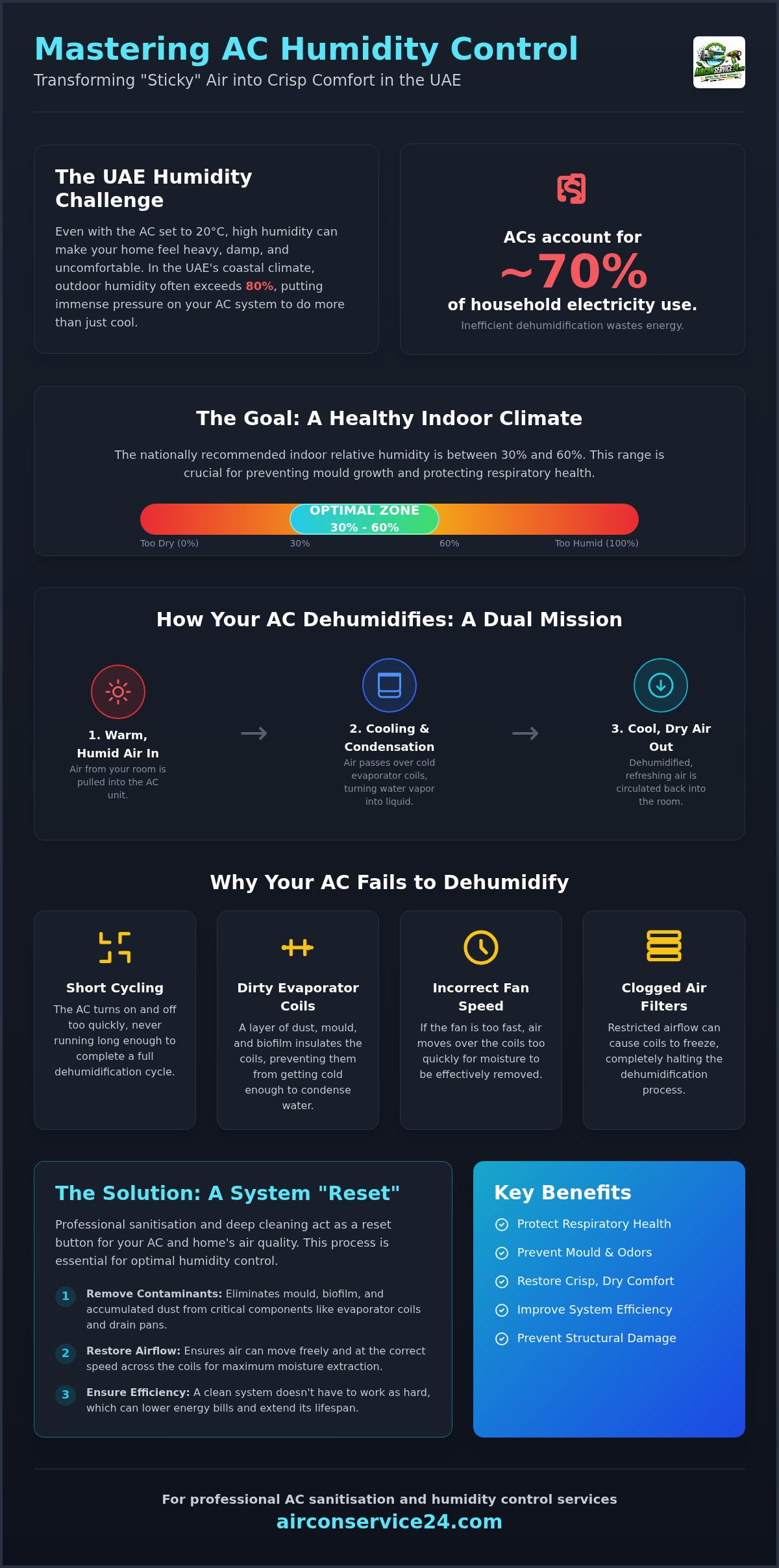
Living in Dubai means coexisting with a maritime climate that frequently pushes outdoor humidity levels above 80% during the peak summer months. While the heat is the most obvious factor, the invisible moisture load represents the true challenge for indoor comfort and structural integrity. Standard air conditioning units are often engineered for temperature reduction as a primary function; however, in this region, they must work twice as hard to manage latent heat, which is the energy held in water vapor. Effective ac humidity control dubai isn’t just a matter of comfort. It’s a technical necessity to prevent your living space from becoming a breeding ground for dust mites and mould spores.
When indoor moisture isn’t managed, the health implications are immediate and cumulative. High humidity levels facilitate the growth of allergens that can trigger asthma and other respiratory conditions. To ensure a healthy environment, maintaining a relative humidity level between 40% and 60% is considered the national gold standard. This range is high enough to prevent skin and throat irritation but low enough to inhibit the biological growth that thrives in damp conditions. Achieving this balance requires a system that is both mechanically sound and hygienically clean.
Understanding Relative vs. Absolute Humidity
Many residents believe that dropping the thermostat to a very low setting will solve the “sticky” feeling in the air. In reality, cooling the air without effectively removing the water vapor actually increases the relative humidity. This occurs because colder air has a lower capacity to hold moisture than warm air. If your system doesn’t actively extract water, you reach the dew point faster, causing condensation to form on vents, ceilings, and walls. Relative Humidity is the amount of water vapor present in the air expressed as a percentage of the amount needed for saturation at the same temperature. Understanding How Air Conditioners Control Humidity is essential for anyone living in a high-moisture zone, as it highlights the need for the system to run long enough to complete a full dehumidification cycle.
The Impact of Coastal Air on National Properties
Proximity to the Arabian Gulf accelerates moisture ingress through a process known as vapor pressure, where humid outdoor air naturally moves toward the drier, cooler air inside your home. In Dubai’s coastal communities, the building envelope acts as the first line of defense. Common architectural weak points, such as poorly sealed window frames, degraded balcony door gaskets, and uninsulated ceiling voids, allow humid air to seep into the structure. This constant infiltration places an immense load on your AC equipment, often leading to premature wear and higher energy costs. Achieving consistent ac humidity control dubai requires a combination of a sealed home environment and a perfectly calibrated cooling system that can handle the relentless coastal moisture.
How AC Systems Execute Dehumidification
Your air conditioner is a dual-purpose engine designed to manage both sensible heat (temperature) and latent heat (moisture). In the context of ac humidity control dubai, the cooling process is inseparable from dehumidification. As warm, humid air from your living room is pulled into the unit, it passes over a set of cold evaporator coils. This encounter triggers a thermodynamic reaction where the air’s temperature drops rapidly, forcing water vapor to lose energy and transform into liquid droplets. It’s a technical reality that if your system only cools the air without removing water, the resulting environment will remain heavy and uncomfortable.
The efficiency of this cycle depends entirely on the condition of your AC equipment. Airflow volume serves as the silent partner in this process. If the fan speed is calibrated too high, the air moves across the coils too quickly for condensation to occur. Conversely, restricted airflow due to clogged filters can cause the coils to drop below freezing, halting the dehumidification process entirely. The EPA Guide to Indoor Air Quality highlights that maintaining this mechanical balance is the first step in defending your home against biological contaminants.
The Role of the Evaporator Coil
The evaporator coil must maintain a temperature consistently below the “dew point” of the incoming air to successfully pull water from the atmosphere. This creates the “wet coil” phenomenon, which is actually a sign of a healthy, functioning system. As moisture clings to the coil, it also traps fine dust particles, essentially washing the air before it’s recirculated. The relationship between refrigerant pressure and moisture extraction is absolute; lower suction pressure results in a colder coil surface, which increases the moisture removal capacity up to the point of coil icing. If you notice your home feels damp despite the AC running, a professional AC inspection can determine if your refrigerant levels are correctly balanced for Dubai’s specific humidity loads.
Condensate Management and Drainage
Once moisture is extracted, it must be safely removed from the building. The journey of water follows a specific path:
- Collection: Droplets drip from the evaporator coils into a primary condensate tray.
- Transport: The water flows through a drainage line, often assisted by a condensate pump in high-rise apartments where gravity alone is insufficient.
- Discharge: The fluid is expelled into the building’s main drainage system or an external drain point.
In Dubai’s high-density residential towers, drainage efficiency is directly linked to indoor air quality. A blockage in this system doesn’t just cause leaks; it creates a reservoir of stagnant water that can lead to bacterial growth and musty odors. Ensuring these lines are clear is a non-negotiable part of effective ac humidity control dubai.
Troubleshooting Excess Moisture and Sticky Air
Troubleshooting a “sticky” home environment starts with understanding that cooling and dehumidifying are two separate mechanical outcomes. If your unit is oversized for the room, it may reach the target temperature in just a few minutes and shut off before the moisture is effectively extracted. This “short cycling” leaves water vapor suspended in the air, resulting in a cold but damp atmosphere. For effective ac humidity control dubai, your system requires longer, more consistent run times at a lower intensity to pull water from the air. A unit that cycles on and off too rapidly never gives the evaporator coil enough time to complete the condensation process.
A common culprit behind poor moisture removal is the “dirty coil” barrier. Over time, fine desert dust and grime accumulate on the evaporator fins, creating a thick insulating layer. This prevents the warm indoor air from making direct contact with the cold metal, which is the physical requirement for condensation to occur. Similarly, low refrigerant levels can mean the coil never reaches the dew point, even if the air blowing out still feels somewhat cool. Ignoring these early warning signs leads to catastrophic system failure and potential mould infestation. This is why following a rigorous schedule for preventive AC maintenance UAE is vital for long-term comfort and equipment longevity.
The Hidden Threat of Biofilm and Sludge
Inside the dark, damp environment of your AC unit, a complex layer of bacteria known as biofilm can form. This biological “sludge” often clogs the primary drain line, causing water to back up into the collection tray. This stagnant water increases local humidity levels within the ductwork and is the primary source of the musty “AC smell” that plagues many Dubai apartments. Adhering to ASHRAE Ventilation and Air Quality Standards ensures your system is not just moving air, but maintaining a hygienic environment that resists these biological loads. This level of ac humidity control dubai requires a disciplined approach to internal cleanliness.
Thermostat and Sensor Calibration Errors
Sometimes the issue is digital rather than mechanical. Faulty humidity sensors can provide inaccurate data to the system, causing it to cycle off prematurely while the air is still heavy. You can improve performance by checking your fan settings; keeping the fan on “Auto” ensures that when the compressor stops, the fan also stops. This prevents moisture sitting on the wet coils from being evaporated back into the room. Modern smart thermostats can also be programmed to prioritize dehumidification, running the system specifically to manage moisture levels regardless of the temperature reading.
Maintenance Protocols for Optimal Humidity Control
Maintaining a dry indoor environment in the UAE requires a methodical approach that goes beyond simple temperature adjustments. Routine care is the primary defense against the relentless moisture of the coastal climate. By adopting a disciplined maintenance schedule, you can ensure your system operates at peak efficiency, which typically reduces electricity consumption by 20% to 30%. Consistent ac humidity control dubai depends on the integrity of your system’s components, starting with the filtration quality and ending with the precise calibration of cooling cycles.
High-MERV filters play a critical role in this process by capturing fine, moisture-laden particles that standard filters might miss. These particles often act as the “seeds” for mould growth when they settle on damp internal surfaces. For national homeowners, the most important date on the calendar is the pre-summer peak service, ideally scheduled between February and April. This proactive inspection ensures that your coils, sensors, and drainage lines are fully prepared for the extreme latent heat loads of July and August. If you encounter sudden visible mould or a complete failure in moisture extraction, you should contact a specialist for 24/7 emergency AC repair to protect your home’s hygiene and structural integrity.
Essential Filter and Vent Care
Cleaning your filters is a simple yet powerful way to maintain the airflow required for moisture removal. Follow these steps to ensure thorough care:
- Remove and Vacuum: Carefully slide out the filter and use a soft brush attachment to remove surface dust.
- Wash: Rinse with lukewarm water; avoid harsh chemicals that can degrade the delicate mesh.
- Dry Completely: Ensure the filter is bone-dry before reinsertion to prevent immediate bacterial growth.
During UAE sandstorm seasons, you must check your filters at least once a week to prevent dust accumulation from choking the system’s ability to dehumidify. Additionally, verify that supply and return vents are free from obstructions like heavy curtains or furniture, which can disrupt the balanced airflow required for effective ac humidity control dubai.
Optimising Fan and Cooling Cycles
The settings on your thermostat dictate how effectively your system handles water vapor. Using the “Auto” fan setting is superior for moisture removal because it stops the fan as soon as the cooling cycle ends, preventing moisture on the wet coil from being blown back into the room. Many modern units also feature a “Dry Mode,” which runs the compressor at a lower speed while maintaining a cold coil surface to maximize condensation without over-cooling the space. To avoid the risk of coil freezing and subsequent water leaks, set realistic temperature targets between 22°C and 24°C. If your system still feels sluggish or the air remains heavy, a professional maintenance check can recalibrate your sensors for optimal performance.
Sanitisation represents the final, critical step in mastering ac humidity control dubai. While mechanical repairs address how the system runs, deep cleaning addresses the environment in which it operates. AirConService24.com treats a comprehensive sanitisation as a “reset button” for your property’s indoor air quality. By removing the accumulated layers of dust and biological growth from internal components, we restore the system’s native ability to manage moisture. This process ensures that the air circulating through your home is not only cool but also hygienically safe and crisp.
Our technicians follow a rigorous protocol that utilizes professional-grade biocides. These agents are specifically formulated to eliminate microscopic spores and stubborn biofilm without compromising the air you breathe. When the evaporator coil is coated in grime, it loses its ability to transfer heat effectively, which forces the compressor to run longer and harder. By stripping away these contaminants, we restore the heat-exchange efficiency of the coil, allowing it to reach the dew point faster and extract moisture more aggressively. This methodical approach transforms your AC from a potential source of pollution into a disciplined guardian of your home environment.
Specialized Odour and Mould Removal
Many residents struggle with “Dirty Sock Syndrome,” a pungent, musty smell that signals significant bacterial colonies within the unit. Addressing this requires more than a simple surface wipe of the vents. Professional deep-tissue AC cleaning involves disassembling key components to reach the dark, damp recesses where mould and biofilm thrive. It’s a health necessity, not just a cosmetic fix. Eliminating these biological loads is the only way to stop the cycle of recycled spores that can cause persistent respiratory irritation and domestic discomfort.
Ensuring Long-Term System Efficiency
A clean system is an efficient system. When your AC is free from internal obstructions, the workload on the compressor drops significantly, which directly results in lower monthly utility bills and a longer lifespan for your AC equipment. Our service provides the AirConService24.com guarantee of professional reassurance that every part of your system, from the drip tray to the fan blades, has been methodically inspected and restored to a factory-clean standard. We prioritize transparency and integrity, ensuring you understand the exact state of your home’s air quality after every visit.
Don’t let sticky air and musty smells compromise your domestic harmony. Take control of your indoor environment with a specialized service designed for the unique challenges of the UAE climate. Book a professional humidity assessment and deep clean today to ensure your home remains a dry, healthy sanctuary all year round.
Secure Your Home’s Air Quality Today
Mastering your indoor climate requires a shift from simple cooling to comprehensive moisture management. We’ve explored how a clean evaporator coil and balanced refrigerant levels are the true engines of dehumidification. By maintaining your system and ensuring internal hygiene, you eliminate the threat of mould and the “sticky” discomfort that plagues many national properties. Professional ac humidity control dubai is an investment in your family’s health and your home’s longevity.
Our team operates as licensed building maintenance specialists, providing elite sanitisation and specialized odour removal across the UAE. We remain ready to act with a 24/7 emergency response for any cooling or moisture crisis you encounter. Don’t let poor air quality compromise your domestic harmony or well-being. Restore your comfort with professional AC deep cleaning and humidity control. You deserve a home that feels as crisp and refreshing as it looks.
Frequently Asked Questions
Why does my AC run but the house still feels humid?
This usually happens because the system is short cycling or has low refrigerant levels. If the unit is too powerful for the space, it reaches the target temperature quickly and shuts off before it can extract enough water vapor. For effective ac humidity control dubai, the compressor needs to run for extended periods to ensure the evaporator coil pulls moisture from the air. A system that stops too soon leaves the air feeling “sticky” and heavy.
What is the ideal indoor humidity level for UAE homes?
The national gold standard for indoor comfort is a relative humidity level between 40% and 60%. This range is high enough to prevent skin irritation and low enough to inhibit the growth of mould and dust mites. Maintaining this balance is essential for both your health and the structural integrity of your property. Levels consistently above 60% lead to musty odors and potential biological infestations within your ductwork.
Can a dirty AC filter cause high humidity levels?
Yes, a clogged filter restricts the volume of air passing over the evaporator coils. When airflow is limited, the heat exchange process becomes inefficient; the system may even experience coil freezing, which halts all moisture extraction. Regular filter cleaning is a simple but vital step in ensuring your system has the necessary breath to perform its dual role of cooling and dehumidifying effectively. Don’t let a layer of dust compromise your home’s hygiene.
Does “Dry Mode” on my AC actually save energy?
Dry Mode can save energy when the outdoor humidity is high but the temperature is moderate. In this setting, the fan runs at a lower speed while the compressor works to maximize condensation on the coils. This allows the system to lower the humidity without constantly cycling the compressor at high power for cooling. It’s a precise way to maintain comfort without the high utility costs of standard cooling cycles during humid months.
How often should I deep clean my AC for humidity control?
You should schedule a professional deep clean at least once a year, ideally during the pre-summer peak between February and April. In the harsh UAE climate, bi-annual servicing is even better for homes near the coast. Regular sanitisation removes the biofilm and dust that insulate the coils, ensuring your system maintains the high heat-exchange efficiency required for consistent ac humidity control dubai. Proactive care prevents the accumulation of moisture-trapping contaminants.
What causes the musty smell coming from my AC vents?
Musty odors are typically caused by biological growth, such as mould or biofilm, inside the dark and damp sections of your unit. When moisture isn’t drained correctly, stagnant water in the tray becomes a breeding ground for bacteria. This “Dirty Sock Syndrome” isn’t just a cosmetic issue; it’s a sign that your system is recirculating contaminants. Professional sanitisation is required to eliminate these colonies and restore a fresh, neutral scent to your home.
Is high indoor humidity dangerous for my health?
Prolonged exposure to high humidity is a significant health risk. Excess moisture promotes the proliferation of dust mites and mould spores, which are major triggers for asthma and allergic rhinitis. Beyond respiratory issues, damp environments can lead to fatigue and sleep disruption because the body cannot effectively cool itself through sweat. Maintaining a dry indoor environment is a fundamental requirement for a healthy lifestyle and long-term domestic harmony.
Can an oversized AC unit actually make my home more humid?
An oversized unit is a common cause of high indoor humidity. Because the unit is too powerful, it cools the room to the set temperature almost instantly and then shuts down. This prevents the system from running a full dehumidification cycle, which requires time. For proper moisture removal, you need a correctly sized system that runs longer at a steady pace to wring the water out of the air before the compressor cycles off.