Why Your AC Smells Like Vinegar: Causes, Risks, and Solutions

Article by
Jon Bonnett
Australian Air Conditioning Specialist with extensive hands-on experience in AC servicing, deep cleaning, maintenance, and troubleshooting. Focused on high-quality workmanship, reliability, and professional service to UAE standards.
That sharp, pungent scent wafting through your living room isn’t just a minor annoyance; it’s a chemical warning sign that your indoor air quality is under immediate threat. You expect your air conditioning to provide a sanctuary from the intense UAE heat, yet when your ac smells like vinegar, it transforms your home into an uncomfortable environment. This sour odor often triggers immediate concerns about mold growth and the potential for expensive mechanical failures. We understand that your priority is the health of your family and the long-term efficiency of your cooling system.
In this guide, you’ll discover the exact reasons behind that biting vinegar scent and learn how to eliminate it permanently for a fresh, healthy home environment. We’ll identify the source of the problem, from clogged condensate lines to dirty evaporator coils, while providing clear solutions to ensure your system is thoroughly sanitised. By following our methodical approach, you can move from uncertainty to a state of domestic harmony with a system that operates at peak precision. We’ll explore the technical causes and the professional-grade steps needed to reclaim your air quality today.
Key Takeaways
- Identify why your ac smells like vinegar by understanding the chemical reaction between moisture, accumulated dust, and organic breakdown within your cooling system.
- Learn how to pinpoint the odor’s source by monitoring whether the scent remains constant or triggers only when the compressor activates.
- Discover the necessity of professional deep sanitisation using hospital-grade disinfectants to eliminate biological matter that basic cleaning cannot reach.
- Understand how to differentiate between localized issues and property-wide contamination to determine the scale of the required technical intervention.
- Establish a disciplined maintenance routine to prevent the recurrence of acidic odors and protect the health and well-being of your home environment.
Understanding the ‘Vinegar Smell’ in Your Air Conditioning System
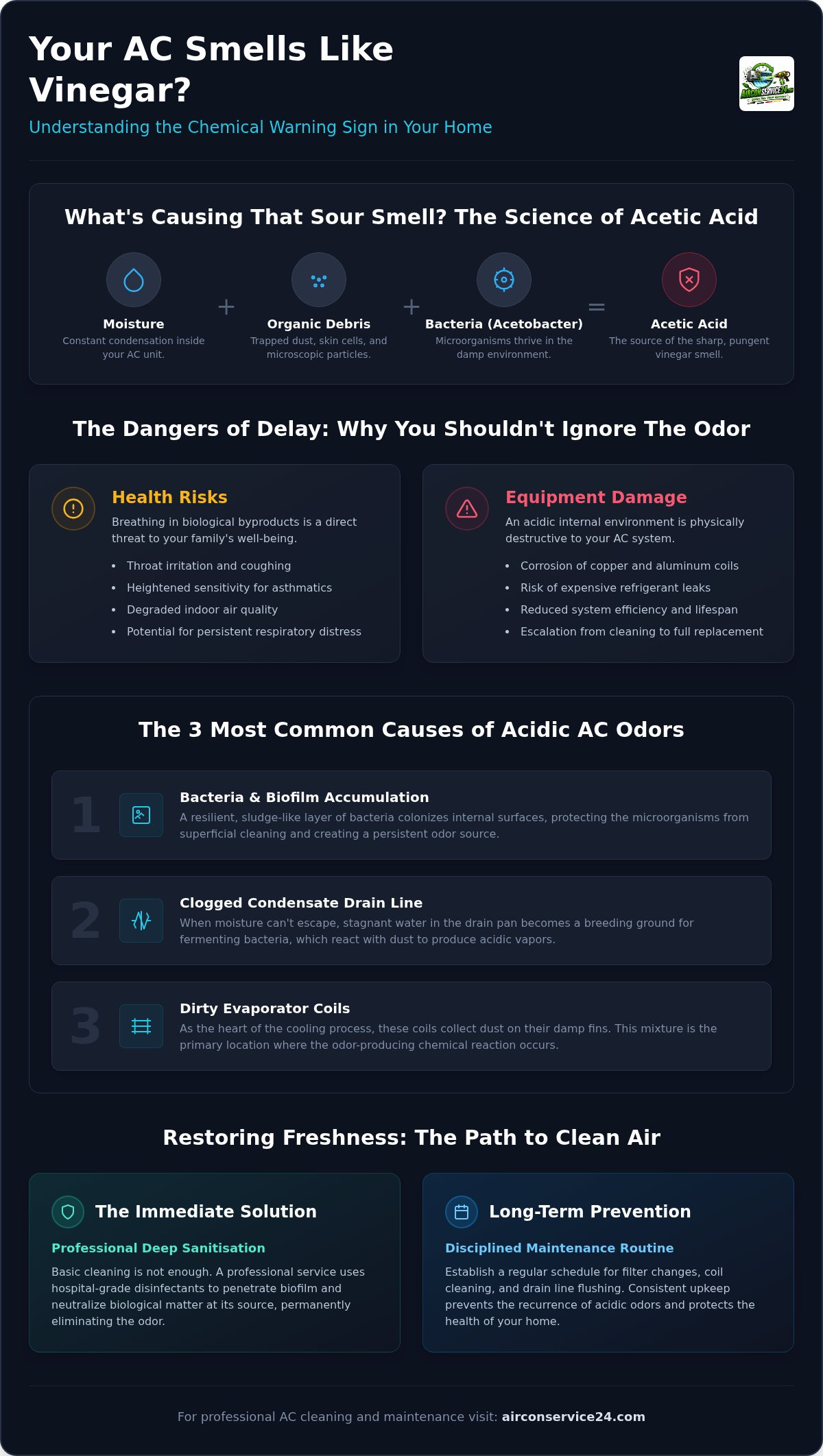
The sharp, acidic aroma of vinegar is unmistakable. When your ac smells like vinegar, it’s a signal that a specific chemical reaction is occurring within your HVAC unit. This isn’t a mere aesthetic issue; it’s the result of acetic acid formation. This occurs when organic matter, such as skin cells or microscopic dust particles, becomes trapped in the moist environment of your evaporator coils and begins to break down. This sharp odor indicates that organic matter is reacting with moisture in a way that suggests your system’s hygiene has been compromised.
The Chemical Signature of Acetic Acid
In the high-humidity environment of the UAE, condensation is constant. When this moisture mixes with accumulated debris, it creates a biochemical soup. Specific bacteria, most notably Acetobacter, thrive in these conditions. These microorganisms convert ethanol or other organic compounds into acetic acid through a fermentation-like process. This reaction is distinct from the damp, earthy scent of typical mildew, often referred to as “dirty sock syndrome.” While mildew smells musty, the presence of acetic acid creates a biting, pungent odor that cuts through the air. It serves as a precursor to more severe biological growth if you leave it unaddressed.
Why Ignoring the Scent is a Risk
Ignoring this scent is a gamble with your health and your assets. Understanding Indoor Air Quality is essential for any property owner, as the presence of acetic acid byproducts can lead to throat irritation, coughing, and heightened sensitivity for asthmatic residents. Breathing in concentrated biological byproducts isn’t just unpleasant; it’s a direct threat to your domestic harmony. If you don’t act, the ac smells like vinegar today but could lead to persistent respiratory distress tomorrow.
Beyond the human cost, an acidic environment is physically destructive. Constant exposure to low-pH vapors can lead to the premature corrosion of sensitive internal equipment, specifically the copper tubing and aluminum fins of your coils. This corrosion can eventually cause refrigerant leaks, which are far more expensive to repair than a standard cleaning. Delaying a professional inspection doesn’t just prolong the discomfort; it escalates the risk. What starts as a localized bacterial colony can quickly evolve into widespread contamination throughout your property. Acting now ensures that a routine sanitisation procedure doesn’t turn into a full-scale system replacement.
The 4 Most Common Causes of an Acidic AC Odor
While many online resources focus on automotive cooling, residential HVAC systems in the UAE face a unique set of challenges due to near-constant operation and extreme humidity. When your ac smells like vinegar, it’s rarely a simple mechanical failure. Instead, it’s typically the result of biological or chemical processes occurring deep within your unit’s internal components. Identifying the specific trigger is the first step toward restoring a fresh, healthy home environment.
Bacteria and Biofilm Accumulation
Biological growth is the primary culprit behind sharp, vinegary scents. In the damp interior of an air handler, bacteria don’t just float; they colonize. They create what specialists call biofilm, a resilient, sludge-like layer that adheres to internal surfaces. Biofilm is sophisticated. It acts as a protective shield for the bacteria, making them resistant to superficial cleaning sprays. This biological matrix allows colonies to thrive even when you think the system is clean. Eliminating this requires professional sanitisation to penetrate these layers and neutralize the odor at its source.
Clogged Condensate Drain Lines
Your AC doesn’t just cool the air; it removes massive amounts of moisture. This water is supposed to exit through a dedicated drain line. However, dust and organic debris often create blockages in the primary or secondary drain pans. When water stagnates in the high-humidity UAE climate, it quickly becomes a breeding ground for fermenting bacteria. This standing water reacts with the dust to produce acidic vapors. If you notice water spots near your unit or a sudden spike in indoor humidity alongside the scent, a clogged drain is likely the cause.
Dirty Evaporator Coils and Dust Build-up
The evaporator coil is the heart of your cooling process and the most common place for odors to originate. As air passes over the cold coils, moisture condenses on the metal fins. If your filters aren’t capturing every particle, dust accumulates on these damp surfaces. This dust acts as a concentrated food source for microorganisms. You can find several Common causes for a vinegar smell, but the interaction between organic dust and coil moisture is the most persistent in residential settings. Simple filter changes are often insufficient once the equipment itself is contaminated; the coils require a deep technical cleaning to remove the embedded matter.
Finally, it’s worth considering your air purification settings. Some electronic air cleaners produce trace amounts of ozone during the filtration process. In confined spaces, concentrated ozone can mimic a sharp, acidic scent that many homeowners confuse with vinegar. If your ac smells like vinegar only when specific purification modes are active, the issue might be electronic rather than biological. For a definitive diagnosis and a permanent fix, scheduling a professional odour removal assessment is the most methodical way to protect your home’s air quality.
Diagnosing the Source: Where Is the Smell Coming From?
Pinpointing the origin of an acidic odor requires a methodical approach to your cooling system’s operation. Start by observing the timing of the scent. If your ac smells like vinegar only when the compressor kicks in, the issue is likely concentrated on the evaporator coils where active condensation occurs. Conversely, a constant odor suggests a deeper contamination within the ductwork or a stagnant drain line that isn’t clearing properly. You should also evaluate whether the scent is localized to a single room or present throughout the entire property. Localized smells often point to a specific indoor unit’s failure, while a building-wide aroma indicates a systemic maintenance deficit.
Perform a quick walk-around of your indoor unit. Look for visible moisture on the casing or small pools of water on the floor. In the high-demand environment of the UAE, even a minor leak can lead to rapid bacterial fermentation. A visual inspection of your air filters is your next step. If you notice heavy dust saturation or dampness, the filters are no longer protecting the internal components from organic debris.
Inspecting the Filter and Vents
Safely remove your filters and hold them up to a bright light. You’re looking for more than just dust; check for grey or black spotting, which are clear indicators of microbial activity. These spots often correlate with the health risks of mold exposure, making immediate replacement or sanitisation a priority. Next, examine your vent covers. Look for “ghosting,” which appears as dark dust streaks or smudges around the louvers. This suggests that the contamination isn’t just on the surface but is being pushed through the system from the internal equipment.
Checking the Drain Pan for Standing Water
The condensate pan is a common site for “sludge” or biofilm to accumulate. Locate the pan beneath your indoor coils and check for discoloured, stagnant water. If the vinegar scent is significantly more concentrated at this drainage point, you’ve found your primary source. The water should be clear and moving freely. If it looks milky or gelatinous, a blockage is present. Don’t attempt to pour harsh DIY chemicals or bleach down the drain. These substances can react poorly with the plastic components or copper piping, leading to brittle lines and future leaks. A disciplined guardian of the home environment knows that while a visual check is helpful, professional-grade intervention is required to safely clear these blockages without damaging the system.
Professional Remediation and Prevention Strategies
When your ac smells like vinegar, surface-level sprays and household cleaners won’t solve the underlying biochemical issue. You need a methodical, high-stakes response to ensure the safety of your home environment. Professional intervention moves beyond masking scents; it targets the molecular structures of acetic acid and the biological colonies producing them. Our approach as a disciplined guardian of your indoor air quality is to eliminate the threat through advanced technical procedures that standard cleaning simply cannot match.
The Role of Deep Cleaning and Sanitisation
Deep cleaning is a comprehensive technical process that involves the total removal of biological matter from evaporator coils and blower fans. We utilize specialized pressure washing techniques to dislodge the resilient biofilm layers that protect bacteria from common cleaning agents. This is followed by professional sanitisation using hospital-grade disinfectants. These biocides are specifically formulated to kill microorganisms at the source while remaining safe for residential air circulation. Technicians also clear the entire condensate system to ensure zero standing water, effectively removing the environment required for acidic reactions to occur.
UV Light and Advanced Odour Removal
For properties facing persistent issues, installing UV-C lamps within the air handler is a proactive solution. These lamps provide continuous sterilization, breaking down the DNA of mold and bacteria before they can colonize your internal components. Additionally, specialized carbon filtration can be integrated to neutralize persistent chemical odors and volatile organic compounds. This multi-layered approach ensures your indoor air remains pristine regardless of the intense external humidity found across the UAE.
Long-term success requires precise system calibration. By ensuring your AC is correctly removing humidity, you prevent the moist conditions that lead to fermentation. This proactive strategy is a core component of AC maintenance in the UAE, where the climate is particularly aggressive. A disciplined specialist doesn’t wait for a crisis to act; they establish a routine that prioritizes hygiene and mechanical integrity. System calibration ensures that your unit operates with the precision needed to keep your home fresh and your family safe.
If you’re currently dealing with a sharp, acidic scent, don’t delay the necessary technical intervention. Contact our experts for professional odour removal and sanitisation to restore your home’s air quality immediately.
Restoring Freshness with Expert AC Maintenance
A pristine cooling system is more than a mechanical requirement; it’s the foundation of domestic harmony and a comfortable lifestyle. When your ac smells like vinegar, the atmosphere of your home is compromised, creating a high-stakes situation that demands an authoritative response. Our professional technicians approach these issues with a methodical, calm demeanor, ensuring that your sanctuary is restored quickly and effectively. We prioritize transparency, providing you with a clear understanding of the technical root cause and the specific steps required to eliminate it permanently. This directness eliminates customer anxiety, replacing worry with the confidence that your home is in expert hands.
Immediate action is essential. If you delay, contaminants and biological byproducts can migrate through the ductwork, leading to widespread air quality issues. By acting decisively, you protect both your health and your mechanical equipment. A system that is left to circulate acidic vapors will eventually suffer from internal degradation, turning a simple sanitisation task into a complex repair project.
Why Professional Sanitisation Outperforms DIY
Many homeowners attempt to solve the issue using household vinegar or bleach. This is a mistake. Introducing acidic or corrosive household chemicals into your unit can damage sensitive aluminum fins and copper tubing, leading to brittle components and refrigerant leaks. These DIY methods often fail because they only treat the surface. Professional sanitisation utilizes specialized tools designed to reach deep into the plenum and blower housing, where biofilm often hides. We use industry-specific biocides that achieve total odour elimination while preserving the integrity of your system’s internal components. This thoroughness ensures that even if your ac smells like vinegar today, the scent won’t simply return after the first few hours of operation.
Establishing a Preventive Maintenance Routine
The UAE’s high-dust and high-heat environment places extreme stress on HVAC systems. In these conditions, quarterly inspections aren’t a luxury; they’re a necessity for maintaining environmental hygiene. Regular technical intervention prevents the accumulation of the organic matter that causes your system to fail. Securing a reliable AC repair service gives you the peace of mind that your home environment is being monitored by a disciplined guardian. This proactive strategy doesn’t just keep the air fresh; it significantly extends the lifespan of your cooling investment, saving you from the high costs of premature system replacement. Professional maintenance ensures your unit remains a reliable responder against the heat, operating with the precision and excellence you expect from a premium service.
Reclaim Your Pure Home Environment
When your ac smells like vinegar, it’s a signal that your indoor sanctuary has been compromised by biological growth and chemical reactions. We’ve explored how acetic acid forms from trapped organic matter and why ignoring this pungent warning sign risks both your respiratory health and the longevity of your cooling equipment. A disciplined approach to maintenance is the only way to ensure these contaminants don’t spread through your ductwork. You now understand that surface-level cleaning isn’t enough to penetrate resilient biofilms that protect bacteria from standard methods.
You deserve a living space defined by domestic harmony and fresh air. Our team provides 24/7 emergency response for urgent odour issues, utilizing specialized deep cleaning and sanitisation experts to deliver reliable cooling solutions across the UAE. We act as the proactive problem-solver your home needs to maintain modern standards of excellence and mechanical integrity. Restore fresh air to your home with professional AC sanitisation today. Take the first step toward a healthier, more comfortable environment and breathe easy once again.
Frequently Asked Questions
Is the vinegar smell from my AC dangerous to my health?
Breathing in these acidic vapors is a direct risk to your health, as the scent indicates active biological growth. These byproducts can cause respiratory irritation, coughing, and throat discomfort, particularly for residents with asthma or allergies. When your ac smells like vinegar, it’s a sign that your indoor air quality has fallen below safe standards. Immediate professional sanitisation is required to eliminate these airborne contaminants and restore a healthy home environment for your family.
Can I use an air freshener to get rid of the vinegar scent?
Air fresheners are ineffective because they only mask the symptoms without addressing the underlying biochemical reaction. Sprays add volatile organic compounds to your air, which can actually worsen the situation when mixed with existing pollutants. To permanently eliminate the scent, you need professional odour removal that neutralizes acetic acid molecules at the source. This methodical approach ensures the biological colonies causing the smell are completely eradicated rather than just temporarily hidden by artificial perfumes.
How long does a professional AC sanitisation take to remove odours?
A professional sanitisation procedure typically takes between 60 and 90 minutes per indoor unit. This timeframe allows our technicians to perform a methodical deep cleaning of the evaporator coils, blower housing, and condensate drain lines. The duration may vary based on the level of biological accumulation and the complexity of your specific system. We prioritize precision and thoroughness to ensure the sharp vinegar scent is removed completely, providing you with immediate and lasting relief.
Will a simple filter change stop the vinegar smell?
A filter change is rarely enough to stop an acidic odor once it has developed. While clean filters prevent new debris from entering, the vinegar scent usually originates from biofilm already established on the evaporator coils or in the drain pan. When your ac smells like vinegar, the contamination is already deep within the internal components. You need a technical intervention that includes deep cleaning and sanitisation to reach the areas where standard filters simply cannot help.
What happens if I ignore the acidic smell in my air conditioner?
Ignoring the scent leads to the premature corrosion of your unit’s internal copper and aluminum components. Over time, these acidic vapors cause microscopic pits in the coils, which eventually lead to expensive refrigerant leaks and total system failure. Beyond mechanical damage, the biological growth will continue to spread throughout your property’s ductwork. This escalates a simple cleaning task into a high-stakes crisis involving widespread contamination and significantly higher repair costs for your cooling system.
Can a clogged drain line really cause a vinegar odour?
A clogged drain line is a very common cause of this specific odor. When water stagnates in the drain pan due to a blockage, it mixes with accumulated organic dust and skin cells. In the high-humidity environment of the UAE, this mixture undergoes a fermentation-like process that produces acetic acid. This chemical reaction is what creates the sharp, vinegary scent. Clearing the blockage and sanitising the pan is the only way to stop this process effectively.
How often should I have my AC deep cleaned to prevent smells?
In the aggressive UAE climate, we recommend a professional deep cleaning every three to four months. The combination of high external temperatures and constant dust levels means that organic matter accumulates much faster than in other regions. Quarterly inspections allow a disciplined guardian to identify potential issues before they turn into pungent odors. Regular maintenance ensures your system operates at peak efficiency while maintaining the highest standards of hygiene and domestic harmony in your home.
Is the vinegar smell covered under a standard AC maintenance contract?
Standard maintenance contracts typically cover routine inspections and basic filter cleaning, but specialized odour removal often requires a separate, more intensive deep cleaning service. It’s important to review your specific agreement to understand the scope of work included. Our comprehensive maintenance plans are designed to be transparent, offering clear expectations for sanitisation and technical repairs. We focus on providing a proactive solution that keeps your cooling system operating reliably and without unpleasant scents.