Why Is My AC Leaking Water Inside? Causes, Risks, and Expert Solutions

Article by
Jon Bonnett
Australian Air Conditioning Specialist with extensive hands-on experience in AC servicing, deep cleaning, maintenance, and troubleshooting. Focused on high-quality workmanship, reliability, and professional service to UAE standards.
That steady drip pooling on your floor isn’t just a minor plumbing nuisance; it’s a critical warning that your home’s structural integrity and your family’s respiratory health are under immediate threat. You’ve likely spent the last hour wondering why is my ac leaking water inside while worrying about ruined floorboards or the looming cost of a major breakdown. It’s completely natural to feel anxious when your primary defense against the heat starts failing, especially when moisture begins to compromise your living space. We understand that you need more than a temporary fix; you need the peace of mind that comes from a permanent, hygienic solution.
This guide will help you decode the exact mechanical and environmental triggers behind this moisture, providing you with the professional steps needed to stop the damage and restore a dry, healthy environment. We’ll explore everything from clogged condensate lines to the high-stakes implications of the 2026 EPA refrigerant regulations that are currently reshaping the industry. By the end of this article, you’ll know exactly how to identify the source of the leak, assess the urgency of the repair, and ensure your indoor air quality remains uncompromised through precise maintenance and sanitisation.
Key Takeaways
- Understand the fundamental condensation process to identify why is my ac leaking water inside and differentiate between normal moisture extraction and a critical system failure.
- Recognise that standing water isn’t just a structural threat; it’s a breeding ground for biofilm and mould that compromises your home’s hygiene and air quality.
- Learn the critical first steps to take during a leak, including safe power-down procedures and air filter inspections, to prevent expensive mechanical damage.
- Discover how professional deep cleaning and sanitisation go beyond a simple fix to restore your system’s efficiency and eliminate persistent odours.
- Establish a proactive maintenance routine to safeguard your domestic harmony and avoid the high-stakes urgency of emergency system downtime.
Why Is Your AC Leaking Water Inside? Understanding the Condensation Process
Your air conditioner is effectively a high-performance dehumidifier. Every hour it operates, it extracts liters of moisture from your indoor environment. This process remains silent and invisible until the drainage path fails. When homeowners ask why is my ac leaking water inside, they’re usually witnessing a breakdown in the system’s ability to manage its own liquid byproduct. It is a transition from controlled cooling to an uncontrolled domestic hazard.
The Role of the Evaporator Coil
The evaporator coil serves as the primary site for heat exchange. As warm, humid air is pulled across these cold metal fins, the refrigerant inside absorbs the thermal energy. This sudden temperature drop forces the moisture in the air to reach its dew point. It transitions instantly from a gas to a liquid. A clean coil allows these droplets to sheet off and collect safely. However, if the coil is blanketed in dust or debris, the water can’t flow correctly. It gets trapped, freezes, or drips erratically onto the floor below. Maintaining a pristine coil is not just about efficiency; it is the first line of defense against indoor flooding.
The Path of Condensate Drainage
Once moisture leaves the coil, it enters a gravity-fed drainage network. It falls into a primary drip pan and travels through a PVC condensate line to an external exit. The precision of this system depends on two factors:
- Pitch and Gravity: The drain line must maintain a specific downward slope to ensure water never stagnates. A slight shift in the unit’s position can disrupt this flow.
- Unobstructed Flow: Even a minor buildup of dust can create a dam in high-volume systems.
In high-humidity environments across the UAE, a residential unit can generate massive amounts of water daily. This heavy volume is why a small clog causes a rapid overflow. Modern AC equipment often features safety float switches to mitigate this risk, but older systems rely entirely on an open path. If that path is compromised, the water has nowhere to go but into your home. When you see a puddle, the system is telling you that its internal plumbing has reached a breaking point. Solving why is my ac leaking water inside requires looking past the puddle and examining this entire mechanical journey.
The Top 5 Mechanical Failures Causing Indoor Water Pools
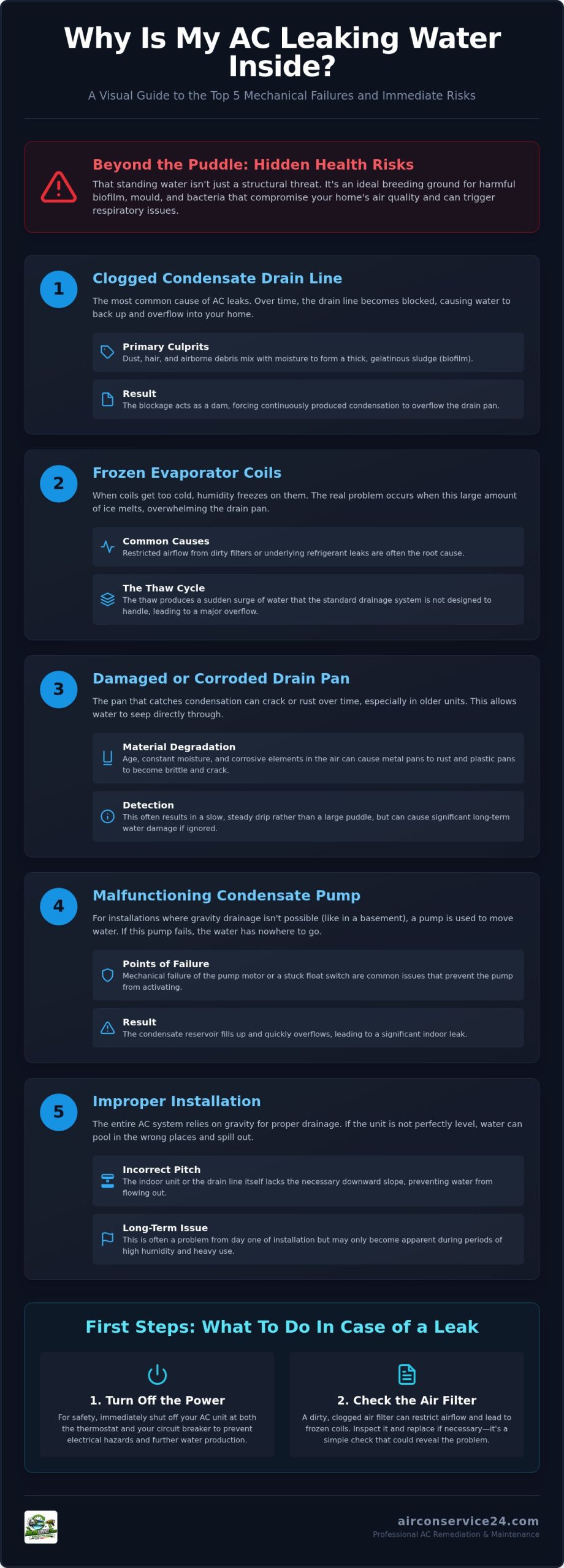
While the condensation process is a standard part of cooling, a mechanical failure turns this routine moisture into a domestic crisis. When you find yourself investigating why is my ac leaking water inside, the answer usually lies within one of five specific technical breakdowns. These failures range from simple hygiene issues to complex refrigerant imbalances that require immediate professional intervention. Identifying the root cause is essential to prevent permanent damage to your home’s infrastructure.
- Clogged condensate drain lines: The most frequent cause of indoor flooding.
- Damaged or corroded drain pans: Direct seepage through metal or plastic.
- Frozen evaporator coils: An overwhelming surge of water during the thaw cycle.
- Malfunctioning condensate pumps: Failure in units that cannot rely on gravity alone.
- Improper installation: Unlevelled units that disrupt the intended flow of water.
Clogs and Blockages in the Drain Line
Dust, hair, and environmental debris are the primary components of a waterproof plug. In the high-demand climate of the UAE, moisture combines with these particles to form a thick, gelatinous sludge known as biofilm. This organic growth thrives in the dark, damp environment of your PVC piping. Once a blockage forms, the water backs up instantly. Because many modern systems lack a safety shut-off, the unit continues to produce water, leading to a total overflow. This isn’t just a plumbing issue; it’s a sign that your system requires a professional AC repair to clear the line and sanitise the internal components.
Frozen Coils and the Thaw Cycle
A frozen coil is often a symptom of restricted airflow or a refrigerant leak. When the coil temperature drops below freezing, the moisture on the fins turns to ice rather than draining away. You might hear a distinct hissing or crackling sound as the ice expands. The real danger occurs during the thaw cycle. When the unit finally shuts down, the massive volume of ice melts rapidly, completely overwhelming the drain pan’s capacity. Unlike a slow drip, this creates an immediate indoor pool. Addressing this requires more than just melting the ice; it involves checking for the underlying refrigerant issues that are becoming more critical under the 2026 EPA regulations.
Drain Pan Integrity and Corrosion
Primary and secondary drain pans are designed to catch every drop of moisture. However, older metal pans are susceptible to rust, while modern plastic versions can develop hairline cracks under extreme heat over time. In ceiling-mounted units, even a microscopic leak in the pan leads to visible ceiling stains and potential structural collapse. If your pan is overflowing despite a clear drain line, the integrity of the pan itself is likely compromised. Ensuring your AC equipment is level and the pan is sound is a non-negotiable step in maintaining a dry, healthy home.
Beyond the Puddle: Hidden Health Risks of AC Water Leaks
The visual impact of water on your floor is alarming, but the biological activity happening inside your unit is far more hazardous. When you investigate why is my ac leaking water inside, you must look beyond the mechanical failure and consider the impact on your home’s environmental hygiene. Standing water within an AC system acts as a catalyst for rapid microbial growth, turning your cooling unit into a source of contamination rather than comfort. This moisture doesn’t just damage your property; it actively degrades the air your family breathes every minute the system is running.
Biofilm: The Silent Drain Blocker
Biofilm is a complex colony of bacteria and fungi that creates a protective, slimy matrix. It thrives in the dark, damp channels of your condensate system. This organic sludge doesn’t just block the pipe; it provides a persistent reservoir for pathogens that prevents the system from ever truly drying out. Because this matrix is resistant to standard detergents, it requires professional deep cleaning to physically break down the biological bonds. Without this intervention, the sludge continues to produce the volatile organic compounds that cause that distinct, sour smell in your home. It’s a cycle of contamination that only precision sanitisation can break.
Indoor Air Quality and Mould Proliferation
A leak creates a localized zone of 100% humidity inside the unit. This is the perfect environment for mould and mildew spores to germinate. Once established, these spores are picked up by the blower fan and distributed through your living spaces. This process presents several risks to your domestic harmony:
- Respiratory Irritation: Airborne spores can trigger allergies and asthma, especially in children and the elderly.
- Secondary Contamination: Moisture from the leak can seep into drywall and carpets, allowing mould to spread far beyond the AC unit.
- Persistent Odours: The musty scent associated with water damage is a direct result of active fungal growth.
Simply mopping the floor doesn’t eliminate the spores colonizing your unit’s internal components. True remediation requires specialized sanitisation to ensure the air you breathe is as clean as the surfaces you see. When you’re trying to figure out why is my ac leaking water inside, remember that the water you see is only half the problem. The invisible spores and bacteria represent the real threat to your family’s well-being. A methodical approach to odour removal and hygiene is the only way to restore your home to a safe, healthy state.
Methodical Troubleshooting: What to Check Before Calling a Specialist
When water begins to breach your home’s interior, your priority must shift from comfort to containment. Shut it down immediately. The first and most critical step is to power down the unit entirely at the thermostat. Continuing to run a leaking system risks saturating sensitive electrical components and worsening structural damage to your ceilings or floors. Once the system is inactive, you can begin a methodical assessment to determine why is my ac leaking water inside and whether the fix is a simple maintenance task or a high-stakes mechanical failure.
The Air Filter Check
A severely restricted air filter is the most common non-mechanical cause of water leaks. When airflow is blocked by accumulated debris, the evaporator coil cannot absorb enough heat from the room. This leads to a significant pressure drop, causing the coil temperature to plummet and freeze. As the unit cycles off, that ice melts rapidly and overwhelms the drainage system. Inspecting your AC filters should be your first diagnostic action. If the filter is caked in grey dust, replace it. Establishing a strict 30 to 60 day replacement schedule prevents the thermal imbalances that lead to these emergency situations.
When DIY Troubleshooting Ends
There is a narrow window where homeowner intervention is safe and effective. If the filter is clean and the unit continues to leak, you’ve reached the limit of amateur troubleshooting. Attempting to clear a drain line with harsh household chemicals like bleach is a dangerous mistake; these substances can corrode internal metal components and react with organic biofilm to create toxic fumes. If you notice water dripping near the electrical panel or hear a distinct buzzing sound, stop immediately. Water and high-voltage circuitry are a lethal combination that requires an expert’s precision.
Check your thermostat settings to ensure the system hasn’t been set to an impossibly low temperature, which can also trigger coil freezing. If the settings are correct and the filters are fresh, the issue likely involves an internal crack or a refrigerant leak regulated by the 2026 EPA standards. At this stage, the most responsible action for your home’s safety is to request professional AC repair. A certified specialist can perform a comprehensive diagnostic, ensuring that the root cause is eliminated without risking your system’s long-term viability or your personal safety.
Professional AC Remediation: Ensuring a Dry and Healthy Home
Professional remediation moves beyond a temporary mop-up to address the systemic failures that triggered the crisis. When our specialists evaluate why is my ac leaking water inside, we look for more than just a mechanical blockage. We view every leak as a breach of your home’s environmental hygiene. Our methodical recovery process is designed to eliminate the immediate flood while sterilizing the internal environment to prevent the recurrence of biological growth. It is a transition from emergency response to long-term stability.
Deep Cleaning and Sanitisation Protocols
A standard wipe-down is insufficient for a contaminated drainage system. We employ high-pressure flushing and precision vacuuming to clear the entire condensate path, ensuring that even the most stubborn biofilm is physically removed from the unit’s interior. This process is paired with hospital-grade disinfectants and specialized treatments for odour removal. By targeting the microscopic spores and bacteria established during the leak, we restore your indoor air quality to modern standards of excellence. This level of thoroughness is what separates a basic mechanical repair from a complete environmental remediation.
Long-Term Prevention Strategies
Preventing the next emergency requires a shift from reactive repairs to disciplined, proactive care. The most effective safeguard against recurring water damage is annual AC maintenance. This allows technicians to identify corroded pans or minor clogs before they manifest as indoor pools. During these visits, we also recommend the implementation of advanced safety hardware:
- Safety Float Switches: These devices act as a fail-safe, automatically cutting power to the unit if water levels in the drain pan rise too high.
- Drain Line Treatments: Professional-grade tablets that prevent the formation of organic sludge between service intervals.
- Precision Calibration: Ensuring the unit remains perfectly level to maintain the gravity-fed flow of condensate.
AirConService24.com operates as a 24/7 responder, committed to restoring domestic harmony in homes across the UAE. We understand that a functioning air conditioner is a necessity, not a luxury. Our technicians don’t just fix the immediate drip; they recalibrate your entire system for optimal performance and hygiene. By combining advanced methodology with a ready-to-act energy, we ensure your living space remains a sanctuary of cool, clean air. If you are still questioning why is my ac leaking water inside, it is time to transition from uncertainty to a professional solution that secures your home’s structural and respiratory health.
Restore Your Home’s Environmental Sanctuary
A puddle on your floor is a clear signal that your system’s internal balance has been compromised. Whether the cause is a simple filter blockage or a complex mechanical failure, understanding why is my ac leaking water inside is the first step toward reclaiming your domestic harmony. Leaving standing water unaddressed invites rapid biofilm growth and mould proliferation, turning a manageable repair into a significant health hazard for your family. You deserve a cooling system that operates with surgical precision and medical-grade hygiene.
Our expert technicians are available 24/7 to provide the specialized deep cleaning and sanitisation required to eliminate these risks permanently. As trusted UAE-wide cooling specialists, we don’t just stop the leak; we restore the air quality and structural integrity of your living space. Don’t let a technical failure disrupt your well-being. Request Urgent AC Repair and Sanitisation today to ensure your home remains a dry, healthy, and sophisticated environment. Your comfort and safety are our highest priorities.
Frequently Asked Questions
Can I still run my AC if it is leaking water inside?
You should stop operating your unit immediately if you notice water pooling indoors. Continuing to run a leaking system risks saturating sensitive internal electrical components, which can lead to short circuits or permanent motor failure. Beyond the mechanical risks, the moisture can quickly damage your drywall and flooring. Powering down the system at the thermostat is the most effective way to prevent a minor leak from escalating into a costly emergency restoration project.
Is a leaking air conditioner considered an emergency?
A leaking unit is a high-stakes emergency that requires a rapid response from a specialist. In the high-humidity environment of the UAE, standing water becomes a breeding ground for biofilm and mould within just a few hours. This compromises both your home’s structural integrity and your family’s respiratory health. Because a leak often indicates a complete failure of the drainage or cooling cycle, immediate professional intervention is necessary to restore domestic harmony and prevent system downtime.
How do I unblock my AC condensate drain line at home?
You can attempt to clear a minor blockage by using a wet/dry vacuum on the external condensate exit point to suction out debris. However, you must avoid using harsh household chemicals like bleach, as these substances can corrode metal components and react with organic sludge to create toxic fumes. If the suction doesn’t clear the line, the blockage is likely a dense biological matrix that requires professional high-pressure flushing and specialized sanitisation to remove safely.
Why is my AC leaking water even when it is turned off?
This phenomenon usually occurs because of a frozen evaporator coil that begins to melt once the system stops. When the unit is running, moisture turns to ice on the coil fins due to airflow or refrigerant issues. Once you turn the power off, the ice thaws rapidly, producing a volume of water that completely overwhelms the primary drain pan. This is a primary reason why is my ac leaking water inside even after you have finished cooling.
Will a dirty AC filter really cause a water leak?
A clogged air filter is the most frequent non-mechanical cause of indoor flooding. When airflow is restricted, the evaporator coil cannot absorb sufficient heat, causing its temperature to drop below freezing. The resulting ice buildup eventually melts and bypasses the drainage system entirely. Replacing your filters every 30 to 60 days is a critical preventive measure. If you’re wondering why is my ac leaking water inside, checking for a dirty filter should always be your first diagnostic action.
How can I tell if my AC leak is caused by low refrigerant?
Low refrigerant levels cause the pressure in the evaporator coil to drop, leading to ice formation and subsequent leaking during the thaw cycle. You can identify this by looking for ice on the copper lines or listening for a distinct hissing sound. Under the 2026 EPA regulations, handling these leaks requires certified technicians to ensure compliance with new environmental standards. If your unit is blowing warm air while leaking, a refrigerant imbalance is the likely culprit.
What is the musty smell coming from my leaking AC unit?
The sour or musty odour is a direct byproduct of active microbial growth within the standing water. Biofilm, which is a gelatinous colony of bacteria and fungi, thrives in the damp environment of a failed drainage system. This biological activity releases volatile organic compounds into your air supply. Eliminating this smell requires more than a mechanical fix; it necessitates specialized odour removal and professional sanitisation to physically remove the organic contaminants and restore a healthy environment.
Does professional AC cleaning prevent future water leaks?
Comprehensive professional cleaning is the most effective way to ensure long-term system stability. Unlike surface dusting, a deep clean involves high-pressure flushing of the condensate lines and the application of professional-grade disinfectants to the evaporator coils. This prevents the formation of the organic sludge that causes most clogs. Regular maintenance visits allow technicians to calibrate the system’s pitch and verify the integrity of the drain pans, stopping high-stakes crises before they begin.