AC Troubleshooting UAE: The Expert Guide to Cooling and Air Quality (2026)

Article by
Jon Bonnett
Australian Air Conditioning Specialist with extensive hands-on experience in AC servicing, deep cleaning, maintenance, and troubleshooting. Focused on high-quality workmanship, reliability, and professional service to UAE standards.
In the 50-degree peak of a UAE summer, your air conditioning system isn’t just a mechanical luxury; it’s the primary guardian of your family’s health and comfort. You’ve likely felt that immediate spike of anxiety when the vents begin blowing lukewarm air or a persistent, musty odor starts to compromise your indoor sanctuary. Navigating the complexities of ac troubleshooting uae requires more than just a quick fix. It demands a methodical approach to handle the extreme operational loads that residents face in 2026. Conflicting online advice often leads to more confusion, leaving homeowners worried about escalating repair costs while the indoor temperature continues to climb.
We’ve designed this expert guide to empower you with professional diagnostic steps that restore cooling immediately and eliminate the biological films causing those unpleasant smells. You’ll master how to identify common failures before they become expensive emergencies, ensuring your system operates with the precision required by the latest UAE Climate Decree standards. By following this structured path, you’ll achieve lower energy bills through peak efficiency and gain total peace of mind regarding your home’s air quality. From checking refrigerant levels to understanding advanced sanitisation needs, we’re providing the clarity you need to maintain a pristine, cool environment all year round.
Key Takeaways
- Understand how the extreme desert heat and abrasive dust force UAE systems to run at maximum capacity, making specialized maintenance a necessity rather than an option.
- Master the fundamental steps of ac troubleshooting uae to accurately identify whether your cooling failure stems from a simple filter clog or a more serious mechanical issue.
- Learn to eliminate persistent musty odors by targeting the biofilm and sludge that accumulate in drain pans, moving beyond temporary fragrance sprays toward deep sanitisation.
- Execute a structured homeowner diagnostic checklist to resolve minor thermostat and airflow issues immediately, potentially avoiding unnecessary service callout fees.
- Recognize how professional multi-point inspections and annual maintenance contracts can reduce energy consumption by 15% while significantly extending your system’s operational lifespan.
The UAE Environmental Load: Why AC Systems Fail
The UAE environment is a high-stress arena for mechanical systems. Between April and October, units often run at 100% capacity without a single hour of rest. This relentless operational load accelerates component wear and makes ac troubleshooting uae a frequent necessity for residents. Understanding the foundational HVAC system principles is the first step toward diagnosing why a unit that worked perfectly yesterday is struggling today. Mechanical fatigue isn’t just a possibility in this region; it’s a certainty for any system that lacks a proactive, disciplined health strategy.
The Impact of Dust and Sand
Fine desert dust is more than a nuisance. It’s an abrasive contaminant that settles deep within your system. These microscopic particles frequently bypass standard mesh filters to coat the evaporator coils and the external condenser unit. Once a layer of dust accumulates, it acts as a thermal insulator, preventing the critical heat exchange process that keeps your home cool. This restriction forces the compressor to work significantly harder to reach your thermostat’s target temperature. This extra strain directly leads to higher energy consumption and the premature failure of sensitive specialized AC equipment like fan motors and capacitors. Standard surface cleaning is usually insufficient for these specific environmental loads.
Humidity and Biological Growth
Humidity levels in the UAE fluctuate wildly, creating a constant cycle of heavy condensation within your unit’s dark interior. This damp environment is the ideal breeding ground for biological contaminants that thrive away from sunlight. When moisture traps airborne pollutants and dust, it results in the “dirty sock syndrome” that many homeowners find distressing. Biofilm is a resilient bacterial matrix that attaches to the drain pan and coils, requiring professional sanitisation to remove completely. Beyond the odor, these biological layers can eventually block the condensate drain lines, leading to water damage inside your property. Maintaining air quality is now a mandatory compliance requirement for many buildings under the UAE Climate Decree 2025, highlighting the shift toward health-focused maintenance.
The 5 Most Common AC Troubleshooting Scenarios
Most AC issues in the Emirates manifest as a sudden, unwelcome loss of comfort. Identifying the root cause requires a methodical look at the system’s behavior. Whether it’s a unit that’s running but failing to drop the temperature or a pool of water forming on your floor, the symptoms are clear indicators of internal distress. Effective ac troubleshooting uae starts with recognizing these five common failure modes:
- AC running but not cooling: This signals a conflict between airflow restrictions and refrigerant depletion.
- Water leaking from the indoor unit: A direct result of condensate line obstructions or sludge buildup.
- System tripping the circuit breaker: This indicates electrical overload or a failing capacitor struggling with the heat.
- Strange noises: Grinding or rattling sounds point to worn motor bearings or loose fan blades.
- Thermostat irregularities: These occur when the control system loses its calibration or power source.
Mechanical Failures and Electrical Stress
The capacitor is a small but vital component that provides the electrical surge needed to start the compressor. In the extreme UAE heat, these parts face immense stress. Identifying a failing capacitor early prevents it from damaging the expensive compressor. You should also watch for “short-cycling.” This is where the unit turns on and off too frequently. This behavior destroys system longevity and is a core focus of professional maintenance. Distinguishing between a minor sensor fault and a major mechanical breakdown is essential for maintaining your budget and ensuring your home remains a sanctuary.
Fluid Dynamics: Leaks and Refrigerant
Many residents assume a water leak is simply a plumbing problem. In reality, these leaks are frequently a symptom of poor sanitisation. When biofilm and sludge accumulate in the drain pan, they block the exit route for condensation. This buildup exposes your home to the dangers of mold and moisture. Regarding refrigerant, “topping up” is never a permanent solution. A system is a sealed loop. If gas is low, there’s a leak that requires professional repair. Look for ice buildup on the evaporator coils as a clear diagnostic indicator of low gas levels. If you notice these signs, it’s wise to have a specialist inspect your specialized AC equipment. Contact AirConService24 to restore your cooling and protect your indoor environment.
Beyond Mechanics: Troubleshooting Odours and Biofilm
When you detect an unpleasant scent coming from your vents, it’s a signal that your indoor environment is compromised. Many residents attempt to mask these smells with fragrance sprays, but this only hides a deeper issue. Odour removal is a specialized science that targets the root cause of the problem. In the context of ac troubleshooting uae, persistent smells often indicate a failure in air hygiene rather than a mechanical breakdown. Ignoring these signals can lead to respiratory irritation and a decrease in domestic harmony.
Identifying the Source of the Smell
The type of odour often provides a direct clue to the underlying problem. A “rotten egg” smell typically points to a dead pest within the ductwork or, more rarely, an electrical component that is overheating and melting its insulation. A sharp, vinegar-like scent usually suggests a chemical buildup on the evaporator coils or an issue with ozone production in certain air purifiers. Most commonly, homeowners report a heavy, musty smell that worsens when the unit starts up. It’s vital to understand that musty odours are the active release of microbial VOCs into your breathing air. These volatile organic compounds are the byproducts of active bacterial and fungal growth inside your system.
Biofilm, often described as a thick, jelly-like sludge, is the primary culprit behind these persistent musty smells. It forms in the drain pan where standing water mixes with dust and organic matter. Proper ventilation helps improve indoor air quality, yet it cannot eliminate a biological colony that has established itself within your AC housing. These colonies release spores and contaminants that circulate throughout your home every time the fan turns on, posing hidden health risks to vulnerable family members.
Professional Odour Elimination Strategies
Effective restoration requires a clear distinction between surface cleaning and deep sanitisation. While a standard cleaning might involve wiping down the visible parts of the unit, professional sanitisation uses specialized agents to break down complex biological matrices. This process must be thorough. It isn’t enough to treat the coils alone; the blower fan and the internal housing must be addressed to remove all traces of mould and bacteria. The AirConService24 sanitisation process is designed for high-stakes hygiene, ensuring that the system is not just clean to the eye, but biologically safe. By targeting the source of the biofilm, you restore the fresh, neutral air quality that is essential for a healthy UAE home.
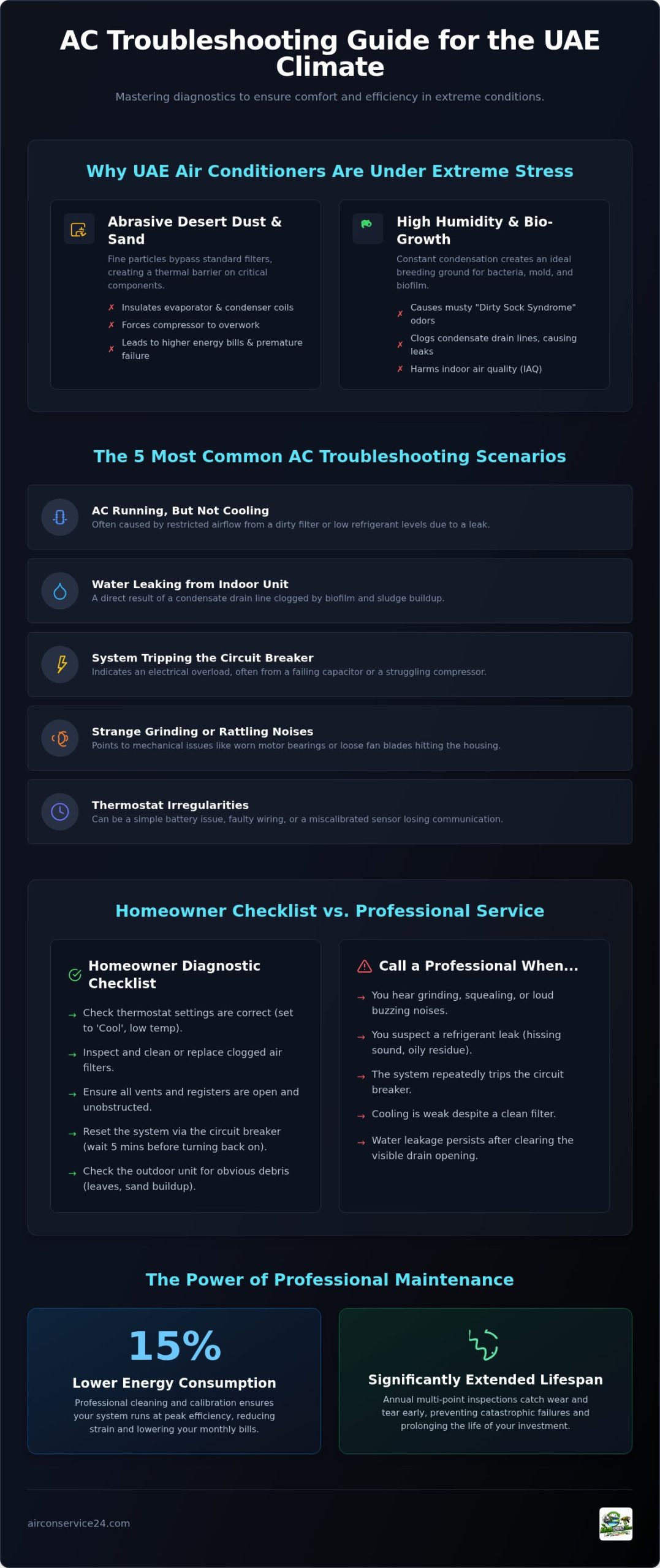
Homeowner Diagnostic Checklist: DIY vs. Professional
Before requesting an emergency responder, a systematic evaluation can often resolve minor performance dips. This structured approach to ac troubleshooting uae helps you identify simple fixes while ensuring you don’t overlook critical warning signs. Safety remains the priority; if a step feels beyond your technical comfort level, stop and seek assistance. Follow these five diagnostic steps to assess your system’s current health:
- Step 1: Verify the thermostat settings and battery power. A blank screen or incorrect mode selection is a frequent cause of “cooling failure.”
- Step 2: Inspect the air filters for visible dust saturation. In the desert climate, a clogged filter can choke airflow in as little as three weeks.
- Step 3: Ensure the outdoor condenser unit is clear of debris. It requires at least 50cm of clearance on all sides to reject heat effectively.
- Step 4: Check your main electrical panel for tripped breakers. A sudden surge during peak summer loads can often flip a switch.
- Step 5: Monitor the system for unusual vibrations or persistent odours. These are early indicators of mechanical fatigue or biological growth.
Safe DIY Interventions
Maintenance is a shared responsibility between the homeowner and the specialist. You can safely clean or replace your own filters every 30 days to maintain peak efficiency. This simple act prevents the evaporator coils from freezing and lowers your monthly energy consumption. Another effective check is the “hand test.” Place your hand above the outdoor unit’s fan; you should feel a steady stream of warm air. If the air is cool while the indoor unit is running, the compressor has likely failed to engage. For digital glitches, resetting your thermostat to factory defaults can often clear software errors that cause temperature fluctuations.
When to Call a Professional Responder
Precision and safety define the boundary for professional intervention. Any task involving high-voltage electrical components or the handling of refrigerant is strictly for certified technicians. Attempting to “top up” gas or bypass a capacitor can lead to expensive compressor damage or personal injury. You should also call for help if you notice persistent water leaks. These suggest an internal blockage or a cracked drain pan that requires dismantling the unit. If musty odours remain after you’ve cleaned the filters, the biofilm has likely migrated deep into the specialized AC equipment. This level of contamination requires professional-grade sanitisation to ensure your home meets the latest air quality standards. If your system fails these diagnostic steps, contact AirConService24 immediately to restore your cooling harmony.
Professional Restoration: The Path to Cooling Harmony
Restoring an air conditioning system to its factory performance requires more than just reactive repairs. It demands a methodical, multi-point inspection that addresses the cumulative stress of the UAE environment. While basic ac troubleshooting uae can resolve immediate symptoms, professional restoration identifies the underlying causes of inefficiency. By utilizing advanced diagnostics, such as pressure gauges and thermal imaging, specialists can locate hidden electrical faults or micro-leaks that standard checks often miss. This level of precision ensures your system doesn’t just run; it performs with the same reliability it had on day one.
Professional deep cleaning is a strategic investment that pays for itself. Industry data indicates that regular HVAC maintenance can reduce energy consumption by up to 15% and extend the system’s lifespan by several years. This efficiency is vital when units are under constant load. A clean, calibrated system draws less power and provides superior air quality, directly contributing to your family’s well-being and domestic harmony. Investing in professional care transforms your AC from a source of anxiety into a reliable guardian of your home environment.
Preventive Maintenance Strategies
We advocate for the “Disciplined Guardian” approach to home climate control. In the UAE, quarterly checks are vital to combat the rapid accumulation of desert dust and biological biofilm. A professional maintenance visit is comprehensive. It must always include a deep cleaning of the evaporator and condenser coils, a thorough flush of the condensate drains, and a precise calibration of all electrical components. For a complete reference on protecting your investment, consult our AC Maintenance UAE pillar. This proactive strategy prevents approximately 80% of the common failures that plague residential systems during the peak of summer.
Emergency Response and Reliability
Climate emergencies don’t follow a schedule. The peace of mind provided by 24/7 availability is essential when your cooling system fails during a heatwave. We prioritize transparency in every diagnostic report, ensuring you have clear expectations regarding the health of your system. There are no hidden costs or vague explanations. Our commitment to modern standards and environmentally responsible methods ensures that your home remains a pristine sanctuary. Don’t wait for a total system failure to address your comfort. Secure your home cooling today with AirConService24 and experience the standard of elite professional care.
Securing Your Indoor Sanctuary
Managing the extreme climate of the Emirates requires a disciplined strategy that looks beyond simple thermostat adjustments. You now understand that maintaining your home’s comfort involves addressing both mechanical stress and the biological contaminants that thrive in high humidity. By implementing a systematic approach to ac troubleshooting uae, you can identify early warning signs like decreased airflow or persistent musty smells before they escalate into costly emergencies. This proactive vigilance is the key to achieving lower energy bills and a significantly longer system lifespan.
Real domestic harmony is only possible when your air is as clean as it is cool. Our specialized odour removal experts and deep sanitisation protocols ensure your living space meets the highest modern hygiene standards while eliminating resilient biofilm colonies. We provide 24/7 emergency repair across the UAE to guarantee you’re never left without protection during a cooling crisis, remaining calm and methodical even in the highest temperatures. Restore your comfort now with professional AC troubleshooting and reclaim the pristine sanctuary your family deserves. Your home’s peak efficiency and health are well within reach.
Frequently Asked Questions
Why is my AC running but not blowing cold air?
This failure usually stems from a combination of restricted airflow and depleted refrigerant levels. When your filters are saturated with desert dust, the evaporator coils can’t absorb heat effectively; this often leads to them freezing solid. Additionally, the extreme outdoor temperatures force the compressor to work at maximum capacity. If there’s a leak in the system, it simply won’t reach the required pressure to drop the temperature efficiently.
How often should I clean my AC filters in the UAE?
You should clean or replace your AC filters every 30 days to maintain optimal performance. In the UAE’s high-dust environment, microscopic particles accumulate rapidly, choking the system’s ability to breathe. Neglecting this simple step leads to “short-cycling” and increased mechanical fatigue. Regular filter maintenance is a vital part of ac troubleshooting uae that prevents approximately 80% of common airflow issues before they require a professional responder.
Why does my AC smell like dirty socks or vinegar?
These odours are indicators of biological growth or chemical imbalances within the unit. The “dirty sock” smell is the active release of microbial VOCs from biofilm colonies established in your drain pan. Conversely, a vinegar scent often suggests a chemical buildup on the coils or an issue with the system’s electronic components. Both scenarios require professional sanitisation to eliminate the root cause and protect your indoor air quality and general well-being.
Can I fix a water leak from my AC unit myself?
While you can check for visible obstructions in the primary drain line, most leaks require professional intervention. Persistent dripping often signals a deep-seated blockage caused by sludge or a cracked condensate pan. Attempting a DIY fix without the correct tools can lead to internal water damage or electrical shorts. A specialist will use high-pressure flushes and sanitisation agents to clear the blockage and prevent future recurrences in your home.
What is the average lifespan of an AC unit in the UAE?
AC units in the Emirates typically last between 10 to 15 years, provided they receive disciplined, quarterly maintenance. The extreme environmental load in this region means systems run two to three times more frequently than in temperate climates. Without proactive care, mechanical fatigue can reduce this lifespan significantly. Regular deep cleaning and timely component replacement are essential to ensure your system survives the relentless summer operational demands year after year.
Is it worth repairing an old AC unit or should I replace it?
If your unit is over 10 years old or uses the phased-out R22 refrigerant, replacement is often the more sustainable choice. Modern inverter systems are significantly more energy-efficient and use environmentally responsible refrigerants like R32. When the cost of a major repair, such as a compressor replacement, exceeds 50% of a new unit’s value, investing in an upgrade provides better long-term reliability and lower monthly electricity bills for the homeowner.
What are the signs that my AC compressor is failing?
A failing compressor often presents through “hard starting,” where the unit struggles or shudders when turning on. You might also notice the circuit breaker tripping frequently or hear loud grinding noises coming from the outdoor unit. If your vents are blowing warm air despite the fan running, the compressor has likely failed to engage. These are high-stakes issues that require immediate attention from a technical expert to prevent a total system collapse.
How does deep cleaning improve my electricity bill?
Deep cleaning restores the system’s ability to exchange heat efficiently by removing insulating layers of dust and biofilm from the coils. When the system is pristine, the compressor reaches the target temperature faster and stays off longer, reducing power consumption by up to 15%. This methodical restoration of factory performance ensures your unit operates with precision, directly translating into significant savings on your monthly utility costs during the peak summer months.